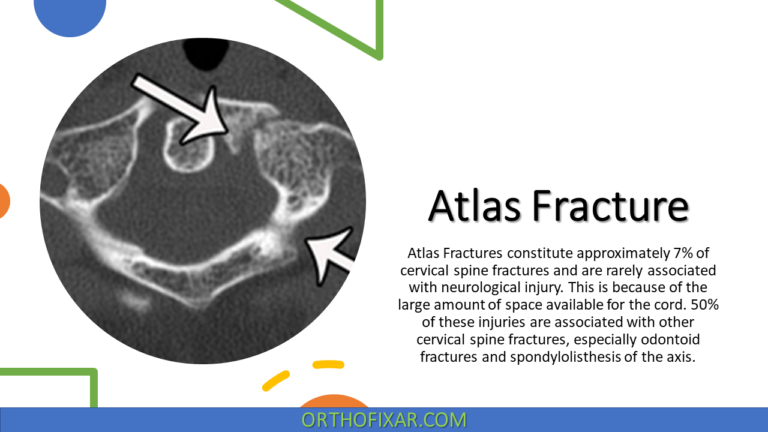
Atlas Fracture Overview
Atlas Fracture constitute approximately 7% of cervical spine fractures and are rarely associated with neurological injury.
Read Full Entry →Topics in orthopedic trauma surgery. Fractures, dislocation and injuries of the upper and lower limbs.
Atlas Fracture constitute approximately 7% of cervical spine fractures and are rarely associated with neurological injury.
Read Full Entry →
Occipitocervical Dissociation, also known as craniovertebral dissociations, are high-energy injuries resulting from a combination of hyperextension, distraction and…
Read Full Entry →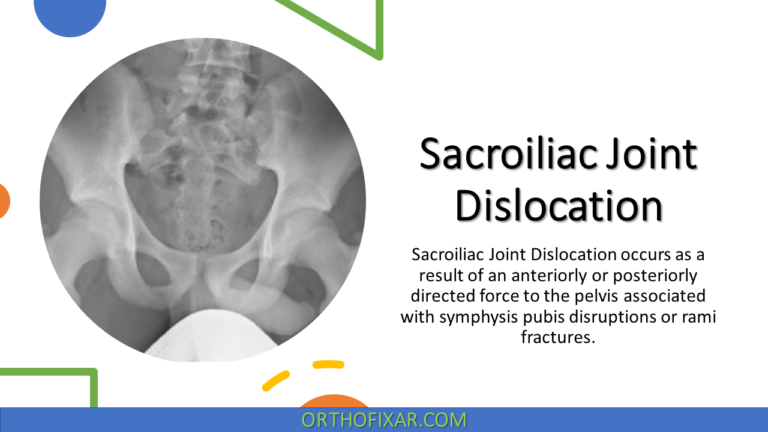
Sacroiliac Joint Dislocation occurs as a result of an anteriorly or posteriorly directed force to the pelvis associated…
Read Full Entry →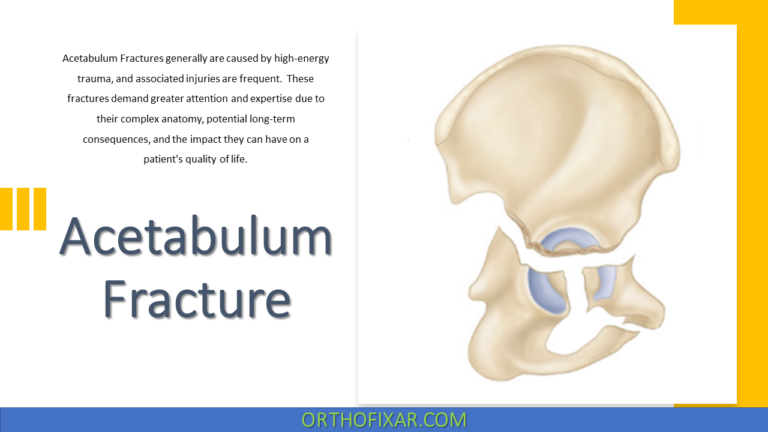
Acetabulum Fractures generally are caused by high-energy trauma, and associated injuries are frequent.
Read Full Entry →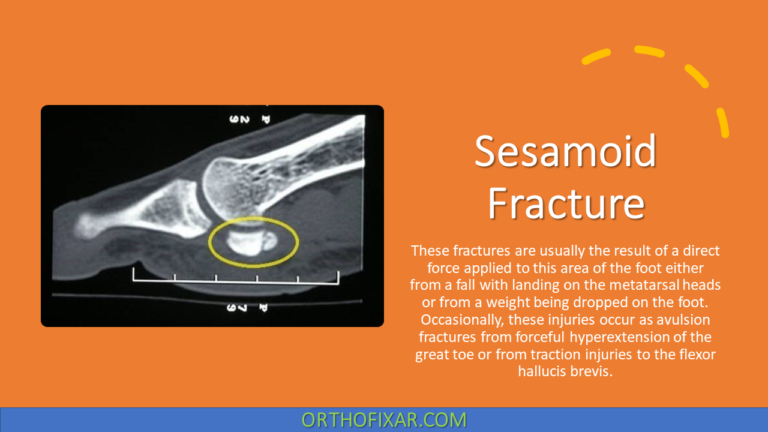
Sesamoid fractures are seen in ballet dancers and runners secondary to repetitive hyperextension at the MTP joints.
Read Full Entry →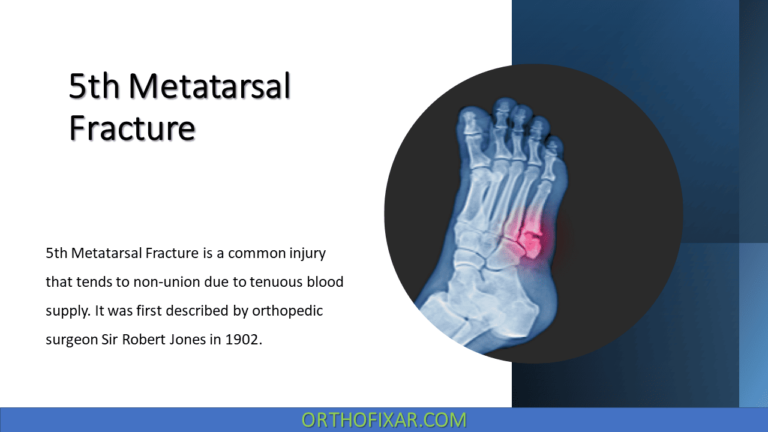
5th Metatarsal Fracture is a common injury that tends to nonunion due to tenuous blood supply. It was first…
Read Full Entry →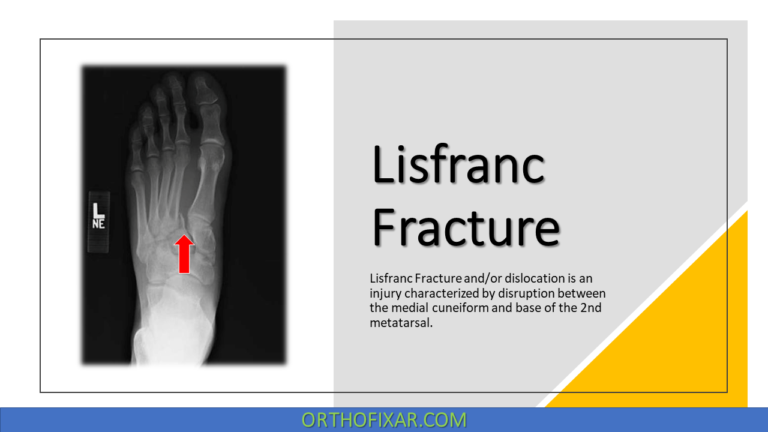
Lisfranc Fracture and/or dislocation is an injury characterized by disruption between the medial cuneiform and base of the 2nd…
Read Full Entry →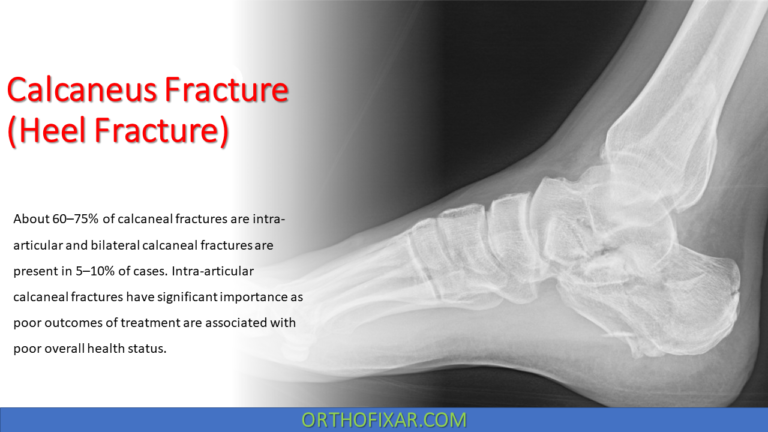
About 60–75% of Calcaneus fractures are intra-articular and bilateral calcaneal fractures are present in 5–10% of cases.
Read Full Entry →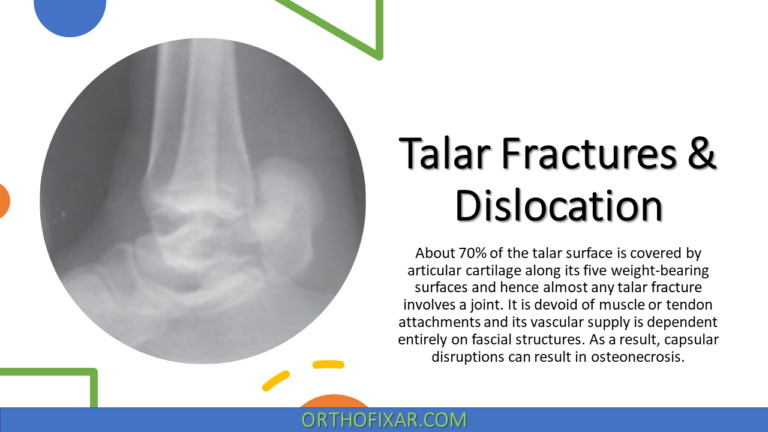
Talar bone fracture are classified according to the anatomic location as lateral process, posterior process, talar head, talar…
Read Full Entry →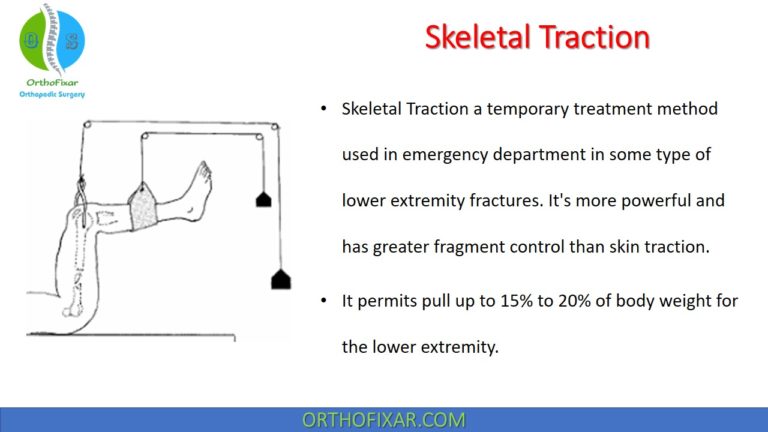
Skeletal Traction is a temporary treatment method used in emergency department in some type of lower extremity fractures.
Read Full Entry →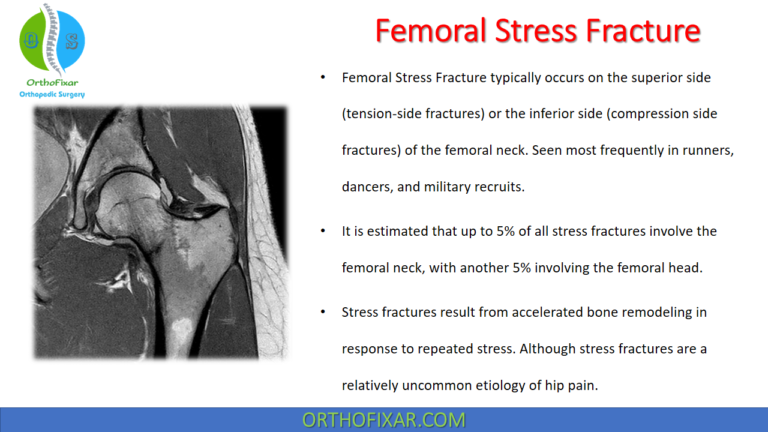
Femoral Stress Fracture typically occurs on the superior side (tension-side fractures) or the inferior side (compression side fractures)…
Read Full Entry →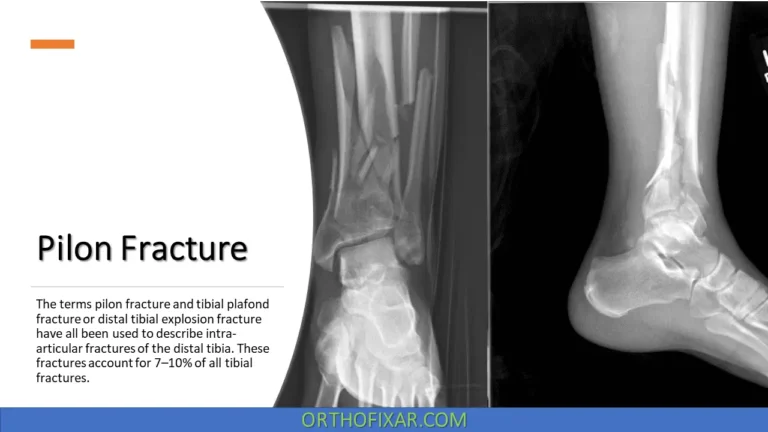
The terms pilon fracture and tibial plafond fracture or distal tibial explosion fracture have all been used to…
Read Full Entry →