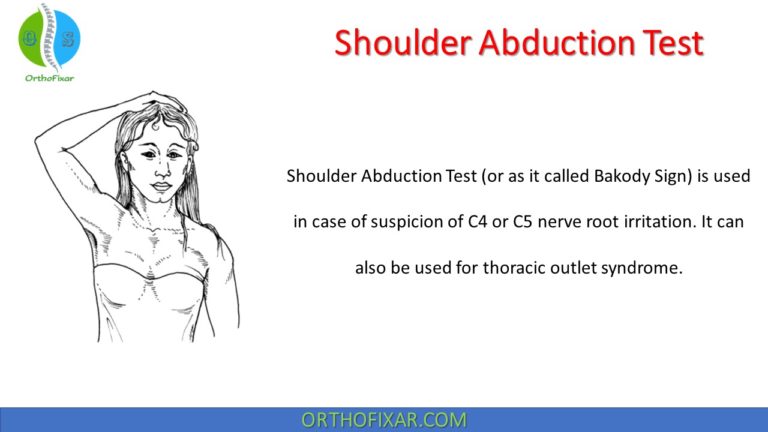
Shoulder Abduction Test (Bakody Sign)
Shoulder Abduction Test (or as it called Bakody Test) is used in case of suspicion of C4 or C5…
Read Full Entry →This section contains all the Special Tests for Spine examination. Learn how to examine and diagnosis the Spine region.
Shoulder Abduction Test (or as it called Bakody Test) is used in case of suspicion of C4 or C5…
Read Full Entry →
The Scalene Cramp Test is a clinical examination aimed at eliciting discomfort or pain in the scalene muscle…
Read Full Entry →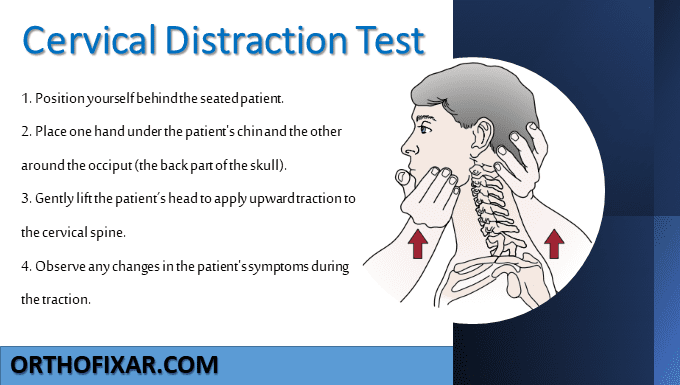
This test is particularly useful for patients who report radicular pain in their medical history and exhibit corresponding…
Read Full Entry →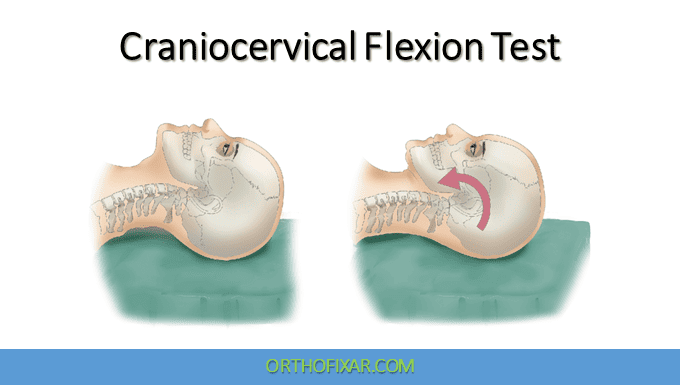
The Craniocervical Flexion Test is specifically designed to evaluate the strength and endurance of the deep cervical flexors:…
Read Full Entry →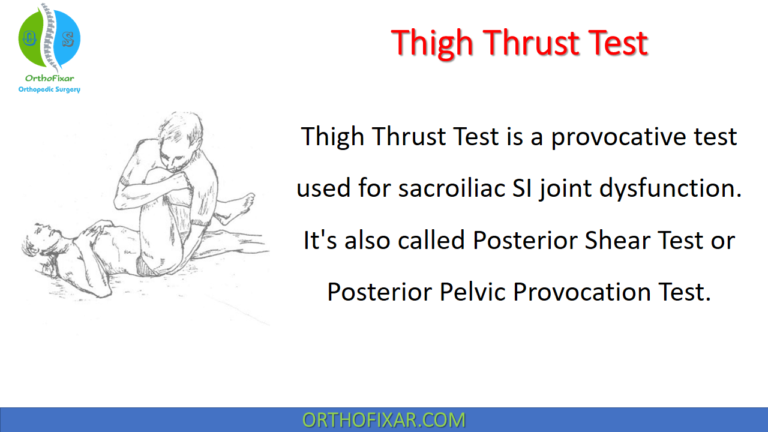
Thigh Thrust Test is a provocative test used in sacroiliac SI joint dysfunction. It's also called Posterior Shear…
Read Full Entry →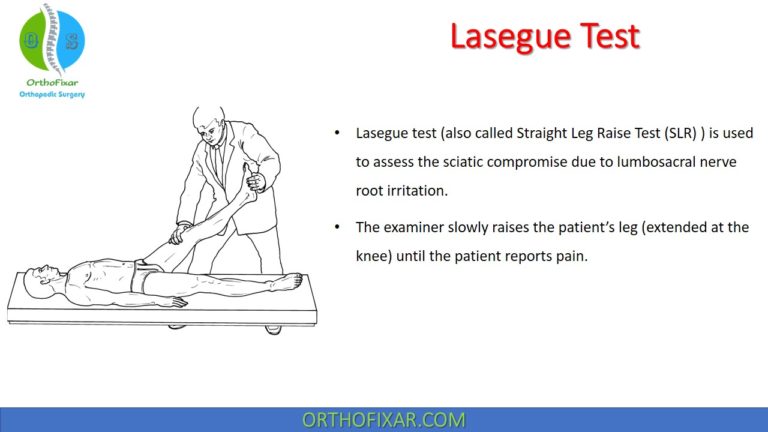
Lasegue test (also called Straight Leg Raise Test (SLR)) is used to assess the sciatic compromise due to…
Read Full Entry →
Waddell Signs or Waddell Nonorganic Signs are group of eight clinical physical signs to detect psychogenic, or “non-organic,”…
Read Full Entry →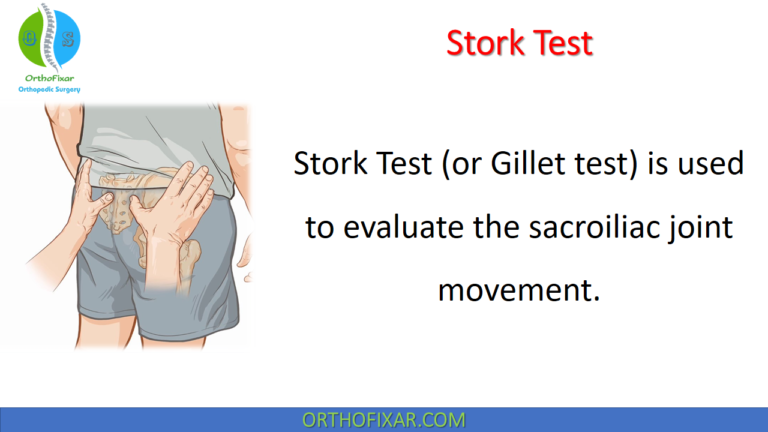
The Stork Test, also known as the Gillet Test or Ipsilateral Posterior Rotation Test, is commonly used to…
Read Full Entry →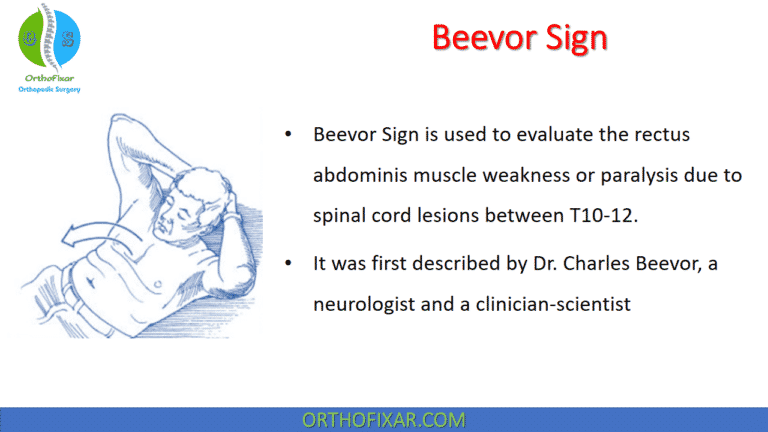
Beevor Sign is used to evaluate the rectus abdominis muscle weakness or paralysis due to spinal cord lesions…
Read Full Entry →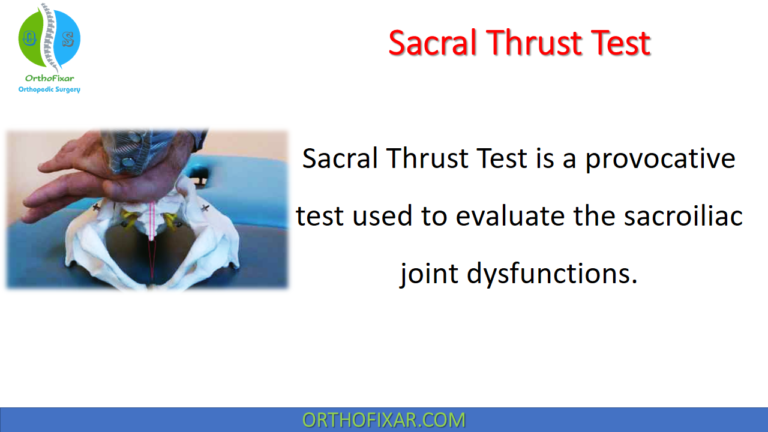
Sacral Thrust Test is a provocative test used to evaluate the sacroiliac joint dysfunctions.
Read Full Entry →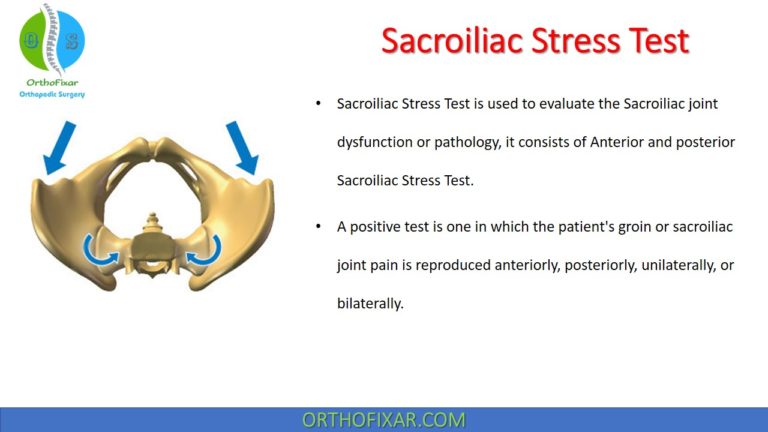
Sacroiliac Stress Test (or Sacroiliac Distraction Test) demonstrates involvement of the anterior sacroiliac ligaments in a sacroiliac joint…
Read Full Entry →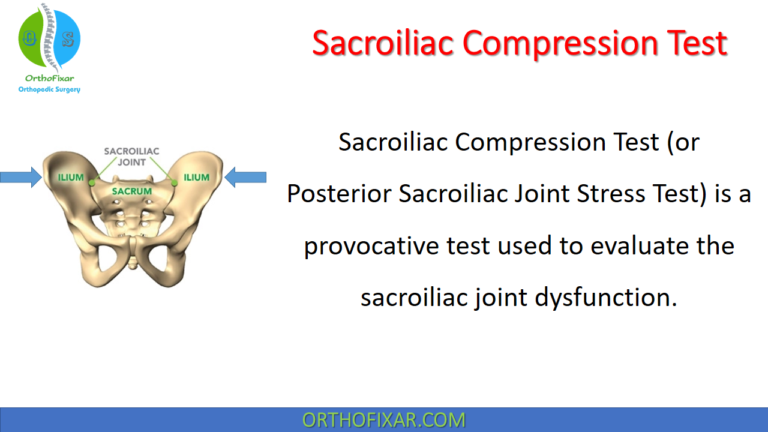
Sacroiliac Compression Test (or Posterior Sacroiliac Joint Stress Test) is a provocative test used to evaluate the sacroiliac…
Read Full Entry →