What Is a 5th Metatarsal Base Fracture?
A 5th metatarsal base fracture is a break occurring at the proximal portion of the fifth metatarsal bone on the outer side of the foot. These fractures are among the most common foot injuries encountered in orthopedic and sports medicine practice, especially after ankle inversion injuries or repetitive athletic stress.
The 5th metatarsal base fracture injury spectrum includes:
- Avulsion fractures (Pseudo-Jones fractures)
- Jones fractures
- Proximal diaphyseal stress fractures
Accurate classification is critical because healing potential, complication risk, and treatment differ significantly between fracture types.
Anatomy of the 5th Metatarsal Base
The fifth metatarsal consists of:
- Tuberosity (base)
- Metaphysis
- Diaphysis (shaft)
Several important structures attach near the base:
- Peroneus brevis tendon
- Lateral plantar fascia
- Peroneus tertius tendon
These soft tissue attachments contribute to fracture mechanisms during inversion injuries.
See Also: Foot Anatomy
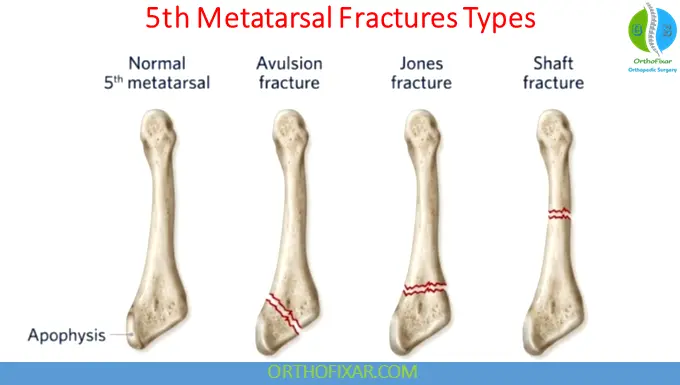
Classification of 5th Metatarsal Base Fractures
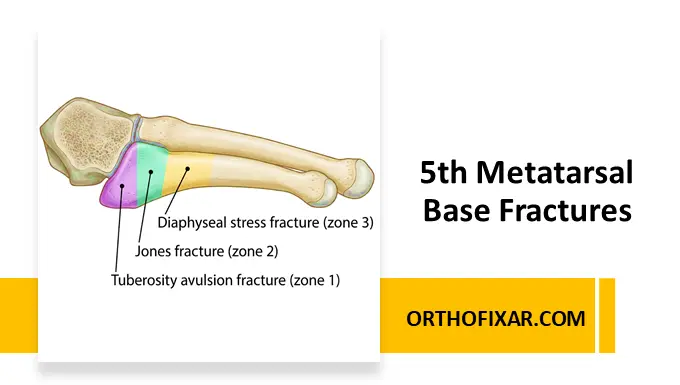
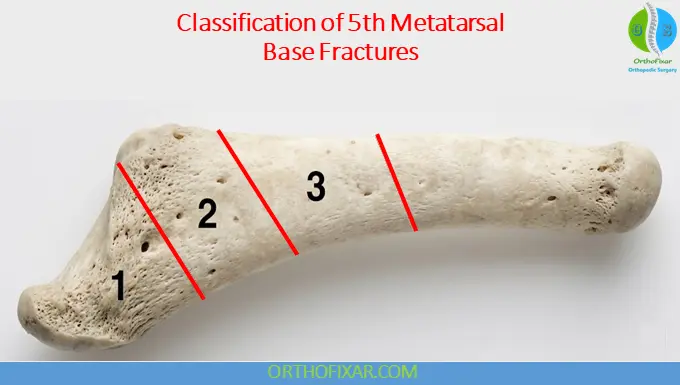
The most widely used system is the Lawrence and Botte classification, which divides 5th metatarsal base fractures into 3 zones.
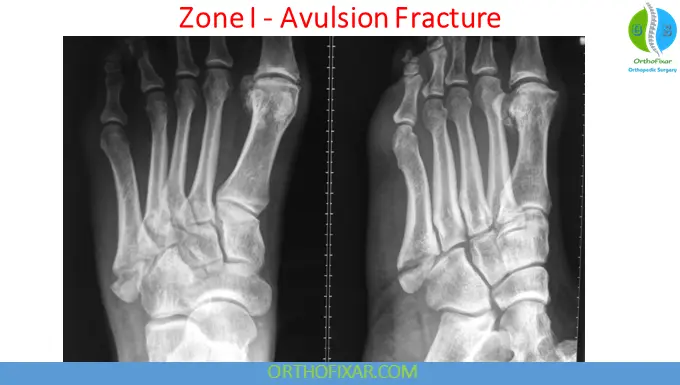
Zone 1: Avulsion Fracture (Pseudo-Jones Fracture)
Pseudo-Jones Fracture is a fracture involving the tuberosity at the base of the fifth metatarsal.
Usually caused by:
- Forced inversion of the foot
- Sudden plantarflexion injury
- Ankle sprain mechanisms
The peroneus brevis tendon and plantar fascia may avulse a fragment from the tuberosity.
Clinical Features
- Lateral foot pain
- Swelling
- Tenderness at the tuberosity
- Difficulty walking
Prognosis
Zone 1 fractures generally heal well because blood supply is relatively preserved.
Jones Fracture (Zone 2)
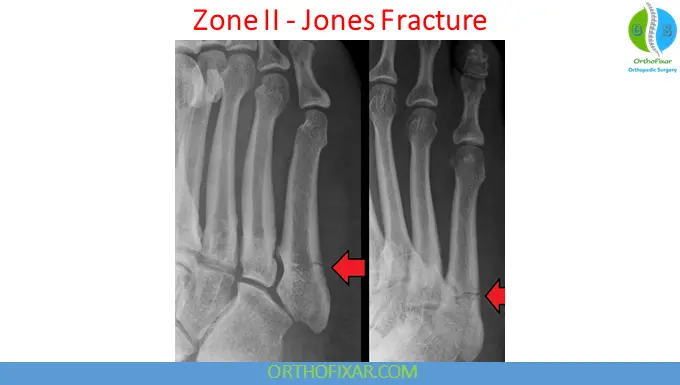
Jones Fracture is a fracture at the metaphyseal-diaphyseal junction extending into the 4th–5th intermetatarsal articulation.
It’s typically caused by:
- Adduction force to the forefoot
- Sudden directional change
- Sports injuries
Why Jones Fractures Matter
Jones fractures occur in a vascular watershed region with limited blood supply, leading to:
- Delayed union
- Nonunion
- Refracture risk
Nonunion rates may reach 15–30%.
Symptoms
- Lateral midfoot pain
- Swelling
- Pain with weight-bearing
- Tenderness distal to the tuberosity
Zone 3: Proximal Diaphyseal Stress Fracture
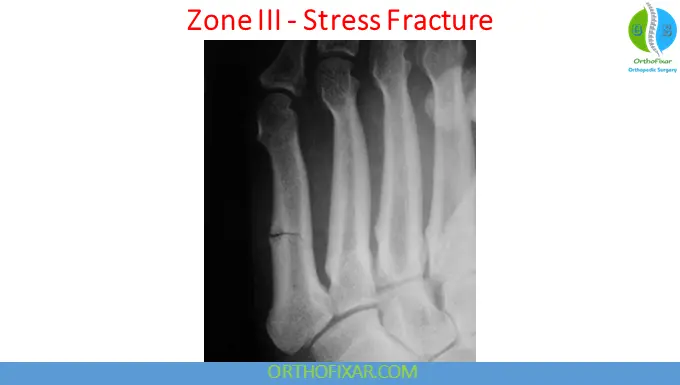
Stress fractures located distal to the Jones fracture region in the proximal diaphysis.
Common in:
- Athletes
- Runners
- Military recruits
Pathophysiology
These injuries result from repetitive microtrauma and chronic overload.
Clinical Presentation
- Chronic lateral foot pain
- Pain worsening with activity
- Possible prodromal symptoms for weeks or months
Epidemiology
5th metatarsal fractures are among the most common metatarsal fractures seen in clinical practice. Athletes participating in:
- Basketball
- Soccer
- Football
- Running
- Dancing
are particularly susceptible.
Jones fractures are especially important in elite athletes because delayed healing may prolong return-to-sport time.
Mechanism of Injury
Common mechanisms include:
- Ankle inversion injury
- Twisting trauma
- Sudden directional change
- Repetitive stress loading
Avulsion fractures commonly mimic ankle sprains and may initially be overlooked.
Clinical Examination
Inspection
- Swelling
- Ecchymosis
- Antalgic gait
Palpation
Localized tenderness helps differentiate fracture zones.
Functional Findings
- Pain with weight-bearing
- Difficulty walking
- Reduced athletic performance
Imaging Evaluation
Plain Radiographs
Standard views include:
- AP view
- Lateral view
- Oblique view
Radiographs remain the primary diagnostic tool for 5th metatarsal base fracture.
MRI
MRI may help identify:
- Stress fractures
- Early bone edema
- Occult fractures
CT Scan
Useful for:
- Delayed union
- Nonunion
- Surgical planning
Torg Classification for Stress Fractures
The Torg system classifies stress-related Jones fractures:
| Type | Features |
|---|---|
| Type I | Acute fracture without sclerosis |
| Type II | Delayed union with sclerosis |
| Type III | Nonunion with complete obliteration |
Higher Torg grades are associated with poorer healing potential.
Differential Diagnosis
Conditions that may mimic a 5th metatarsal base fracture include:
- Ankle sprain
- Peroneal tendon injury
- Cuboid syndrome
- Iselin disease
- Stress reaction
- Accessory ossicles
Treatment of 5th Metatarsal Base Fractures
Zone 1 Avulsion Fractures
Most nondisplaced fractures are treated nonoperatively with:
- Protected weight-bearing
- Walking boot
- Short leg cast
- Activity modification
Healing typically occurs within 6–8 weeks.
Jones Fractures
Nonoperative Treatment
May include:
- Non-weight-bearing cast immobilization
- Walking boot
- Gradual rehabilitation
However, healing may require prolonged immobilization due to limited vascularity.
Surgical Treatment
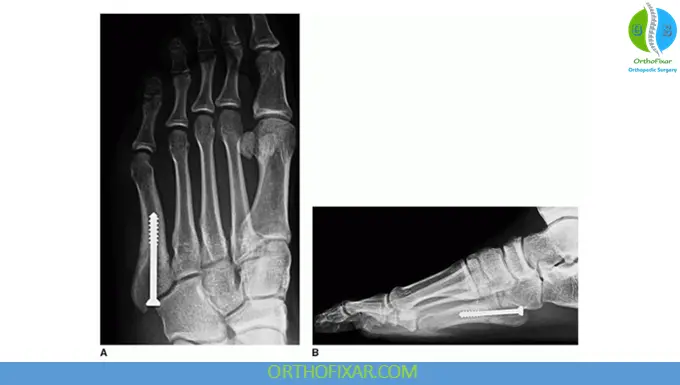
Athletes and active individuals frequently undergo:
- Intramedullary screw fixation
Advantages:
- Faster healing
- Earlier return to sport
- Reduced nonunion risk
Stress Fractures (Zone 3)
Treatment depends on:
- Chronicity
- Activity level
- Radiographic findings
Management options include:
- Strict non-weight-bearing
- Bone stimulation
- Surgical fixation
- Bone grafting in nonunion cases
Surgical Indications
Surgery may be considered for:
- Displaced fractures
- Elite athletes
- Delayed union
- Nonunion
- Recurrent fractures
- High-demand patients
Common surgical procedures:
- Intramedullary screw fixation
- Plate fixation
- Bone grafting
Rehabilitation
Early Phase
- Immobilization
- Pain control
- Swelling reduction
Intermediate Phase
- Gradual weight-bearing
- Range-of-motion exercises
Advanced Phase
- Strengthening
- Proprioception training
- Sport-specific rehabilitation
Return to Sports
Return-to-play depends on:
- Fracture type
- Healing progression
- Imaging findings
- Pain resolution
Athletes treated surgically often return faster than those managed conservatively.
Complications
Potential complications include:
- Delayed union
- Nonunion
- Refracture
- Chronic pain
- Hardware irritation
- Malunion
Jones fractures carry the highest complication risk because of the watershed blood supply.
Prognosis
Excellent Prognosis
- Zone 1 avulsion fractures
Moderate Risk
- Acute Jones fractures
Higher Risk
- Chronic stress fractures
- Smokers
- High-demand athletes
- Delayed diagnosis
Prevention Strategies
Prevention may include:
- Proper footwear
- Gradual training progression
- Addressing cavovarus foot alignment
- Strength and balance training
- Early management of ankle instability
Key Points
- 5th metatarsal base fractures are classified into Zones 1, 2, and 3.
- Jones fractures occur in a vascular watershed region and have increased nonunion risk.
- Avulsion fractures usually heal successfully with conservative treatment.
- Athletes often benefit from surgical fixation for Jones fractures.
- Accurate classification guides prognosis and management.
Frequently Asked Questions (FAQ)
What is the difference between a Jones fracture and an avulsion fracture?
A Jones fracture occurs at the metaphyseal-diaphyseal junction (Zone 2), while an avulsion fracture occurs at the tuberosity (Zone 1). Jones fractures have a significantly higher risk of delayed healing and nonunion.
How long does a 5th metatarsal base fracture take to heal?
Most avulsion fractures heal within 6–8 weeks, whereas Jones fractures may require longer healing times and sometimes surgery.
Can you walk on a Jones fracture?
Weight-bearing recommendations vary depending on fracture severity and treatment plan. Many Jones fractures initially require non-weight-bearing immobilization.
Why do Jones fractures heal poorly?
They occur in a vascular watershed region with limited blood supply, increasing the risk of delayed union and nonunion.
References & More
- Smidt KP, Massey P. 5th Metatarsal Fracture. [Updated 2023 May 29]. In: StatPearls [Internet]. Treasure Island (FL): StatPearls Publishing; 2026 Jan-. Available from: https://www.ncbi.nlm.nih.gov/books/NBK544369/
- Vogler HW, Westlin N, Mlodzienski AJ, Møller FB. Fifth metatarsal fractures. Biomechanics, classification, and treatment. Clin Podiatr Med Surg. 1995 Oct;12(4):725-47. PMID: 8536208. Pubmed
- Chuckpaiwong B, Queen RM, Easley ME, Nunley JA. Distinguishing Jones and proximal diaphyseal fractures of the fifth metatarsal. Clin Orthop Relat Res. 2008 Aug;466(8):1966-70. doi: 10.1007/s11999-008-0222-7. Epub 2008 Mar 25. PMID: 18363075; PMCID: PMC2584274. Pubmed
- Herterich V, Baumbach SF, Kaiser A, Böcker W, Polzer H. Fifth Metatarsal Fracture–A Systematic Review of the Treatment of Fractures of the Base of the Fifth Metatarsal Bone. Dtsch Arztebl Int. 2021 Sep 6;118(35-36):587-594. doi: 10.3238/arztebl.m2021.0231. Epub 2021 Sep 6. PMID: 34789369; PMCID: PMC8647295. Pubmed
- Landorf KB. Clarifying proximal diaphyseal fifth metatarsal fractures. The acute fracture versus the stress fracture. J Am Podiatr Med Assoc. 1999 Aug;89(8):398-404. doi: 10.7547/87507315-89-8-398. PMID: 10466292. Pubmed
- DeVries JG, Taefi E, Bussewitz BW, Hyer CF, Lee TH. The fifth metatarsal base: anatomic evaluation regarding fracture mechanism and treatment algorithms. J Foot Ankle Surg. 2015 Jan-Feb;54(1):94-8. doi: 10.1053/j.jfas.2014.08.019. Epub 2014 Oct 16. PMID: 25441854. Pubmed
- Egol KA. Handbook of fractures. 6th ed. Philadelphia: Lippincott Williams & Wilkins; 2019.