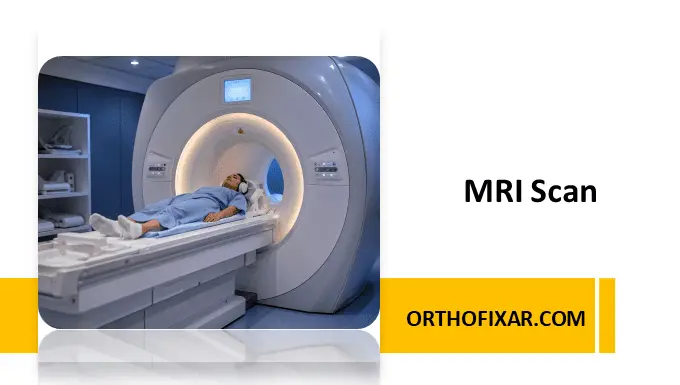
A magnetic resonance imaging (MRI) scan is one of the most advanced diagnostic imaging techniques in modern medicine. Unlike conventional radiography and computed tomography (CT), MRI imaging uses powerful magnetic fields and radiofrequency waves to generate detailed cross-sectional images of the body’s internal structures without exposing patients to ionizing radiation.
MRI has revolutionized musculoskeletal, neurological, cardiovascular, and oncological imaging due to its exceptional soft-tissue contrast and multiplanar imaging capabilities. It is particularly valuable for evaluating ligaments, tendons, cartilage, muscles, nerves, spinal structures, and bone marrow abnormalities.
This article reviews the principles of MRI, clinical applications, safety considerations, MRI and pregnancy, MRI and pacemaker compatibility, and the role of gadolinium contrast in modern imaging.
What Is an MRI Scan?
An MRI scan is a non-invasive imaging technique that creates highly detailed images of internal tissues using magnetic fields and radiofrequency pulses.
Unlike X-rays and CT scans, MRI does not use ionizing radiation. Instead, it detects signals emitted by hydrogen protons within body tissues after exposure to a strong magnetic field and radiofrequency energy.
The resulting images can be obtained in multiple planes:
- Axial
- Sagittal
- Coronal
- Oblique
This flexibility makes MRI particularly useful for complex anatomical regions and musculoskeletal evaluation.
See Also: Computed Tomography (CT Scan) Principles & Clinical Applications
History of MRI Imaging
The development of MRI originated from discoveries in nuclear magnetic resonance (NMR) physics during the mid-20th century. Clinical MRI became widely available during the 1980s and has since become a cornerstone of diagnostic medicine.
Continuous technological advancements have improved:
- Image quality
- Scan speed
- Functional imaging
- Vascular imaging
- Cardiac imaging
- Whole-body cancer screening
Modern scanners commonly operate at 1.5 Tesla (T) and 3 Tesla, while ultra-high-field research systems may reach 7 Tesla and beyond.
How MRI Imaging Works
Basic Principles
The human body contains large amounts of hydrogen atoms, primarily within water and fat molecules.
During MRI imaging:
- The patient is placed inside a strong magnetic field.
- Hydrogen protons align with the magnetic field.
- Radiofrequency pulses temporarily disturb this alignment.
- As protons return to equilibrium, they emit signals.
- Specialized receivers detect these signals.
- Computer algorithms reconstruct detailed anatomical images.
Image Weighting
Different pulse sequences produce varying image characteristics.
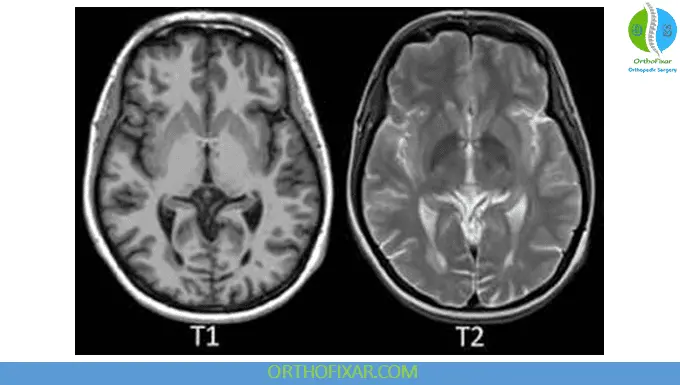
T1-Weighted Images
T1-weighted imaging provides:
- Excellent anatomical detail
- High spatial resolution
- Clear visualization of normal anatomy
T2-Weighted Images
T2-weighted imaging is useful for detecting:
- Edema
- Inflammation
- Infection
- Fluid collections
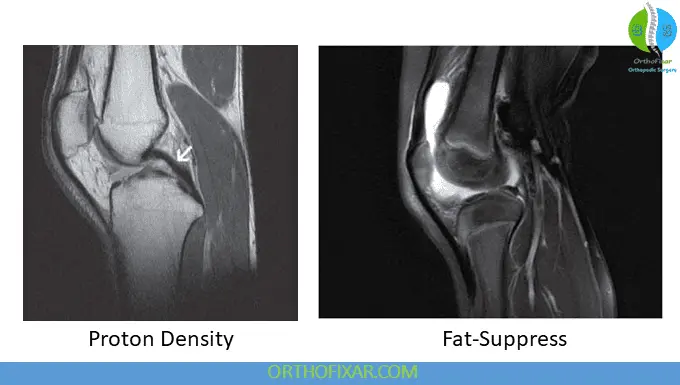
Proton Density Imaging
Proton density sequences offer:
- Balanced image contrast
- Excellent musculoskeletal detail
- Evaluation of cartilage and ligaments
Fat-Suppressed Sequences
Fat suppression techniques improve visualization of:
- Bone marrow edema
- Soft-tissue injuries
- Inflammatory processes
- Tumors
Advantages of MRI Imaging
MRI offers numerous advantages over other imaging modalities.
Superior Soft-Tissue Contrast
MRI can clearly distinguish:
- Ligaments
- Tendons
- Cartilage
- Muscles
- Nerves
- Bone marrow
Multiplanar Imaging
Images can be obtained directly in multiple planes without repositioning the patient.
No Ionizing Radiation
Unlike CT or radiography, MRI does not expose patients to radiation.
Early Disease Detection
MRI can identify abnormalities before structural changes become visible on conventional imaging.
Examples include:
- Bone marrow edema
- Osteonecrosis
- Stress fractures
- Early tumors
Clinical Applications of MRI
Musculoskeletal Imaging
MRI is extensively used in orthopedics and sports medicine.
Common indications include:
- Meniscal tears
- Cruciate ligament injuries
- Rotator cuff tears
- Tendon injuries
- Cartilage lesions
- Stress fractures
- Osteonecrosis
MRI can often provide diagnostic accuracy comparable to arthroscopy for certain knee pathologies.
Neurological Imaging
MRI is the preferred modality for evaluating:
- Brain tumors
- Multiple sclerosis
- Stroke
- Epilepsy
- Spinal cord disorders
- Degenerative spine disease
Oncological Imaging
MRI helps determine:
- Tumor location
- Tumor extent
- Soft-tissue invasion
- Response to treatment
Cardiovascular Imaging
Cardiac MRI is useful for assessing:
- Cardiomyopathies
- Myocardial viability
- Congenital heart disease
- Cardiac masses
Abdominal and Pelvic Imaging
MRI assists in evaluating:
- Liver lesions
- Pancreatic disease
- Gynecological disorders
- Prostate pathology
- Inflammatory bowel disease
Gadolinium Contrast in MRI
What Is Gadolinium Contrast?
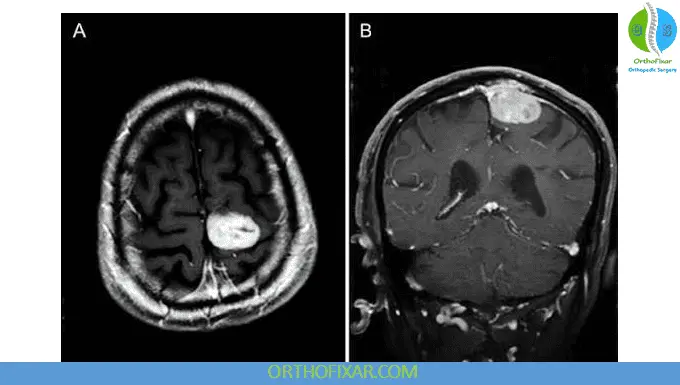
Gadolinium contrast agents are paramagnetic substances administered intravenously to enhance MRI images.
Gadolinium contains unpaired electrons that alter local magnetic fields, improving signal characteristics and tissue visualization.
Why Is Gadolinium Contrast Used?
Gadolinium contrast improves detection of:
- Tumors
- Infections
- Inflammation
- Vascular abnormalities
- Active disease processes
Contrast enhancement occurs because abnormal tissues often have increased blood flow or altered vascular permeability.
MRI Arthrography
Gadolinium may also be used in:
Direct MR Arthrography
Contrast is injected directly into a joint to evaluate:
- Labral tears
- Cartilage defects
- Capsular injuries
- Ligament injuries
Indirect MR Arthrography
Intravenous gadolinium enters joint fluid through synovial membranes, although this technique is less commonly used.
Risks of Gadolinium Contrast
Modern gadolinium-based contrast agents are generally safe.
Potential risks include:
- Allergic reactions
- Injection site complications
- Rare nephrogenic systemic fibrosis (NSF) in severe kidney disease
Renal function should be assessed before contrast administration in high-risk patients.
MRI and Pregnancy
Is MRI Safe During Pregnancy?
The topic of MRI and pregnancy is frequently encountered in clinical practice.
Current evidence indicates that non-contrast MRI is generally considered safe during pregnancy when clinically indicated.
MRI may be particularly valuable when ultrasound findings are inconclusive.
First Trimester Considerations
Although no proven harmful effects have been demonstrated, MRI examinations during the first trimester are usually reserved for situations where the expected diagnostic benefit outweighs potential theoretical risks.
Gadolinium Contrast During Pregnancy
Routine use of gadolinium contrast during pregnancy is generally avoided.
Gadolinium crosses the placenta and enters fetal circulation.
Therefore, gadolinium-enhanced MRI should only be performed when:
- The diagnostic information is essential
- Alternative imaging methods are inadequate
- Benefits clearly outweigh potential risks
MRI During Breastfeeding
Most professional organizations consider breastfeeding safe after gadolinium administration because only tiny amounts enter breast milk and even smaller amounts are absorbed by the infant.
MRI and Pacemaker
Historical Concerns
Traditionally, MRI was contraindicated in patients with implanted cardiac devices.
The strong magnetic field could potentially:
- Interfere with device function
- Cause lead heating
- Produce inappropriate pacing
- Damage device components
MRI-Conditional Devices
Today, many modern devices are specifically designed for MRI environments.
These are known as MRI-conditional devices.
Patients with MRI-conditional systems can often undergo MRI safely when established protocols are followed.
Pre-Scan Evaluation
For patients requiring MRI, careful assessment is essential:
- Device identification
- Lead verification
- Programming adjustments
- Monitoring during the scan
- Post-scan device interrogation
MRI and Pacemaker Safety
The presence of a pacemaker no longer automatically excludes MRI examination. However, every case requires individualized assessment by cardiology and radiology specialists.
Limitations of MRI
Despite its advantages, MRI has limitations.
Longer Examination Times
MRI scans typically require more time than CT scans.
Claustrophobia
Some patients experience anxiety or claustrophobia inside the scanner.
Motion Sensitivity
Patient movement can significantly degrade image quality.
Cost and Availability
MRI remains more expensive and less accessible than conventional radiography.
Metal-Related Artifacts
Certain metallic implants may cause image distortion and reduce diagnostic quality.
Recent Advances in MRI Technology
Modern MRI innovations include:
- 3-Tesla systems
- Functional MRI (fMRI)
- Diffusion tensor imaging
- Whole-body MRI
- Artificial intelligence-assisted reconstruction
- Weight-bearing MRI
- Dedicated extremity scanners
These advances continue to improve diagnostic accuracy and patient care.
Key Points
- A MRI scan provides detailed cross-sectional images without ionizing radiation.
- MRI imaging offers superior soft-tissue contrast compared with most other imaging modalities.
- MRI plays a crucial role in musculoskeletal, neurological, cardiovascular, and oncological diagnosis.
- Gadolinium contrast enhances detection of tumors, inflammation, and vascular abnormalities.
- MRI and pregnancy are generally compatible when clinically necessary, although gadolinium use should be limited.
- MRI and pacemaker considerations have evolved significantly with MRI-conditional devices and specialized safety protocols.
- MRI remains one of the most powerful diagnostic tools available in modern medicine.
Frequently Asked Questions (FAQ)
What is an MRI scan used for?
An MRI scan is used to evaluate soft tissues, joints, the brain, spinal cord, internal organs, blood vessels, and tumors with excellent anatomical detail.
Does MRI imaging use radiation?
No. MRI imaging uses magnetic fields and radiofrequency waves rather than ionizing radiation.
Is gadolinium contrast safe?
Gadolinium contrast is generally safe for most patients but should be used cautiously in individuals with severe kidney disease.
Can pregnant women have MRI scans?
Yes. Non-contrast MRI is generally considered safe during pregnancy when clinically indicated.
Can patients with pacemakers undergo MRI?
Many modern MRI-conditional pacemakers allow safe MRI examinations under appropriate medical supervision.
References & More
- Ghadimi M, Thomas A. Magnetic Resonance Imaging Contraindications. [Updated 2025 May 4]. In: StatPearls [Internet]. Treasure Island (FL): StatPearls Publishing; 2026 Jan-. Available from: https://www.ncbi.nlm.nih.gov/books/NBK551669/
- Grover VP, Tognarelli JM, Crossey MM, Cox IJ, Taylor-Robinson SD, McPhail MJ. Magnetic Resonance Imaging: Principles and Techniques: Lessons for Clinicians. J Clin Exp Hepatol. 2015 Sep;5(3):246-55. doi: 10.1016/j.jceh.2015.08.001. Epub 2015 Aug 20. PMID: 26628842; PMCID: PMC4632105. Pubmed
- Pai A, Shetty R, Hodis B, et al. Magnetic Resonance Imaging Physics. [Updated 2023 Apr 2]. In: StatPearls [Internet]. Treasure Island (FL): StatPearls Publishing; 2026 Jan-. Available from: https://www.ncbi.nlm.nih.gov/books/NBK564320/
- Blom, A., Warwick, D., & Whitehouse, M. R. (2018). Apley & Solomon’s system of orthopaedics and trauma (10th ed.). CRC Press