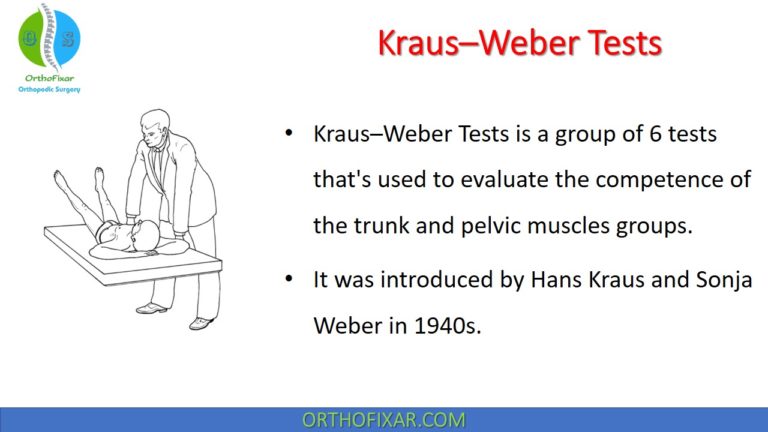
The 6-Item Kraus Weber Tests
Kraus Weber Tests is a group of 6 tests that's used to evaluate the competence of the trunk…
Read Full Entry →This section contains all the Special Tests for Spine examination. Learn how to examine and diagnosis the Spine region.
Kraus Weber Tests is a group of 6 tests that's used to evaluate the competence of the trunk…
Read Full Entry →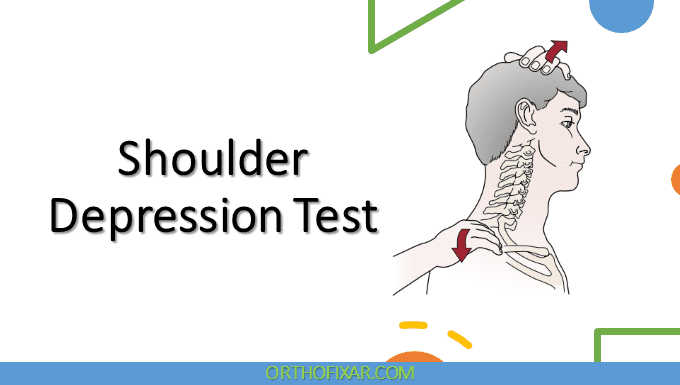
Patient Positioning: The patient is comfortably seated or standing upright. Side Flexion: The examiner gently side flexes the…
Read Full Entry →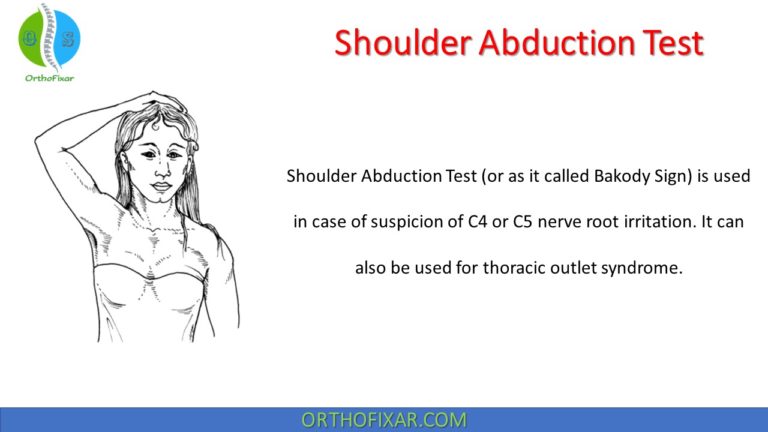
Shoulder Abduction Test (or as it called Bakody Test) is used in case of suspicion of C4 or C5…
Read Full Entry →
The Scalene Cramp Test is a clinical examination aimed at eliciting discomfort or pain in the scalene muscle…
Read Full Entry →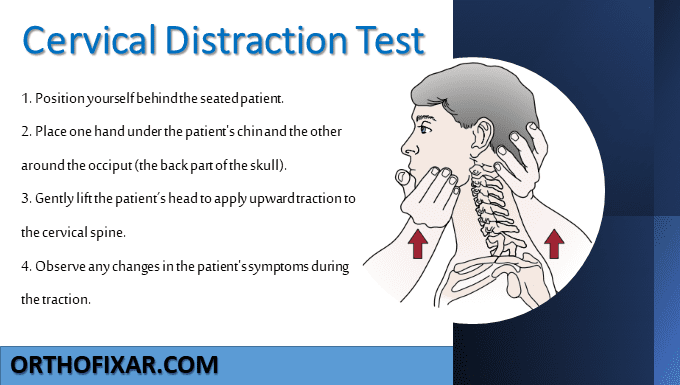
This test is particularly useful for patients who report radicular pain in their medical history and exhibit corresponding…
Read Full Entry →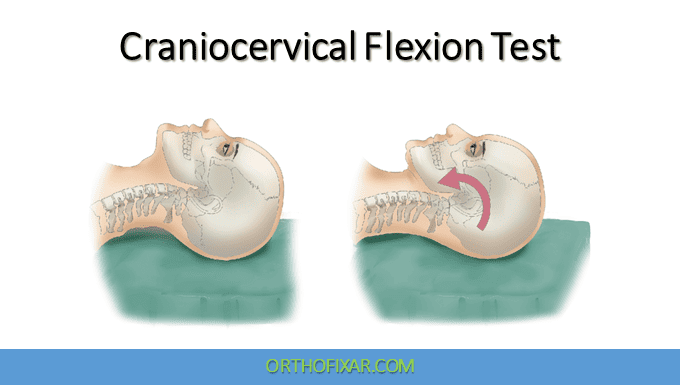
The Craniocervical Flexion Test is specifically designed to evaluate the strength and endurance of the deep cervical flexors:…
Read Full Entry →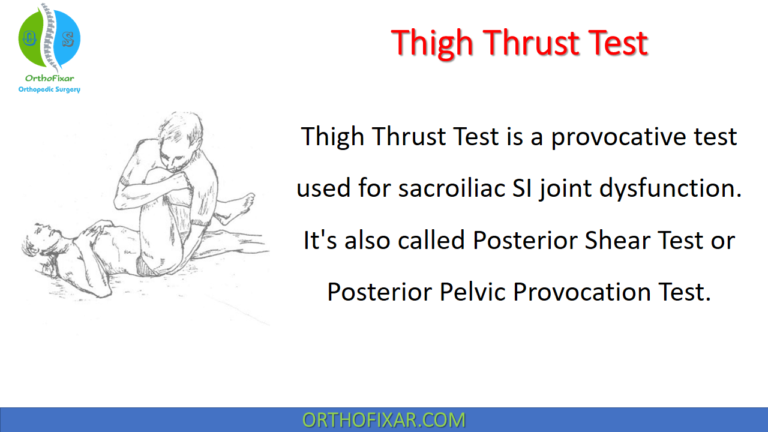
Thigh Thrust Test is a provocative test used in sacroiliac SI joint dysfunction. It's also called Posterior Shear…
Read Full Entry →
Waddell Signs or Waddell Nonorganic Signs are group of eight clinical physical signs to detect psychogenic, or “non-organic,”…
Read Full Entry →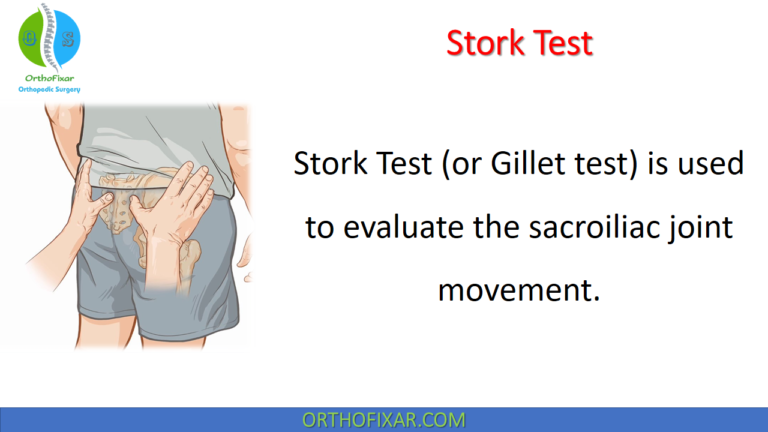
The Stork Test, also known as the Gillet Test or Ipsilateral Posterior Rotation Test, is commonly used to…
Read Full Entry →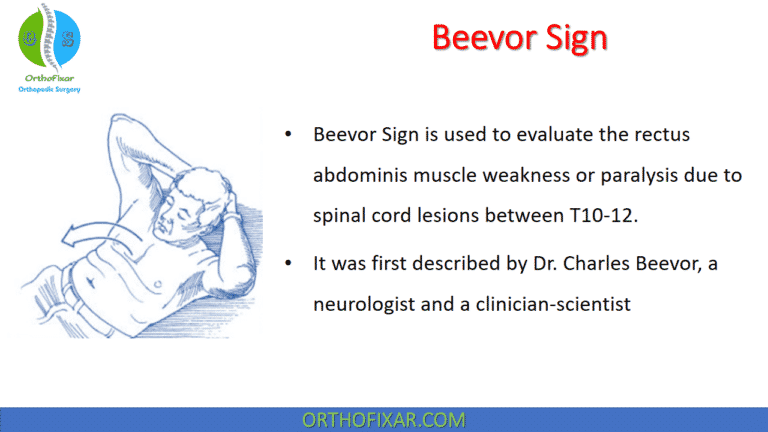
Beevor Sign is used to evaluate the rectus abdominis muscle weakness or paralysis due to spinal cord lesions…
Read Full Entry →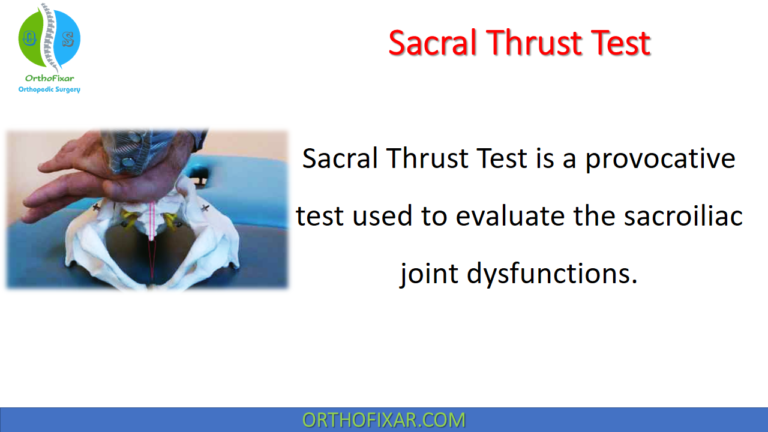
Sacral Thrust Test is a provocative test used to evaluate the sacroiliac joint dysfunctions.
Read Full Entry →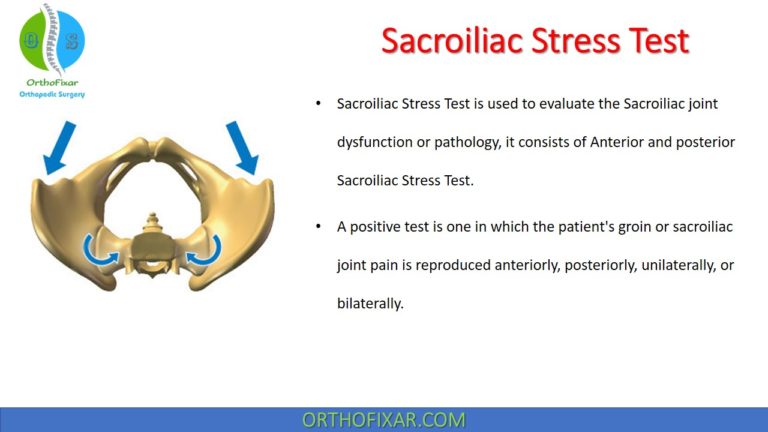
Sacroiliac Stress Test (or Sacroiliac Distraction Test) demonstrates involvement of the anterior sacroiliac ligaments in a sacroiliac joint…
Read Full Entry →