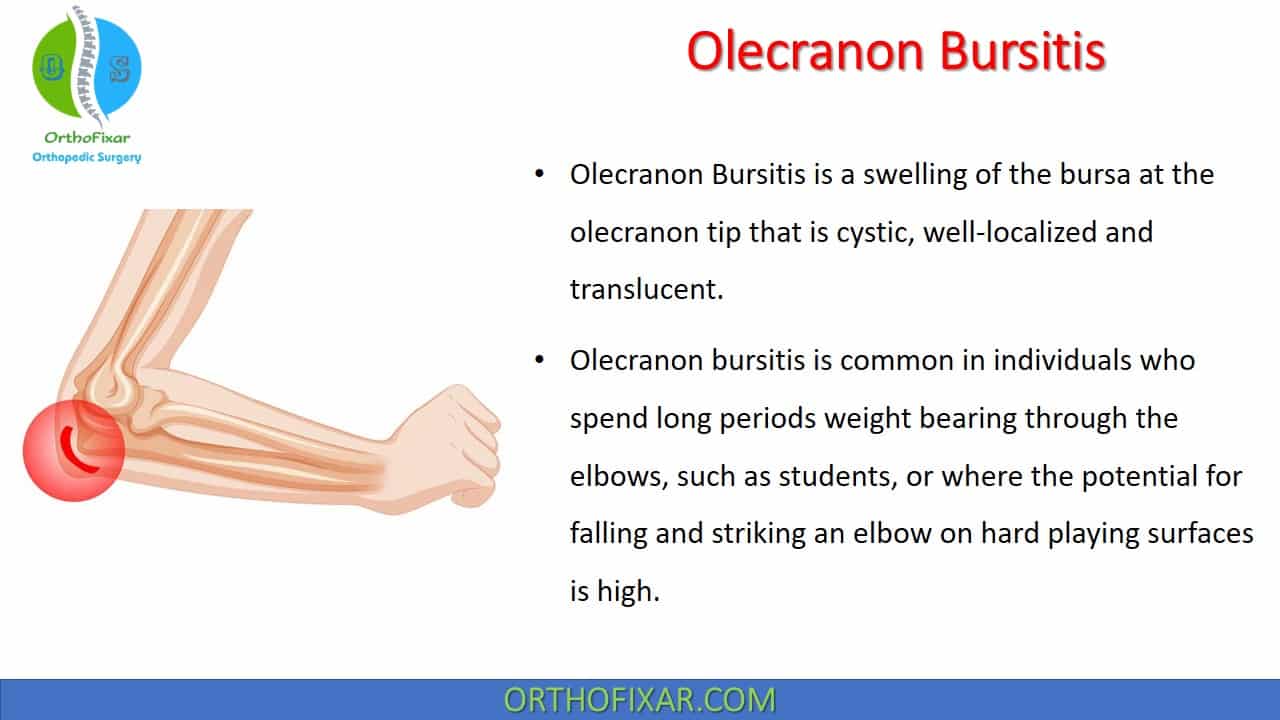
Olecranon bursitis, commonly known as Student’s Elbow, is inflammation and swelling of the olecranon bursa located at the tip of the elbow. The condition presents as a localized, cystic, and often translucent swelling over the olecranon process.
It commonly affects individuals who spend prolonged periods leaning on their elbows, including students, office workers, mechanics, and athletes involved in contact or throwing sports.
The condition may be aseptic (noninfectious) or septic (infectious), and distinguishing between the two is essential because septic bursitis requires urgent medical treatment.
See Also: Biceps Tendonitis
What Is the Olecranon Bursa?
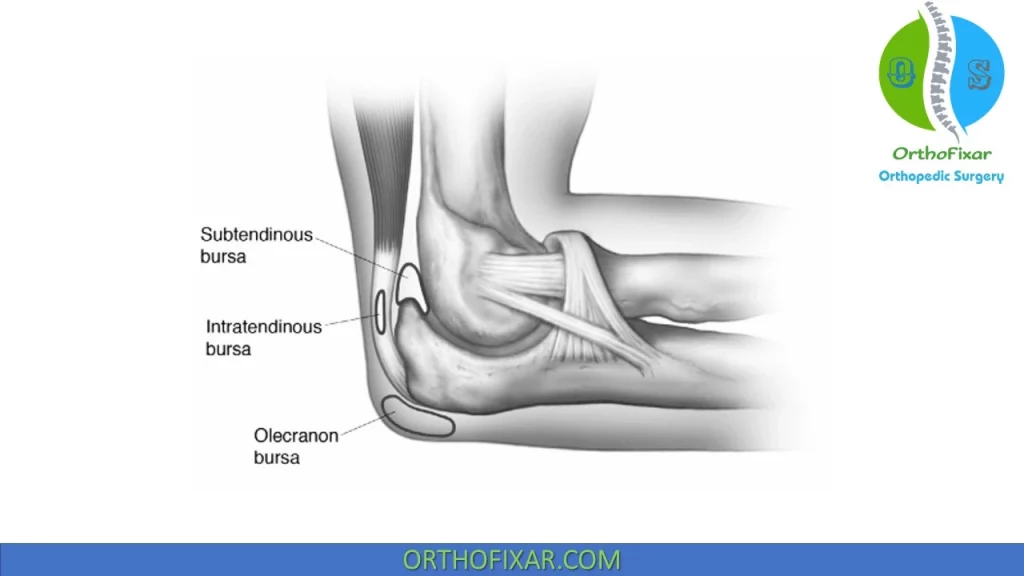
The olecranon bursa is a small fluid-filled sac situated between the skin and the olecranon process of the ulna.
Its primary function is to reduce friction and facilitate smooth movement between the skin and the underlying bone during elbow motion.
Because the bursa is located superficially beneath the skin, it is highly susceptible to:
- Direct trauma
- Repetitive friction
- Prolonged pressure
- Infection
Related Anatomy of the Elbow
The skin overlying the olecranon process is naturally redundant and loose, allowing the elbow to achieve a large range of flexion and extension.
When the elbow extends fully, the skin becomes wrinkled and mobile. The olecranon bursa allows smooth gliding between the skin and the bony olecranon during elbow movement.
Due to its superficial location, the bursa is vulnerable to irritation from:
- Leaning on hard surfaces
- Repetitive elbow pressure
- Falls onto the elbow
- Sports-related trauma
See Also: Elbow Anatomy
Causes of Olecranon Bursitis
Olecranon bursitis may develop from several underlying mechanisms:
Repetitive Pressure
Frequent leaning on the elbows is the classic cause of “student’s elbow.”
Trauma
Direct blows or falls onto the elbow may lead to bleeding and inflammation within the bursa.
Infection
Bacteria may enter the bursa through:
- Skin abrasions
- Cuts
- Puncture wounds
The most common pathogen is Staphylococcus aureus.
Inflammatory Conditions
Systemic diseases may predispose patients to bursitis, including:
- Rheumatoid arthritis
- Gout
- Pseudogout
Occupational and Sports Causes
Higher incidence occurs in:
- Students
- Plumbers
- Mechanics
- Wrestlers
- Throwing athletes
Olecranon Bursitis Symptoms
Acute Olecranon Bursitis
Acute bursitis usually presents with:
- Localized swelling over the olecranon
- Mild to severe elbow pain
- Tenderness
- Warmth
- Reduced elbow motion
The swelling can vary from subtle distension to a large fluctuant mass several centimeters in diameter.
Chronic Olecranon Bursitis
Chronic cases may develop gradually and are often associated with repetitive irritation.
Symptoms may include:
- Persistent swelling
- Discomfort during elbow flexion
- Difficulty wearing long sleeves
- Cosmetic deformity
- Recurrent fluid accumulation
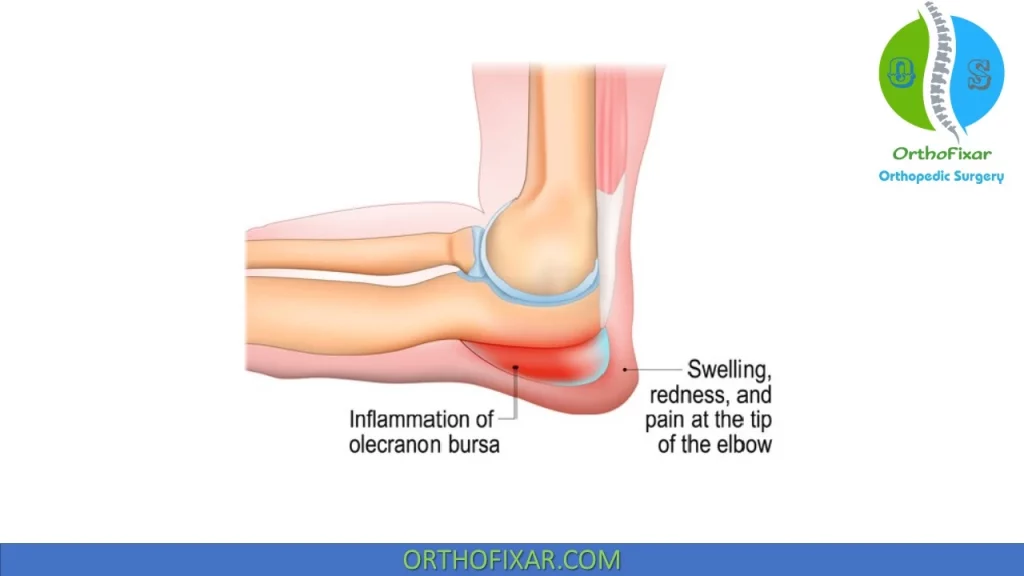
Signs Suggesting Septic Bursitis
Features concerning for infection include:
- Redness
- Increased warmth
- Severe tenderness
- Fever
- Drainage
- Rapid swelling progression
Septic bursitis requires prompt medical evaluation.
Physical Examination Findings
Clinical examination may reveal:
- Fluctuant swelling at the posterior elbow
- Erythema
- Tenderness
- Restricted range of motion
- Skin warmth
- Pain with elbow movement
In chronic elbow bursitis, thickening of the bursal wall may be palpated.
Differential Diagnosis
Several conditions can mimic olecranon bursitis:
- Elbow fractures
- Rheumatoid arthritis
- Gout
- Septic arthritis
- Synovial cysts
- Triceps tendon injuries
- Olecranon stress fractures
Diagnostic Evaluation
Clinical Diagnosis
Diagnosis is primarily clinical based on history and physical examination.
Aspiration
Bursal aspiration is indicated when:
- Infection is suspected
- Significant swelling exists
- Diagnosis is uncertain
The aspirated fluid should be analyzed for:
- Cell count
- Gram stain
- Culture
- Crystal analysis
Aspiration helps differentiate:
- Septic bursitis
- Gout
- Inflammatory bursitis
Imaging Studies
X-rays
Radiographs may identify:
- Olecranon spurs
- Fractures
- Calcifications
- Loose bodies
Ultrasound
Useful for confirming fluid collections and guiding aspiration.
MRI
Reserved for atypical or recurrent cases.
See Also: Elbow X-Ray Views
Olecranon Bursitis Treatment
The simple posttraumatic Olecranon bursitis treatment includes the principles of PRICEMEM:
- Protection: Avoid further elbow irritation.
- Rest: Limit aggravating activities.
- Ice: Apply intermittently to reduce inflammation.
- Compression: Elastic bandaging may reduce swelling.
- Elevation: Helps decrease edema.
- Manual therapy: Gentle mobilization may restore movement.
- Early motion: Maintaining mobility prevents stiffness.
- Medication: NSAIDs may reduce pain and inflammation.
Splinting and Sling Use
If elbow movement causes significant pain, temporary use of:
- A sling
- Posterior splint
may help calm symptoms and protect the joint.
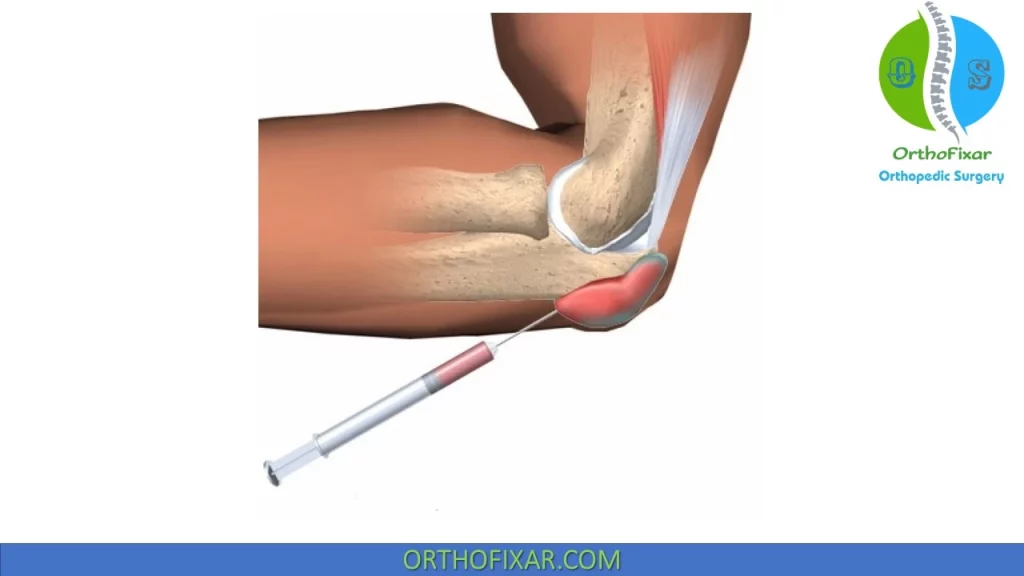
Aspiration of the Bursa
Aspiration serves both diagnostic and therapeutic purposes.
Benefits include:
- Pain reduction
- Improved motion
- Pressure relief
- Identification of infection or crystals
Following aspiration:
- The elbow may be immobilized briefly
- Reevaluation is usually recommended within one week
Corticosteroid Injection
Corticosteroid injections may be considered in:
- Chronic bursitis
- Recurrent aseptic bursitis
However, infection must be excluded before injection because corticosteroids can worsen septic bursitis.
Potential risks include:
- Skin atrophy
- Infection
- Recurrence
Surgical Resection
Bursectomy
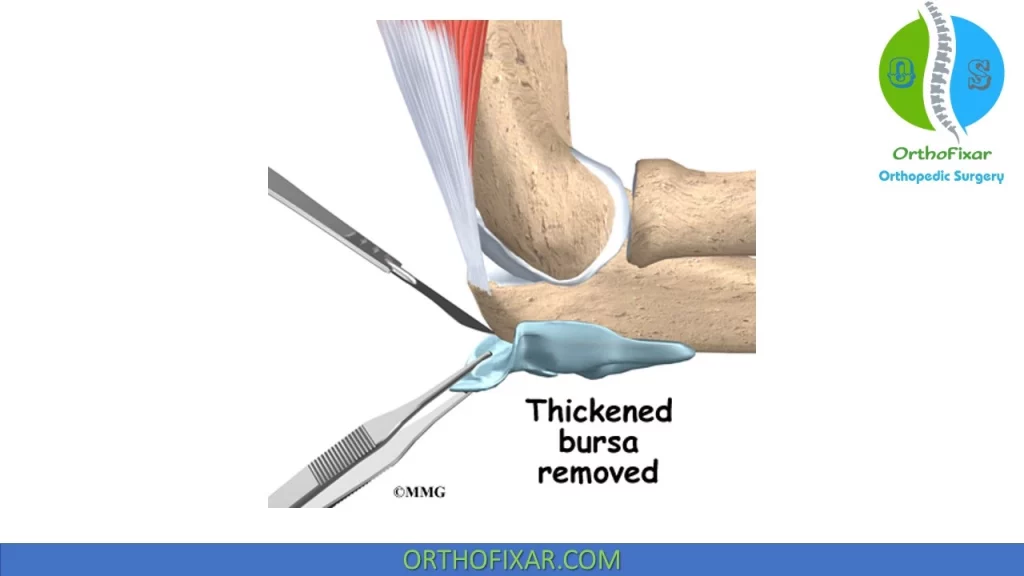
Persistent or recurrent cases may require surgical excision of the bursa.
Indications for Surgery
- Recurrent bursitis despite repeated aspiration
- Chronic pain
- Failed conservative treatment
- Persistent infection
- Functional limitation
Surgical removal may be performed:
- Open
- Arthroscopically
Rehabilitation After Surgery
Postoperative rehabilitation focuses on:
- Restoring range of motion
- Gradual strengthening
- Edema control
- Functional recovery
Most patients regain satisfactory elbow function with appropriate rehabilitation.
Septic Olecranon Bursitis
Infected olecranon bursitis is a medical condition requiring prompt intervention.
Treatment Includes
- Aspiration and drainage
- Antibiotic therapy
- Immobilization
- Close follow-up
Hospital admission may be required in severe infections.
Prevention of Olecranon Bursitis
Preventive strategies include:
- Avoiding prolonged elbow pressure
- Using elbow pads
- Treating skin wounds promptly
- Modifying repetitive activities
- Maintaining flexibility and strength
Olecranon Impingement Syndrome
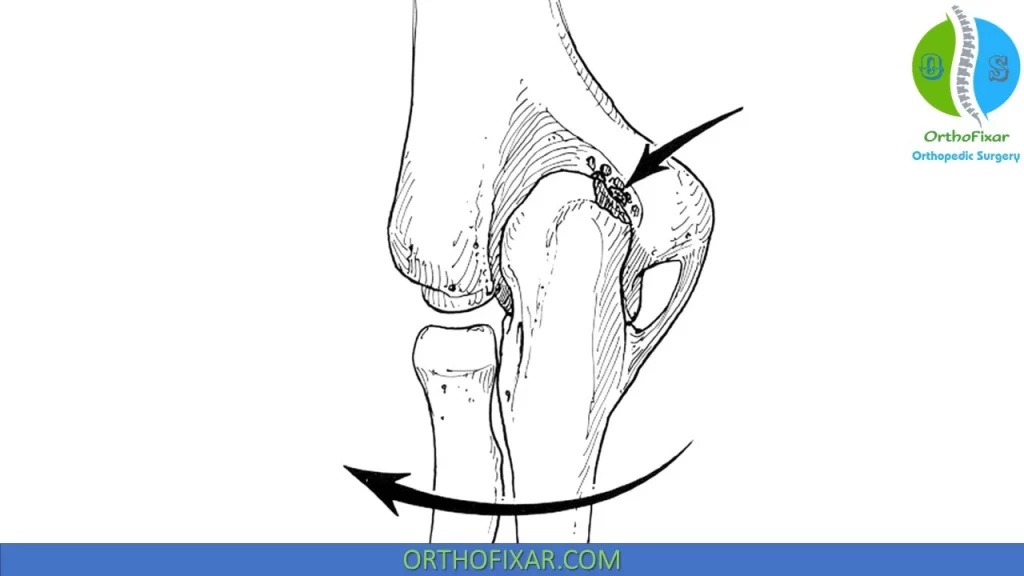
Olecranon impingement syndrome involves repetitive impaction of the olecranon within the olecranon fossa, particularly during forceful elbow extension.
It commonly occurs in:
- Baseball pitchers
- Throwing athletes
- Overhead sports participants
Symptoms
Patients may report:
- Catching
- Clicking
- Crepitus
- Pain during extension
- Mechanical block to motion
Imaging Findings
X-rays may reveal:
- Olecranon osteophytes
- Loose bodies
- Degenerative changes
Treatment
Conservative Care
- Activity modification
- Strengthening
- Flexibility exercises
- Rehabilitation
Surgical Indications
Surgery is considered when:
- Loose bodies persist
- Mechanical locking occurs
- Pain fails conservative management
Key Clinical Pearls
- Olecranon bursitis is commonly called Student’s Elbow.
- Septic bursitis must be differentiated from aseptic bursitis.
- Aspiration is important when infection or crystal disease is suspected.
- Conservative treatment is successful in most cases.
- Surgical bursectomy is reserved for persistent or recurrent disease.
Frequently Asked Questions (FAQs)
What causes olecranon bursitis?
The most common causes are repetitive elbow pressure, trauma, infection, gout, and rheumatoid arthritis.
Is olecranon bursitis painful?
Yes. Pain ranges from mild discomfort to severe tenderness, especially in septic bursitis.
Can olecranon bursitis go away on its own?
Mild aseptic cases may resolve with rest, ice, and activity modification.
When should aspiration be performed?
Aspiration is indicated when infection is suspected or swelling significantly limits motion.
Is surgery commonly required?
No. Surgery is usually reserved for chronic, recurrent, or treatment-resistant cases.
References
- Reilly JP, Nicholas JA. The chronically inflamed bursa. Clin Sports Med. 1987 Apr;6(2):345-70. PMID: 3319205. Pubmed
- Onieal ME. Common wrist and elbow injuries in primary care. Lippincotts Prim Care Pract. 1999 Jul-Aug; 3(4):441-50. PMID: 10624278. Pubmed
- Shell D, Perkins R, Cosgarea A. Septic olecranon bursitis: recognition and treatment. J Am Board Fam Pract. 1995 May-Jun;8(3):217-20. PMID: 7618500. Pubmed
- Reid DC, Kushner S: The elbow region. In: Donatelli RA, Wooden MJ, eds. Orthopaedic Physical Therapy, 2nd ed. New York, NY: Churchill Livingstone, 1994:203–232.
- Stewart NJ, Manzanares JB, Morrey BF. Surgical treatment of aseptic olecranon bursitis. J Shoulder Elbow Surg. 1997 Jan-Feb;6(1):49-54. doi: 10.1016/s1058-2746(97)90070-7. PMID: 9071682. Pubmed
- Kerr DR, Carpenter CW. Arthroscopic resection of olecranon and prepatellar bursae. Arthroscopy. 1990;6(2):86-8. doi: 10.1016/0749-8063(90)90003-v. PMID: 2363785. Pubmed
- O’Connor FG, Wilder RP, Sobel JR. Overuse injuries of the elbow. J Back Musculoskelet Rehabil. 1994 Jan 1;4(1):17-30. doi: 10.3233/BMR-1994-4107. PMID: 24571993. Pubmed
- Dutton’s Orthopaedic Examination, Evaluation, And Intervention 3rd Edition.