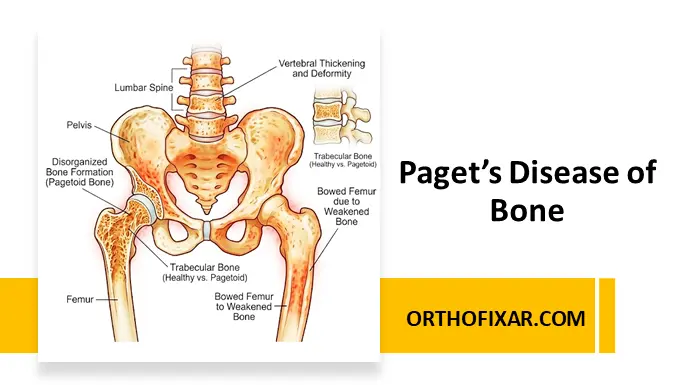
Paget’s disease of bone (PDB), also known as osteitis deformans, is a chronic metabolic bone disorder characterized by abnormal bone remodeling. In affected areas, excessive osteoclast-mediated bone resorption is followed by disorganized osteoblast-driven bone formation. The result is enlarged, structurally weak, and biomechanically abnormal bone that is more susceptible to deformity, pain, and fracture.
Paget’s disease is considered the second most common metabolic bone disease after osteoporosis. It typically affects older adults and most commonly involves the pelvis, femur, spine, skull, and tibia.
Key Takeaway: Paget’s disease causes accelerated and disorganized bone turnover, producing enlarged but weakened bone.
Epidemiology of Paget’s Disease
Paget’s disease is most commonly diagnosed after the age of 50 years and is more prevalent in men than women. The condition has historically been most common among individuals of British and Northern European ancestry.
The prevalence varies significantly by geographic region, with higher rates reported in the United Kingdom, Australia, New Zealand, and parts of North America and Europe. Recent studies suggest that both the incidence and severity of the disease may be declining in some countries.
Risk Factors
- Advanced age
- Male sex
- Family history of Paget’s disease
- Genetic mutations, particularly in the SQSTM1 gene
- Northern European ancestry
Causes and Pathophysiology
The exact cause of Paget’s disease remains incompletely understood. Current evidence suggests a combination of genetic susceptibility and environmental influences.
Genetic Factors
Several genes have been associated with Paget’s disease, including:
- SQSTM1
- TNFRSF11A
- ZNF687
- PFN1
Mutations in these genes affect osteoclast function and bone remodeling pathways.
Cellular Mechanisms
Normal bone continuously undergoes remodeling through balanced activity of:
- Osteoclasts – responsible for bone resorption
- Osteoblasts – responsible for bone formation
In Paget’s disease, osteoclasts become abnormally large and hyperactive, causing excessive bone breakdown. Osteoblasts attempt to compensate by increasing bone formation, but the new bone is laid down in a disorganized mosaic pattern.
This abnormal bone is:
- Enlarged
- Hypervascular
- Structurally weaker
- More prone to deformity and fracture
See Also: Bone Formation
Bones Commonly Affected
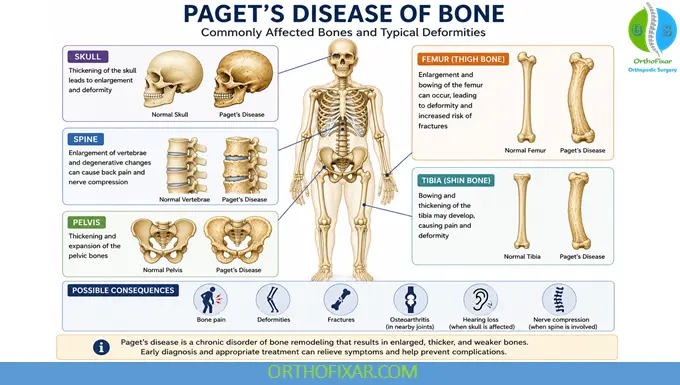
Paget’s disease can affect one bone (monostotic disease) or multiple bones (polyostotic disease).
Most Frequently Involved Sites
- Pelvis
- Femur
- Lumbar spine
- Skull
- Tibia
Less commonly affected bones include the ribs, clavicles, scapulae, and upper extremities.
Symptoms of Paget’s Disease
Many patients are asymptomatic and are diagnosed incidentally after abnormal laboratory findings or imaging studies.
When symptoms occur, they may include:
Bone Pain
Bone pain is the most common symptom and is often described as:
- Deep
- Persistent
- Worse at night
- Localized to affected bones
Bone Deformities
Abnormal bone remodeling can lead to:
- Bowing of the legs
- Enlargement of the skull
- Spinal curvature abnormalities
- Limb deformities
Joint Problems
Degenerative arthritis frequently develops in joints adjacent to affected bones due to altered biomechanics.
Neurological Symptoms
When the skull or spine is involved, patients may develop:
- Hearing loss
- Headaches
- Cranial nerve compression
- Radiculopathy
- Spinal stenosis
See Also: Osteomalacia: Causes, Symptoms, Diagnosis & Treatment
Complications of Paget’s Disease
Although many patients remain stable, untreated disease may result in serious complications.
Skeletal Complications
- Pathologic fractures
- Bone deformities
- Secondary osteoarthritis
- Chronic pain
Neurological Complications
- Hearing impairment
- Nerve compression syndromes
- Spinal cord compression
Cardiovascular Effects
Extensive disease may increase blood flow through affected bones, occasionally contributing to:
- High-output cardiac failure
- Vascular calcification
Malignant Transformation
Rarely, Paget’s disease may evolve into:
- Osteosarcoma
- Fibrosarcoma
- Other bone malignancies
The risk is estimated to be less than 1%.
Diagnosis of Paget’s Disease
Diagnosis is based on clinical findings, laboratory testing, and imaging studies.
Laboratory Findings
Serum Alkaline Phosphatase (ALP)
The hallmark laboratory abnormality is:
- Elevated serum alkaline phosphatase (ALP)
ALP reflects increased bone formation activity and often correlates with disease extent.
Other laboratory findings may include:
- Normal calcium levels
- Normal phosphate levels
- Elevated bone turnover markers
Imaging Studies
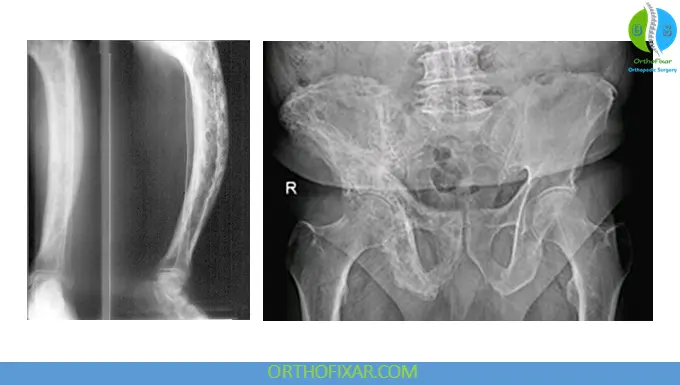
Plain Radiographs
Characteristic findings include:
- Bone enlargement
- Cortical thickening
- Mixed lytic and sclerotic lesions
- Bone deformities
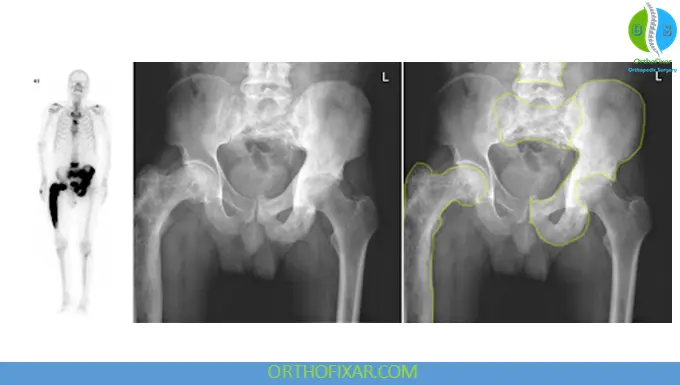
Bone Scintigraphy
Bone scans are useful for:
- Determining disease extent
- Identifying asymptomatic lesions
- Monitoring treatment response
CT and MRI
Advanced imaging may be necessary when:
- Neurological complications are suspected
- Malignancy needs exclusion
- Surgical planning is required
Differential Diagnosis
Conditions that may resemble Paget’s disease include:
- Osteoporosis
- Osteomalacia
- Fibrous dysplasia
- Bone metastases
- Hyperparathyroidism
- Chronic osteomyelitis
Accurate diagnosis relies on combining clinical, biochemical, and radiological findings.
See Also: Osteogenesis Imperfecta: Types, Symptoms, Tests & Treatment
Treatment of Paget’s Disease of Bone
Not all patients require treatment. Therapy is generally recommended for:
- Symptomatic disease
- Active disease in high-risk anatomical locations
- Progressive bone deformity
- Elevated bone turnover markers
- Preoperative management before orthopedic surgery
Bisphosphonates
Bisphosphonates are the first-line treatment.
Zoledronic Acid
Intravenous zoledronic acid is considered the most effective therapy because it:
- Produces rapid remission
- Suppresses bone turnover
- Provides long-term disease control
Other Bisphosphonates
- Alendronate
- Risedronate
- Pamidronate
Pain Management
Supportive treatment may include:
- Acetaminophen
- Nonsteroidal anti-inflammatory drugs (NSAIDs)
- Physical therapy
Surgical Treatment
Surgery may be required for:
- Fracture repair
- Severe deformities
- Joint replacement
- Spinal decompression
Patients undergoing surgery should ideally receive anti-pagetic treatment beforehand because affected bone is highly vascular.
Monitoring and Follow-Up
Long-term follow-up is important.
Recommended Monitoring
- Serum alkaline phosphatase every 3–12 months
- Clinical symptom assessment
- Repeat imaging when clinically indicated
Successful treatment is generally associated with normalization or substantial reduction of ALP levels.
Prognosis
The prognosis for most patients with Paget’s disease is favorable when appropriately managed.
Modern bisphosphonate therapy can:
- Reduce symptoms
- Improve quality of life
- Prevent complications
- Achieve prolonged biochemical remission
Many patients remain stable for years following treatment, particularly after intravenous zoledronic acid therapy.
Frequently Asked Questions
Is Paget’s disease of bone cancer?
No. Paget’s disease is a benign metabolic bone disorder. However, very rarely, it may transform into a malignant bone tumor such as osteosarcoma.
Is Paget’s disease hereditary?
Genetics play an important role. Mutations in genes such as SQSTM1 are associated with familial forms of the disease.
Can Paget’s disease be cured?
There is currently no cure, but effective treatments can control disease activity and provide long-term remission.
What is the most common laboratory finding?
Elevated serum alkaline phosphatase (ALP) is the most common biochemical abnormality.
Which bones are most commonly affected?
The pelvis, femur, spine, skull, and tibia are the most frequently involved bones.
Key Points
- Paget’s disease of bone is a chronic disorder characterized by excessive and disorganized bone remodeling.
- It primarily affects adults older than 50 years.
- Common symptoms include bone pain, deformity, fractures, and hearing loss.
- Elevated alkaline phosphatase and characteristic radiographic findings aid diagnosis.
- Bisphosphonates, especially zoledronic acid, are the cornerstone of treatment.
- Early diagnosis and appropriate management can prevent long-term complications.
References & More
- Shaker JL. Paget’s Disease of Bone: A Review of Epidemiology, Pathophysiology and Management. Ther Adv Musculoskelet Dis. 2009 Apr;1(2):107-25. doi: 10.1177/1759720X09351779. PMID: 22870432; PMCID: PMC3383486. Pubmed
- Nebot Valenzuela E, Pietschmann P. Epidemiology and pathology of Paget’s disease of bone – a review. Wien Med Wochenschr. 2017 Feb;167(1-2):2-8. doi: 10.1007/s10354-016-0496-4. Epub 2016 Sep 6. PMID: 27600564; PMCID: PMC5266784. Pubmed
- Cundy T, Bolland M. Paget disease of bone. Trends Endocrinol Metab. 2008 Sep;19(7):246-53. doi: 10.1016/j.tem.2008.06.001. Epub 2008 Aug 6. PMID: 18691901. Pubmed