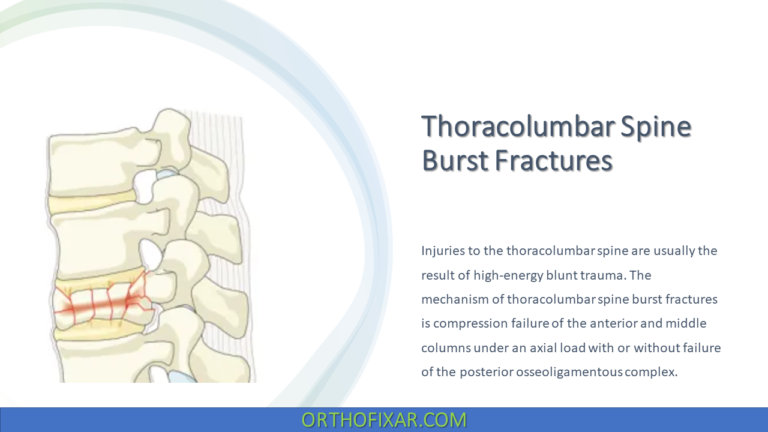
Thoracolumbar Spine Burst Fractures
The mechanism of thoracolumbar spine burst fractures is compression failure of the anterior and middle columns under an…
Read Full Entry →This section contains all Spine region disease and injuries, in addition to treatment methods used in spine surgery.
The mechanism of thoracolumbar spine burst fractures is compression failure of the anterior and middle columns under an…
Read Full Entry →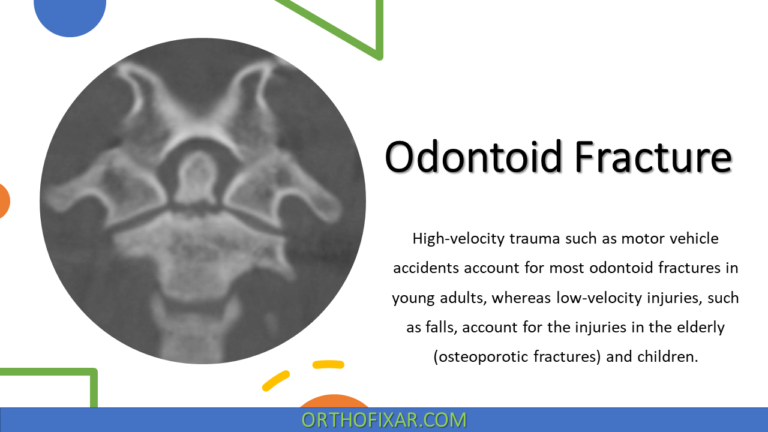
Odontoid fractures constitute 8–18% of all cervical fractures, with neurological deficits occurring in 10–20% of cases.
Read Full Entry →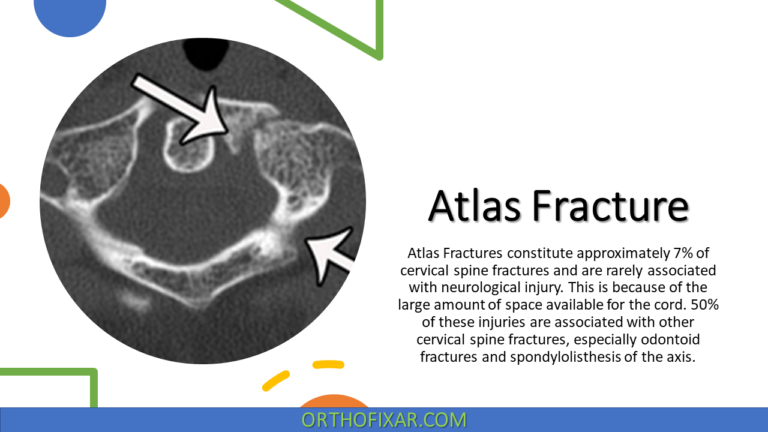
Atlas Fracture constitute approximately 7% of cervical spine fractures and are rarely associated with neurological injury.
Read Full Entry →
Occipitocervical Dissociation, also known as craniovertebral dissociations, are high-energy injuries resulting from a combination of hyperextension, distraction and…
Read Full Entry →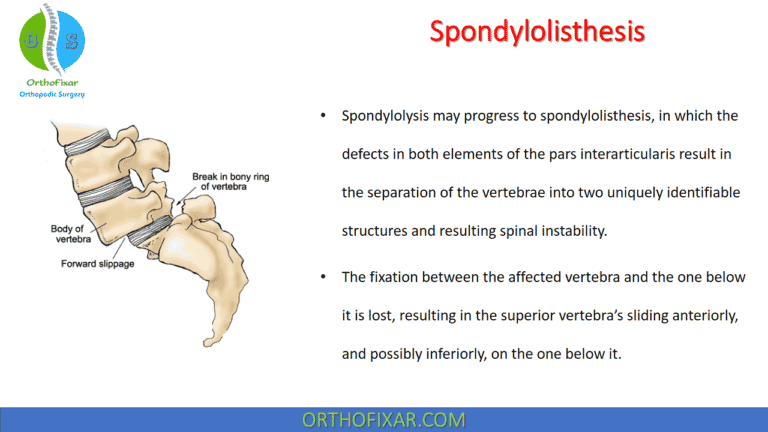
Spondylolysis may progress to spondylolisthesis, in which the defects in both elements of the pars interarticularis result in…
Read Full Entry →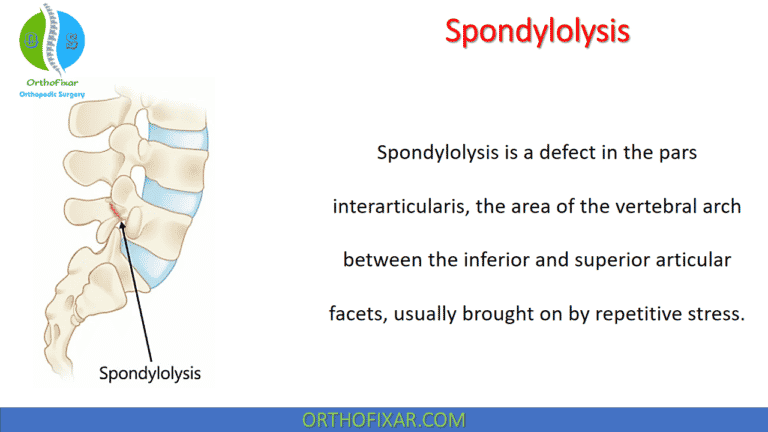
Spinal Spondylolysis is a defect in the pars interarticularis, the area of the vertebral arch between the inferior…
Read Full Entry →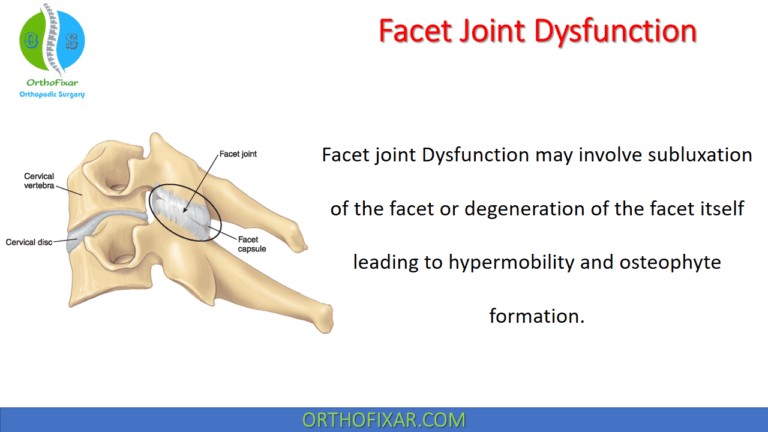
Facet joint Dysfunction may involve subluxation of the facet or degeneration of the facet itself leading to hypermobility…
Read Full Entry →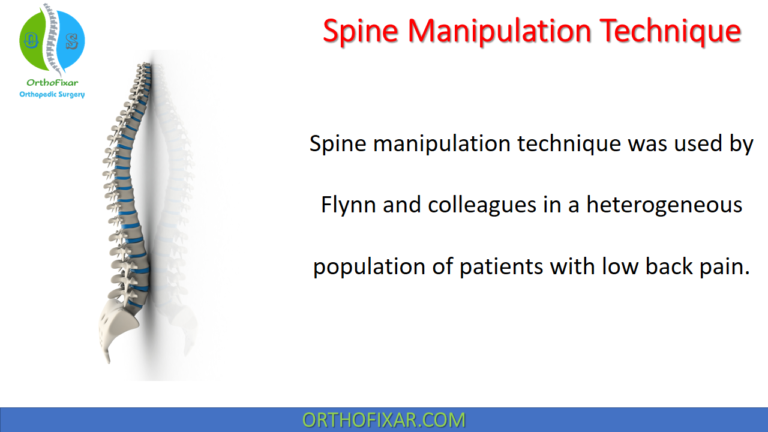
Spine manipulation technique was used by Flynn and colleagues in a heterogeneous population of patients with low back…
Read Full Entry →