Magnesium is an essential mineral and the second most abundant intracellular cation after potassium. Although often overshadowed by calcium and potassium, magnesium plays a critical role in numerous physiological processes, including energy metabolism, neuromuscular function, cardiovascular regulation, and mineral homeostasis.
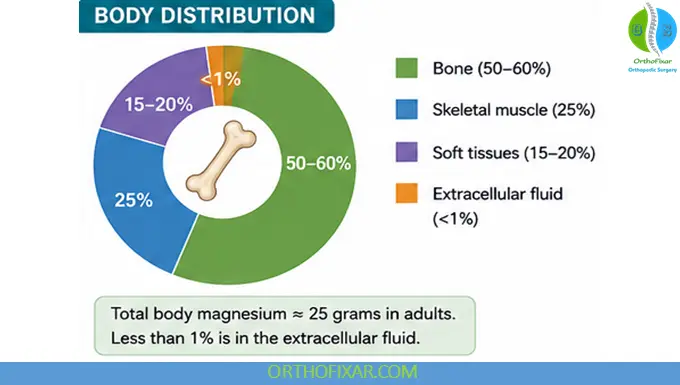
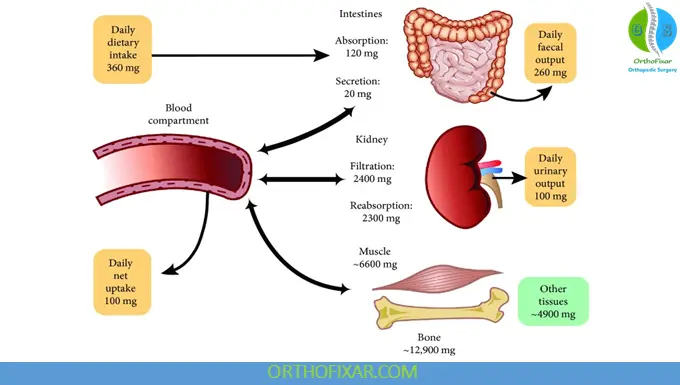
Approximately 25 grams of magnesium are present in the adult human body. Around 50–60% is stored in bone, while the remainder is distributed within soft tissues and intracellular compartments. Less than 1% is found in the extracellular fluid, making serum magnesium an imperfect indicator of total body magnesium stores.
Among its most important physiological functions is its role in calcium homeostasis and parathyroid hormone (PTH) regulation. Magnesium deficiency can lead to hypocalcemia that is resistant to correction until magnesium levels are restored.
Magnesium Distribution and Homeostasis
Body Distribution
Magnesium is distributed throughout the body in the following manner:
- Bone: 50–60%
- Skeletal muscle: approximately 25%
- Soft tissues: approximately 15–20%
- Extracellular fluid: less than 1%
The mineral exists primarily as an intracellular cation and serves as a cofactor for more than 300 enzymatic reactions.
Regulation of Magnesium Balance
Magnesium homeostasis is maintained through coordinated actions of:
Gastrointestinal Tract
The small intestine absorbs dietary magnesium, primarily in the jejunum and ileum.
Bone
Bone serves as a major reservoir for magnesium storage and release.
Kidneys
The kidneys regulate magnesium excretion and reabsorption, making renal function a critical determinant of magnesium balance.
Physiological Functions of Magnesium
Enzymatic Activity
Magnesium acts as a cofactor in hundreds of biochemical reactions, including:
- ATP synthesis and utilization
- Protein synthesis
- DNA and RNA synthesis
- Cellular energy metabolism
- Oxidative phosphorylation
Neuromuscular Function
It contributes to:
- Nerve impulse transmission
- Neuromuscular stability
- Muscle contraction and relaxation
- Neurotransmitter release
Deficiency may result in neuromuscular hyperexcitability, tremors, muscle cramps, tetany, and seizures.
Cardiovascular Function
It plays an important role in:
- Cardiac conduction
- Maintenance of normal heart rhythm
- Regulation of vascular tone
- Sodium-potassium ATPase activity
Hypomagnesemia is associated with cardiac arrhythmias, including torsades de pointes and ventricular tachycardia.
Bone Health
It contributes to:
- Bone mineralization
- Osteoblast and osteoclast regulation
- Parathyroid hormone synthesis and secretion
- Vitamin D metabolism
Magnesium and Mineral Homeostasis
Relationship Between Magnesium and Calcium
Magnesium plays a small but crucial role in mineral homeostasis. The interaction between magnesium, calcium, and parathyroid hormone is essential for maintaining normal extracellular calcium concentrations.
Calcium homeostasis depends on:
- Parathyroid hormone (PTH)
- Vitamin D
- Bone remodeling
- Renal calcium handling
Magnesium influences each of these processes directly or indirectly.
Magnesium and Parathyroid Hormone
Normal magnesium levels are required for:
- Adequate secretion of parathyroid hormone
- Proper responsiveness of target tissues to PTH
- Maintenance of normal calcium metabolism
When magnesium levels become significantly reduced, PTH secretion decreases and peripheral resistance to PTH may develop.
As a result, serum calcium levels decline despite calcium supplementation.
Clinical Importance
A key clinical principle is:
Hypocalcemia Associated With Hypomagnesemia Cannot Be Fully Corrected Until Magnesium Deficiency Is Treated
This phenomenon occurs because magnesium deficiency impairs both:
- PTH release from the parathyroid glands
- PTH action in peripheral tissues
Consequently, calcium replacement alone may fail to normalize serum calcium concentrations.
Hypomagnesemia
Definition
Hypomagnesemia is generally defined as a serum magnesium concentration below the normal laboratory reference range.
Common Causes
Gastrointestinal Causes
- Chronic diarrhea
- Malabsorption syndromes
- Inflammatory bowel disease
- Short bowel syndrome
Renal Causes
- Loop diuretics
- Thiazide diuretics
- Renal tubular disorders
Medication-Induced Causes
- Proton pump inhibitors (PPIs)
- Certain chemotherapeutic agents
- Aminoglycoside antibiotics
Nutritional Causes
- Malnutrition
- Chronic alcohol use disorder
- Inadequate dietary intake
Clinical Manifestations of Hypomagnesemia
Neuromuscular Symptoms
Common manifestations include:
- Muscle weakness
- Tremors
- Muscle cramps
- Tetany
- Positive Chvostek sign
- Positive Trousseau sign
- Seizures
Cardiovascular Symptoms
Patients may develop:
- Palpitations
- QT interval prolongation
- Ventricular arrhythmias
- Torsades de pointes
Metabolic Consequences
Hypomagnesemia frequently coexists with:
- Hypocalcemia
- Hypokalemia
Correction of calcium and potassium abnormalities may be difficult unless magnesium deficiency is addressed first.
Diagnosis of Magnesium Deficiency
Laboratory Assessment
Common investigations include:
- Serum magnesium
- Serum calcium
- Serum potassium
- Renal function tests
- Parathyroid hormone levels when indicated
Diagnostic Challenges
Because most magnesium is stored intracellularly or in bone, serum magnesium concentrations may not accurately reflect total body magnesium stores.
Clinical assessment remains important when magnesium deficiency is suspected.
Management of Hypomagnesemia
Oral Magnesium Replacement
Mild to moderate deficiency is typically treated with oral magnesium preparations such as:
- Magnesium oxide
- Magnesium citrate
- Magnesium gluconate
Intravenous Magnesium
Severe symptomatic hypomagnesemia may require intravenous magnesium sulfate, particularly when:
- Cardiac arrhythmias are present
- Seizures occur
- Oral therapy is not feasible
Correction of Associated Electrolyte Disorders
Treatment should also address:
- Hypocalcemia
- Hypokalemia
- Underlying causes of magnesium loss
Dietary Sources of Magnesium
Magnesium-Rich Foods
Important dietary sources include:
- Green leafy vegetables
- Legumes
- Whole grains
- Nuts
- Seeds
- Fish
A balanced diet generally provides adequate magnesium for healthy individuals.
Conclusion
Magnesium is a vital mineral that plays an indispensable role in mineral homeostasis, calcium regulation, neuromuscular function, and cardiovascular health. Although often overlooked in clinical practice, magnesium deficiency can produce significant metabolic and physiological disturbances.
One of the most important clinical concepts is the relationship between magnesium and parathyroid hormone. Magnesium is necessary for both the secretion and peripheral action of PTH. Therefore, hypocalcemia associated with hypomagnesemia frequently remains resistant to calcium replacement until magnesium stores are restored.
Recognition and correction of magnesium deficiency are essential components of effective patient management and electrolyte balance.
References & More
- Allen MJ, Sharma S. Magnesium. [Updated 2023 Feb 20]. In: StatPearls [Internet]. Treasure Island (FL): StatPearls Publishing; 2026 Jan-. Available from: https://www.ncbi.nlm.nih.gov/books/NBK519036/
- Al Alawi AM, Majoni SW, Falhammar H. Magnesium and Human Health: Perspectives and Research Directions. Int J Endocrinol. 2018 Apr 16;2018:9041694. doi: 10.1155/2018/9041694. PMID: 29849626; PMCID: PMC5926493. Link
- Blom, A., Warwick, D., & Whitehouse, M. R. (2018). Apley & Solomon’s system of orthopaedics and trauma (10th ed.). CRC Press