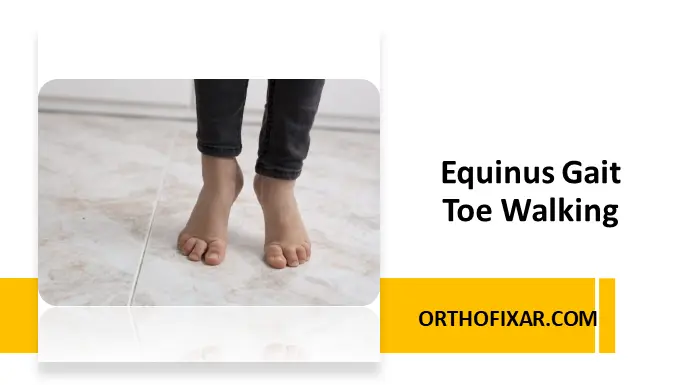
Equinus gait, commonly referred to as toe walking or tiptoe gait, is a pathological gait pattern most frequently observed in pediatric patients. It is characterized by an absence of normal heel strike during initial contact, with the forefoot contacting the ground first. This gait abnormality reflects limited ankle dorsiflexion and premature plantar flexion during the gait cycle.
This gait pattern is classically associated with talipes equinovarus (clubfoot) but may also be seen in neuromuscular, orthopedic, or idiopathic conditions.
Definition of Equinus Gait
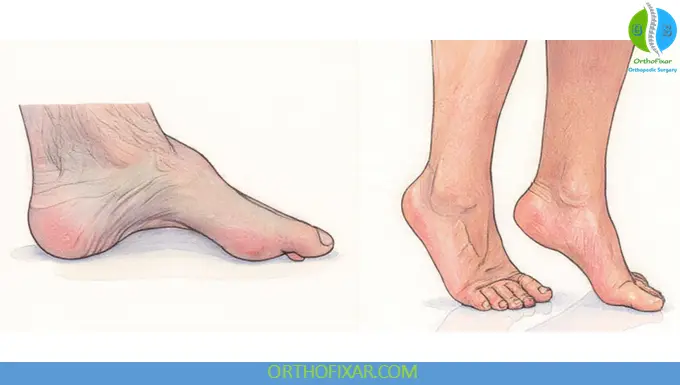
Equinus gait (toe walking) is defined as a gait pattern in which the ankle remains in plantar flexion throughout stance, preventing heel contact with the ground. As a result, the patient walks primarily on the forefoot or toes, producing the characteristic tiptoe gait appearance.
See Also: Ataxic Gait Definition
Gait Characteristics and Biomechanics
During normal gait, heel strike initiates the stance phase. In equinus gait, this sequence is disrupted due to fixed or dynamic plantar flexion deformity.
Key biomechanical features include:
- Forefoot strike at initial contact instead of heel strike
- Premature plantar flexion during the loading response phase, occurring before midstance
- Reduced ankle dorsiflexion throughout stance
- Shortened weight-bearing phase on the affected limb
- Presence of a limp, particularly in unilateral involvement
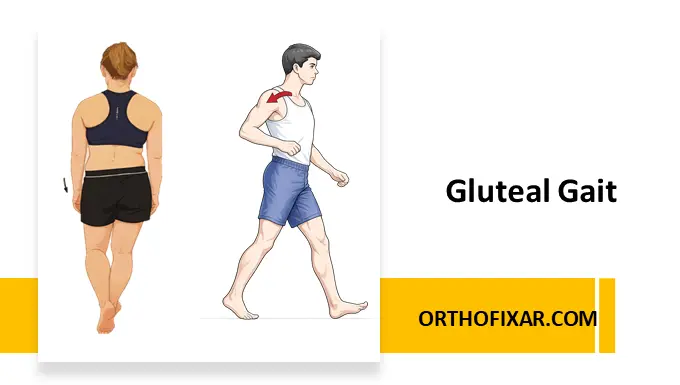
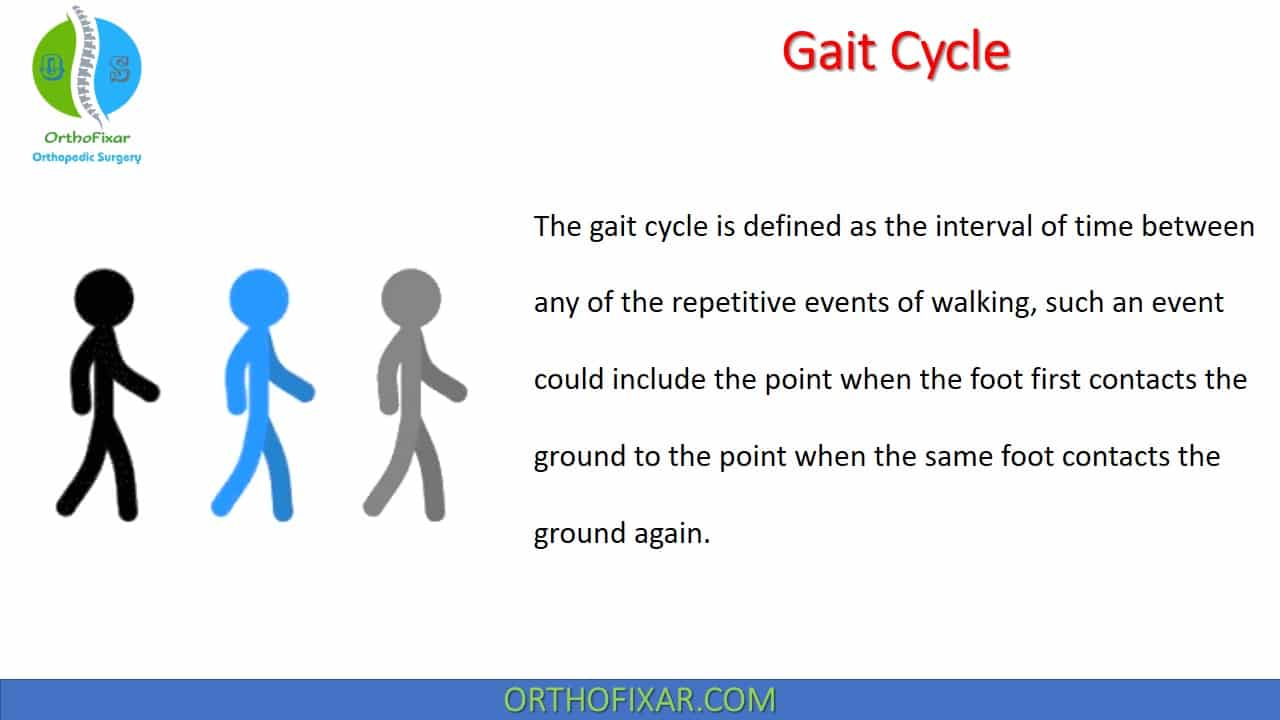
See Also: Gait Cycle
Weight-Bearing Pattern
In equinus gait, weight bearing is abnormal and depends on the severity and orientation of the deformity:
- Primary load is transmitted through the forefoot
- Weight is often concentrated along the dorsolateral or lateral border of the foot
- Medial foot loading is reduced due to associated rotational deformities
This abnormal distribution increases stress on the forefoot and lateral column of the foot, potentially leading to callus formation and pain.
Associated Rotational Compensations
To partially compensate for the altered distal alignment, proximal segments adjust during ambulation:
- Lateral rotation of the pelvis and femur
- Compensation for medial rotation of the tibia and foot
- Altered knee and hip mechanics to maintain forward progression
These compensations may reduce tripping risk but often increase energy expenditure and contribute to secondary musculoskeletal strain.
Common Causes of Equinus (Toe Walking) Gait
Equinus gait is most commonly observed in childhood and may be associated with:
- Talipes equinovarus (clubfoot)
- Tightness or contracture of the gastrocnemius–soleus complex
- Neurological conditions such as cerebral palsy
- Post-immobilization or post-surgical ankle stiffness
- Idiopathic toe walking
Accurate diagnosis requires differentiation between fixed and dynamic equinus deformities.
Differential Causes of Equinus Gait
| Etiology | Clinical Features | Key Considerations |
|---|---|---|
| Idiopathic Tight Achilles Tendon | Persistent toe walking with normal neurological examination | Common in children; often bilateral; ankle dorsiflexion limited |
| Talipes Equinovarus (Clubfoot) | Forefoot strike, lateral foot weight bearing, rotational deformities | May be residual or untreated; often present from infancy |
| Cerebral Palsy | Spastic equinus, increased muscle tone, asymmetric or bilateral involvement | Frequently associated with spastic diplegia or hemiplegia |
| Gastrocnemius–Soleus Contracture | Fixed plantar flexion deformity; limited passive dorsiflexion | May develop after prolonged immobilization or neuromuscular disease |
| Post-Immobilization Ankle Stiffness | Toe walking following casting or surgery | Typically improves with rehabilitation |
| Idiopathic Toe Walking | Normal strength and reflexes; absence of structural deformity | Diagnosis of exclusion; requires long-term monitoring |
Clinical Assessment
Clinical evaluation of equinus gait should include:
- Observation of barefoot walking
- Assessment of ankle dorsiflexion range of motion
- Evaluation of muscle tone and strength
- Identification of unilateral versus bilateral involvement
- Assessment for associated foot deformities
Instrumented gait analysis may be used in complex or surgical cases.
See Also: Silfverskiold Test
Management Considerations
Management depends on the underlying cause and severity and may include:
- Stretching and physical therapy
- Ankle–foot orthoses (AFOs)
- Serial casting
- Botulinum toxin injections (in selected cases)
- Surgical lengthening procedures for fixed deformities
Early intervention is critical to prevent secondary compensatory problems.
References & More
- Orthopedic Physical Assessment by David J. Magee, 7th Edition.
- Sutherland DH, Valencia F. Pediatric gait: normal and abnormal development. In: Drennan JC, ed. The Child’s Foot and Ankle. New York: Raven Press; 1992.
- Abel MH, Damiano DL, Pannunzio M, et al. Muscletendon surgery in diplegic cerebral palsy: functional and mechanical changes. J Pediatr Orthop. 1999;19:366–375. Pubmed