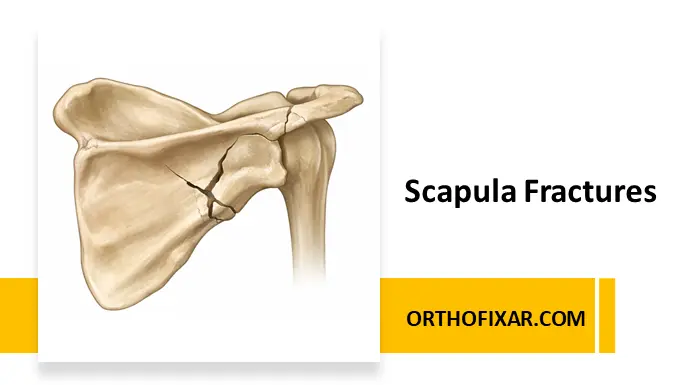
Scapula fractures are uncommon but clinically significant injuries, typically associated with high-energy trauma and a high incidence of concomitant injuries.
Epidemiology
Scapula fractures are relatively rare:
- Account for 3%–5% of all shoulder fractures
- Represent 0.4%–1% of all fractures
- Most commonly affect individuals aged 35–45 years
Their rarity is largely due to the scapula’s protected anatomical position.
Anatomy
The scapula is a flat, triangular bone that connects the upper limb to the axial skeleton. Key features include:
- Mobility over the thoracic wall, which dissipates force
- Surrounding muscle envelope, providing additional protection
- Important articulations: glenohumeral joint and acromioclavicular joint
See Also: Scapula Anatomy
Mechanism of Injury
Scapula fractures usually result from high-energy trauma:
Common causes:
- Motor vehicle accidents (~50%)
- Motorcycle accidents (11%–25%)
Injury patterns:
- Indirect trauma: axial loading through an outstretched arm → glenoid or neck fractures
- Direct trauma: blow to the back or shoulder → scapular body fractures
- Shoulder dislocation: may cause glenoid fractures
- Avulsion injuries: caused by ligament or muscle pull
Associated Injuries
Scapula fractures are highly associated with other serious injuries (35%–98%):
- Thoracic injuries:
- Rib, clavicle, and sternum fractures
- Pneumothorax (11%–55%)
- Pulmonary contusion (11%–54%)
- Neurovascular injuries:
- Brachial plexus injuries
- Vascular damage
- Spinal injuries:
- Cervical (20%)
- Thoracic (76%)
- Lumbar (4%)
⚠️ The presence of a scapula fracture should always trigger a full trauma evaluation.
Clinical Evaluation
Initial assessment:
Follow ATLS principles:
- Airway
- Breathing
- Circulation
- Disability
- Exposure
Typical presentation:
- Arm supported by the opposite hand
- Limited shoulder motion, especially abduction
- Significant pain
Key clinical signs:
- Comolli sign: triangular swelling over the posterior scapula → suggests hematoma
- Rule out compartment syndrome (rare but serious)
Essential examination:
- Thorough neurovascular assessment
- Evaluation for associated injuries
Radiographic Evaluation
Initial imaging:
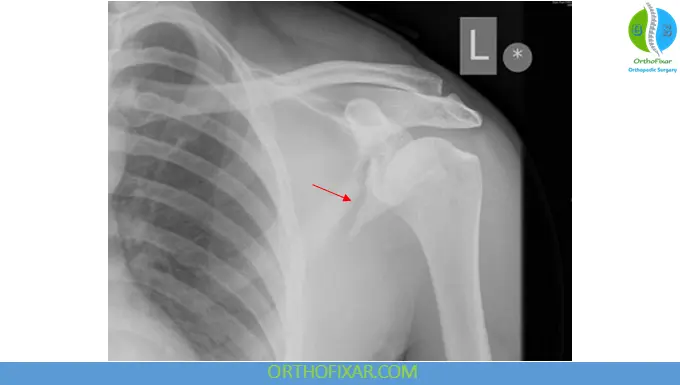
- Often first detected on chest X-ray
- Standard trauma shoulder series:
- Anteroposterior (AP) view
- Axillary view
- Scapular-Y view
Additional imaging:
- CT scan: essential for intra-articular glenoid fractures
- Stryker notch view: useful for coracoid fractures
Important differentials:
- Os acromiale (normal variant)
- Glenoid hypoplasia
Scapula Fractures Classification
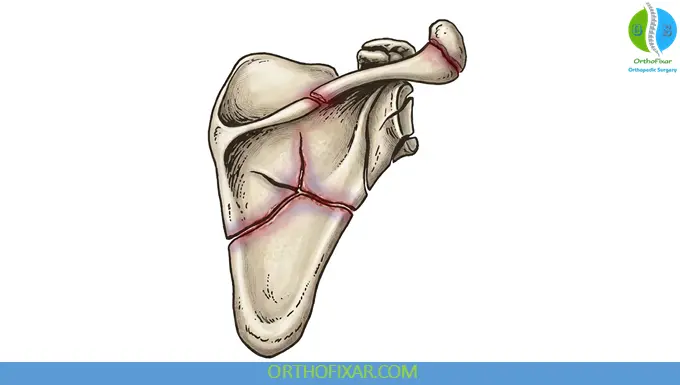
1. Anatomic Classification (Zdravkovic & Damholt Classification)
- Type I: Scapular body
- Type II: Apophyseal (acromion, coracoid)
- Type III: Fractures of the superolateral angle, including the scapular neck and glenoid
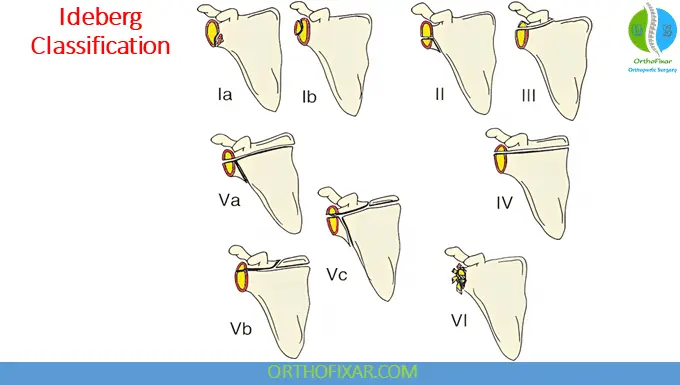
2. Ideberg Classification (Glenoid Fractures)
| Type Ia | Anterior rim fracture |
| Type Ib | Posterior rim fracture |
| Type II | Fracture line through glenoid fossa exiting scapula laterally |
| Type III | Fracture line through glenoid fossa exiting scapula superiorly |
| Type IV | Fracture line through glenoid fossa exiting scapula medially |
| Type Va | Combination of types II and IV |
| Type Vb | Combination of types III and IV |
| Type Vc | Combination of types II, III, and IV |
| Type VI | Severe comminution |
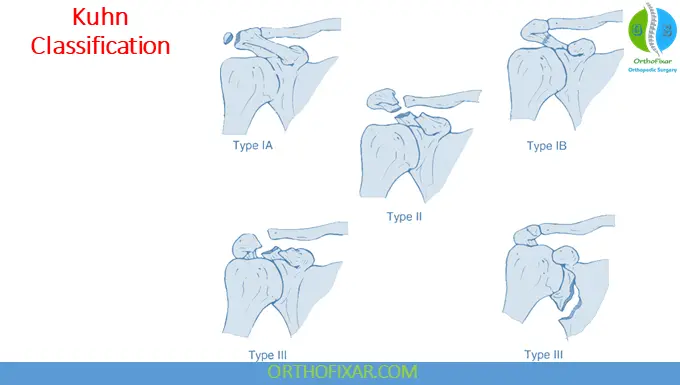
3. Kuhn Classification for Acromial Fracture
| Type I | Nondisplaced or minimally displaced. – IA: avulsion fractures – IB: true fractures |
| Type II | Displaced but does not compromise the subacromial space |
| Type III | Displaced and compromises the subacromial space: – Type IIIa: Inferior displacement of the acromion. – Type IIIb: With ipsilateral superiorly displaced glenoid neck fracture. |
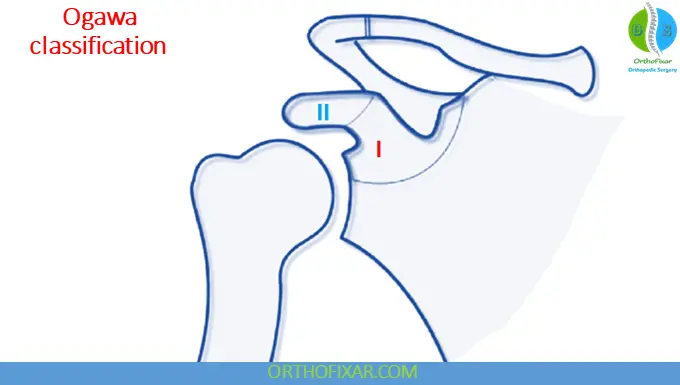
4. Ogawa classification for Coracoid Fracture
- Type I: Fracture occurs proximal to coracoclavicular ligaments
- Type II: Fracture occurs towards the tip of the coracoids
Scapula Fractures Treatment
Nonoperative Management (Most Cases)
- Sling immobilization
- Early range-of-motion exercises
- Indicated for most extra-articular fractures
Operative Management
Indications include:
- Intra-articular glenoid fractures (>25% involvement)
- Articular step-off >5 mm
- Scapular neck:
- 40° angulation
- 1 cm medial displacement
- Displaced acromion causing impingement
- Coracoid fractures with AC joint instability
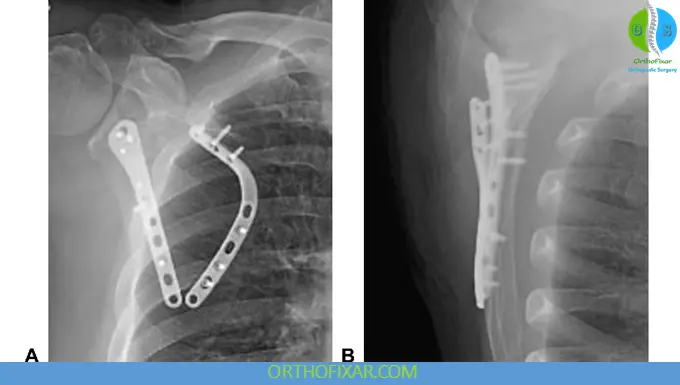
- “Floating shoulder” injuries
Floating Shoulder
A double disruption of the Superior Shoulder Suspensory Complex (SSSC):
- Includes:
- Glenoid
- Coracoid
- Clavicle
- AC joint
Clinical relevance:
- May cause instability and functional impairment
- Glenopolar angle <30° → poorer outcomes
Management remains controversial, but both operative and nonoperative approaches can yield good results.
Surgical Considerations
Positioning:
- Lateral (common for body/neck fractures)
- Supine or beach chair (depending on approach)
Surgical approaches:
- Anterior (deltopectoral): glenoid/coracoid
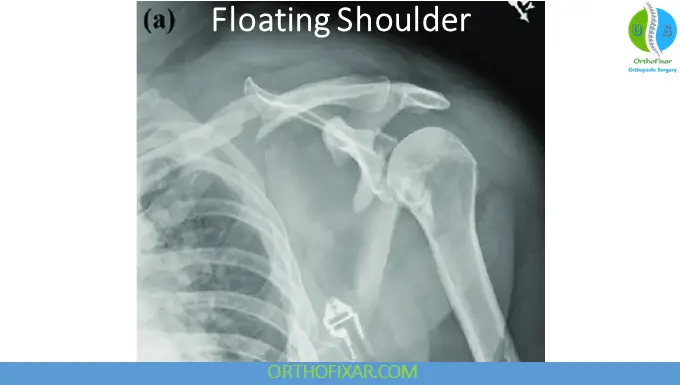
- Posterior (Judet approach): body/neck
- Superior: acromion
Complications
- Associated injuries (major source of morbidity/mortality)
- Malunion:
- Usually well tolerated
- May cause scapulothoracic crepitus
- Nonunion:
- Rare
- May require surgical fixation
- Suprascapular nerve injury:
- Especially in fractures involving the suprascapular notch
Key Takeaways
- Scapula fractures are rare but serious markers of high-energy trauma
- Always evaluate for life-threatening associated injuries
- Most fractures are treated nonoperatively
- Surgical intervention depends on displacement, instability, and joint involvement
References & More
- Libby C, Frane N, Bentley TP. Scapula Fracture. [Updated 2023 Jul 17]. In: StatPearls [Internet]. Treasure Island (FL): StatPearls Publishing; 2026 Jan-. Available from: Pubmed
- Mavrotas J, Fischer J. Scapula fractures: functional anatomy, clinical assessment and management. Br J Hosp Med (Lond). 2024 Mar 2;85(3):1-8. doi: 10.12968/hmed.2023.0351. Epub 2024 Mar 27. PMID: 38557096. Pubmed
- Egol KA. Handbook of fractures. 6th ed. Philadelphia: Lippincott Williams & Wilkins; 2019.