Merke Test
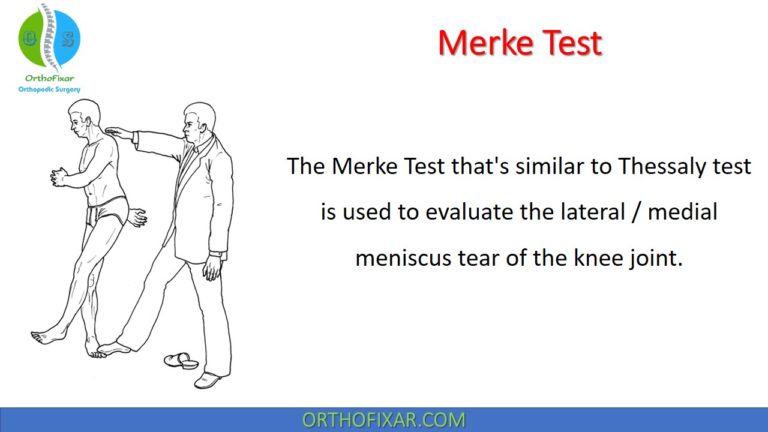
The Merke Test that's similar to Thessaly test is used to evaluate the lateral / medial meniscus tear…
Read Full Entry →Knee Examination section contains all special tests to examine and evaluate knee joint. ACL, meniscus, MCL, LCL and Patella tests.
The Merke Test that's similar to Thessaly test is used to evaluate the lateral / medial meniscus tear…
Read Full Entry →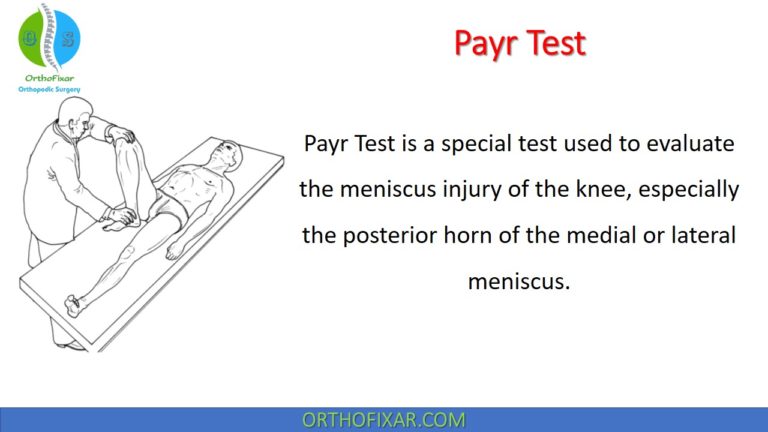
Payr Test is a special test used to evaluate the meniscus injury of the knee, especially the posterior…
Read Full Entry →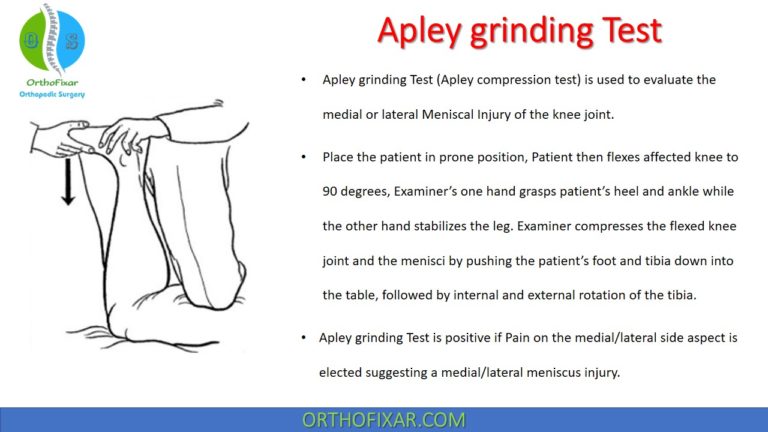
Apley grinding Test (Apley compression test) is used to evaluate the medial or lateral Meniscal Injury of the knee…
Read Full Entry →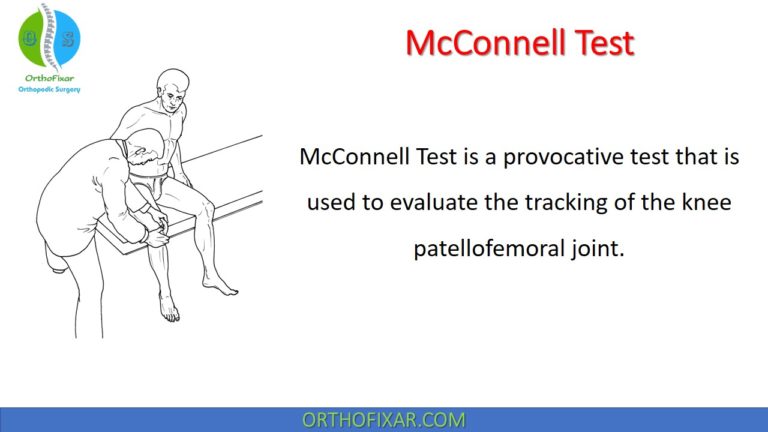
McConnell Test is a provocative test that is used to evaluate the tracking of the knee patellofemoral joint.
Read Full Entry →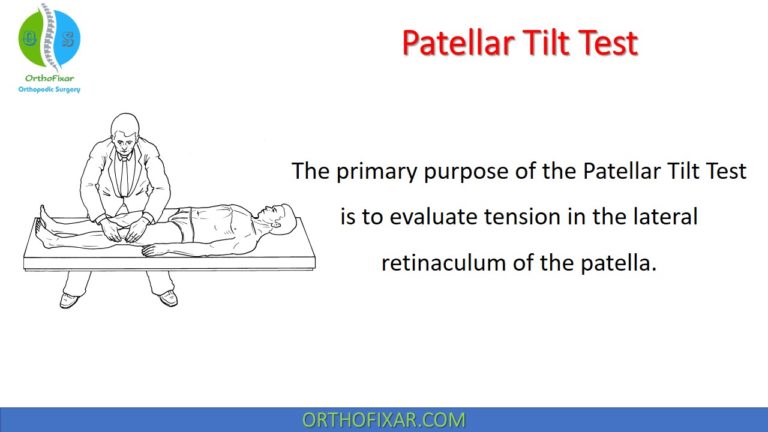
The primary purpose of the Patellar Tilt Test is to evaluate tension in the lateral retinaculum of the…
Read Full Entry →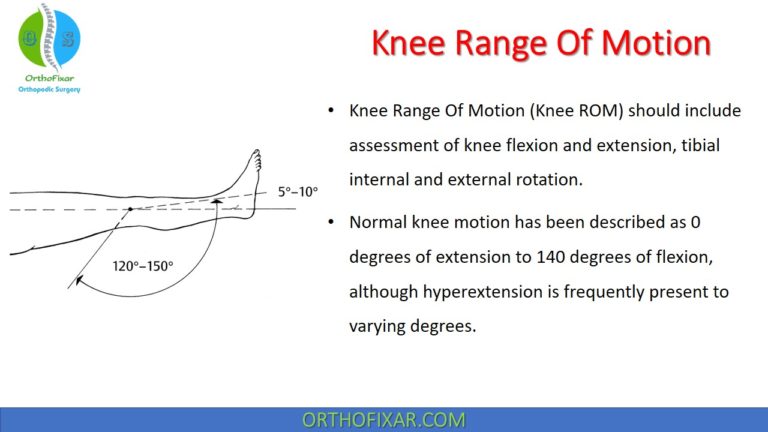
Knee Range Of Motion (Knee ROM) should include assessment of knee flexion and extension, tibial internal and external…
Read Full Entry →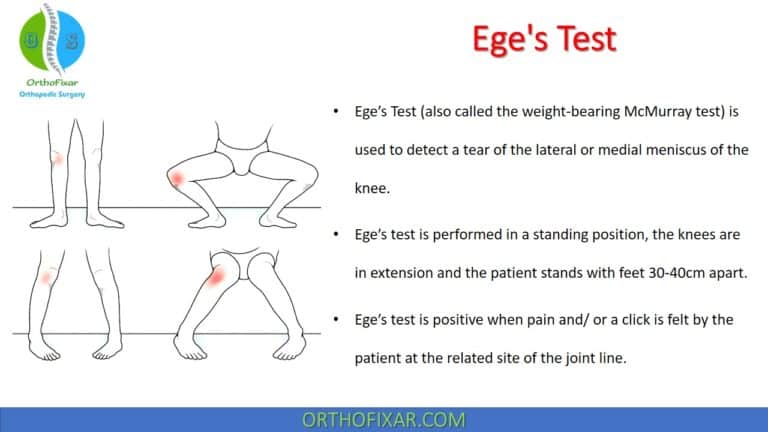
Ege’s Test (also called the weight-bearing McMurray test) is used to detect a tear of the lateral or medial meniscus of…
Read Full Entry →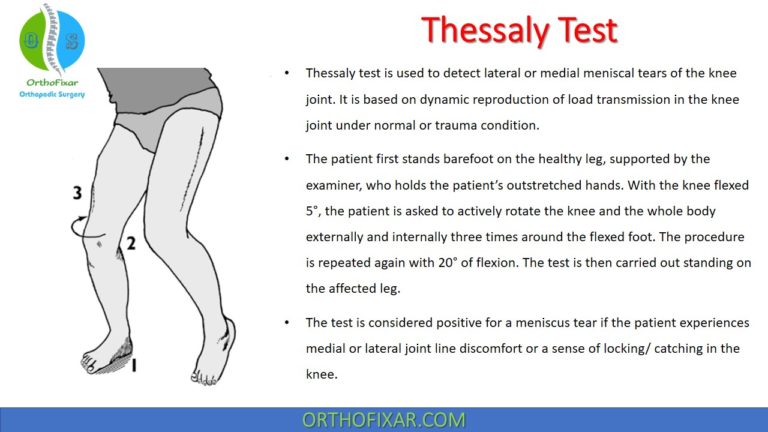
The patient first stands barefoot on the healthy leg, supported by the examiner, who holds the patient’s outstretched…
Read Full Entry →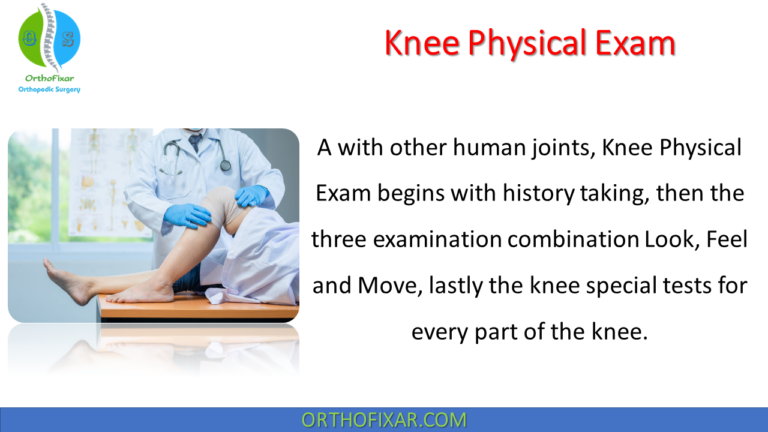
Knee Physical Exam begins with history taking, then the three examination combination Look, Feel and Move, lastly the…
Read Full Entry →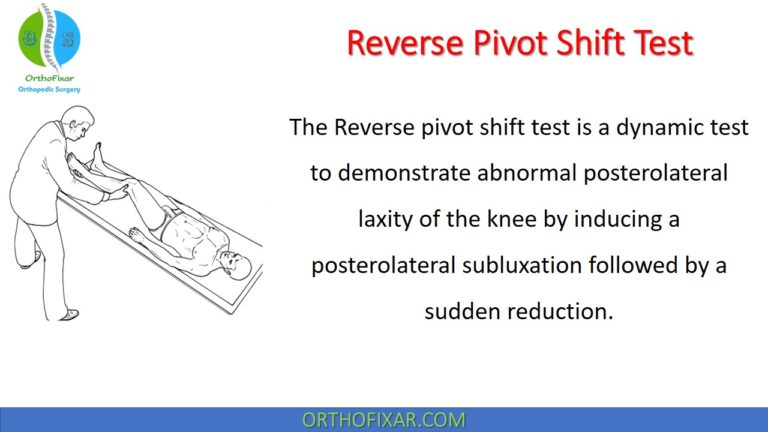
The Reverse pivot shift test is a dynamic test used to demonstrate abnormal posterolateral laxity of the knee…
Read Full Entry →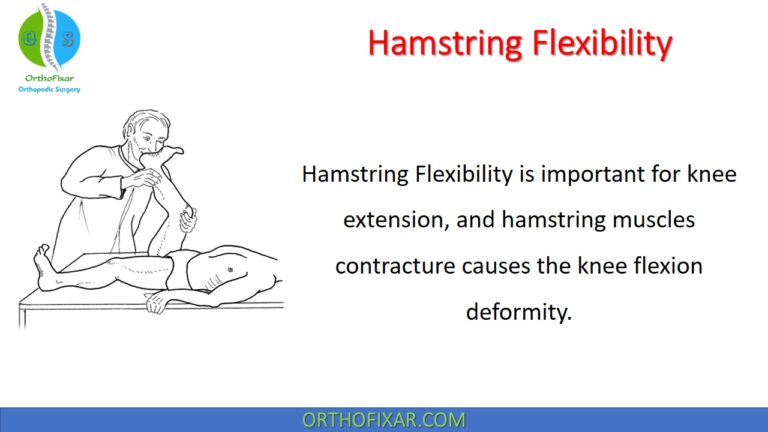
Hamstring Flexibility is important for knee extension, and hamstring muscles contracture causes the knee flexion deformity.
Read Full Entry →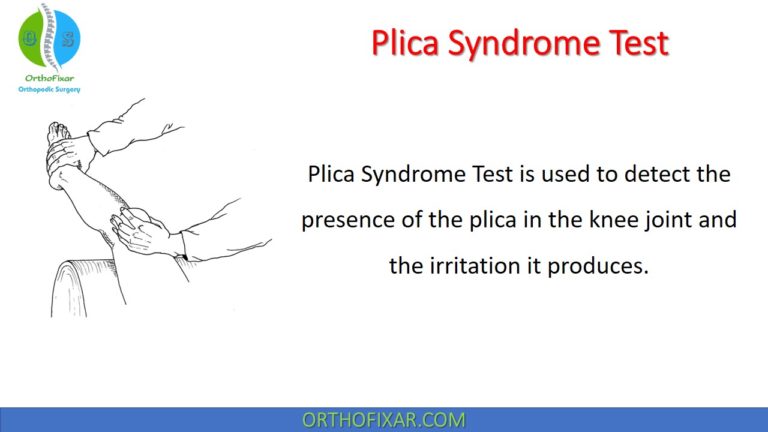
Plica Syndrome Test is used to detect the presence of the plica in the knee joint and the…
Read Full Entry →