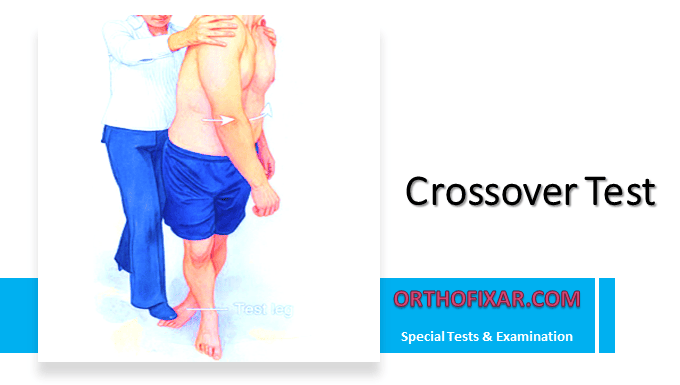
Crossover Test of the Knee
The Crossover Test is a functional clinical examination used to assess anterolateral rotatory instability of the knee, most…
Read Full Entry →Knee Examination section contains all special tests to examine and evaluate knee joint. ACL, meniscus, MCL, LCL and Patella tests.
The Crossover Test is a functional clinical examination used to assess anterolateral rotatory instability of the knee, most…
Read Full Entry →
The Swain Test is a clinical maneuver used to assess the integrity of the medial collateral ligament (MCL)…
Read Full Entry →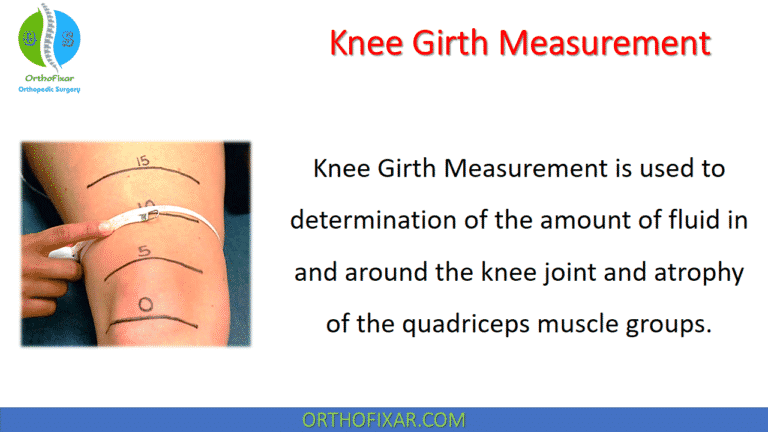
Knee Girth Measurement is used to determination of the amount of fluid in and around the knee joint…
Read Full Entry →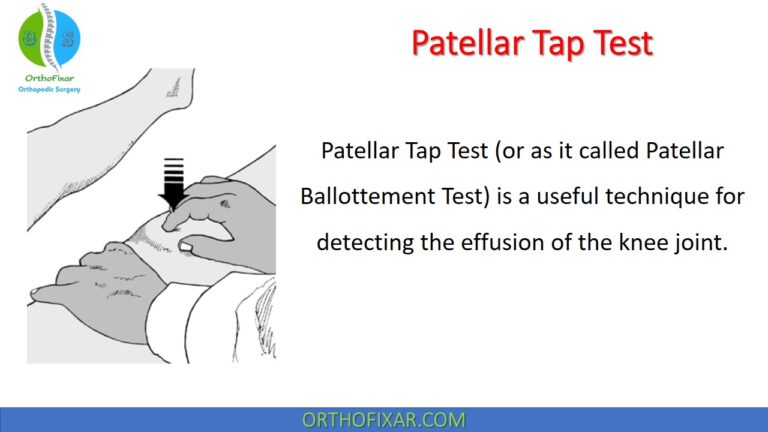
Patellar Tap Test (or as it called Patellar Ballottement Test) is a useful technique for detecting the effusion…
Read Full Entry →
Renne test represents a significant advancement in the clinical evaluation of iliotibial band (ITB) syndrome, offering healthcare professionals…
Read Full Entry →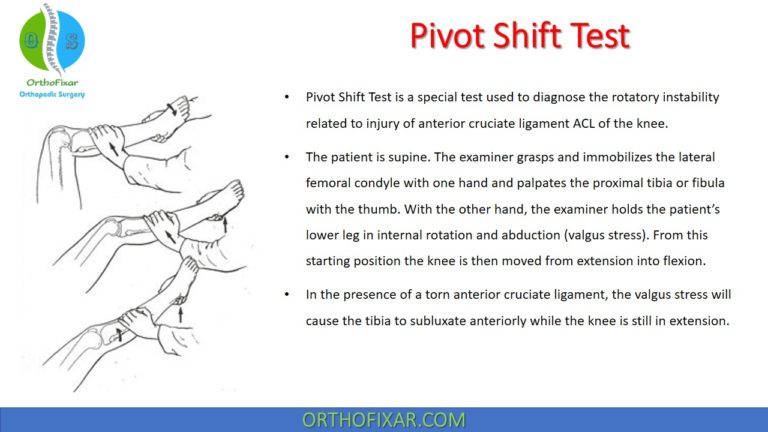
Pivot shift test is a manipulative test for demonstrating the rotatory subluxation that is often associated with anterior…
Read Full Entry →
Wilson Test is a provocative test that can be performed when osteochondritis dissecans of the knee is suspected.
Read Full Entry →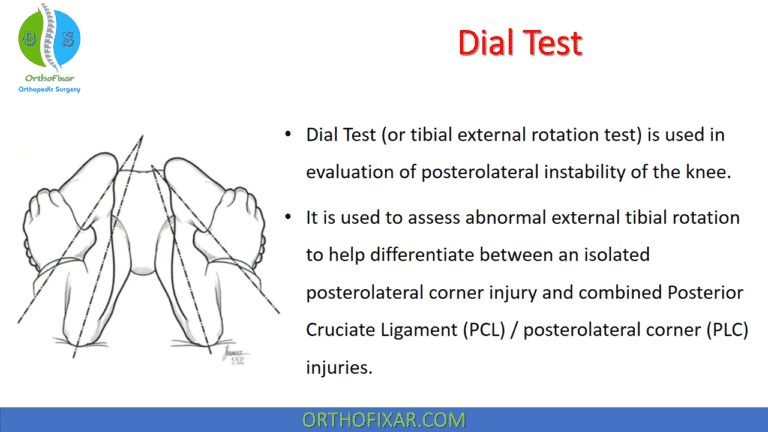
Dial Test (or tibial external rotation test) is used in evaluation of posterolateral instability of the knee.
Read Full Entry →
The examiner holds the patient’s knee between 15 and 30° of flexion. In this position in particular, the…
Read Full Entry →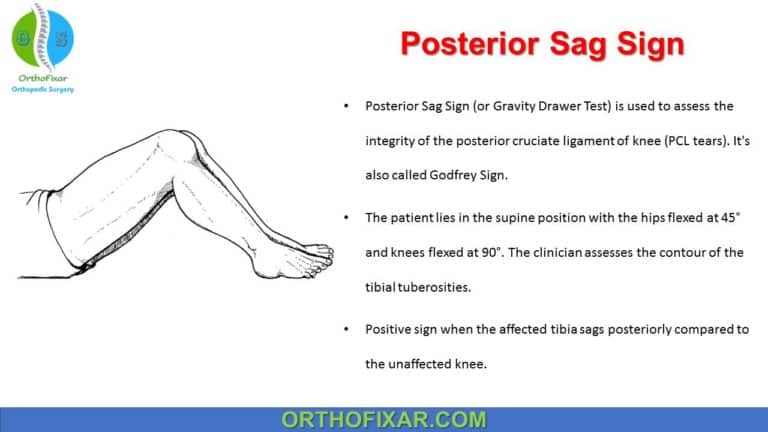
Posterior Sag Sign (or Gravity Drawer Test) is used to assess the integrity of the posterior cruciate ligament of…
Read Full Entry →
The Brush Test is a physical examination maneuver designed to detect even minimal effusions in the knee joint.…
Read Full Entry →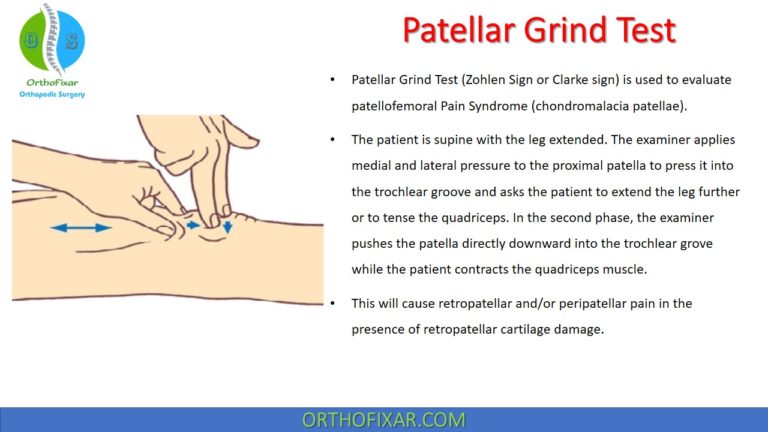
The Patellar Grind Test (Clarke test) is performed with the patient in supine position with the leg extended.…
Read Full Entry →