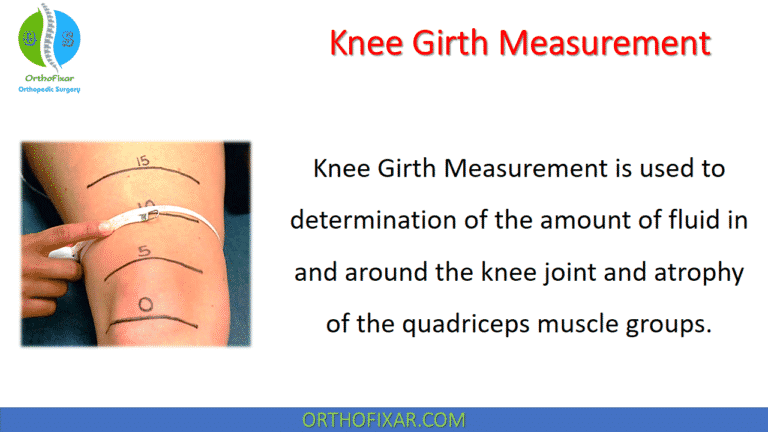
Knee Girth Measurement
Knee Girth Measurement is used to determination of the amount of fluid in and around the knee joint…
Read Full Entry →Knee Examination section contains all special tests to examine and evaluate knee joint. ACL, meniscus, MCL, LCL and Patella tests.
Knee Girth Measurement is used to determination of the amount of fluid in and around the knee joint…
Read Full Entry →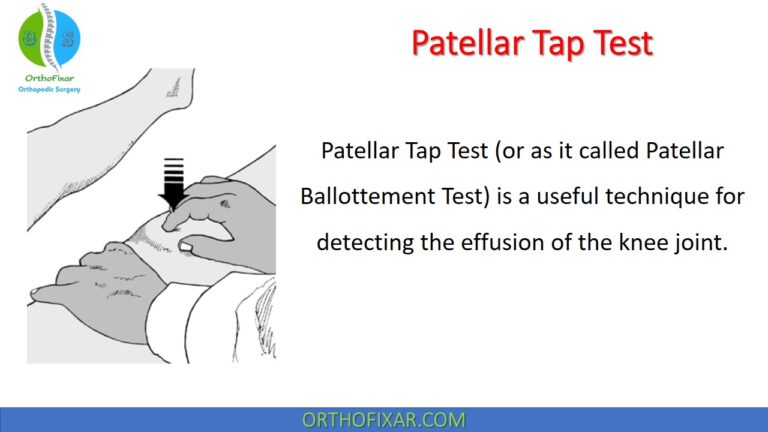
Patellar Tap Test (or as it called Patellar Ballottement Test) is a useful technique for detecting the effusion…
Read Full Entry →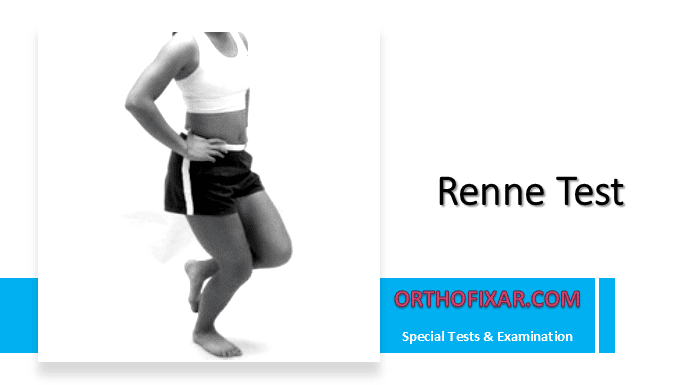
Renne test represents a significant advancement in the clinical evaluation of iliotibial band (ITB) syndrome, offering healthcare professionals…
Read Full Entry →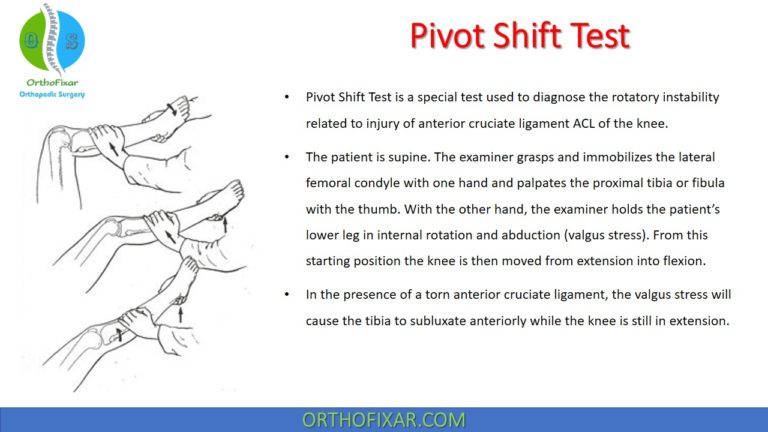
Pivot shift test is a manipulative test for demonstrating the rotatory subluxation that is often associated with anterior…
Read Full Entry →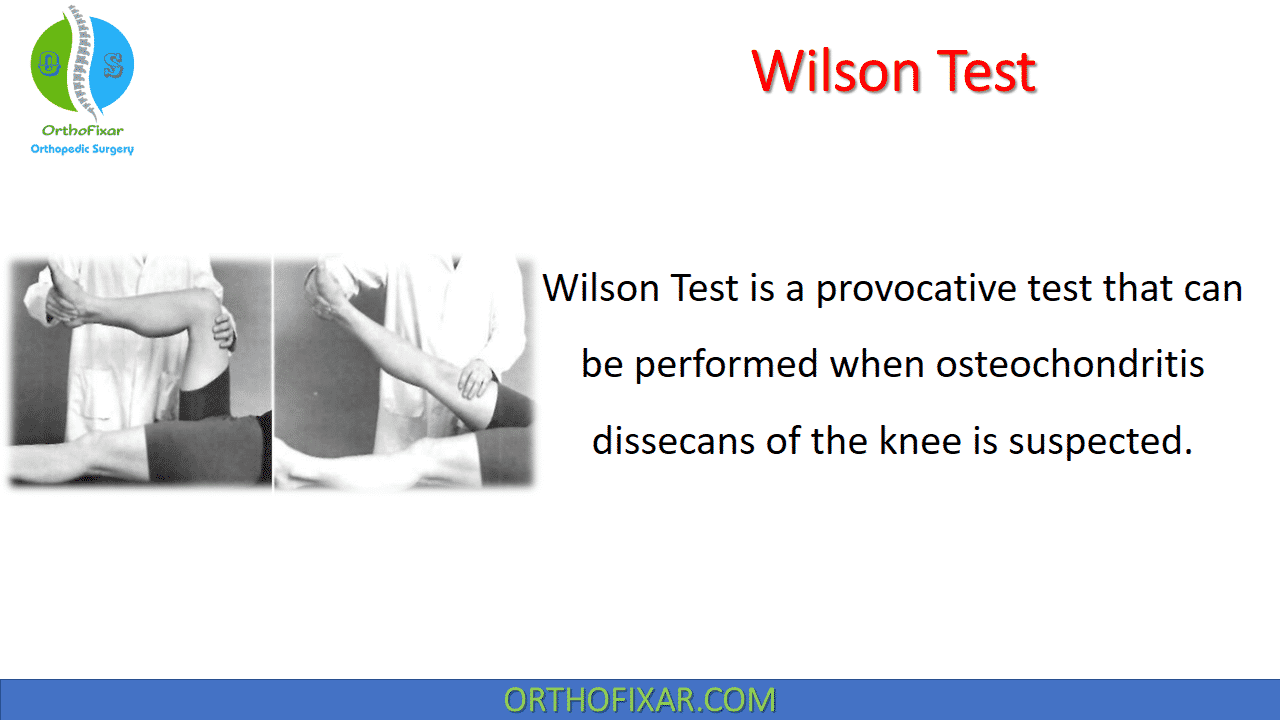
Wilson Test is a provocative test that can be performed when osteochondritis dissecans of the knee is suspected.
Read Full Entry →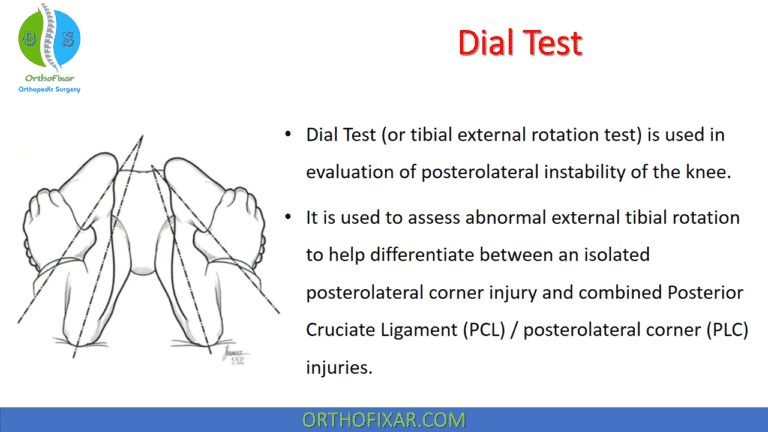
Dial Test (or tibial external rotation test) is used in evaluation of posterolateral instability of the knee.
Read Full Entry →
The examiner holds the patient’s knee between 15 and 30° of flexion. In this position in particular, the…
Read Full Entry →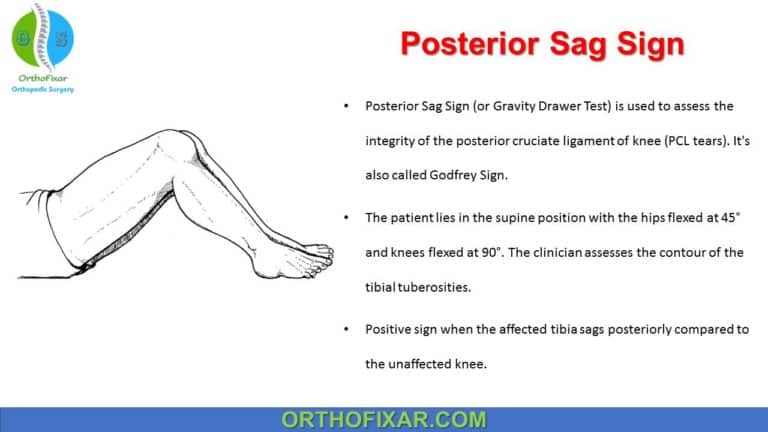
Posterior Sag Sign (or Gravity Drawer Test) is used to assess the integrity of the posterior cruciate ligament of…
Read Full Entry →
The Brush Test is a physical examination maneuver designed to detect even minimal effusions in the knee joint.…
Read Full Entry →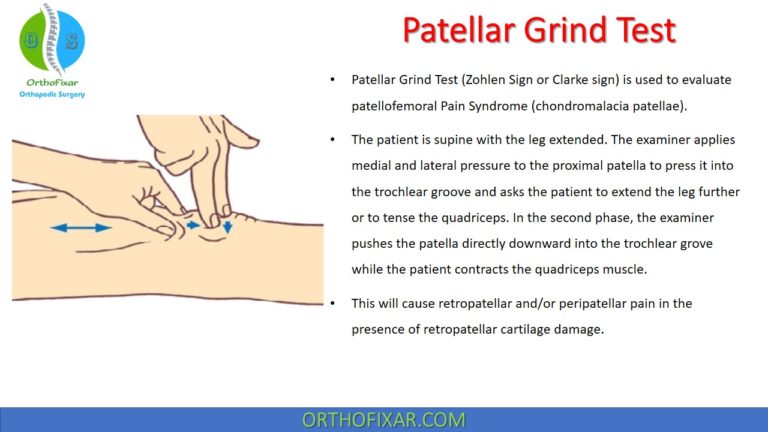
The Patellar Grind Test (Clarke test) is performed with the patient in supine position with the leg extended.…
Read Full Entry →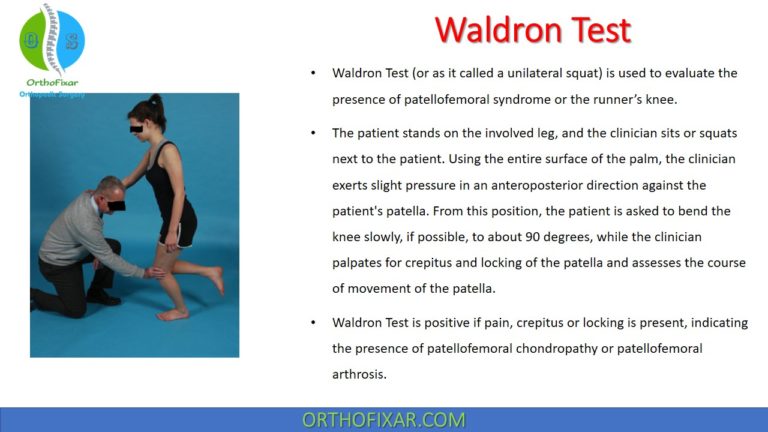
Waldron Test (or as it called a unilateral squat) is used to evaluate the presence of patellofemoral syndrome…
Read Full Entry →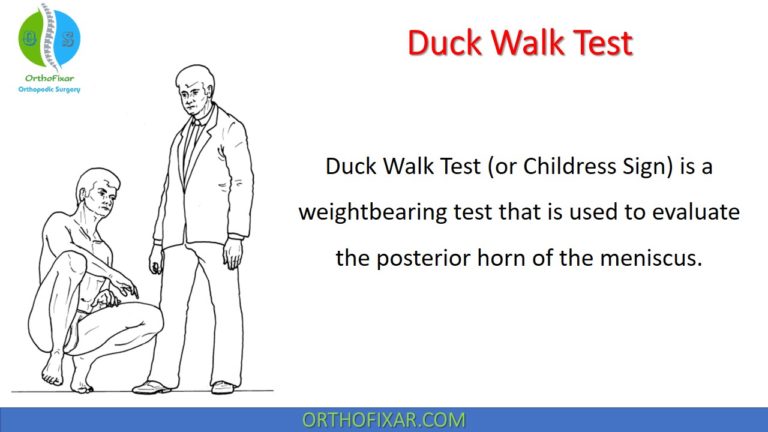
Duck Walk Test (or Childress Sign) is a weightbearing test that is used to evaluate the posterior horn…
Read Full Entry →