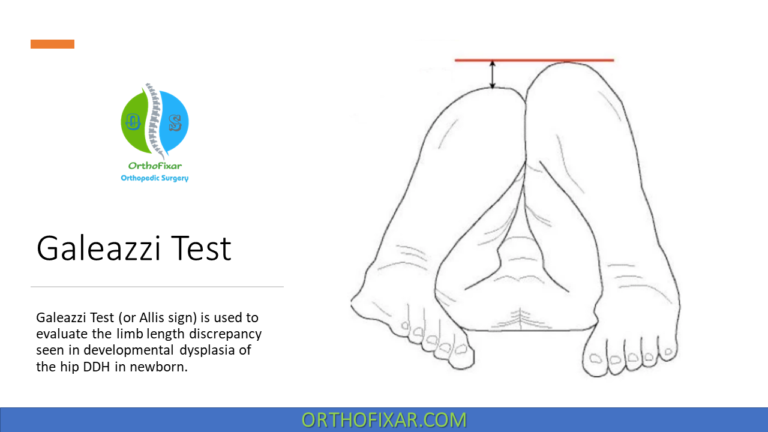
Galeazzi Test for Leg-Length Discrepancy
Galeazzi Test (or Allis sign) is used to evaluate the limb length discrepancy seen in developmental dysplasia of…
Read Full Entry →This section contains all the special Tests for hip joint examination. You will Learn how to assess and examine the hip joint.
Galeazzi Test (or Allis sign) is used to evaluate the limb length discrepancy seen in developmental dysplasia of…
Read Full Entry →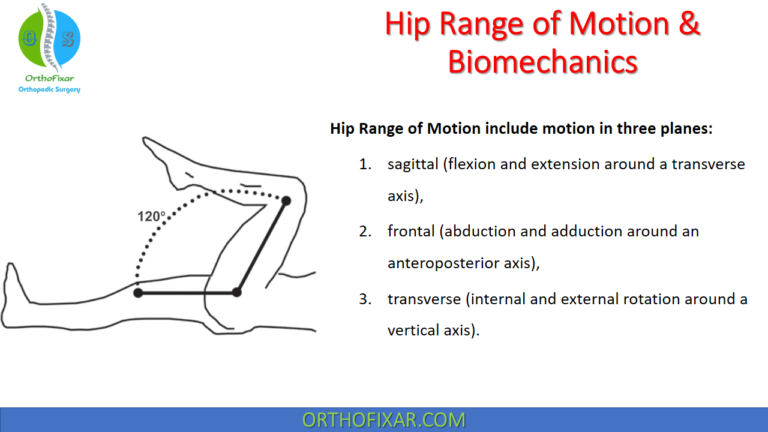
Hip range of motion is variable. Hip flexion averages 110–120 degrees, extension 10–15 degrees, abduction 30–50 degrees, and…
Read Full Entry →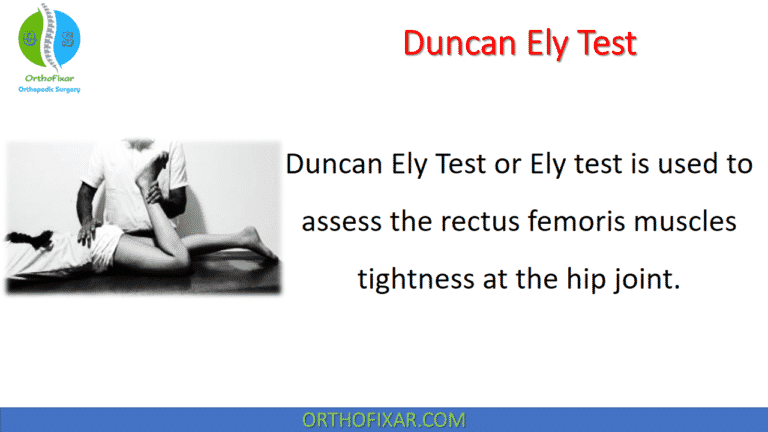
Duncan Ely Test or Ely test is used to assess the rectus femoris muscle tightness at the hip…
Read Full Entry →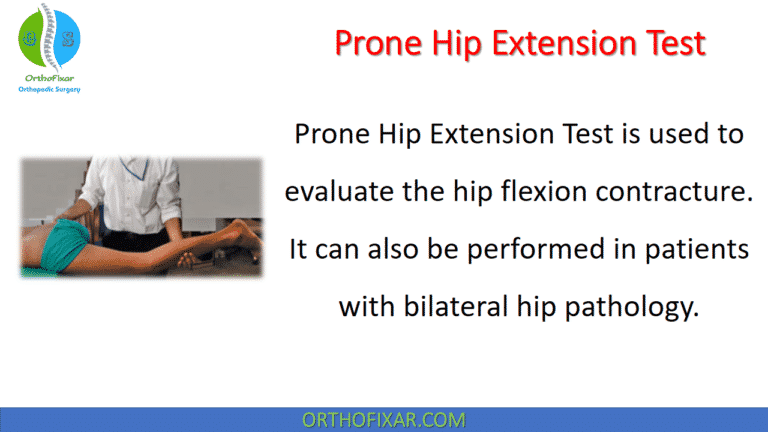
Prone Hip Extension Test is used to evaluate the hip flexion contracture. It can also be performed in…
Read Full Entry →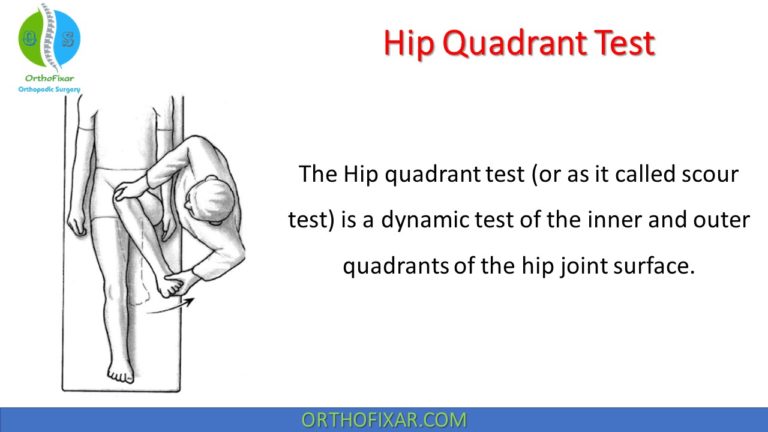
The Hip quadrant test (or as it called scour test) is a dynamic test of the inner and…
Read Full Entry →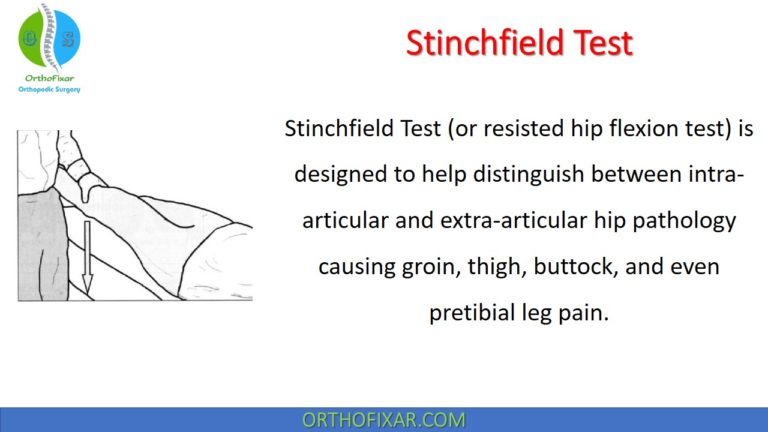
Stinchfield test (or resisted hip flexion test) is designed to help distinguish between intra-articular and extra-articular hip pathologies…
Read Full Entry →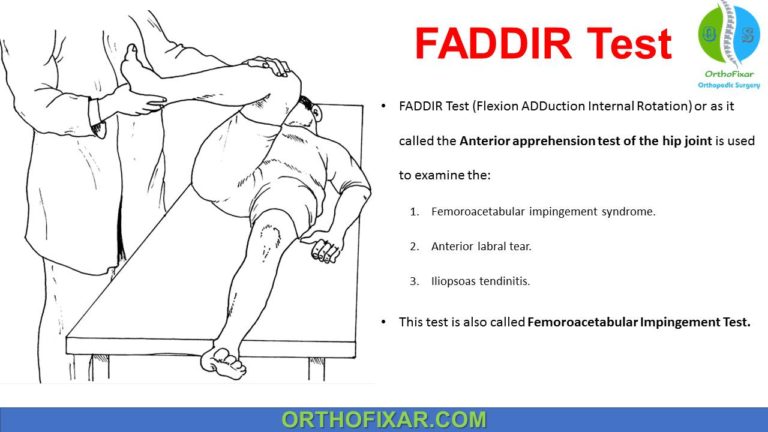
FADDIR Test (Flexion ADDuction Internal Rotation) is used for examine the Femoroacetabular impingement syndrome, anterior labral tear ,…
Read Full Entry →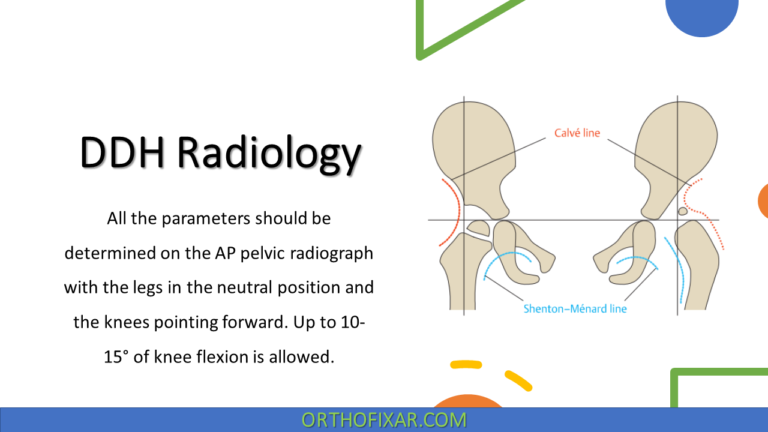
DDH radiology measurements is essential in diagnosis the developmental dysplasia of the hip after the age of 6…
Read Full Entry →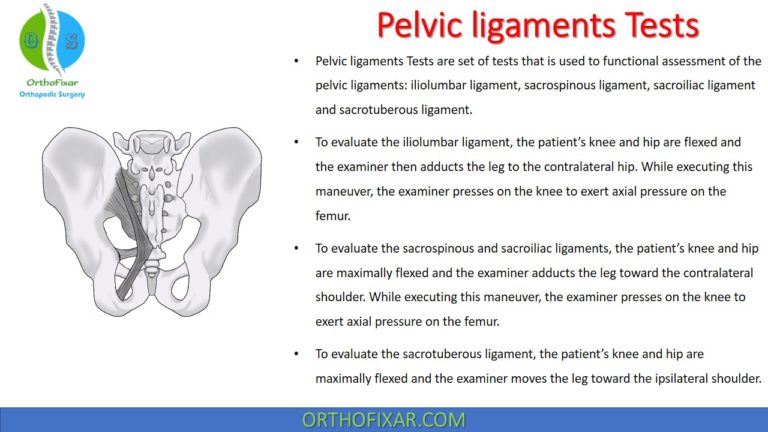
Pelvic ligaments Tests are functional assessment of the pelvic ligaments: iliolumbar, sacrospinous, sacroiliac and sacrotuberous ligaments.
Read Full Entry →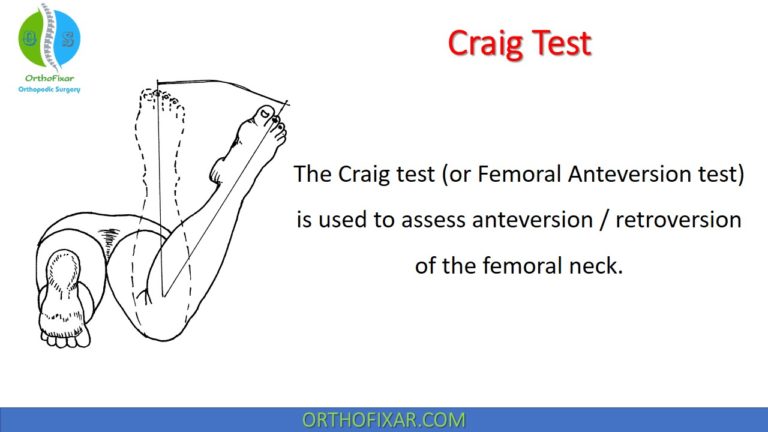
The Craig test (or Femoral Anteversion test) is used to assess anteversion/ retroversion of the femoral neck.
Read Full Entry →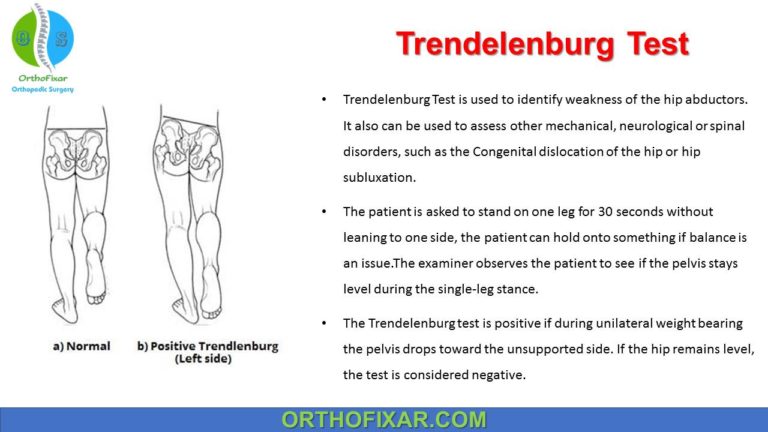
Trendelenburg Test is used to identify weakness of the hip abductor muscles. It also can be used to…
Read Full Entry →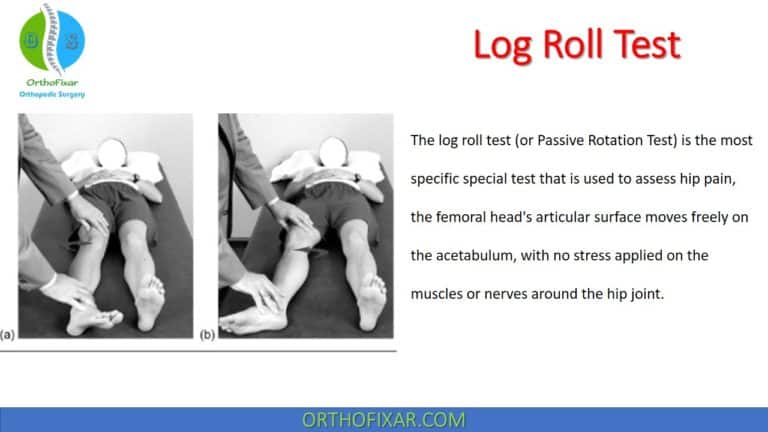
The log roll test (or Passive Rotation Test) is the most specific special test that is used to…
Read Full Entry →