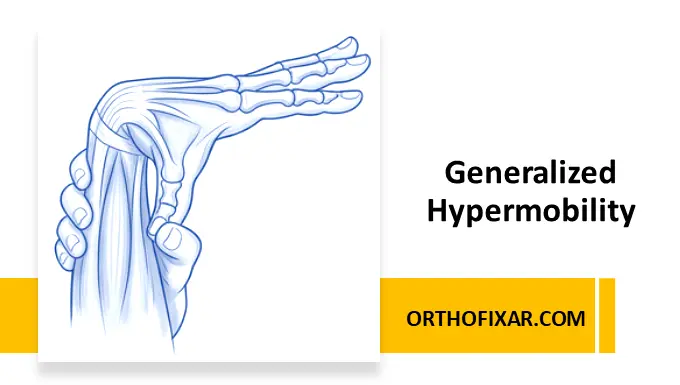
Generalized hypermobility of joints is a condition characterized by an unusually large range of motion in multiple joints, often due to ligamentous laxity. While many children naturally exhibit higher joint flexibility, some individuals maintain this hypermobility into adulthood, which can sometimes lead to musculoskeletal pain, joint instability, and increased risk of injuries.
Understanding the clinical features, diagnosis, and management of generalized hypermobility is essential for medical professionals, physical therapists, and educators in the musculoskeletal field.
What is Generalized Hypermobility?
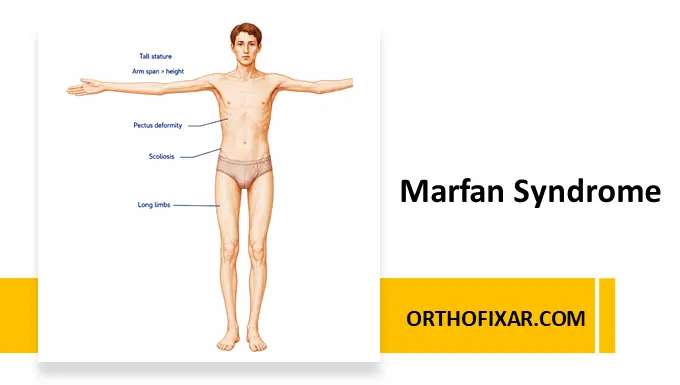
Generalized hypermobility is defined as hypermobility affecting multiple joints rather than a single joint. It can exist as an isolated trait or as part of systemic disorders such as Ehlers-Danlos syndrome (EDS) or Marfan syndrome.
Key Features:
- Increased joint range of motion beyond normal limits.
- Frequent joint dislocations or subluxations.
- Soft, lax ligaments contributing to ligamentous laxity.
- Musculoskeletal pain, especially in the knees, shoulders, and fingers.
Epidemiology
- More prevalent in children than adults due to naturally higher joint mobility in pediatric populations.
- Studies suggest up to 10–20% of the general population may demonstrate generalized hypermobility.
- Females are more frequently affected than males.
- Prevalence tends to decrease with age as connective tissue loses elasticity.
Causes of Generalized Hypermobility
- Genetic Factors
- Variants in collagen genes can weaken connective tissue, leading to hypermobile joints.
- Family history often reveals similar joint hypermobility.
- Ligamentous Laxity
- Ligaments are less stiff than normal, contributing to increased joint range of motion.
- Laxity can predispose individuals to recurrent joint injuries.
- Connective Tissue Disorders
- Hypermobile Ehlers-Danlos syndrome (hEDS)
- Marfan syndrome
- Other collagenopathies
Clinical Features
- Musculoskeletal Symptoms
- Joint pain, especially after physical activity.
- Frequent sprains or subluxations.
- Early onset osteoarthritis in some adults.
- Extra-articular Features
- Soft, velvety skin with mild hyperextensibility.
- Fatigue and proprioceptive difficulties.
- Mild cardiovascular involvement in connective tissue disorders.
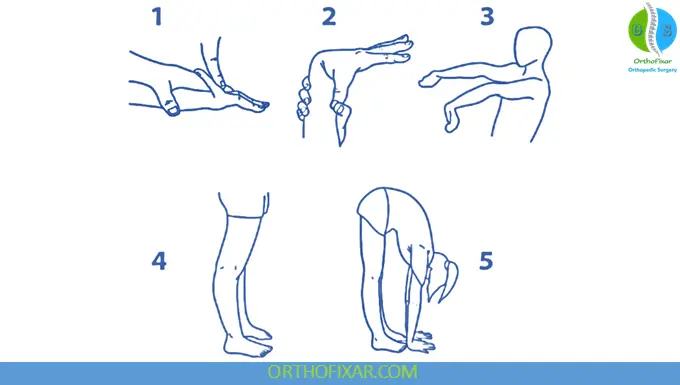
- Beighton Score
- A common tool to assess generalized hypermobility, scoring from 0–9.
- ≥4–5 points typically indicates generalized joint hypermobility.
Diagnosis
Diagnosis is primarily clinical, based on joint examination and medical history.
Steps include:
- Assessing hypermobility using the Beighton scoring system.
- Evaluating for musculoskeletal pain, instability, or frequent injuries.
- Excluding other connective tissue disorders through genetic and laboratory tests if indicated.
- Imaging may be used to assess joint damage or dislocations in chronic cases.
See Also: Beighton score for Ligamentous Laxity
Management
While generalized hypermobility is often benign, symptomatic patients benefit from targeted management:
- Physical Therapy
- Strengthening periarticular muscles to stabilize joints.
- Proprioceptive and balance training.
- Lifestyle Modifications
- Avoiding activities that excessively strain hypermobile joints.
- Using protective gear for sports participation.
- Pain Management
- NSAIDs for acute flare-ups.
- Activity modification to prevent overuse injuries.
- Surgical Intervention
- Rarely required, typically reserved for recurrent dislocations or severe joint instability.
Prognosis
- Many individuals with generalized hypermobility of joints lead normal lives without significant complications.
- Early recognition and intervention, especially in children with ligamentous laxity, can prevent chronic joint pain and musculoskeletal injuries.
- Regular follow-up with musculoskeletal specialists is recommended for patients with persistent symptoms.
Conclusion
Generalized hypermobility is a condition defined by excessive joint range of motion due to ligamentous laxity. Although often benign, awareness of potential complications is crucial for preventing chronic pain and injuries. Proper diagnosis, patient education, and physiotherapy form the cornerstone of management.
References & More
- Lamari MM, Lamari NM, de Medeiros MP, Giacomini MG, Santos AB, de Araújo Filho GM, Goloni-Bertollo EM, Pavarino ÉC. Generalized Joint Hypermobility: A Statistical Analysis Identifies Non-Axial Involvement in Most Cases. Children (Basel). 2024 Mar 14;11(3):344. doi: 10.3390/children11030344. PMID: 38539379; PMCID: PMC10969682. Pubmed
- Dasgupta T, Gogia T, Gupta LM, Kishlaya K, Garg R, Sahu N. Linking Generalized Ligamentous Laxity to Musculoskeletal Injury: A Study in the Indian Population. Cureus. 2024 Jan 12;16(1):e52180. doi: 10.7759/cureus.52180. PMID: 38344633; PMCID: PMC10859219. Pubmed
- Egol KA. Handbook of fractures. 6th ed. Philadelphia: Lippincott Williams & Wilkins; 2019.