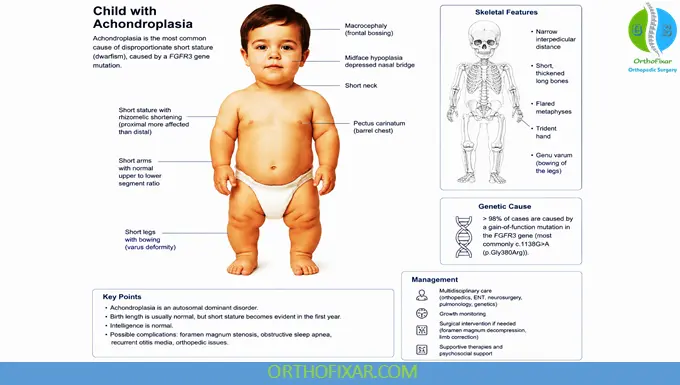
Achondroplasia is the most common form of disproportionate short stature and skeletal dysplasia. Often referred to as achondroplasia dwarfism, this genetic condition affects bone growth, especially in the arms and legs, while typically preserving normal intelligence and lifespan. The disorder results from mutations in the fibroblast growth factor receptor 3 (FGFR3) gene, which negatively regulates bone growth.
Over the past decade, scientific understanding of achondroplasia has expanded significantly. New targeted therapies, including vosoritide and experimental achondroplasia gene therapy approaches, are changing the future of treatment and improving outcomes for children with this condition.
This article provides a comprehensive, medically accurate overview of achondroplasia, including its causes, symptoms, diagnosis, treatment options, complications, prognosis, and current research.
What Is Achondroplasia?
Achondroplasia is a rare genetic disorder characterized by abnormal cartilage formation and impaired endochondral ossification, the process responsible for the growth of long bones.
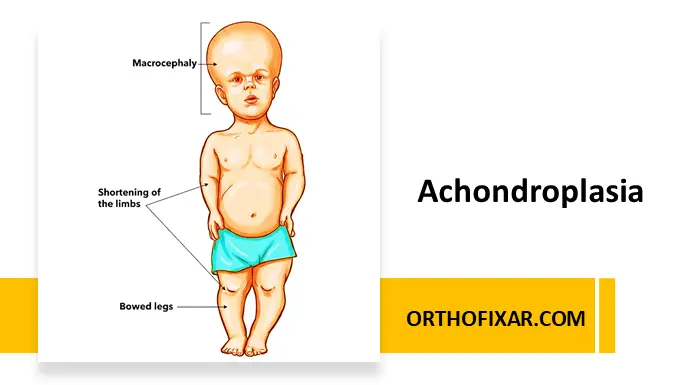
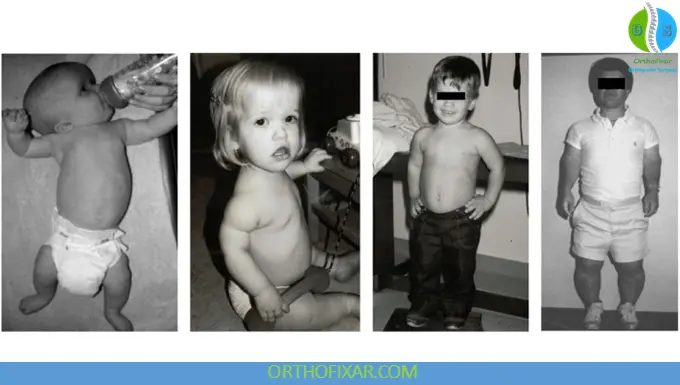
People with achondroplasia usually have:
- Short stature
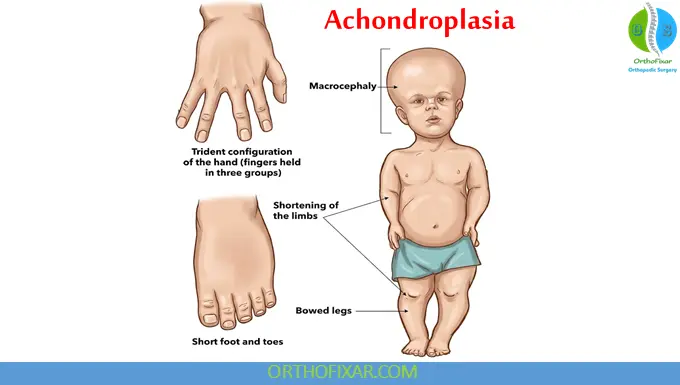
- Shortened arms and legs
- Enlarged head size (macrocephaly)
- Prominent forehead
- Midface hypoplasia
- Normal intelligence
Achondroplasia dwarfism affects approximately 1 in 15,000 to 1 in 40,000 live births worldwide, making it the most common skeletal dysplasia.
The condition follows an autosomal dominant inheritance pattern. However, around 80% of cases occur due to spontaneous mutations in families with no previous history of the disorder.
See Also: Osteogenesis Imperfecta: Types, Symptoms, Tests & Treatment
The Genetics Behind Achondroplasia
FGFR3 Mutation
Achondroplasia is caused by gain-of-function mutations in the FGFR3 gene located on chromosome 4p16.3.
The FGFR3 protein normally helps regulate bone growth by slowing cartilage-to-bone conversion. In achondroplasia, the mutated receptor becomes overactive, excessively inhibiting bone growth.
The most common mutation is:
- G380R substitution in the FGFR3 gene
This mutation leads to:
- Reduced chondrocyte proliferation
- Impaired growth plate development
- Shortened long bones
- Skeletal abnormalities
Inheritance Pattern
Achondroplasia is inherited in an autosomal dominant manner:
- One mutated gene copy is sufficient to cause the disorder.
- If one parent has achondroplasia, the child has a 50% chance of inheriting the condition.
- Homozygous achondroplasia, where both gene copies are mutated, is usually fatal in infancy due to severe thoracic restriction.
Advanced paternal age is associated with an increased risk of spontaneous FGFR3 mutations.
Signs and Symptoms of Achondroplasia
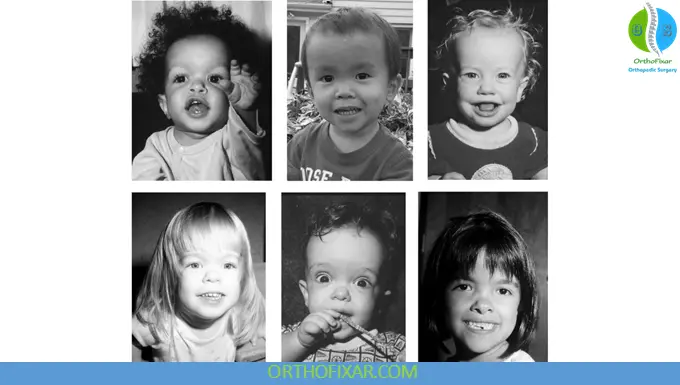
The clinical features of achondroplasia are often apparent at birth.
Common Physical Features
Short Stature
Adults with achondroplasia usually have:
- Average adult height around 131 cm in males
- Average adult height around 124 cm in females
Limb Shortening
The proximal portions of the limbs are disproportionately shortened, known as rhizomelic shortening.
Craniofacial Features
Typical findings include:
- Large head circumference
- Frontal bossing
- Flattened nasal bridge
- Midface hypoplasia
Hand Abnormalities
A “trident hand” appearance may occur due to separation between the middle and ring fingers.
Neurological and Orthopedic Complications
Achondroplasia can involve multiple body systems.
Foramen Magnum Stenosis
Narrowing at the skull base may compress the brainstem and upper spinal cord.
Potential complications include:
- Sleep apnea
- Hypotonia
- Developmental delay
- Sudden infant death in severe cases
Spinal Stenosis
Lumbar spinal stenosis is common in adults with achondroplasia and may cause:
- Back pain
- Leg weakness
- Numbness
- Walking difficulty
Bowed Legs
Genu varum (bowed legs) may develop due to abnormal bone alignment.
Recurrent Ear Infections
Middle ear dysfunction may lead to:
- Chronic otitis media
- Conductive hearing loss
Obesity
Obesity occurs more frequently in patients with achondroplasia and may worsen orthopedic complications.
Achondroplasia Diagnosis
Prenatal Diagnosis
Prenatal ultrasound may detect:
- Shortened femur length
- Macrocephaly
- Limb disproportion
Genetic testing using chorionic villus sampling or amniocentesis can identify FGFR3 mutations.
Postnatal Diagnosis
Diagnosis after birth is based on:
- Physical examination
- Radiographic findings
- Genetic testing
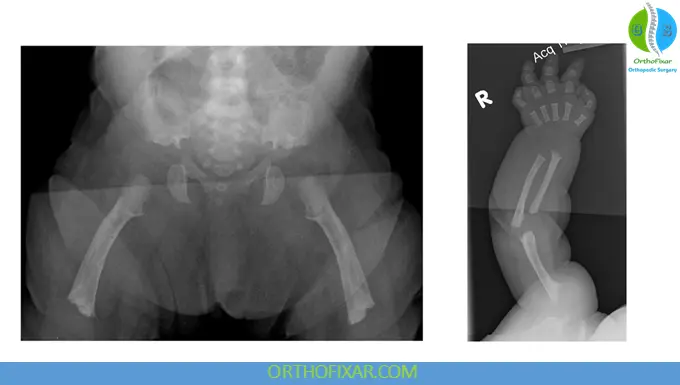
Characteristic X-ray Findings
Radiographic features may include:
- Short long bones
- Narrow interpedicular distance in the lumbar spine
- Square iliac wings
- Short pedicles
Molecular confirmation through FGFR3 testing is considered the gold standard.
Achondroplasia Treatment
Modern achondroplasia treatment focuses on improving growth, preventing complications, and enhancing quality of life.
Management often requires a multidisciplinary team including:
- Pediatricians
- Geneticists
- Orthopedic surgeons
- Neurosurgeons
- ENT specialists
- Physical therapists
Vosoritide Therapy
Vosoritide is the first approved targeted therapy specifically developed for achondroplasia.
Mechanism of Action
Vosoritide is a C-type natriuretic peptide (CNP) analog that counteracts excessive FGFR3 signaling.
This promotes:
- Growth plate activity
- Bone elongation
- Improved endochondral ossification
Clinical Benefits
Studies show vosoritide can:
- Increase annual growth velocity
- Improve skeletal growth
- Potentially reduce complications over time
Current evidence demonstrates generally favorable safety profiles, with injection-site reactions and transient hypotension being the most common adverse effects.
Limitations
Important limitations include:
- Daily injections required
- Long-term outcomes still under investigation
- High treatment cost
- Limited data in adults
Growth Hormone Therapy
Growth hormone has historically been used in some children with achondroplasia.
However:
- Height gains are usually modest
- Effects may diminish over time
- It does not correct the underlying FGFR3 pathway abnormality
Growth hormone is no longer considered the primary targeted therapy.
Surgical Management
Limb Lengthening Surgery
Limb lengthening may increase height substantially but remains controversial.
Potential concerns include:
- Multiple surgeries
- Infection risk
- Chronic pain
- Psychological stress
- Long rehabilitation periods
Neurosurgical Procedures
Surgery may be required for:
- Severe foramen magnum stenosis
- Hydrocephalus
- Symptomatic spinal stenosis
Orthopedic Surgery
Procedures may address:
- Bowed legs
- Spinal deformities
- Joint instability
Emerging Achondroplasia Gene Therapy
Research into achondroplasia gene therapy is rapidly evolving.
Scientists are exploring methods to directly target the FGFR3 mutation and normalize bone growth pathways.
Experimental Strategies
Gene Editing
CRISPR-based technologies may eventually allow correction of FGFR3 mutations at the DNA level.
Potential benefits include:
- Permanent correction of the mutation
- Prevention of skeletal complications
- Earlier disease intervention
However, significant challenges remain:
- Delivery to cartilage cells
- Long-term safety
- Ethical considerations
- Off-target genetic effects
FGFR3 Inhibitors
Several investigational drugs aim to reduce FGFR3 signaling.
Examples include:
- Infigratinib
- Soluble FGFR3 decoy receptors
- Anti-FGFR3 antibodies
These therapies are currently being evaluated in clinical trials.
Precision Medicine Approaches
Future achondroplasia treatment may involve:
- Personalized genetic therapies
- Early prenatal interventions
- Combination molecular therapies
Although achondroplasia gene therapy is not yet clinically available, ongoing research represents a major advancement in skeletal dysplasia management.
Living With Achondroplasia
Most individuals with achondroplasia have normal cognitive development and can lead productive, independent lives.
Psychosocial Considerations
People with achondroplasia may face:
- Social stigma
- Accessibility barriers
- Bullying or discrimination
- Mental health challenges
Psychological support and community advocacy are essential.
Daily Living Adaptations
Helpful accommodations may include:
- Modified furniture
- Step stools
- Adaptive driving equipment
- Workplace accessibility adjustments
Exercise Recommendations
Low-impact physical activities are generally encouraged, including:
- Swimming
- Walking
- Cycling
Activities with high spinal injury risk should be approached cautiously.
Pregnancy and Achondroplasia
Women with achondroplasia can become pregnant, but pregnancy is considered high risk.
Potential complications include:
- Respiratory compromise
- Pelvic abnormalities
- Increased cesarean section rates
Genetic counseling is strongly recommended for affected individuals planning a family.
Prognosis
Life expectancy in achondroplasia is generally near normal when complications are properly managed.
The prognosis depends largely on:
- Severity of neurological complications
- Respiratory function
- Access to specialized care
- Early intervention
Modern medical advances are significantly improving long-term outcomes.
Current Research Directions
Research in achondroplasia continues to expand rapidly.
Key areas include:
- Long-term vosoritide outcomes
- Oral FGFR3 inhibitors
- Bone growth pathway modulation
- Regenerative medicine
- Achondroplasia gene therapy
- Prenatal interventions
The shift toward precision medicine represents one of the most important developments in skeletal dysplasia care.
Frequently Asked Questions About Achondroplasia
Is achondroplasia the same as dwarfism?
Achondroplasia is the most common form of disproportionate dwarfism, but not all dwarfism is caused by achondroplasia.
Can achondroplasia be cured?
There is currently no cure for achondroplasia. However, targeted therapies such as vosoritide and emerging achondroplasia gene therapy research may substantially improve outcomes.
Is achondroplasia inherited?
Yes. Achondroplasia follows an autosomal dominant inheritance pattern, although most cases result from new spontaneous mutations.
What is the life expectancy of someone with achondroplasia?
Most individuals have near-normal life expectancy with appropriate medical care and monitoring.
Can adults receive achondroplasia treatment?
Most current targeted therapies are approved for children with open growth plates. Research in adult treatment continues.
Conclusion
Achondroplasia is a complex genetic skeletal disorder caused by mutations in the FGFR3 gene. Although traditionally managed through supportive care and surgery, modern medicine has entered a new era with targeted therapies such as vosoritide and promising achondroplasia gene therapy research.
Understanding achondroplasia dwarfism requires a multidisciplinary perspective that includes genetics, orthopedics, neurology, endocrinology, and psychosocial care. Continued advances in molecular medicine may eventually transform treatment from symptom management to true disease modification.
Early diagnosis, comprehensive monitoring, and individualized achondroplasia treatment remain essential for improving long-term quality of life.
References & More
- Chamarthi VS, Chamarthi S, Karsonovich T. Achondroplasia. [Updated 2025 Dec 13]. In: StatPearls [Internet]. Treasure Island (FL): StatPearls Publishing; 2026 Jan-. Available from: Pubmed
- Chamarthi VS, Chamarthi S, Karsonovich T. Achondroplasia. 2025 Dec 13. In: StatPearls [Internet]. Treasure Island (FL): StatPearls Publishing; 2026 Jan–. PMID: 32644689. Pubmed
- Pauli RM. Achondroplasia: a comprehensive clinical review. Orphanet J Rare Dis. 2019 Jan 3;14(1):1. doi: 10.1186/s13023-018-0972-6. PMID: 30606190; PMCID: PMC6318916. Pubmed
- Dardenne E, Ishiyama N, Lin TA, Lucas MC. Current and emerging therapies for Achondroplasia: The dawn of precision medicine. Bioorg Med Chem. 2023 May 3;87:117275. doi: 10.1016/j.bmc.2023.117275. Epub 2023 Apr 20. PMID: 37156065. Pubmed