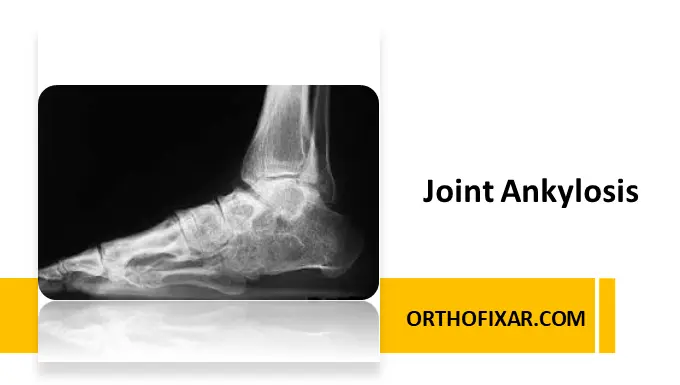
Ankylosis is a pathological condition characterized by stiffness, immobility, or fusion of a joint due to abnormal fibrous tissue formation, cartilage destruction, or bone fusion. The condition can affect various joints throughout the body and may significantly impair mobility, function, and quality of life. Depending on the underlying pathology, ankylosis may be classified as fibrous, fibro-osseous, or bony ankylosis.
Understanding the ankylosis definition, identifying ankylosis causes, and selecting appropriate ankylosis treatment strategies are essential for preventing long-term disability and preserving joint function.
Ankylosis Definition
The medical definition of ankylosis refers to the abnormal stiffening or fusion of a joint that results in restricted movement. The fusion may occur within the joint itself or involve surrounding tissues.
Ankylosis can be classified into:
Fibrous Ankylosis
Fibrous ankylosis occurs when dense fibrous connective tissue develops between joint surfaces. Although some degree of movement may remain, the range of motion is significantly reduced.
Fibro-Osseous Ankylosis
This intermediate stage involves both fibrous tissue and new bone formation within the affected joint.
Bony Ankylosis
Bony ankylosis, also known as osseous ankylosis, occurs when complete bone fusion develops across the joint space. This form usually causes severe limitation or complete loss of joint mobility and often requires surgical intervention.
Research indicates that prolonged inflammation, trauma, and abnormal bone remodeling contribute to the progression from fibrous ankylosis to bony ankylosis.
Types of Ankylosis
Ankylosis can affect multiple anatomical locations, including:
- Temporomandibular joint (TMJ)
- Spine
- Hip joints
- Knee joints
- Shoulder joints
- Wrist joints
- Ankle joints
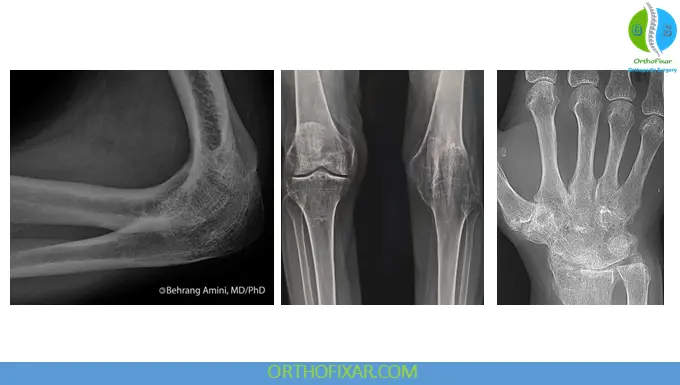
Ankle Ankylosis
Ankle ankylosis refers to stiffness or fusion involving the ankle joint. It may develop after severe trauma, fractures, chronic inflammatory arthritis, infection, or surgical procedures.
Patients with ankle ankylosis often experience:
- Reduced walking ability
- Difficulty climbing stairs
- Chronic pain
- Altered gait mechanics
- Functional disability
Early diagnosis and rehabilitation are important to preserve mobility and prevent progression.
Ankylosis Causes
Several factors can contribute to ankylosis development. The most common ankylosis causes include:
Trauma
Joint injuries are among the leading causes of ankylosis. Fractures, dislocations, and repetitive mechanical damage may trigger inflammation and abnormal healing responses that result in joint fusion.
Infection
Septic arthritis and osteomyelitis can damage joint structures and promote fibrous or bony fusion.
Inflammatory Diseases
Chronic inflammatory conditions may gradually destroy cartilage and stimulate new bone formation.
Examples include:
- Ankylosing spondylitis
- Rheumatoid arthritis
- Psoriatic arthritis
- Juvenile idiopathic arthritis
Congenital Disorders
Some congenital skeletal abnormalities may predispose individuals to ankylosis from birth or early childhood.
Previous Surgery
Joint surgery may occasionally lead to postoperative scar formation, excessive bone growth, or re-ankylosis in susceptible patients.
Radiation Therapy
Radiation-induced fibrosis and tissue damage can contribute to joint stiffness and fusion in some patients.
Pathophysiology of Ankylosis
The development of ankylosis involves complex biological processes.
Key mechanisms include:
- Persistent inflammation
- Fibroblast activation
- Excessive collagen deposition
- Cartilage destruction
- Abnormal bone remodeling
- Endochondral ossification
Recent molecular studies have identified growth factors and signaling pathways involved in ankylosis progression, including:
- Bone morphogenetic proteins (BMPs)
- Transforming growth factor-beta (TGF-β)
- Vascular endothelial growth factor (VEGF)
- Hypoxia-inducible factor-1 alpha (HIF-1α)
These mediators promote new bone formation and may contribute to the transition from fibrous ankylosis to bony ankylosis.
Symptoms of Ankylosis
Clinical manifestations vary depending on the affected joint and severity.
Common symptoms include:
Joint Stiffness
Progressive loss of flexibility is often the earliest symptom.
Reduced Range of Motion
Patients may have difficulty performing routine activities that require normal joint movement.
Pain
Pain may occur during early inflammatory stages and can persist depending on the underlying disease.
Functional Impairment
Advanced ankylosis may interfere with:
- Walking
- Eating
- Speaking
- Personal hygiene
- Occupational activities
Deformity
Long-standing disease may result in abnormal joint positioning and skeletal deformities.
Diagnosis of Ankylosis
Accurate diagnosis requires a combination of clinical examination and imaging studies.
Physical Examination
Healthcare providers evaluate:
- Joint mobility
- Pain
- Swelling
- Functional limitations
X-rays
Radiographs can reveal:
- Joint space narrowing
- Bone fusion
- Structural deformities
Computed Tomography (CT)
CT scans provide detailed visualization of bony ankylosis and are particularly useful for surgical planning.
Magnetic Resonance Imaging (MRI)
MRI helps assess:
- Soft tissue involvement
- Fibrous ankylosis
- Inflammatory activity
Laboratory Testing
When inflammatory or autoimmune diseases are suspected, blood tests may include:
- ESR
- CRP
- Rheumatoid factor
- HLA-B27 testing
Ankylosis Treatment
The choice of ankylosis treatment depends on the cause, severity, and affected joint.
Conservative Management
Physical Therapy
Physical therapy plays a critical role in maintaining mobility and preventing further stiffness.
Therapeutic approaches may include:
- Stretching exercises
- Joint mobilization
- Strengthening programs
- Range-of-motion training
Medications
Pharmacologic treatment may include:
- Nonsteroidal anti-inflammatory drugs (NSAIDs)
- Corticosteroids
- Disease-modifying antirheumatic drugs (DMARDs)
- Biologic agents for inflammatory arthritis
Surgical Treatment
Advanced bony ankylosis often requires surgery.
Procedures may include:
Arthrolysis
Removal of fibrous adhesions to restore movement.
Arthroplasty
Joint reconstruction or replacement may improve function in severely affected joints.
Gap Arthroplasty
Commonly used in temporomandibular joint ankylosis, this procedure removes the ankylotic bone mass to create a functional joint space.
Joint Replacement
Total joint replacement may be considered in selected cases involving severe structural damage.
Postoperative Rehabilitation
Successful ankylosis treatment requires intensive rehabilitation after surgery.
Rehabilitation goals include:
- Restoring mobility
- Preventing recurrence
- Improving muscle strength
- Enhancing overall function
Evidence suggests that structured physiotherapy significantly improves outcomes and reduces the risk of re-ankylosis.
Complications of Ankylosis
Untreated ankylosis can lead to numerous complications:
- Permanent disability
- Chronic pain
- Muscle atrophy
- Postural abnormalities
- Joint deformity
- Reduced quality of life
In temporomandibular joint ankylosis, complications may include:
- Difficulty chewing
- Speech impairment
- Airway problems
- Facial growth abnormalities in children
Prognosis
The prognosis varies according to:
- Underlying cause
- Disease duration
- Degree of joint involvement
- Timing of treatment
Early diagnosis and intervention generally lead to better outcomes. Patients with fibrous ankylosis often have a more favorable prognosis than those with established bony ankylosis.
Prevention of Ankylosis
Preventive strategies include:
- Prompt treatment of joint injuries
- Early management of infections
- Appropriate control of inflammatory diseases
- Postoperative rehabilitation
- Regular physiotherapy after trauma or surgery
Early mobilization and evidence-based rehabilitation remain among the most effective methods for reducing ankylosis risk.
Frequently Asked Questions
What is the definition of ankylosis?
Ankylosis is the abnormal stiffening or fusion of a joint caused by fibrous tissue formation, cartilage destruction, or bone fusion, resulting in restricted movement.
What causes ankylosis?
Common ankylosis causes include trauma, infection, inflammatory arthritis, congenital abnormalities, surgery, and radiation-induced tissue damage.
What is bony ankylosis?
Bony ankylosis occurs when bone completely bridges the joint space, causing severe restriction or complete loss of movement.
Can ankle ankylosis be treated?
Yes. Treatment may involve physical therapy, medications, orthotic support, and surgical intervention depending on severity.
What is the best ankylosis treatment?
The most appropriate ankylosis treatment depends on the underlying cause and stage of disease. Early cases may respond to conservative therapy, while advanced bony ankylosis often requires surgical management followed by intensive rehabilitation.
References & More
- Ankylosis – Wikipedia
- Lories RJ, Schett G. Pathophysiology of new bone formation and ankylosis in spondyloarthritis. Rheum Dis Clin North Am. 2012 Aug;38(3):555-67. doi: 10.1016/j.rdc.2012.08.003. Epub 2012 Sep 7. PMID: 23083755. Pubmed
- Ankylosis – ScienceDirect