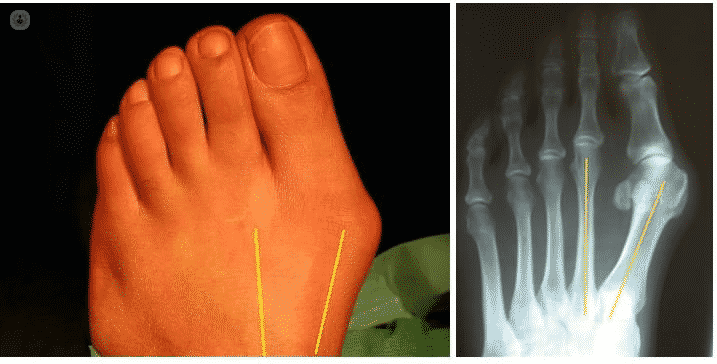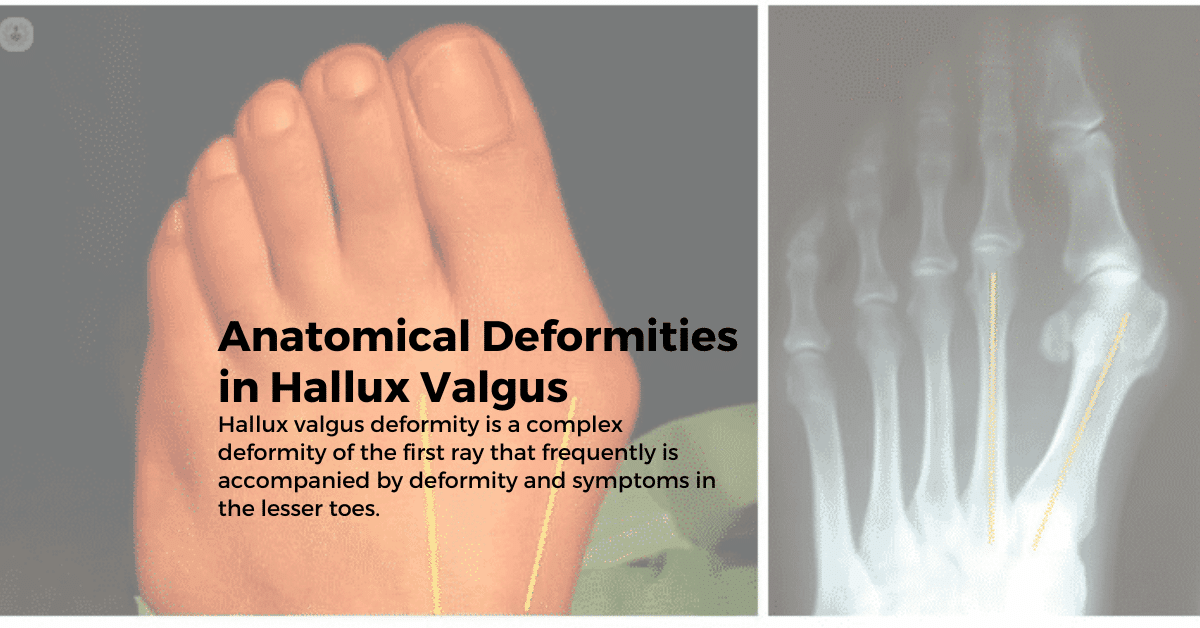
Hallux valgus deformity is a complex deformity of the first ray that frequently is accompanied by deformity and symptoms in the lesser toes.
There are two forms of the deformity:
- Adult hallux valgus
- Adolescent & juvenile hallux valgus
See also: Foot Anatomy
What are the anatomical deformities in Hallux Valgus?
There are multiple changes in the bony and soft tissue anatomy as hallux valgus progresses:
- The proximal phalanx deviates laterally.
- The first metatarsal head deviates medially leaving the sesamoid complex laterally translated relative to the metatarsal head.
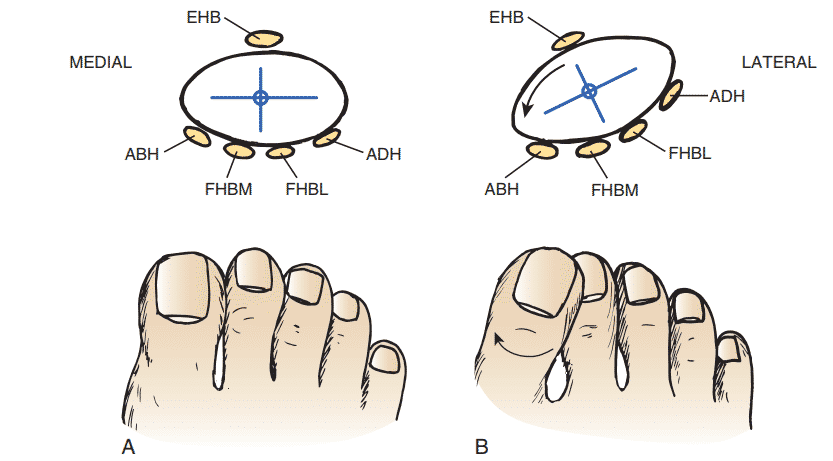
- Sesamoids remain within the respective head of the flexor hallucis brevis tendon and are attached to the base of the proximal phalanx via the sesamoido-phalangeal ligament.
- Medial MTP joint capsule becomes stretched and attenuated while the lateral capsule becomes contracted.
- Adductor tendon becomes a deforming force.
- Medial MTP joint capsule becomes stretched and attenuated while the lateral capsule becomes contracted.
- Lateral deviation of extensor hallux longus tendon (EHL) further contributes to deformity.
- Plantar and lateral migration of the abductor hallucis causes muscle to plantar flex and pronate phalanx.
See also: Adult Hallux Valgus