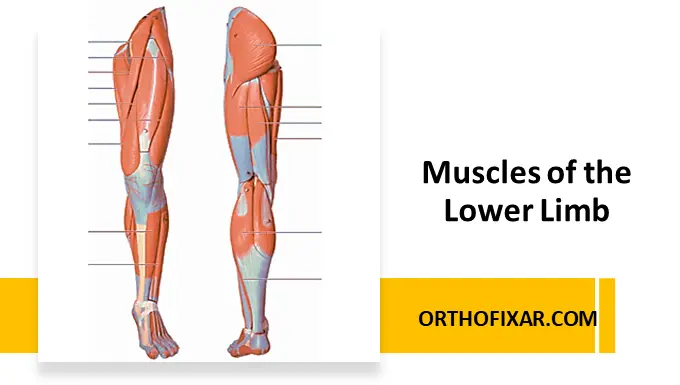
The muscles of the lower limb are highly specialized to support posture, locomotion, balance, and propulsion. Their coordinated activity allows standing, walking, running, and complex movements of the ankle and foot. From a clinical and educational perspective, understanding muscle actions, peripheral nerve supply, and nerve root derivation is essential for accurate neurological localization and musculoskeletal assessment.
This article provides a systematic overview of the muscles of the lower limb, hip, knee, ankle and foot, organized by function and summarized in clinically relevant tables.
Muscles Acting on the Hip Joint
Hip Flexion
Hip flexion is essential for limb advancement during the swing phase of gait.
| Action | Muscles Acting | Nerve Supply | Nerve Root Derivation |
|---|---|---|---|
| Hip flexion | Iliopsoas (psoas major & iliacus) | Femoral | L2, L3 |
| Rectus femoris | Femoral | L2–L4 | |
| Sartorius | Femoral | L2, L3 | |
| Pectineus | Femoral ± obturator | L2, L3 |
Hip Extension
Hip extension provides propulsion during stance and rising from a seated position.
| Action | Muscles Acting | Nerve Supply | Nerve Root Derivation |
|---|---|---|---|
| Hip extension | Gluteus maximus | Inferior gluteal | L5, S1, S2 |
| Biceps femoris (long head) | Tibial division of sciatic | L5, S1, S2 | |
| Semitendinosus | Tibial division of sciatic | L5, S1, S2 | |
| Semimembranosus | Tibial division of sciatic | L5, S1, S2 |
Hip Abduction
Hip abductors stabilize the pelvis during single-leg stance.
| Action | Muscles Acting | Nerve Supply | Nerve Root Derivation |
|---|---|---|---|
| Hip abduction | Gluteus medius | Superior gluteal | L4, L5, S1 |
| Gluteus minimus | Superior gluteal | L4, L5, S1 | |
| Tensor fasciae latae | Superior gluteal | L4, L5, S1 |
Clinical correlation: Weakness causes a positive Trendelenburg sign.
Hip Adduction
Adductors play a key role in stabilizing the lower limb during gait.
| Action | Muscles Acting | Nerve Supply | Nerve Root Derivation |
|---|---|---|---|
| Hip adduction | Adductor longus | Obturator | L2, L3, L4 |
| Adductor brevis | Obturator | L2, L3, L4 | |
| Adductor magnus (adductor part) | Obturator | L2, L3, L4 | |
| Gracilis | Obturator | L2, L3 | |
| Pectineus | Femoral ± obturator | L2, L3 |
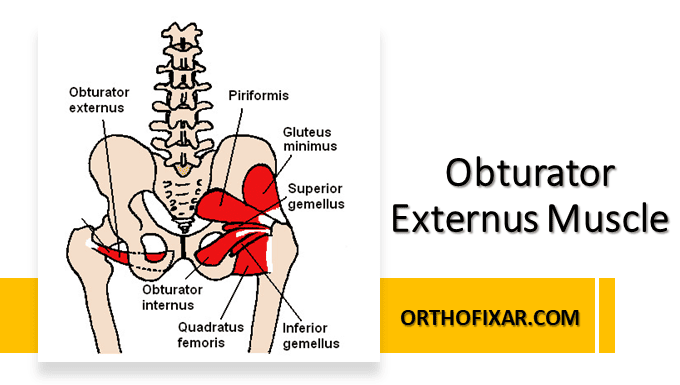
Hip External Rotation
External rotators provide dynamic stabilization of the femoral head.
| Action | Muscles Acting | Nerve Supply | Nerve Root Derivation |
|---|---|---|---|
| External rotation | Piriformis | Nerve to piriformis | S1, S2 |
| Obturator internus | Nerve to obturator internus | L5, S1 | |
| Gemellus superior | Nerve to obturator internus | L5, S1 | |
| Gemellus inferior | Nerve to quadratus femoris | L5, S1 | |
| Quadratus femoris | Nerve to quadratus femoris | L5, S1 | |
| Gluteus maximus | Inferior gluteal | L5, S1, S2 |
Hip Internal Rotation
Internal rotation occurs mainly via abductors and flexors.
| Action | Muscles Acting | Nerve Supply | Nerve Root Derivation |
|---|---|---|---|
| Internal rotation | Gluteus medius (anterior fibers) | Superior gluteal | L4, L5, S1 |
| Gluteus minimus | Superior gluteal | L4, L5, S1 | |
| Tensor fasciae latae | Superior gluteal | L4, L5, S1 |
Muscles Acting on the Knee Joint (Thigh Muscles)
Knee Extension
| Muscles Acting | Nerve Supply | Nerve Root Derivation |
|---|---|---|
| Quadriceps femoris (RF, VL, VM, VI) | Femoral | L2–L4 |
Knee Flexion
| Muscles Acting | Nerve Supply | Nerve Root Derivation |
|---|---|---|
| Biceps femoris | Sciatic | L5, S1, S2 |
| Semitendinosus | Sciatic | L5, S1, S2 |
| Semimembranosus | Sciatic | L5, S1, S2 |
| Sartorius | Femoral | L2, L3 |
| Gracilis | Obturator | L2, L3 |
Muscles Acting on the Ankle Joint
Plantar Flexion of the Ankle
Plantar flexion is essential for push-off during gait and is primarily produced by posterior compartment leg muscles.
| Action | Muscles Acting | Nerve Supply | Nerve Root Derivation |
|---|---|---|---|
| Plantar flexion (flexion) of ankle | Gastrocnemius | Tibial | S1, S2 |
| Soleus | Tibial | S1, S2 | |
| Plantaris | Tibial | S1, S2 | |
| Flexor digitorum longus | Tibial | S2, S3 | |
| Peroneus (Fibularis) longus | Superficial peroneal | L5, S1, S2 | |
| Peroneus (Fibularis) brevis | Superficial peroneal | L5, S1, S2 | |
| Flexor hallucis longus | Tibial | S2, S3 | |
| Tibialis posterior | Tibial | L4, L5 |
Clinical note: Weak plantar flexion commonly indicates tibial nerve or S1 root pathology.
Dorsiflexion of the Ankle
Dorsiflexion allows toe clearance during the swing phase of gait and is mainly controlled by anterior compartment muscles.
| Action | Muscles Acting | Nerve Supply | Nerve Root Derivation |
|---|---|---|---|
| Dorsiflexion (extension) of ankle | Tibialis anterior | Deep peroneal | L4, L5 |
| Extensor digitorum longus | Deep peroneal | L5, S1 | |
| Extensor hallucis longus | Deep peroneal | L5, S1 | |
| Peroneus tertius | Deep peroneal | L5, S1 |
Clinical correlation: Injury to the deep peroneal nerve may result in foot drop.
Inversion of the Foot
Inversion stabilizes the medial arch and is shared by muscles from both anterior and posterior compartments.
| Action | Muscles Acting | Nerve Supply | Nerve Root Derivation |
|---|---|---|---|
| Inversion | Tibialis posterior | Tibial | L4, L5 |
| Flexor digitorum longus | Tibial | S2, S3 | |
| Flexor hallucis longus | Tibial | S2, S3 | |
| Tibialis anterior | Deep peroneal | L4, L5 | |
| Extensor hallucis longus | Deep peroneal | L5, S1 |
Eversion of the Foot
Eversion is mainly produced by lateral compartment muscles and is important for lateral stability.
| Action | Muscles Acting | Nerve Supply | Nerve Root Derivation |
|---|---|---|---|
| Eversion | Peroneus (Fibularis) longus | Superficial peroneal | L5, S1, S2 |
| Peroneus (Fibularis) brevis | Superficial peroneal | L5, S1, S2 | |
| Peroneus tertius | Deep peroneal | L5, S1 | |
| Extensor digitorum longus | Deep peroneal | L5, S1 |
Muscles Acting on the Toes
Flexion of the Toes
Toe flexion contributes to balance and push-off during gait.
| Action | Muscles Acting | Nerve Supply | Nerve Root Derivation |
|---|---|---|---|
| Flexion of toes | Flexor digitorum longus | Tibial | S2, S3 |
| Flexor hallucis longus | Tibial | S2, S3 | |
| Flexor digitorum brevis | Tibial (medial plantar) | S2, S3 | |
| Flexor hallucis brevis | Tibial (medial plantar) | S2, S3 | |
| Quadratus plantae | Tibial (lateral plantar) | S2, S3 | |
| Interossei | Tibial (lateral plantar) | S2, S3 | |
| Flexor digiti minimi brevis | Tibial (lateral plantar) | S2, S3 | |
| Lumbricals (MTP joints) | Medial & lateral plantar | S2, S3 |
Extension of the Toes
Toe extension is crucial for the swing phase of gait.
| Action | Muscles Acting | Nerve Supply | Nerve Root Derivation |
|---|---|---|---|
| Extension of toes | Extensor digitorum longus | Deep peroneal | L5, S1 |
| Extensor hallucis longus | Deep peroneal | L5, S1 | |
| Extensor digitorum brevis | Deep peroneal | S1, S2 | |
| Lumbricals (IP joints) | Tibial (plantar branches) | S2, S3 |
Abduction and Adduction of the Toes
Intrinsic foot muscles control fine movements and maintain the transverse arch.
Abduction of Toes
| Muscles Acting | Nerve Supply | Nerve Root Derivation |
|---|---|---|
| Abductor hallucis | Tibial (medial plantar) | S2, S3 |
| Abductor digiti minimi | Tibial (lateral plantar) | S2, S3 |
| Dorsal interossei | Tibial (lateral plantar) | S2, S3 |
Adduction of Toes
| Muscles Acting | Nerve Supply | Nerve Root Derivation |
|---|---|---|
| Adductor hallucis | Tibial (lateral plantar) | S2, S3 |
| Plantar interossei | Tibial (lateral plantar) | S2, S3 |
Clinical and Educational Importance
- Muscle weakness patterns help localize nerve and root lesions
- Essential for neurological examination, orthopedic assessment, and radiologic correlation
- High-yield content for anatomy exams, OSCEs, and clinical practice
References & More
- Card RK, Bordoni B. Anatomy, Bony Pelvis and Lower Limb, Foot Muscles. [Updated 2025 Dec 9]. In: StatPearls [Internet]. Treasure Island (FL): StatPearls Publishing; 2025 Jan-. Available from: PubMed
- Orthopedic Physical Assessment by David J. Magee, 7th Edition.