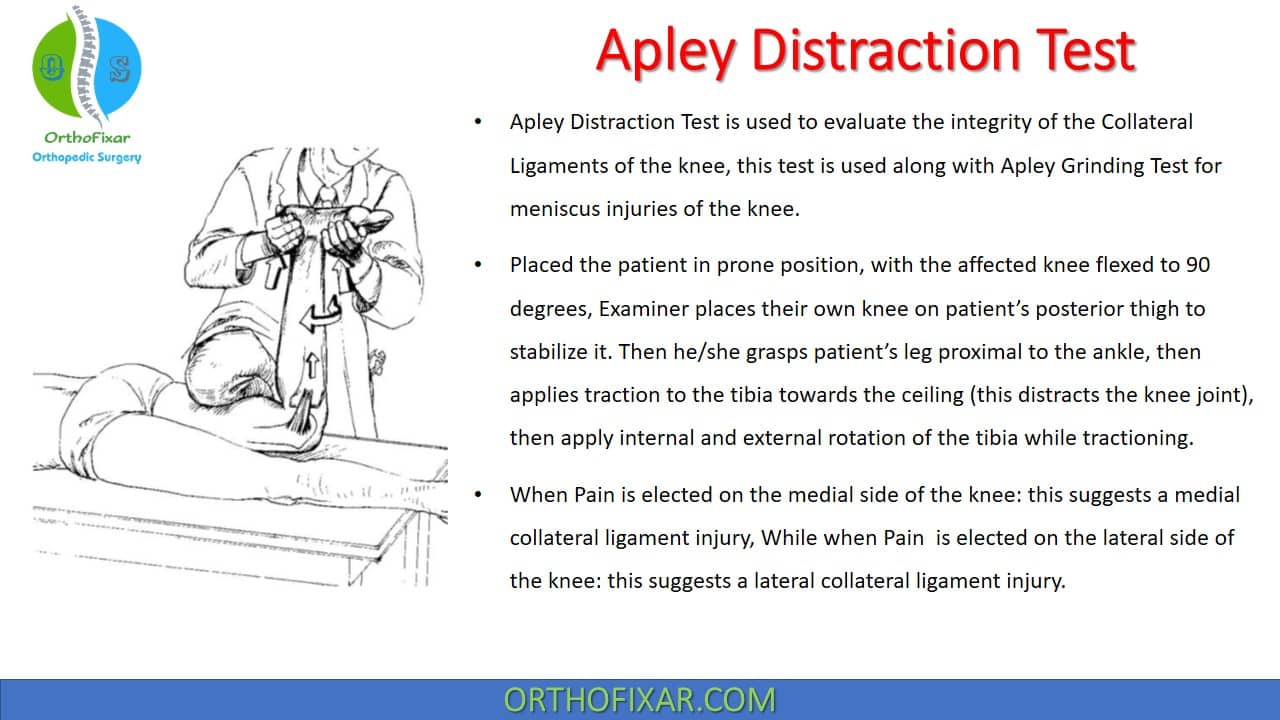
The Apley Distraction Test assesses knee collateral ligament integrity. With the patient prone and knee bent 90°, the examiner stabilizes the thigh, applies upward traction to the tibia, and rotates it. Pain on the medial side suggests a medial collateral ligament injury, while lateral pain indicates a lateral collateral ligament injury. It is often performed alongside the Apley Grinding Test for meniscus evaluation.
Apley Distraction Test is used to evaluate the integrity of the collateral ligaments of the knee; it’s used along with Apley Grinding Test for meniscus injuries of the knee.
How to perform Apley Distraction Test?
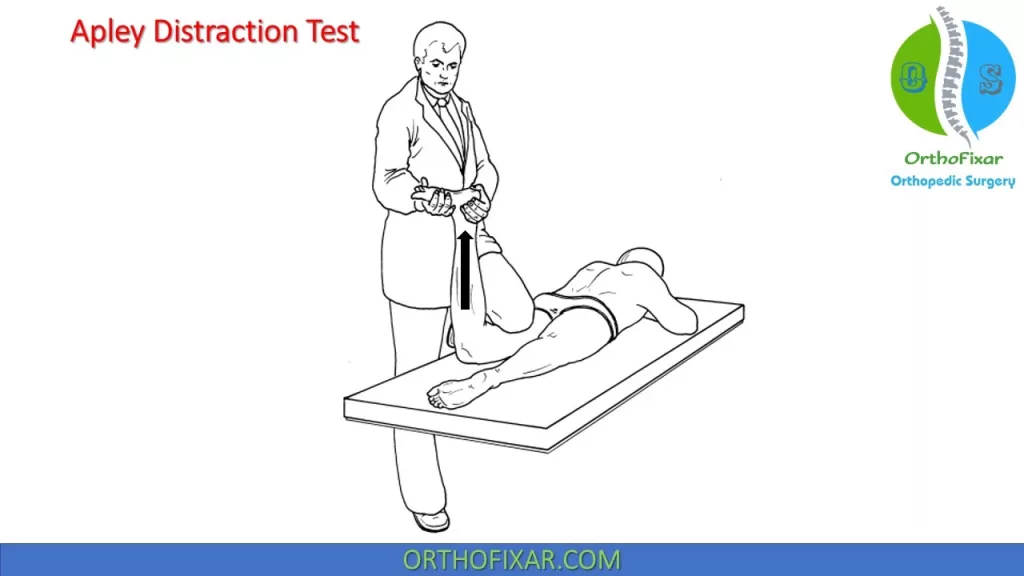
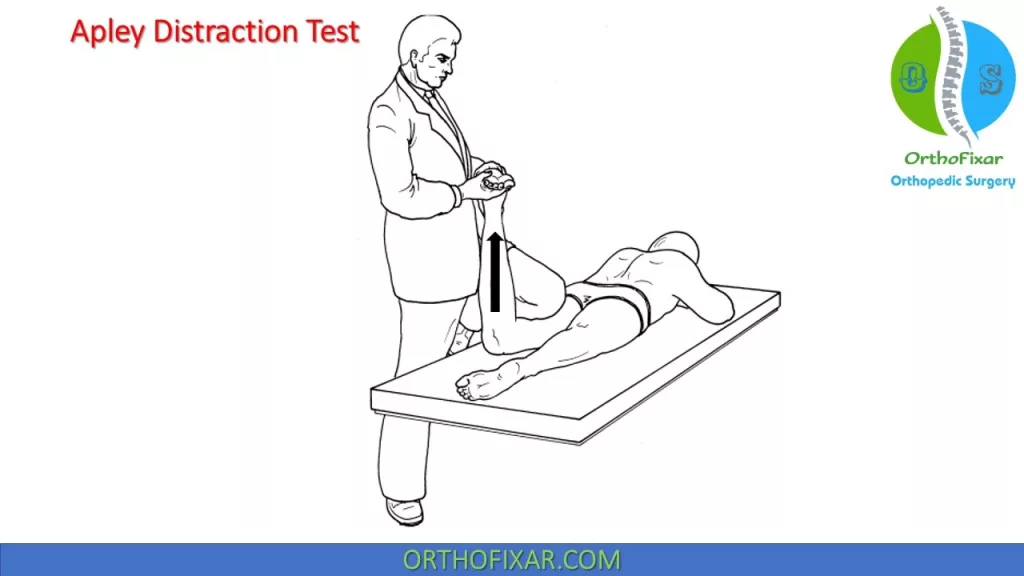
- The patient is placed in prone position, with the affected knee flexed to 90 degrees,
- The examiner places their own knee on patient’s posterior thigh to stabilize it.
- Then the examiner grasps patient’s leg proximal to the ankle, then applies traction to the tibia towards the ceiling (this distracts the knee joint), then apply internal and external rotation of the tibia while applying the traction.
See Also: Apley Grinding Test
What does a positive Apley Distraction Test mean?
Apley Distraction Test is considered positive in these situations:
- When Pain is elected on the medial side of the knee: this suggests a medial collateral ligament injury.
- While when Pain is elected on the lateral side of the knee: this suggests a lateral collateral ligament injury.
Reference & More
- Clinical Tests for the Musculoskeletal System 3rd Edition.
- Agresti D, Jeanmonod R. Apley Grind Test. [Updated 2023 Apr 29]. In: StatPearls [Internet]. Treasure Island (FL): StatPearls Publishing; 2025 Jan-. Available from: Pubmed