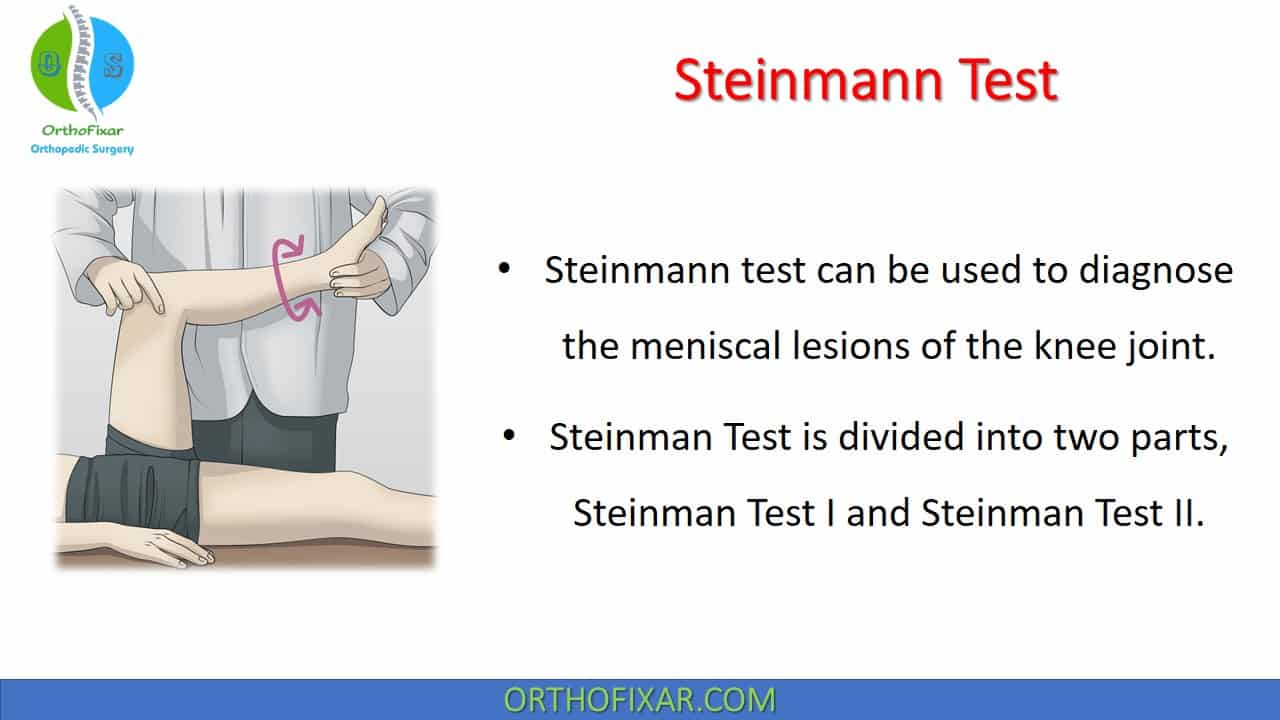
The Steinman test is a well-established orthopedic clinical examination used to evaluate meniscal injuries of the knee, particularly involving the medial and lateral menisci. It remains a valuable bedside diagnostic tool in musculoskeletal assessment, especially in settings where imaging is not immediately available.
What is the Steinmann Test?
The Steinmann test (also called Steinmann sign) is a provocative knee examination maneuver designed to detect meniscal pathology by reproducing pain through tibial rotation and joint line palpation. It is typically divided into two components:
- Steinmann Test I (Rotation Test)
- Steinmann Test II (Tenderness Displacement Test)
These tests help differentiate meniscal injuries from ligamentous or other intra-articular pathologies.
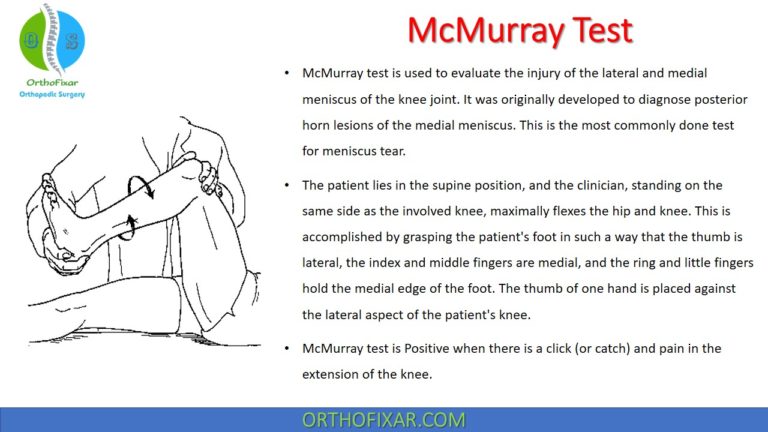
See Also: McMurray Test | Meniscus Tear
How do you do the Steinman Test?
- The patient is placed in the supine position, while the clinician stands to the side.
- Using one hand, the clinician grasps the patient’s lower leg just proximal to the malleolus.
- The other hand grasps the lateral side of the patient’s lower leg as proximal to the knee as possible while also palpating the medial / lateral joint space with the fingers.
See Also: Knee Meniscus Tear
Steinman Test is divided into two parts, Steinman Test I and Steinman Test II:
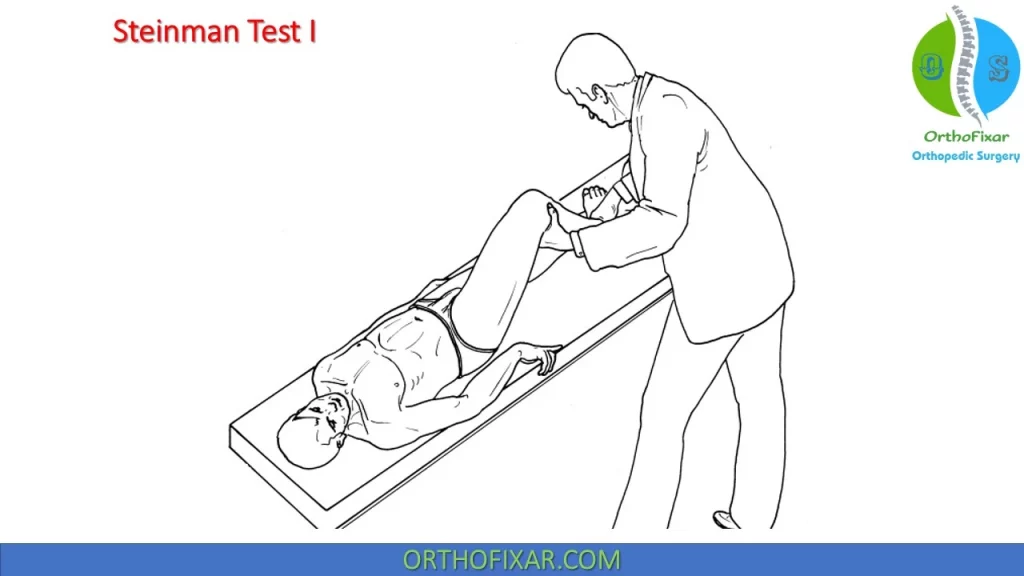
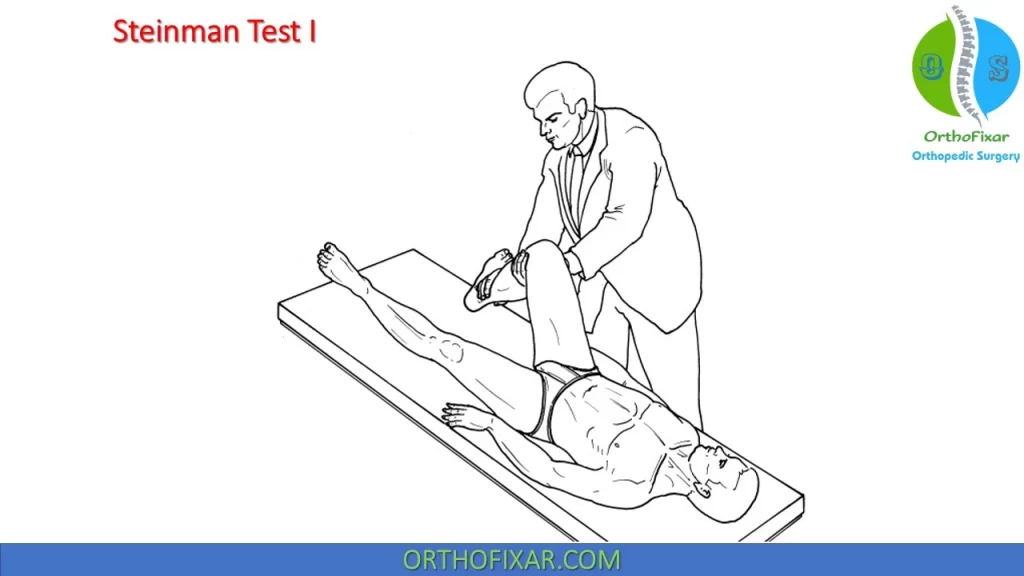
Steinman Test I:
The patient is supine. The examiner immobilizes the patient’s flexed knee with one hand and grasps the lower leg with the other hand. The examiner then forcefully rotates the lower leg in various degrees of knee flexion.
Pain in the medial joint cavity in forced external rotation suggests damage to the medial meniscus; pain in the lateral joint cavity in internal rotation suggests damage to the lateral meniscus. Because the localization of the tear can vary, the test for the Steinman I sign should be performed with the knee in varying degrees of flexion.
Steinman Test II:
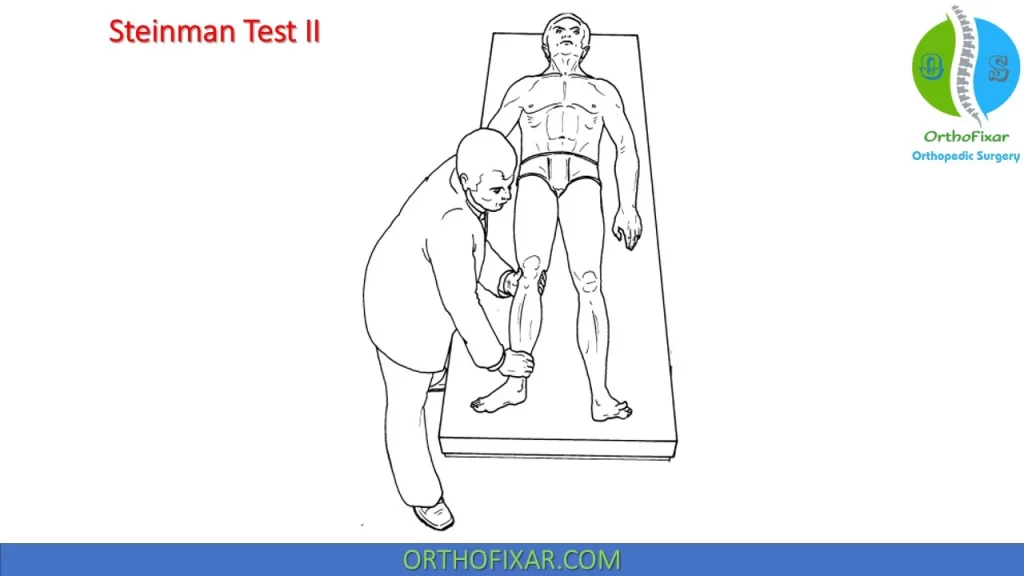
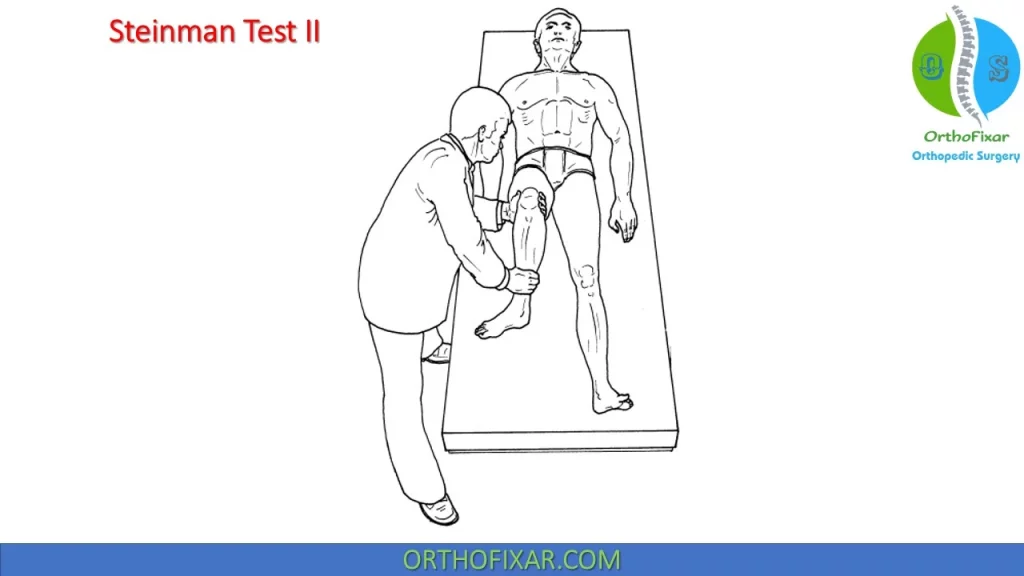
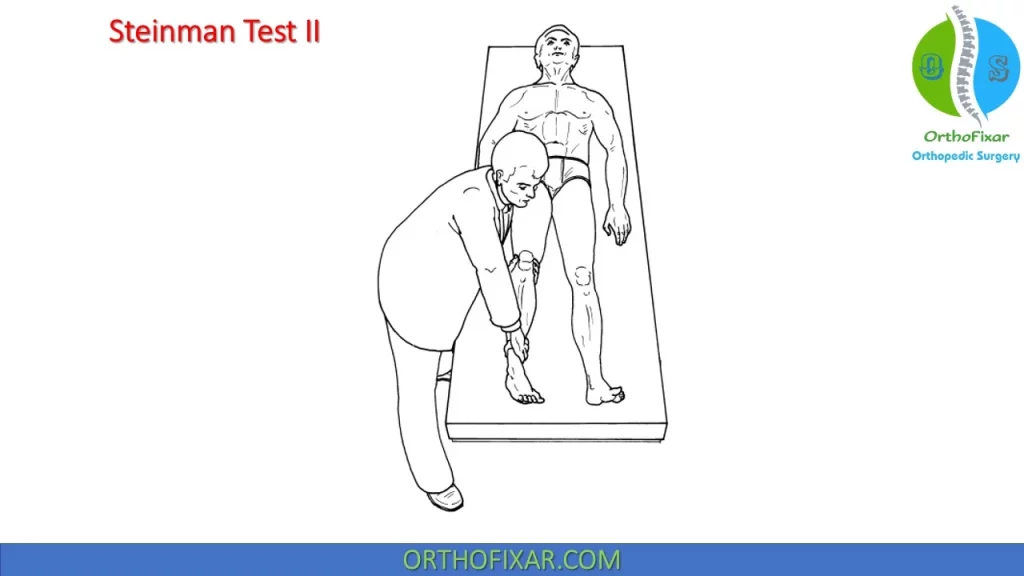
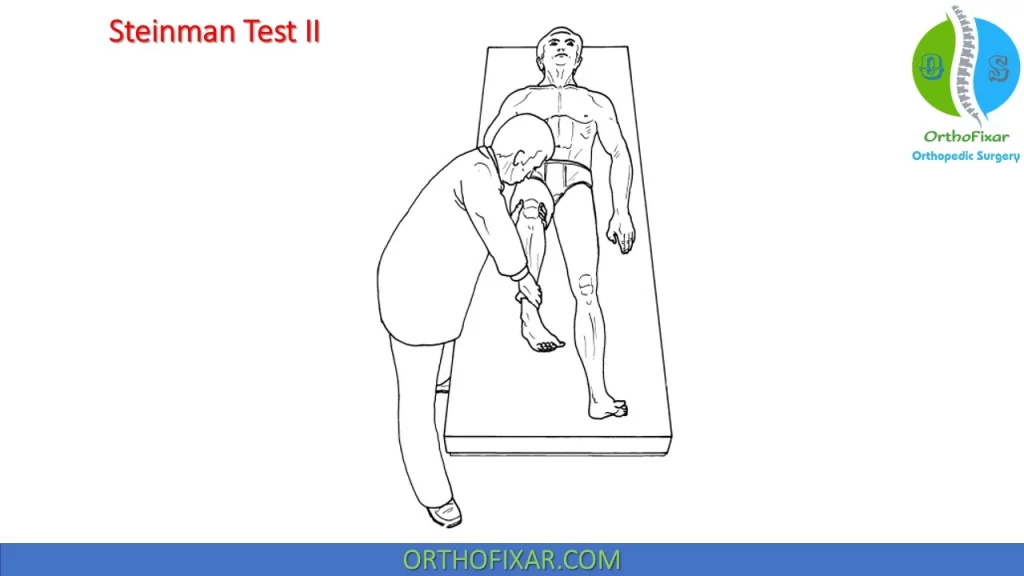
The patient is supine. The examiner grasps the knee with one hand and palpates the joint cavity. With the other hand, the examiner grasps the lower leg just proximal to the mortise of the ankle. With the patient’s thigh immobilized, the examiner places the lower leg first in external rotation, then in internal rotation, in each case alternately flexing and extending the lower leg while applying slight axial compression.
Pain in the medial or lateral joint cavity suggests a meniscus injury. The tenderness to palpation in the joint cavity migrates medially and posteriorly during flexion and slight external rotation of the knee; it then migrates proportionally to the pressure and shear forces placed on the meniscus, posteriorly during knee flexion, and back anteriorly as the knee is extended.
Although this test can also be used for an injury to the lateral meniscus, its primary purpose is to help evaluate medial meniscus lesions. A differential diagnosis must consider osteoarthritis and lesions of the medial collateral and capsular ligaments.
Steinman Test Accuracy
A study by Ricardo da Rocha Gobbo to evaluate the accuracy of five special tests for meniscal lesions of the knee joint (McMurray test, Apley test, Childress test and Steinmann test I and Steinmann test II),
The sensitivity and specificity of Steinmann test I for medial and lateral meniscal lesions was:
- Sensitivity: 69.51% (for medial meniscus) and 59.52% (for lateral meniscus).
- Specificity: 56.25% (for medial meniscus) and 44.17% (for lateral meniscus).
The sensitivity and specificity of Steinmann test II for medial and lateral meniscal lesions was:
- Sensitivity: 68.29% (for medial meniscus) and 59.52% (for lateral meniscus).
- Specificity: 56.25% (for medial meniscus) and 45.00% (for lateral meniscus).
| Test / Meniscus | Medial Meniscus | Lateral Meniscus |
|---|---|---|
| Steinmann test I | Sensitivity: 69.51% Specificity: 56.25% | Sensitivity: 59.52% Specificity: 44.17% |
| Steinmann test II | Sensitivity: 68.29% Specificity: 56.25% | Sensitivity: 59.52% Specificity: 45.00% |
References
- Winkel D, Matthijs O, Phelps V: Examination of the Knee. Gaithersburg, MD: Aspen, 1997.
- Gobbo Rda R, Rangel Vde O, Karam FC, Pires LA. PHYSICAL EXAMINATIONS FOR DIAGNOSING MENISCAL INJURIES: CORRELATION WITH SURGICAL FINDINGS. Rev Bras Ortop. 2015 Nov 16;46(6):726-9. doi: 10.1016/S2255-4971(15)30332-3. PMID: 27047833; PMCID: PMC4799353.
- Clinical Tests for the Musculoskeletal System 3rd Edition.
- Dutton’s Orthopaedic Examination, Evaluation, And Intervention 3rd Edition.