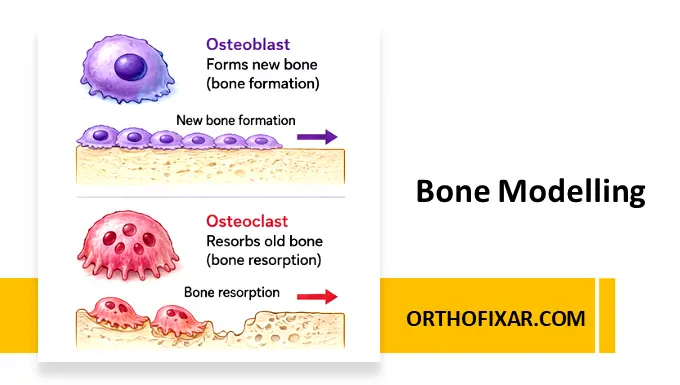
Bone modelling is a fundamental biological process responsible for changes in the size, shape, and structural organization of the skeleton. Unlike bone remodeling, which replaces old bone with new bone at the same location, bone modelling allows bones to grow, reshape, and adapt to mechanical demands through independent actions of bone-forming and bone-resorbing cells.
For medical students, healthcare professionals, and anatomy educators, understanding bone modelling is essential for comprehending skeletal development, growth disorders, orthopedic conditions, and lifelong skeletal adaptation. This process plays a critical role during childhood and adolescence but can continue throughout adulthood in specific skeletal regions.
What is Bone Modelling?
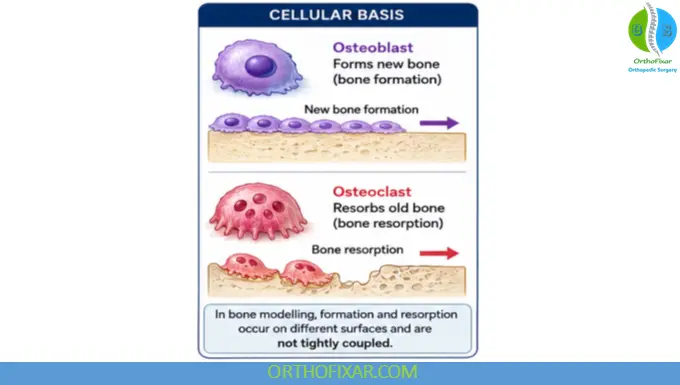
Bone modelling is the process through which bones change their overall size, shape, and position by independent activities of osteoblasts and osteoclasts. During modelling, bone formation and bone resorption occur on different bone surfaces and are not tightly coupled.
This unique characteristic distinguishes bone modelling from bone remodeling, where bone resorption is directly followed by bone formation at the same site.
Key Characteristics of Bone Modelling
- Changes the shape and dimensions of bones
- Occurs predominantly during growth and development
- Involves uncoupled activity of osteoblasts and osteoclasts
- Allows adaptation to mechanical stress
- Contributes to peak bone mass acquisition
- Continues at selected skeletal sites throughout adulthood
Cellular Basis of Bone Modelling
Bone modelling depends on the coordinated actions of two major cell types:
Osteoblasts
Osteoblasts are specialized bone-forming cells responsible for synthesizing osteoid and promoting mineralization. Their activity results in the deposition of new bone tissue, contributing to skeletal enlargement and strengthening.
Osteoclasts
Osteoclasts are multinucleated cells that resorb bone tissue. During modelling, osteoclasts remove bone from specific surfaces, helping maintain proper bone shape and structural integrity.
How Osteoblasts and Osteoclasts Work Together
In bone modelling, these cells act independently rather than sequentially. Bone can be added to one surface while simultaneously being removed from another. This mechanism allows the skeleton to adapt efficiently to growth demands and biomechanical forces.
Bone Modelling During Skeletal Growth
Bone modelling is particularly active during childhood and adolescence when rapid skeletal growth occurs.
Longitudinal Growth
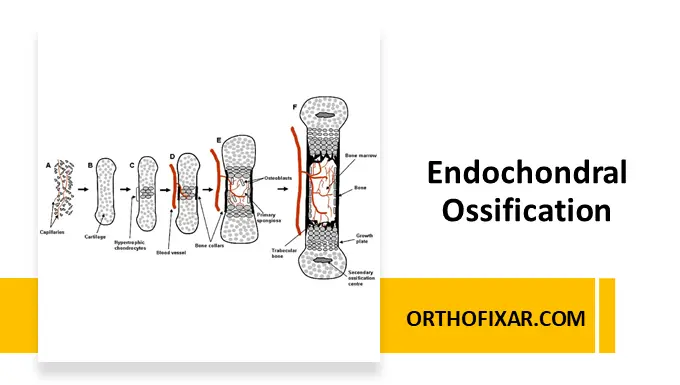
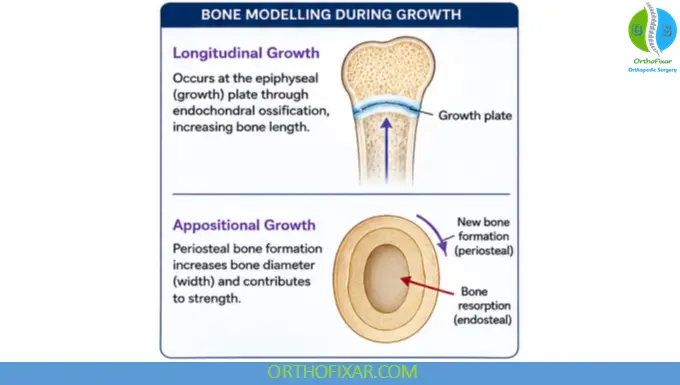
Longitudinal growth occurs primarily at the epiphyseal growth plates of long bones. Through endochondral ossification, cartilage is progressively replaced by bone, resulting in increased bone length.
As growth progresses, modelling helps maintain the proper proportions and architecture of the growing skeleton.
Radial and Appositional Growth
While longitudinal growth eventually ceases following growth plate closure, outward growth of bones may continue through intramembranous bone formation on the periosteal surface.
This process increases bone diameter and contributes significantly to mechanical strength.
Peak Bone Mass Development
Bone modelling plays a major role in achieving peak bone mass, which is generally attained during late adolescence and early adulthood. Studies have demonstrated that increases in bone size contribute substantially to skeletal strength during this period.
The accumulation of peak bone mass is considered one of the most important determinants of future fracture risk and osteoporosis prevention.
Lifelong Bone Modelling
Although bone modelling is most active during growth, it does not completely stop in adulthood.
Continued Expansion of Long Bones
Research has shown that the outer dimensions of long bones may continue expanding into the third decade of life as part of peak bone mass acquisition. In certain anatomical regions, such as the femoral neck, periosteal expansion may continue throughout life.
This gradual expansion helps compensate for age-related bone loss and contributes to maintaining skeletal strength.
Adaptation to Mechanical Loading
According to Wolff’s Law, bone adapts to the stresses placed upon it. Mechanical loading stimulates modelling responses that strengthen areas subjected to increased forces.
Examples include:
- Athletic training adaptations
- Occupational skeletal changes
- Recovery following orthopedic procedures
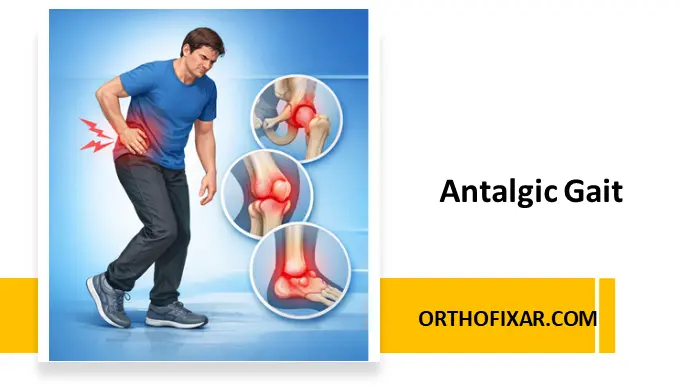
- Structural responses to altered gait patterns
Bone Modelling vs Bone Remodeling
Understanding the distinction between these two processes is essential in medical education.
Bone Modelling
Primary Purpose
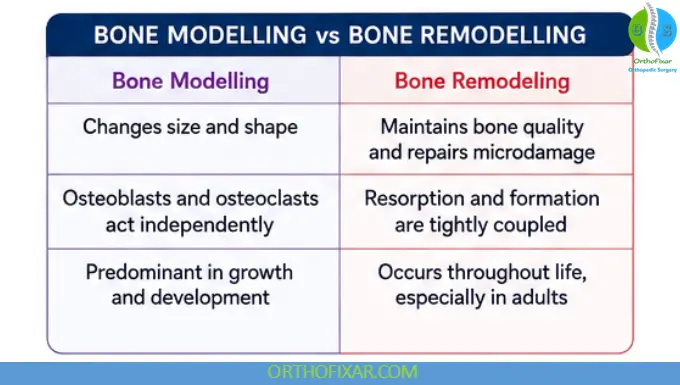
Changes bone size and shape
Cellular Activity
Osteoblasts and osteoclasts work independently
Main Function
Growth and structural adaptation
Predominant Life Stage
Childhood and adolescence
Bone Remodeling
Primary Purpose
Maintains bone quality and mineral homeostasis
Cellular Activity
Resorption and formation are tightly coupled
Main Function
Repair and renewal of bone tissue
Predominant Life Stage
Occurs throughout life, especially in adults
Both processes are essential for maintaining skeletal health, but they serve different physiological functions.
Clinical Importance of Bone Modelling
Understanding bone modelling has significant clinical applications.
Orthopedics
Bone modelling explains:
- Skeletal growth patterns
- Fracture healing adaptations
- Bone deformities
- Structural responses to implants
Pediatrics
Knowledge of bone modelling is crucial for evaluating:
- Growth disorders
- Skeletal dysplasias
- Developmental abnormalities
- Pediatric orthopedic conditions
Osteoporosis Prevention
Maximizing bone modelling during growth contributes to higher peak bone mass, reducing the risk of osteoporosis and fractures later in life.
Sports Medicine
Exercise-induced bone modelling improves bone geometry and strength, highlighting the importance of physical activity during developmental years.
Factors Influencing Bone Modelling
Several factors regulate bone modelling activity.
Genetic Factors
Genes influence:
- Bone size
- Skeletal geometry
- Growth potential
- Peak bone mass achievement
Hormonal Factors
Key hormones include:
- Growth hormone
- Insulin-like growth factor-1 (IGF-1)
- Estrogen
- Testosterone
- Parathyroid hormone
Nutritional Factors
Adequate intake of:
- Calcium
- Vitamin D
- Protein
- Phosphorus
supports optimal bone formation and skeletal development.
Mechanical Factors
Weight-bearing exercise and physical activity stimulate bone formation and improve bone architecture through modelling mechanisms.
Conclusion
Bone modelling is a dynamic biological process responsible for shaping the skeleton throughout growth and, to a lesser extent, during adulthood. By allowing independent actions of osteoblasts and osteoclasts, bone modelling enables bones to change size, shape, and structural organization in response to developmental and mechanical demands.
For medical education, understanding bone modelling is essential for mastering skeletal physiology, growth mechanisms, orthopedic principles, and disease processes affecting bone health. As research continues to uncover the complexities of skeletal adaptation, bone modelling remains a cornerstone concept in modern musculoskeletal medicine.
References & More
- Office of the Surgeon General (US). Bone Health and Osteoporosis: A Report of the Surgeon General. Rockville (MD): Office of the Surgeon General (US); 2004. 2, The Basics of Bone in Health and Disease. Available from: https://www.ncbi.nlm.nih.gov/sites/books/NBK45504/
- Clarke B. Normal bone anatomy and physiology. Clin J Am Soc Nephrol. 2008 Nov;3 Suppl 3(Suppl 3):S131-9. doi: 10.2215/CJN.04151206. PMID: 18988698; PMCID: PMC3152283. Link
- Langdahl B, Ferrari S, Dempster DW. Bone modeling and remodeling: potential as therapeutic targets for the treatment of osteoporosis. Ther Adv Musculoskelet Dis. 2016 Dec;8(6):225-235. doi: 10.1177/1759720X16670154. Epub 2016 Oct 5. PMID: 28255336; PMCID: PMC5322859. Link
- Duan, Yunbo et al. “Structural and biomechanical basis of sexual dimorphism in femoral neck fragility has its origins in growth and aging.” Journal of bone and mineral research : the official journal of the American Society for Bone and Mineral Research vol. 18,10 (2003): 1766-74. doi:10.1359/jbmr.2003.18.10.1766. Link
- Blom, A., Warwick, D., & Whitehouse, M. R. (2018). Apley & Solomon’s system of orthopaedics and trauma (10th ed.). CRC Press