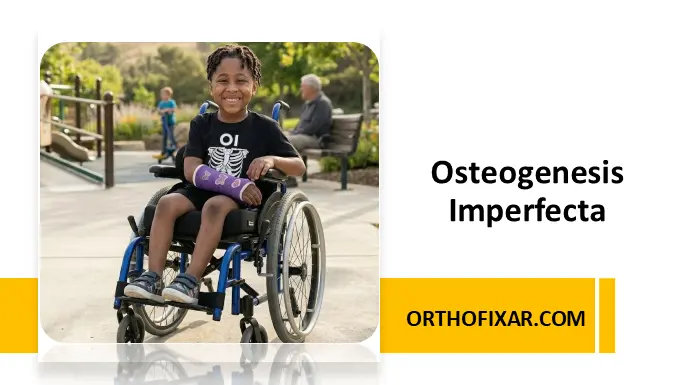
Osteogenesis Imperfecta, commonly called brittle bone disease, is a rare inherited connective tissue disorder characterized by fragile bones that fracture easily. The condition primarily results from abnormalities in type I collagen production or structure, leading to weakened bones and connective tissues.
The severity of osteogenesis imperfecta (OI) varies widely. Some individuals experience only a few fractures during their lifetime, while others may suffer hundreds of fractures, skeletal deformities, respiratory complications, hearing loss, and mobility impairment.
Epidemiology of Osteogenesis Imperfecta
OI affects approximately 1 in 10,000 to 20,000 individuals worldwide. Both males and females can be affected equally. Most cases are linked to mutations in the COL1A1 or COL1A2 genes, which encode type I collagen.
Osteogenesis Imperfecta Symptoms
Common Osteogenesis Imperfecta Symptoms
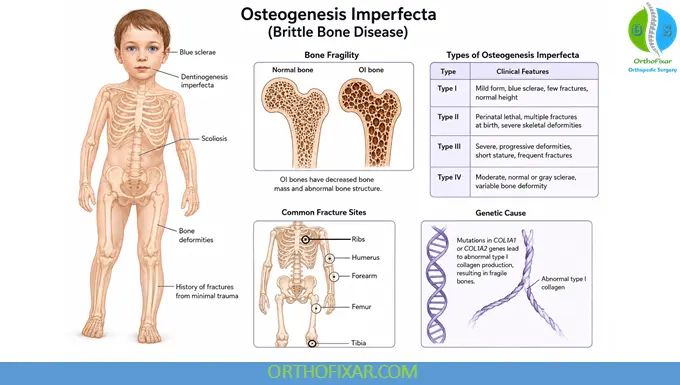
The clinical manifestations of OI differ according to disease severity and subtype. Common osteogenesis imperfecta symptoms include:
- Recurrent bone fractures with minimal trauma
- Bone deformities
- Short stature
- Blue sclerae (bluish tint of the eyes)
- Hearing loss
- Dentinogenesis imperfecta (fragile or discolored teeth)
- Joint laxity
- Scoliosis
- Muscle weakness
- Chronic bone pain
- Respiratory difficulties in severe forms
Severe Symptoms
In severe neonatal forms, infants may present with:
- Fractures at birth
- Underdeveloped lungs
- Rib cage deformities
- Severe skeletal abnormalities
- Life-threatening respiratory compromise
See Also: Sinding-Larsen-Johansson Syndrome: Causes, Symptoms & Treatment
Osteogenesis Imperfecta Types
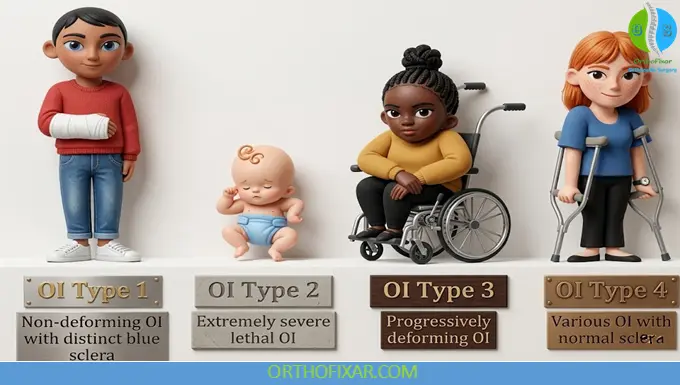
There are at least 19 recognized osteogenesis imperfecta types, though Types I–IV remain the most clinically important and commonly discussed.
Type I Osteogenesis Imperfecta
- Mildest and most common form
- Blue sclerae
- Mild bone fragility
- Few skeletal deformities
- Hearing loss may develop in adulthood
Type II Osteogenesis Imperfecta
- Most severe form
- Frequently lethal in the perinatal period
- Multiple fractures present at birth
- Severe respiratory complications
Type III Osteogenesis Imperfecta
- Progressive deforming type
- Severe bone fragility
- Short stature
- Significant skeletal deformities
- Wheelchair dependence common
Type IV Osteogenesis Imperfecta
- Moderate severity
- Variable bone deformity
- Normal or gray sclerae
- Frequent fractures
Causes and Genetics of Osteogenesis Imperfecta
OI is primarily caused by mutations affecting collagen synthesis. Approximately 90% of cases involve mutations in:
- COL1A1
- COL1A2
These mutations impair the production or quality of type I collagen, weakening bones and connective tissues.
Inheritance Patterns
OI inheritance patterns include:
- Autosomal dominant
- Autosomal recessive
- Rare X-linked forms
Some cases arise from spontaneous (de novo) mutations without family history.
Osteogenesis Imperfecta Test and Diagnosis
How Is Osteogenesis Imperfecta Diagnosed?
An accurate osteogenesis imperfecta test strategy combines clinical evaluation, imaging studies, and genetic analysis.
Clinical Evaluation
Healthcare providers assess:
- Fracture history
- Family history
- Physical examination findings
- Growth abnormalities
- Blue sclerae and dental findings
Imaging Studies
Common imaging modalities include:
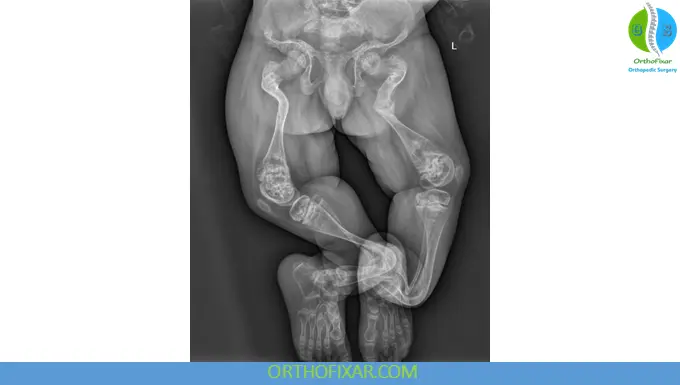
- X-rays
- Bone density scans (DEXA)
- Prenatal ultrasound in severe cases
Genetic Testing
Genetic analysis can identify mutations in collagen-related genes. Blood-based DNA testing is commonly used for confirmation.
Collagen Testing
Specialized collagen biochemical analysis may be performed using skin fibroblast samples.
Differential Diagnosis
Conditions that may mimic OI include:
- Child abuse
- Hypophosphatasia
- Rickets
- Other skeletal dysplasias
Osteogenesis Imperfecta Treatment
Current Osteogenesis Imperfecta Treatment Approaches
There is currently no cure for OI. Management focuses on reducing fractures, improving mobility, maximizing bone strength, and preventing complications.
Medical Management
Bisphosphonate Therapy
Bisphosphonates are considered a cornerstone of modern osteogenesis imperfecta treatment, especially in pediatric patients. Benefits include:
- Increased bone mineral density
- Reduced fracture rates
- Improved mobility
Common medications include:
- Pamidronate
- Zoledronic acid
- Neridronate
Surgical Treatment
Intramedullary Rodding
Orthopedic surgery may involve insertion of metal rods into long bones to:
- Stabilize bones
- Correct deformities
- Prevent fractures
Physical Therapy and Rehabilitation
Physical therapy plays a critical role in maintaining:
- Muscle strength
- Joint mobility
- Functional independence
- Safe ambulation
Assistive devices may include:
- Wheelchairs
- Braces
- Walkers
Emerging Therapies
New targeted therapies under investigation include:
- Anti-sclerostin antibodies
- Transforming growth factor-beta (TGF-β) inhibitors
- Gene-targeted therapies
These approaches may improve bone formation and reduce skeletal complications in the future.
Complications of Osteogenesis Imperfecta
Long-term complications may include:
- Chronic pain
- Severe scoliosis
- Respiratory insufficiency
- Hearing impairment
- Dental abnormalities
- Cardiovascular complications
Multidisciplinary care is essential for optimal long-term outcomes.
Prognosis
Prognosis depends on the severity of disease:
- Mild forms often allow normal lifespan and functional independence.
- Severe forms may result in significant disability or early mortality.
Early diagnosis and comprehensive management improve quality of life substantially.
Frequently Asked Questions (FAQ)
What is osteogenesis imperfecta?
Osteogenesis imperfecta is a genetic disorder causing fragile bones due to defective collagen production.
What are the common osteogenesis imperfecta symptoms?
Common symptoms include recurrent fractures, blue sclerae, hearing loss, short stature, and skeletal deformities.
What are the main osteogenesis imperfecta types?
The primary forms are Types I, II, III, and IV, ranging from mild to severe disease.
What is the best osteogenesis imperfecta test?
Diagnosis usually involves genetic testing, imaging studies, clinical examination, and family history assessment.
What are current osteogenesis imperfecta treatment options?
Treatment includes bisphosphonates, surgery, physical therapy, fracture prevention, and supportive multidisciplinary care.
Conclusion
Osteogenesis Imperfecta is a complex inherited connective tissue disorder with diverse clinical presentations ranging from mild bone fragility to life-threatening skeletal disease. Advances in genetics and targeted therapies continue to improve diagnosis and treatment strategies. Early recognition of osteogenesis imperfecta symptoms, accurate osteogenesis imperfecta test protocols, and individualized osteogenesis imperfecta treatment plans are essential for improving patient outcomes and quality of life.
References & More
- Subramanian S, Anastasopoulou C, Viswanathan VK. Osteogenesis Imperfecta. [Updated 2023 Feb 6]. In: StatPearls [Internet]. Treasure Island (FL): StatPearls Publishing; 2026 Jan-. Available from: Pubmed
- Kang H, Aryal A C S, Marini JC. Osteogenesis imperfecta: new genes reveal novel mechanisms in bone dysplasia. Transl Res. 2017 Mar;181:27-48. doi: 10.1016/j.trsl.2016.11.005. Epub 2016 Nov 19. Pubmed
- Subramanian S, Anastasopoulou C, Viswanathan VK. Osteogenesis Imperfecta. [Updated 2023 Feb 6]. In: StatPearls [Internet]. Treasure Island (FL): StatPearls Publishing; 2026 Jan-. Available from: Pubmed