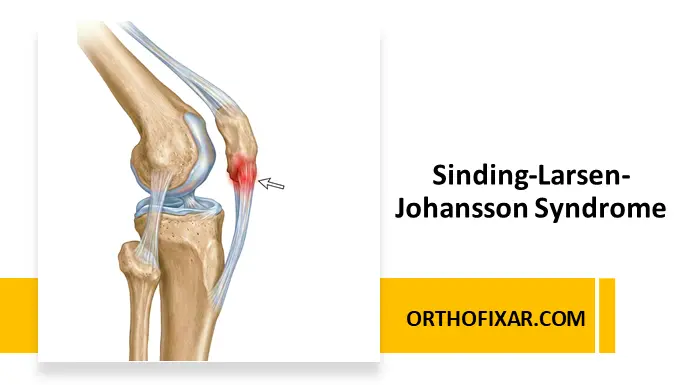
Sinding-Larsen-Johansson syndrome (SLJS) is a common overuse knee condition affecting active children and adolescents during growth spurts. It causes pain at the lower part of the kneecap where the patellar tendon attaches. Although the condition is self-limiting and usually resolves with skeletal maturity, early recognition and appropriate management are important to prevent prolonged symptoms and activity limitations.
This article reviews the epidemiology, pathophysiology, clinical features, diagnosis, treatment, rehabilitation, prognosis, and prevention of SLJS using evidence-based medical literature and trusted educational resources.
What is Sinding-Larsen-Johansson Syndrome?
Sinding-Larsen-Johansson syndrome is a juvenile osteochondrosis and traction apophysitis involving the inferior pole of the patella (kneecap). It occurs at the proximal attachment of the patellar tendon and is considered an overuse injury associated with repetitive stress on the developing growth plate.
The condition mainly affects physically active adolescents between 10 and 14 years of age, particularly those involved in jumping and running sports.
Epidemiology
Sinding-Larsen-Johansson Syndrome most commonly occurs in:
- Adolescents during rapid growth phases
- Athletes participating in:
- Soccer
- Basketball
- Volleyball
- Track and field
- Gymnastics
The syndrome is more frequently reported in males, although increased sports participation among females has narrowed this difference.
Pathophysiology
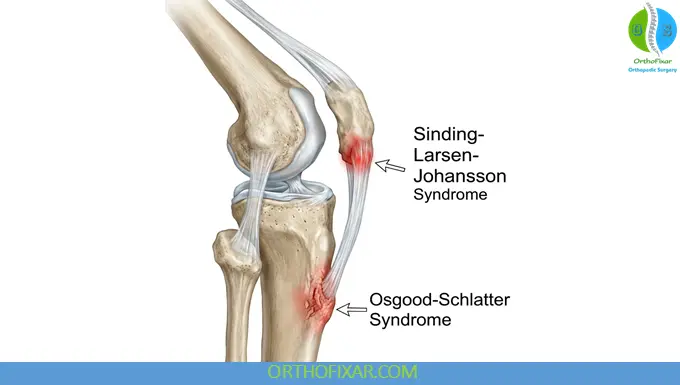
The disorder develops because repetitive traction forces from the quadriceps muscle and patellar tendon stress the immature inferior patellar growth plate. Repeated microtrauma leads to inflammation, micro-avulsions, and sometimes calcification or fragmentation at the lower pole of the patella.
The underlying mechanism is similar to:
However, SLJS affects the superior attachment of the patellar tendon at the patella, whereas Osgood-Schlatter disease affects the tibial tubercle.
Risk Factors
Several factors increase the risk of developing Sinding-Larsen-Johansson Syndrome:
- Rapid skeletal growth
- Repetitive jumping or sprinting
- Tight quadriceps and hamstrings
- Overtraining
- Poor lower-extremity biomechanics
- Inadequate recovery periods
- High sports intensity during adolescence
Clinical Symptoms
The hallmark symptom is anterior knee pain localized to the inferior pole of the patella.
Common Symptoms
- Pain below the kneecap
- Tenderness over the inferior patella
- Pain during:
- Running
- Jumping
- Squatting
- Climbing stairs
- Kneeling
- Mild swelling
- Limping after activity
- Symptoms relieved with rest
Physical Examination Findings
Clinicians may identify:
- Point tenderness at the inferior patellar pole
- Pain with resisted knee extension
- Tight quadriceps and hamstrings
- Mild soft tissue swelling
- Activity-related discomfort without major joint effusion
Diagnostic Evaluation
Sinding-Larsen-Johansson Syndrome is primarily a clinical diagnosis, although imaging may assist in confirming the condition or excluding other causes of anterior knee pain.
X-Ray Findings
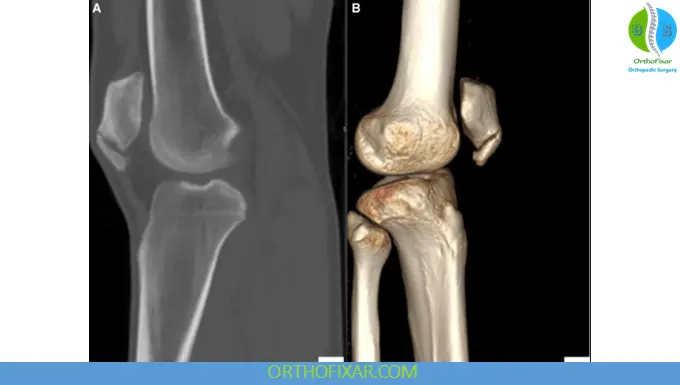
Plain radiographs may show:
- Fragmentation of the inferior patellar pole
- Calcification
- Irregular ossification
Ultrasound
Musculoskeletal ultrasound may reveal:
- Patellar tendon thickening
- Cartilage swelling
- Fragmentation at the inferior patella
MRI
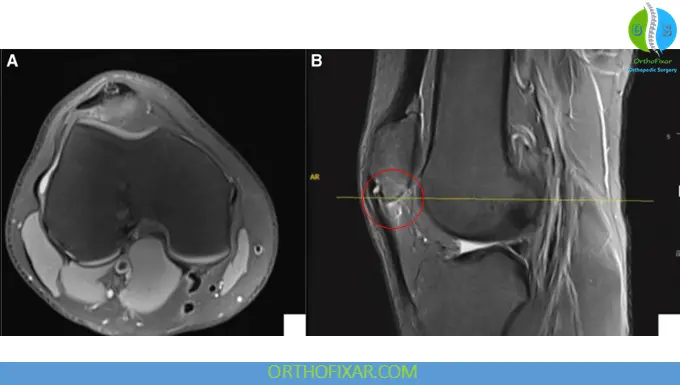
MRI is reserved for atypical or severe cases and may help differentiate SLJS from:
- Patellar sleeve avulsion fractures
- Patellar tendinopathy
- Osteochondral lesions
- Infection or neoplasm
Differential Diagnosis
Important conditions to consider include:
| Condition | Key Distinguishing Feature |
|---|---|
| Osgood-Schlatter disease | Pain at tibial tubercle |
| Patellar tendinopathy | More common in older adolescents/adults |
| Patellar sleeve fracture | Acute traumatic onset |
| Osteochondritis dissecans | Intra-articular symptoms |
| Hoffa fat pad impingement | Pain inferior to patella |
| Juvenile idiopathic arthritis | Inflammatory symptoms |
Sinding-Larsen-Johansson Syndrome Treatment
Sinding-Larsen-Johansson Syndrome is usually treated conservatively.
Activity Modification
The cornerstone of treatment is reducing aggravating activities.
Patients should temporarily limit:
- Jumping
- Sprinting
- Repetitive squatting
- High-impact sports
Complete immobilization is rarely necessary.
Pain Management
Conservative pain control includes:
- Ice application
- Relative rest
- Short-term NSAIDs when appropriate
Clinicians generally avoid corticosteroid injections because of potential complications including tendon weakening and subcutaneous atrophy.
Physical Therapy
Rehabilitation focuses on correcting biomechanical stress and restoring flexibility.
Typical Physical Therapy Components
- Quadriceps stretching
- Hamstring stretching
- Hip strengthening
- Core stabilization
- Gradual eccentric loading
- Progressive return-to-sport training
Physical therapy may shorten symptom duration and improve functional recovery.
Return to Sports
Athletes may return to sports once they achieve:
- Pain-free range of motion
- Full strength
- Ability to jump and run without symptoms
- No tenderness on examination
Recovery timelines vary but often range from several weeks to several months.
Prognosis
The prognosis is excellent.
Sinding-Larsen-Johansson Syndrome is considered a self-limiting condition that generally resolves once skeletal maturity is reached and the growth plate closes. Most adolescents recover completely with conservative care.
Persistent or severe cases requiring surgery are uncommon. Surgical intervention is typically reserved for chronic symptomatic ossicles or refractory pain after failed conservative therapy.
Prevention Strategies
Although not always preventable, the following strategies may reduce risk:
- Proper warm-up routines
- Gradual increases in sports intensity
- Flexibility training
- Strengthening programs
- Adequate recovery time
- Monitoring training loads during growth spurts
Frequently Asked Questions (FAQ)
Is Sinding-Larsen-Johansson syndrome serious?
No. SLJS is generally benign and self-limiting, though symptoms can interfere with sports participation if untreated.
Can adults develop SLJS?
The condition primarily affects adolescents with open growth plates. Adult presentations are rare and may reflect residual ossicles or chronic patellar pathology.
How long does recovery take?
Most patients improve within weeks to months depending on activity modification and rehabilitation adherence.
Is surgery necessary?
Surgery is rarely required and is reserved for persistent symptomatic cases that fail conservative treatment.
Key Takeaways
- Sinding-Larsen-Johansson syndrome is an overuse injury affecting the inferior pole of the patella in active adolescents.
- Repetitive traction from sports activities causes inflammation and microtrauma at the patellar tendon insertion.
- Symptoms include anterior knee pain worsened by running and jumping.
- Diagnosis is primarily clinical, with imaging used when needed.
- Conservative treatment with activity modification and physical therapy is highly effective.
- Prognosis is excellent, and most adolescents return fully to sports.
References & More
- Wilczyński B, Taraszkiewicz M, de Tillier K, Biały M, Zorena K. Sinding-Larsen-Johansson disease. Clinical features, imaging findings, conservative treatments and research perspectives: a scoping review. PeerJ. 2024 Sep 25;12:e17996. doi: 10.7717/peerj.17996. PMID: 39346060; PMCID: PMC11438430. Pubmed
- Patel DR, Villalobos A. Evaluation and management of knee pain in young athletes: overuse injuries of the knee. Transl Pediatr. 2017 Jul;6(3):190-198. doi: 10.21037/tp.2017.04.05. PMID: 28795010; PMCID: PMC5532199. Pubmed
- Draghi F, Danesino GM, Coscia D, Precerutti M, Pagani C. Overload syndromes of the knee in adolescents: Sonographic findings. J Ultrasound. 2008 Dec;11(4):151-7. doi: 10.1016/j.jus.2008.09.001. Epub 2008 Oct 30. PMID: 23396316; PMCID: PMC3552786. Pubmed
- Alhamzah HA, Benfaris DM, Aldosari ZA, Alwabel AA, Awwad MW. Beyond conservative management: Surgical excision for symptomatic Sinding-Larsen-Johansson syndrome: A case report and literature review. Medicine (Baltimore). 2025 Dec 26;104(52):e46792. doi: 10.1097/MD.0000000000046792. PMID: 41465979; PMCID: PMC12746931. Pubmed