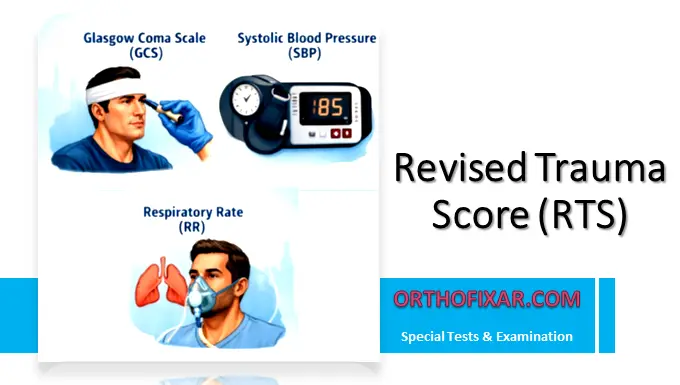
Revised Trauma Score (RTS)
The Revised Trauma Score (RTS) is a widely used physiological scoring system designed to assess the severity of…
Read Full Entry →This section includes all the orthopedic scores and Indexes that’s used to evaluate the function of the patient.
The Revised Trauma Score (RTS) is a widely used physiological scoring system designed to assess the severity of…
Read Full Entry →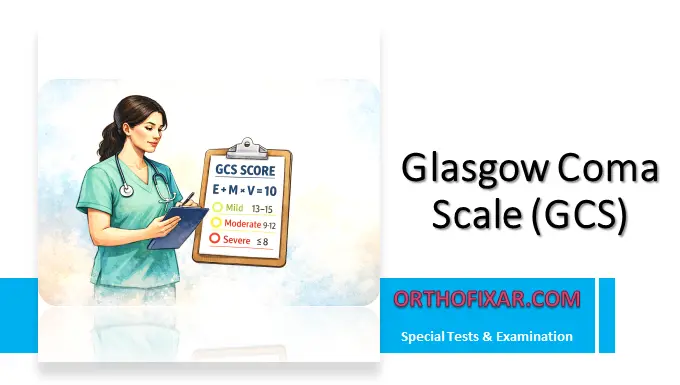
The Glasgow Coma Scale (GCS) is a standardized neurological tool used to assess a patient’s level of consciousness,…
Read Full Entry →
Harris Hip Score (HHS) is a validated tool used to measure the functional capacity of a patient with…
Read Full Entry →
The METS score (Metabolic Equivalents of Task) is a standardized way to express functional capacity and exercise tolerance.…
Read Full Entry →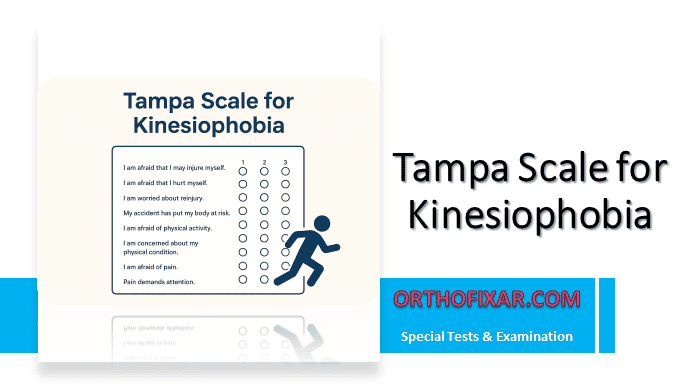
The Tampa Scale for Kinesiophobia (TSK) is a 17-item self-report questionnaire designed to measure the fear of movement…
Read Full Entry →
The Fear-Avoidance Beliefs Questionnaire (FABQ) is a validated self-report instrument designed to measure how a patient’s beliefs about…
Read Full Entry →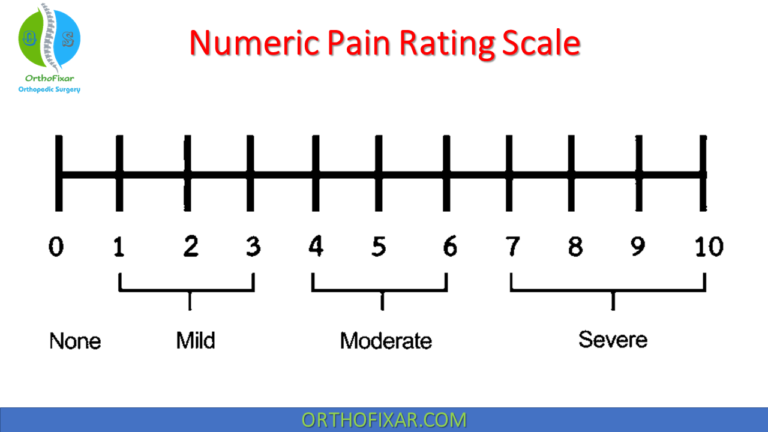
The patient rates his level of pain on an 11 point scale ranging from 0 to 10, with…
Read Full Entry →
Pirani Score is composed of 10 different physical examination findings used in classification of the clubfoot deformity.
Read Full Entry →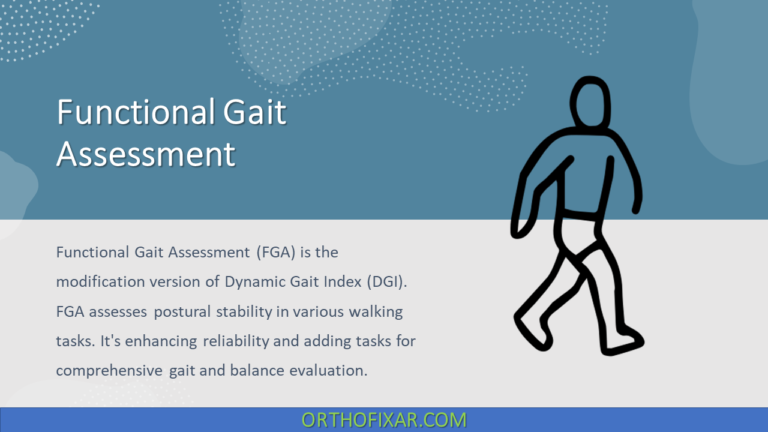
Functional Gait Assessment (FGA) is the modification version of Dynamic Gait Index (DGI). FGA assesses postural stability in various…
Read Full Entry →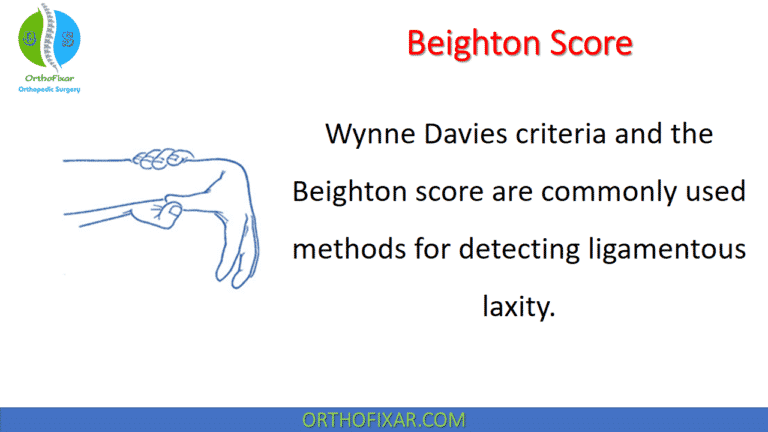
Wynne Davies criteria and the Beighton score are commonly used methods for detecting ligamentous laxity. Beighton score method…
Read Full Entry →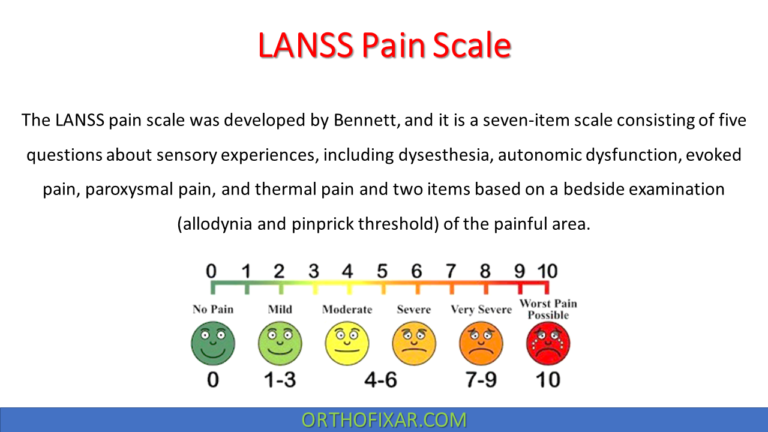
LANSS Pain Scale (Leeds Assessment of Neuropathic Symptoms and Signs) can help to determine whether the nerves that…
Read Full Entry →
Mcgill Pain Scale Questionnaire and its short form provide the patient with three major classes of word descriptors…
Read Full Entry →