Ruland Biceps Squeeze Test
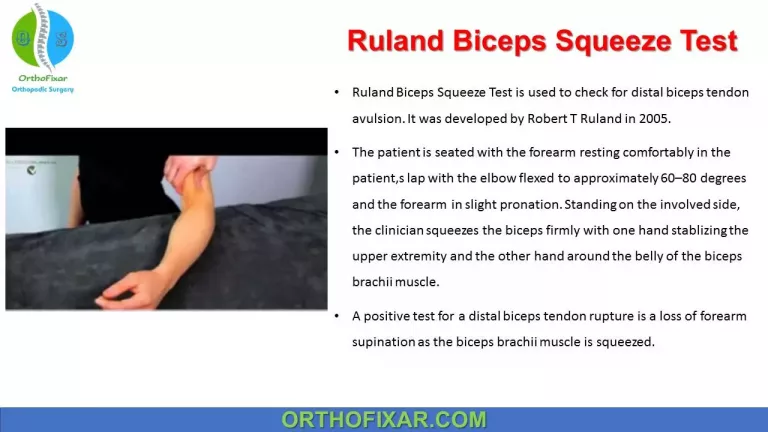
Ruland Biceps Squeeze Test is used to check for distal biceps tendon avulsion. This test is similar to…
Read Full Entry →Special Test for orthopedic surgeon…
Ruland Biceps Squeeze Test is used to check for distal biceps tendon avulsion. This test is similar to…
Read Full Entry →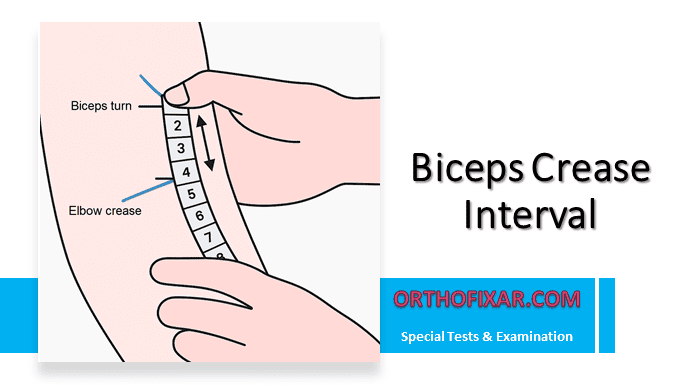
The Biceps Crease Interval (BCI) is a clinical measurement technique used to diagnose distal biceps tendon ruptures at…
Read Full Entry →
The patient stands facing a standard examination table with their symptomatic arm positioned over the lateral edge of…
Read Full Entry →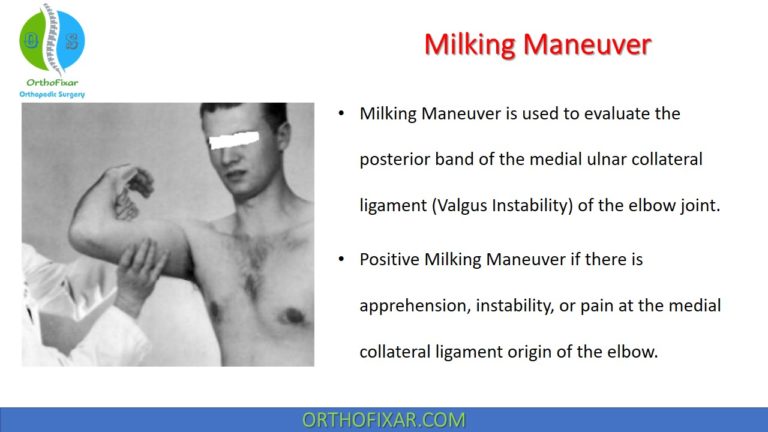
Milking Maneuver is used to evaluate the posterior band of the medial ulnar collateral ligament (Valgus Instability) of…
Read Full Entry →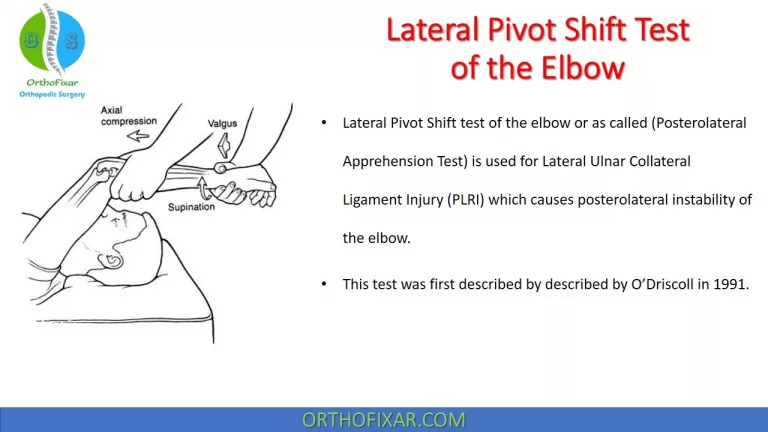
Lateral Pivot Shift test elbow or as called (Posterolateral Apprehension Test) is used for Lateral Ulnar Collateral Ligament…
Read Full Entry →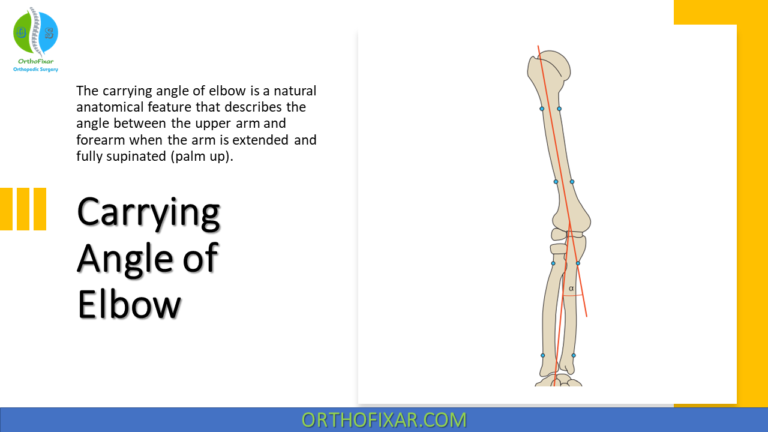
Carrying angle of elbow is a natural anatomical feature that describes the angle between the upper arm and…
Read Full Entry →
Shoulder joint movements are usually performed with the patient lying supine. The examiner compares the amount of available…
Read Full Entry →
Excessive femoral anteversion has been believed to be a cause of in-toed gait in children, which is a…
Read Full Entry →
Renne test represents a significant advancement in the clinical evaluation of iliotibial band (ITB) syndrome, offering healthcare professionals…
Read Full Entry →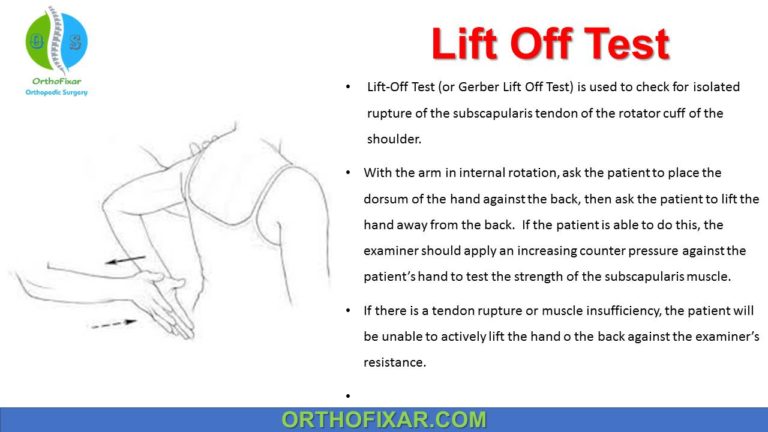
Lift Off Test (or Gerber Lift Off Test) is used to check for isolated rupture of the subscapularis…
Read Full Entry →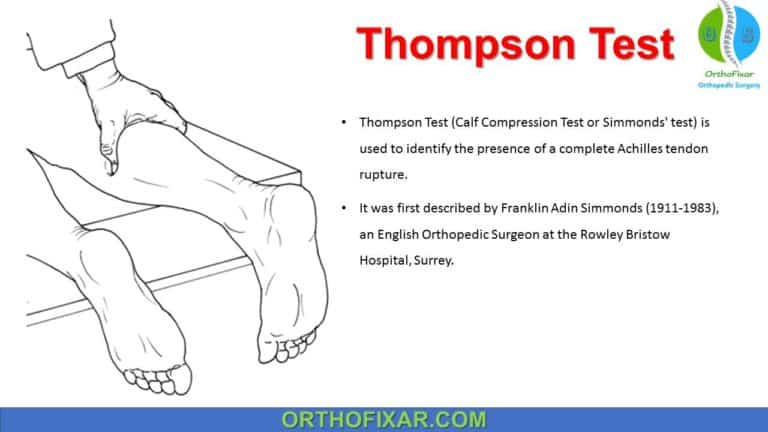
Thompson Test (or as it called Calf Compression Test or Simmonds' test) is used to identify the presence…
Read Full Entry →
Cozen Test (resisted wrist extension test) is used to indicates lateral epicondylitis of the elbow joint or the…
Read Full Entry →