The Ottawa Ankle Rules were developed to reduce unnecessary radiographs for patients presenting to emergency rooms after traumatic foot and ankle injuries. They were developed to help predict fractures in patients with ankle injuries. These rules were first introduced by a team of doctors in the emergency department of the Ottawa Civic Hospital in Ottawa, Canada, in 1992.
Ottawa Ankle Rules are a number of guidelines to help the clinical to decide if the patient with foot or ankle trauma should be offered X-rays to diagnose a possible fracture.
See Also: Ankle Anatomy
What are the 5 Ottawa Ankle Rules?
Using only the clinical findings of the ability to bear weight and areas of point tenderness, this simple diagnostic protocol results in fewer radiographs, lower costs, decreased time in the emergency room, increased patient satisfaction, and (most importantly) no undetected fractures (100% sensitivity).
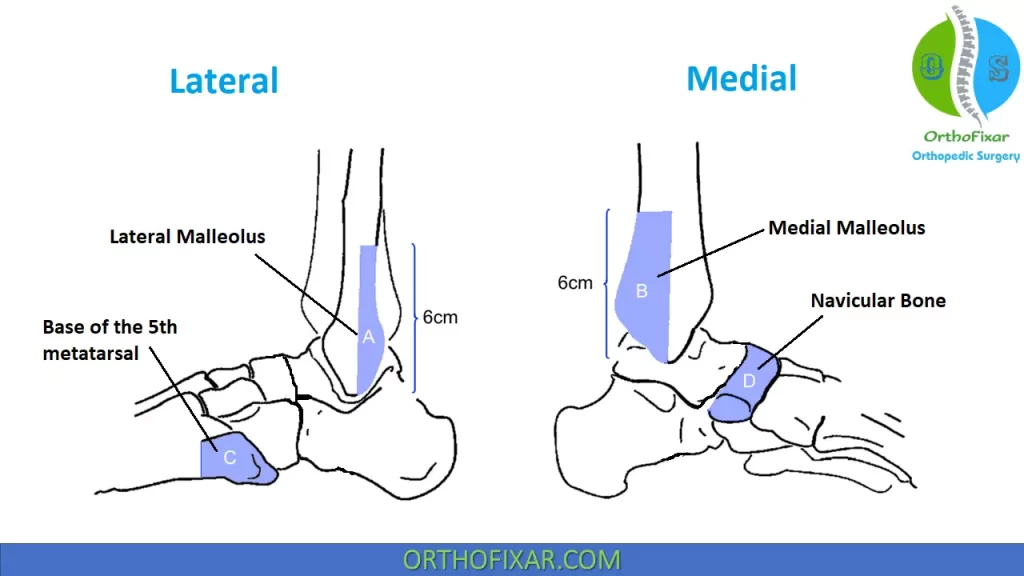
After trauma, ankle and foot radiography is indicated if any of the following are present:
- Bone tenderness at the posterior edge or tip of the lateral malleolus.
- Bone tenderness at the posterior edge or tip of the medial malleolus.
- Inability to bear weight both immediately and in the emergency department.
- Bone tenderness at the base of the 5th metatarsal.
- Bone tenderness at the navicular bone.
See Also: Lateral Ankle Sprain
Accuracy
Statistically pooled data from 27 high-quality studies involving 15,581 adults and children to analyze the the Ottawa Ankle Rules sensitivity and specificity:
- Sensitivity: 98%
- Specificity: 20%
Designed to have a high sensitivity so that fractures are not missed, the Ottawa Ankle Rules have a high negative predictive value when applied to a skeletally mature population. The rules have also been validated in children. If the rules are followed, it is highly likely that a fracture will not be missed.
The conservative nature of the rules results in a relatively low specificity (0.26–0.48), indicating that many patients are still referred for radiographs who do not have a fracture. With the modification relating to the location of the malleolar pain, the specificity is improved to 0.42–0.59.
Ottawa Foot Rules
Radiographic series of the foot is only required if one of the following are present:
- Bone tenderness is at navicular
- Bone tenderness at the base of 5th MT
- Totally unable to bear weight both immediately after injury & (for 4 steps) in the emergency department.
The accuracy of Ottawa Foot Rules the were:
- Adults: Sensitivity = 93-100% & specificity = 12-21%
- Children: Sensitivity = 100% & specificity = 36%
Ankle Standard Views
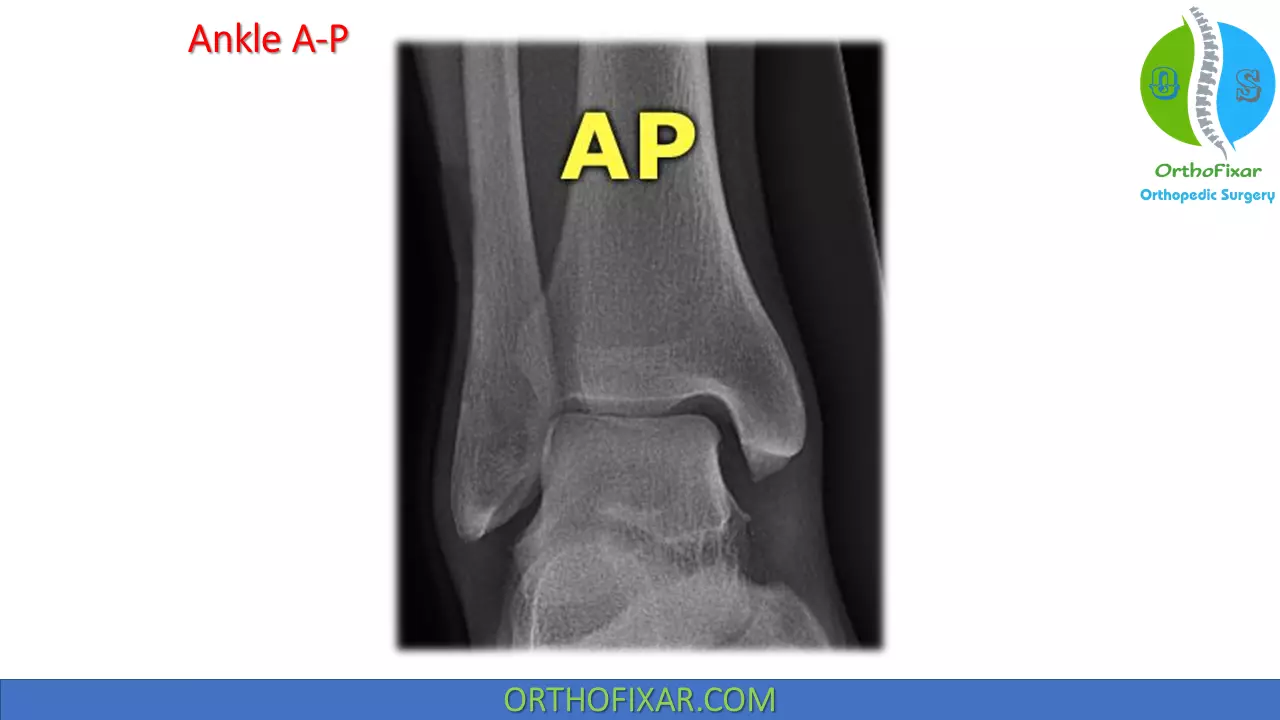
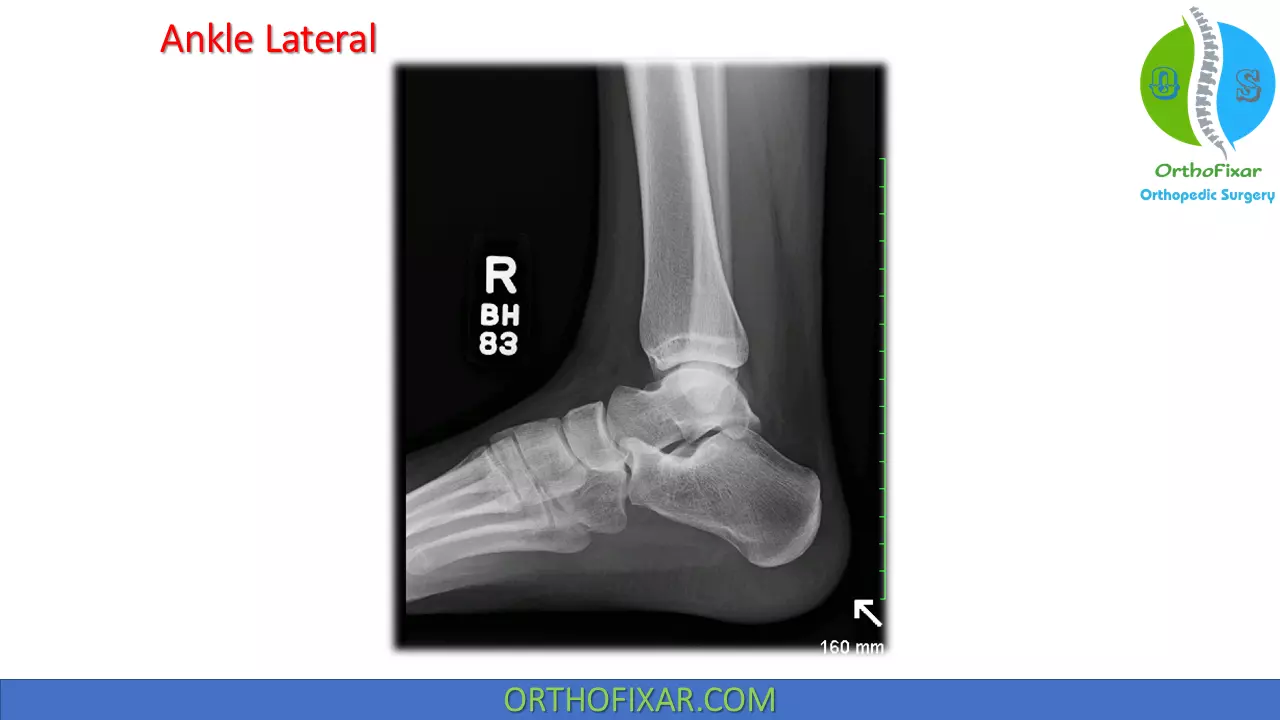
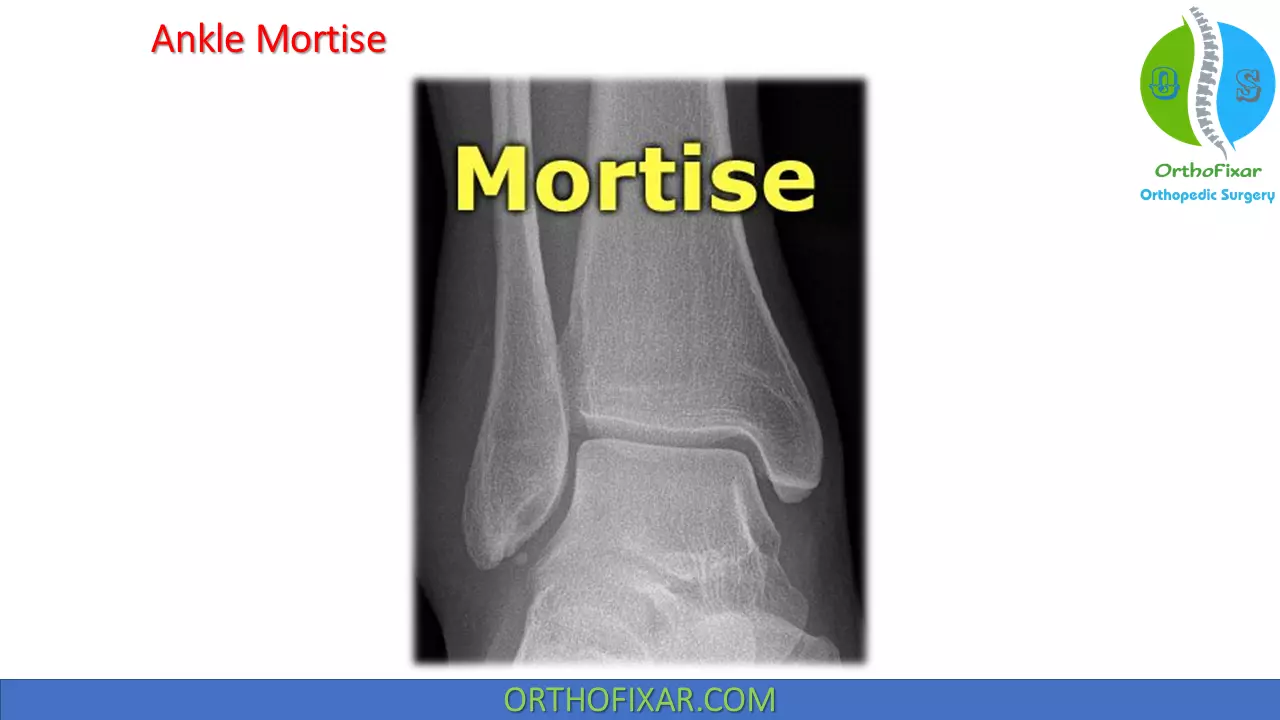
Standard views of the ankle include the A-P, mortise, and lateral views:
- A-P view: This view provides the clinician with information about the shape, position, and texture of the bones, and helps determine whether there is any fractured or new subperiosteal bone.
- Mortise view: This view provides information about the ankle mortise and the distal tibiofibular joint.
- Lateral view: This view provides the clinician with information about the shape, position, and texture of bones, including the tibial tubercle, talus, and calcaneus.
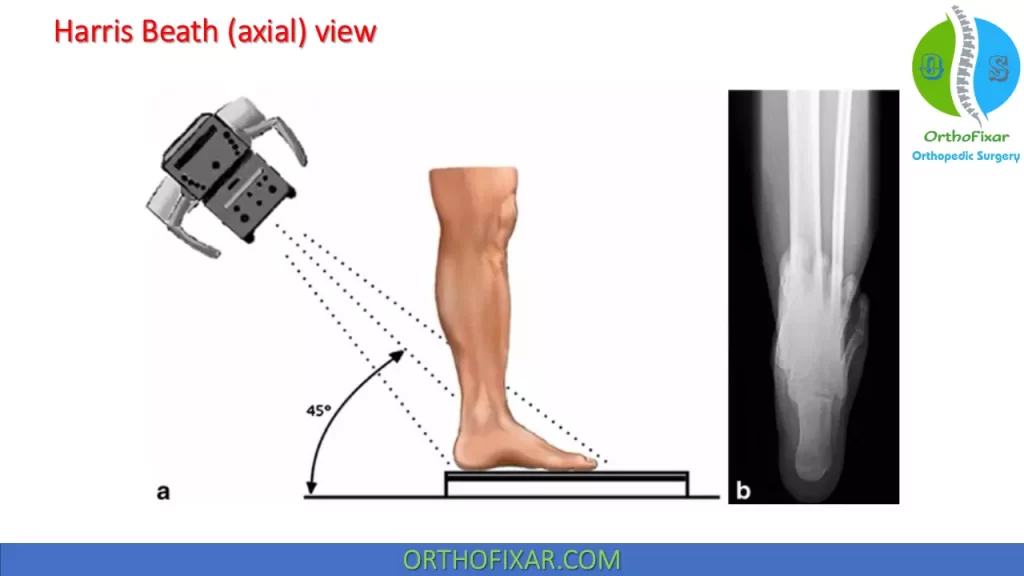
Other nonroutine views include the following:
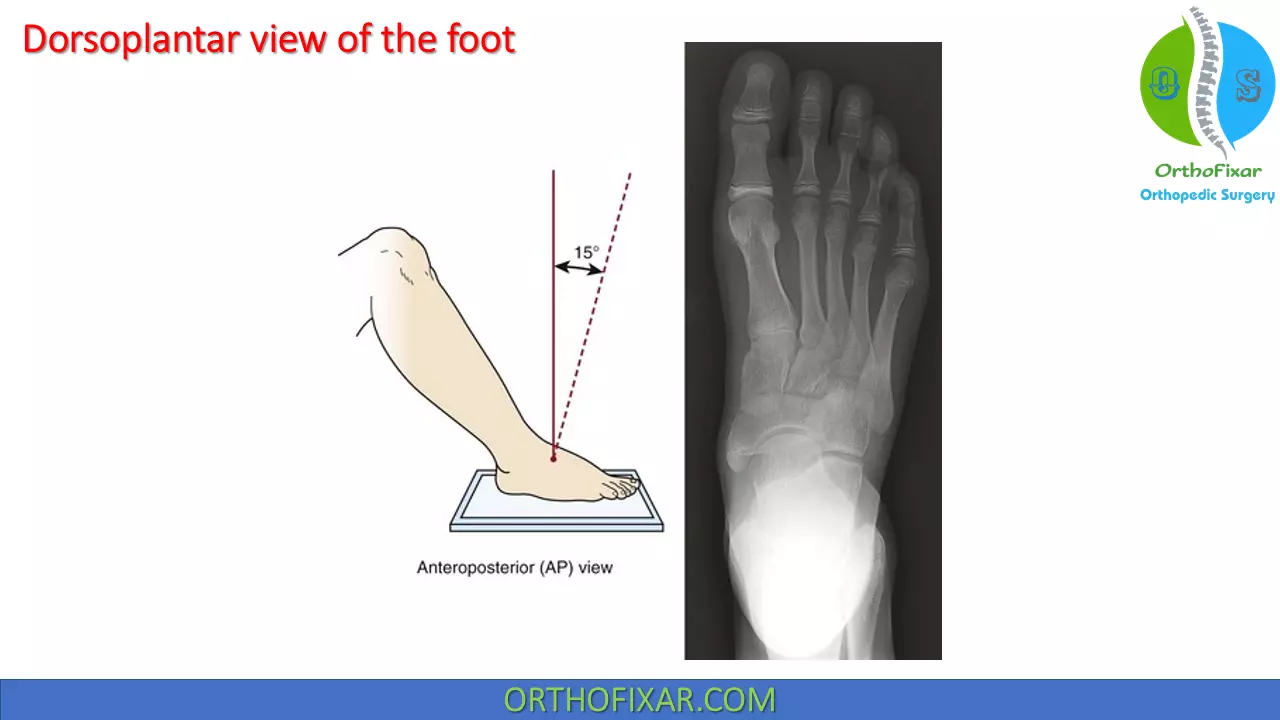
- Dorsoplantar view of the foot: This view provides information with regard to the forefoot.
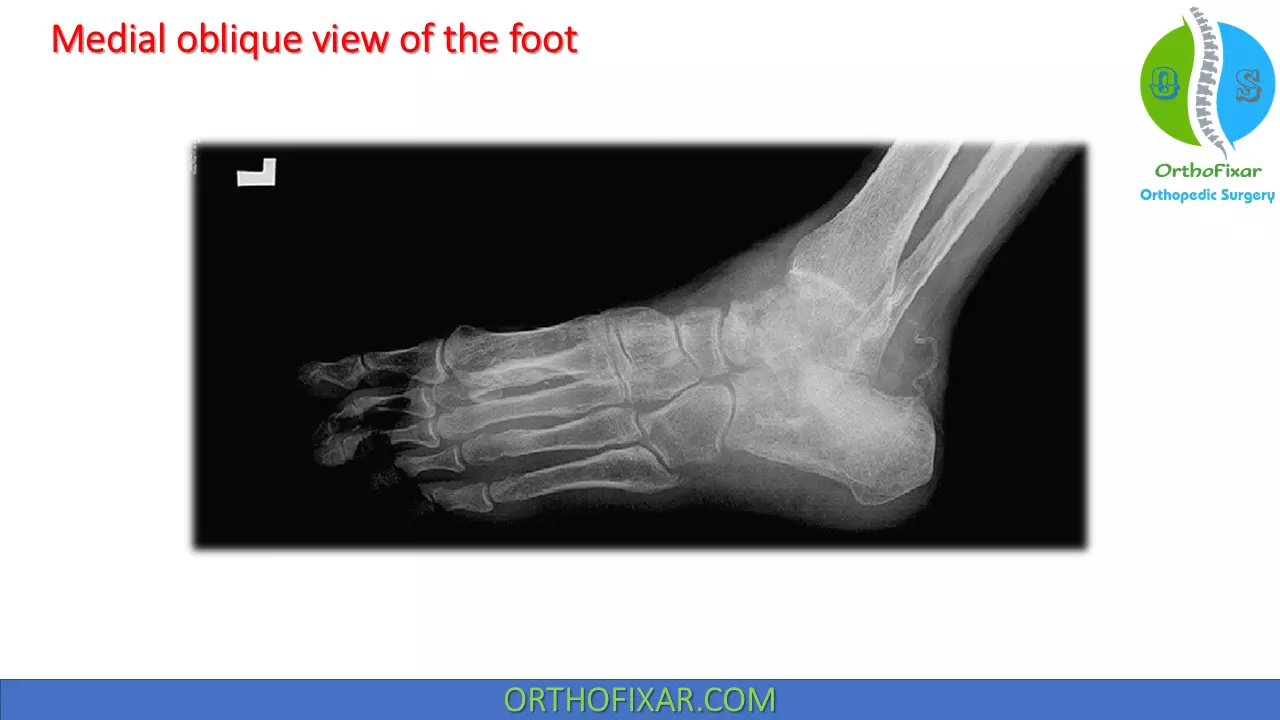
- Medial oblique view of the foot: This view provides information about the tarsal bones and joints and the metatarsal shafts and bases. In addition this view can highlight any pathology in the calcaneocuboid joint.
Stress views of the ankles are routinely utilized for assessment of instability and injury to the lateral collateral ligament of structures.
The stress views include inversion to assess talar tilt and the anterior drawer stress. The accuracy of these tests increases with the use of local anesthesia and a comparison with the uninvolved ankle.
References
- Stiell IG, Greenberg GH, McKnight RD, Wells GA. Ottawa ankle rules for radiography of acute injuries. N Z Med J. 1995 Mar 22;108(996):111. PMID: 7715880. PubMed
- Stiell I, Wells G, Laupacis A, Brison R, Verbeek R, Vandemheen K, Naylor CD. Multicentre trial to introduce the Ottawa ankle rules for use of radiography in acute ankle injuries. Multicentre Ankle Rule Study Group. BMJ. 1995 Sep 2;311(7005):594-7. doi: 10.1136/bmj.311.7005.594. PMID: 7663253; PMCID: PMC2550661. PubMed
- Bachmann LM, Kolb E, Koller MT, Steurer J, ter Riet G. Accuracy of Ottawa ankle rules to exclude fractures of the ankle and mid-foot: systematic review. BMJ. 2003 Feb 22;326(7386):417. doi: 10.1136/bmj.326.7386.417. PMID: 12595378; PMCID: PMC149439. PubMed
- Vela, L, Tourville, TW, and Hertel, J: Physical examination of acutely injured ankles: an evidence-based approach. AthlTher Today, 8:13, 2003.
- Nugent, PJ: Ottawa ankle rules accurately assess injuries and reduce reliance on radiographs. J Fam Pract, 53:785, 2004. PubMed
- Gravel, J, et al: Prospective validation and head-to-head comparison of 3 ankle rules in a pediatric population. Ann Emerg Med, 54:534, 2009. PubMed
- Leddy, JJ, et al: Prospective evaluation of the Ottawa ankle rules in a university sports medicine center. With a modification to increase specificity for identifying malleolar fractures. Am J Sports Med, 26:158, 1998. PubMed
- Dutton’s Orthopaedic Examination, Evaluation, And Intervention 3rd Edition.
- Netter’s Orthopaedic Clinical Examination An Evidence-Based Approach 3rd Edition Book.
- Millers Review of Orthopaedics -7th Edition Book.