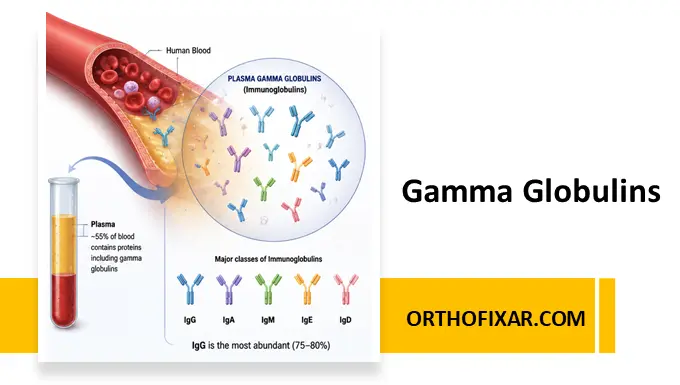
Plasma gamma globulins are an important group of proteins found in human blood plasma. They play a central role in immune defense by helping the body recognize and neutralize pathogens such as bacteria, viruses, and toxins. Most plasma gamma globulins consist of immunoglobulins (antibodies) produced by plasma cells in response to infection or immune stimulation.
Measurement of plasma gamma globulins is commonly used in clinical medicine to evaluate immune system disorders, chronic infections, autoimmune diseases, and plasma cell disorders. In addition, purified gamma globulin preparations are widely used therapeutically as human gamma globulin, intravenous gamma globulin, and subcutaneous gamma globulin formulations.
What Are Plasma Gamma Globulins?
Gamma globulins are proteins that migrate in the gamma region during serum protein electrophoresis. The majority are immunoglobulins produced by B lymphocytes and plasma cells.
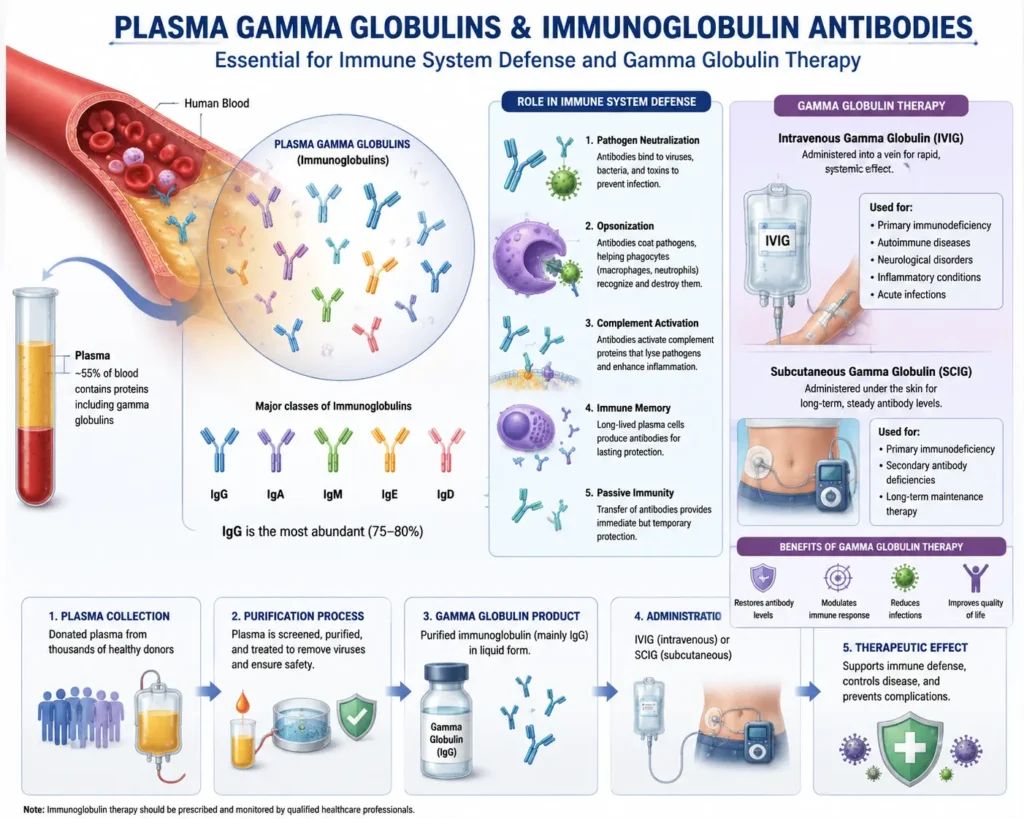
The principal immunoglobulin classes include:
- Immunoglobulin G (IgG)
- Immunoglobulin A (IgA)
- Immunoglobulin M (IgM)
- Immunoglobulin E (IgE)
- Immunoglobulin D (IgD)
Among these, IgG represents the largest proportion of plasma gamma globulins and is responsible for long-term immune protection.
Composition of Plasma Proteins
Human plasma proteins are broadly classified into:
- Albumin
- Alpha-1 globulins
- Alpha-2 globulins
- Beta globulins
- Gamma globulins
While albumin primarily maintains oncotic pressure and transports substances, gamma globulins are predominantly involved in immune function.
Physiological Functions of Plasma Gamma Globulins
Gamma globulins perform several essential immune functions:
Pathogen Neutralization
Antibodies bind to viruses, bacteria, and toxins, preventing them from infecting cells.
Opsonization
Gamma globulins enhance the recognition and destruction of microorganisms by phagocytic cells such as macrophages and neutrophils.
Complement Activation
Certain immunoglobulins activate the complement cascade, leading to pathogen destruction.
Immune Memory
Long-lived plasma cells continuously produce antibodies, providing lasting immunity following infection or vaccination.
Passive Immunity
Administration of purified gamma globulin preparations can provide immediate immune protection in susceptible individuals.
Normal Plasma Gamma Globulin Levels
The normal reference range varies among laboratories but generally represents approximately:
- Gamma globulins: 0.6–1.6 g/dL
- Total immunoglobulin G (IgG): 700–1600 mg/dL
Interpretation should always consider laboratory-specific reference values and clinical context.
How Plasma Gamma Globulins Are Measured
Serum Protein Electrophoresis (SPEP)
Serum protein electrophoresis separates plasma proteins according to their electrical charge, creating distinct protein fractions.
The gamma region reflects immunoglobulin concentration and helps identify:
- Polyclonal gammopathy
- Monoclonal gammopathy
- Hypogammaglobulinemia
Immunofixation Electrophoresis
This test identifies specific immunoglobulin classes and monoclonal proteins.
Quantitative Immunoglobulin Testing
Direct measurement of IgG, IgA, and IgM concentrations provides detailed assessment of immune status.
Causes of Increased Plasma Gamma Globulins
Elevated plasma gamma globulins (hypergammaglobulinemia) may occur in several conditions.
Chronic Infections
Examples include:
- Tuberculosis
- Chronic hepatitis
- HIV infection
Autoimmune Diseases
Common disorders associated with elevated gamma globulins include:
- Rheumatoid arthritis
- Systemic lupus erythematosus
- Sjögren syndrome
Chronic Liver Disease
Cirrhosis and autoimmune hepatitis often cause increased immunoglobulin production.
Plasma Cell Disorders
Monoclonal gammopathies include:
- Multiple myeloma
- Monoclonal gammopathy of undetermined significance (MGUS)
- Waldenström macroglobulinemia
Causes of Decreased Plasma Gamma Globulins
Reduced gamma globulin levels (hypogammaglobulinemia) may result from:
Primary Immunodeficiency Disorders
Examples include:
- X-linked agammaglobulinemia
- Common variable immunodeficiency (CVID)
Secondary Immunodeficiency
Potential causes include:
- Malnutrition
- Hematologic malignancies
- Immunosuppressive therapy
- Protein-losing enteropathy
- Nephrotic syndrome
Patients with low gamma globulin levels often experience recurrent bacterial infections.
Human Gamma Globulin
Human gamma globulin refers to purified immunoglobulin preparations derived from pooled human plasma obtained from thousands of healthy donors.
These products contain predominantly IgG antibodies and provide passive immunity against a broad range of pathogens.
Human gamma globulin products undergo extensive purification and viral inactivation procedures to ensure safety and efficacy.
Clinical Uses of Human Gamma Globulin
Human gamma globulin is commonly used for:
- Primary immunodeficiency disorders
- Secondary antibody deficiencies
- Autoimmune diseases
- Inflammatory neurological disorders
- Certain infectious disease exposures
Gamma Globulin Therapy
Gamma globulin therapy involves administration of concentrated immunoglobulins to replace missing antibodies or modulate abnormal immune responses.
Its therapeutic effects include:
- Antibody replacement
- Immune modulation
- Suppression of inflammatory pathways
- Neutralization of pathogenic autoantibodies
Indications for Gamma Globulin Therapy
Common indications include:
Immunodeficiency Disorders
- Common variable immunodeficiency
- X-linked agammaglobulinemia
- Severe combined immunodeficiency
Neurological Disorders
- Chronic inflammatory demyelinating polyneuropathy (CIDP)
- Guillain-Barré syndrome
- Multifocal motor neuropathy
Autoimmune Conditions
- Immune thrombocytopenia
- Kawasaki disease
- Certain forms of myositis
Intravenous Gamma Globulin
Intravenous gamma globulin (IVIG) is administered directly into the bloodstream through intravenous infusion.
Advantages of Intravenous Gamma Globulin
- Rapid achievement of therapeutic antibody levels
- Suitable for acute treatment situations
- Widely used in hospitals and infusion centers
Common Side Effects of IVIG
Most adverse effects are mild and include:
- Headache
- Fatigue
- Fever
- Chills
- Nausea
Rare but serious complications may include:
- Thromboembolism
- Renal dysfunction
- Hemolytic anemia
- Aseptic meningitis
Intravenous Gamma Globulin Dosing
Dosing varies according to the indication:
- Replacement therapy: typically 300–600 mg/kg every 3–4 weeks
- Immunomodulatory therapy: often 1–2 g/kg administered over several days
Treatment should always be individualized by the prescribing physician.
Subcutaneous Gamma Globulin
Subcutaneous gamma globulin (SCIG) involves administration of immunoglobulin into subcutaneous tissue using small infusion pumps or manual injection systems.
Advantages of Subcutaneous Gamma Globulin
Compared with IVIG, SCIG offers:
- Home-based administration
- More stable serum IgG levels
- Greater patient independence
- Reduced systemic adverse reactions
Limitations of SCIG
Potential disadvantages include:
- More frequent administration
- Local injection-site reactions
- Need for patient training
Conditions Treated with Subcutaneous Gamma Globulin
SCIG is widely used for:
- Primary immunodeficiency disorders
- Secondary antibody deficiencies
- Long-term immunoglobulin replacement therapy
Plasma Gamma Globulins and Serum Protein Electrophoresis
A characteristic finding on serum protein electrophoresis can provide valuable diagnostic information.
Polyclonal Increase
Seen in:
- Chronic infections
- Autoimmune diseases
- Chronic inflammatory conditions
Monoclonal Spike
Suggests:
- Multiple myeloma
- MGUS
- Waldenström macroglobulinemia
Recognition of these patterns is essential in clinical practice.
Future Developments in Gamma Globulin Therapy
Ongoing research aims to improve:
- Immunoglobulin purification methods
- Treatment safety
- Infusion convenience
- Supply sustainability
- Novel immune-modulating applications
Advances in biotechnology continue to expand the therapeutic potential of gamma globulin products.
Key Points
- Plasma gamma globulins are antibody-containing proteins that play a vital role in immune defense.
- Most gamma globulins consist of immunoglobulins, particularly IgG.
- Elevated levels may indicate chronic infection, autoimmune disease, or plasma cell disorders.
- Low levels may reflect primary or secondary immunodeficiency.
- Human gamma globulin preparations are purified antibody products derived from pooled plasma.
- Gamma globulin therapy is used for both antibody replacement and immune modulation.
- Intravenous gamma globulin provides rapid systemic antibody delivery.
- Subcutaneous gamma globulin offers convenient long-term home-based therapy.
- Serum protein electrophoresis remains an important diagnostic tool for evaluating gamma globulin abnormalities.
References & More
- Berger M, Gilbert I. Role of gamma globulin. Semin Respir Infect. 1989 Dec;4(4):272-83. PMID: 2516639. Link
- Waniewski J, Gardulf A, Hammarström L. Bioavailability of gamma-globulin after subcutaneous infusions in patients with common variable immunodeficiency. J Clin Immunol. 1994 Mar;14(2):90-7. doi: 10.1007/BF01541341. PMID: 7515071. Link
- Huq ME, Bhatnagar NK, Hostoffer RW. Hypogammaglobulinemia. [Updated 2023 Jun 5]. In: StatPearls [Internet]. Treasure Island (FL): StatPearls Publishing; 2026 Jan-. Available from: https://www.ncbi.nlm.nih.gov/books/NBK563134/
- Waseem M, Mazhar M. Agammaglobulinemia. [Updated 2023 Jul 3]. In: StatPearls [Internet]. Treasure Island (FL): StatPearls Publishing; 2026 Jan-. Available from: https://www.ncbi.nlm.nih.gov/books/NBK555941/
- Rasel M, Zahra F. Hypergammaglobulinemia (Polyclonal Gammopathy) [Updated 2023 Jul 31]. In: StatPearls [Internet]. Treasure Island (FL): StatPearls Publishing; 2026 Jan-. Available from: https://www.ncbi.nlm.nih.gov/books/NBK585137/