Fibroblast growth factor 23 (FGF23) is a bone-derived peptide hormone that serves as the principal regulator of phosphate homeostasis in the body. Classified as an endocrine member of the FGF superfamily, FGF23 is distinct from the classic paracrine FGFs in its ability to act systemically at distant target organs — primarily the kidneys and parathyroid glands — making it a true circulating hormone.
First identified through its causative role in autosomal dominant hypophosphatemic rickets (ADHR) in 2000, FGF23 has since been recognized as an indispensable regulator of the bone–kidney–parathyroid endocrine axis. Altered circulating levels of FGF23 — measurable via validated immunoassays — are now associated with a broad spectrum of genetic and acquired disorders of mineral metabolism, ranging from hypophosphatemic rickets syndromes to chronic kidney disease (CKD).
Key Concept
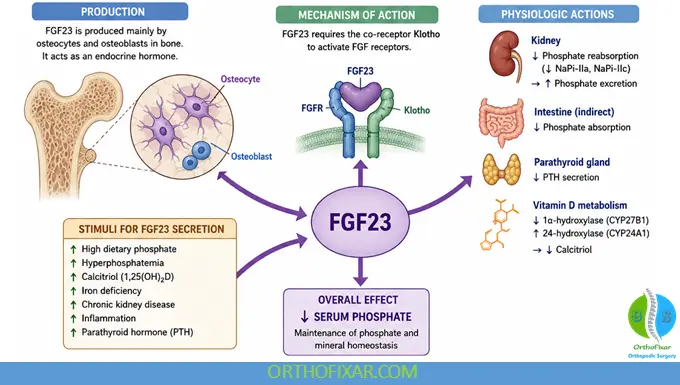
FGF23 is produced primarily by osteocytes and acts on the kidney to lower serum phosphate (Pi) by promoting renal Pi excretion through suppression of renal tubular Pi reabsorption, while simultaneously reducing calcitriol (1,25(OH)₂D₃) synthesis. It represents the central bone-derived hormonal signal in the bone–kidney phosphate regulatory axis.
Molecular Biology and Gene Structure of FGF23
FGF23 is a 251-amino-acid glycoprotein encoded by the FGF23 gene located on chromosome 12p13.3, composed of three exons. The mature protein has a molecular weight of approximately 32 kDa and belongs to the FGF19 subfamily of endocrine FGFs, which also includes FGF19 and FGF21.
Protein Structure and Proteolytic Processing
The FGF23 protein contains:
| Domain / Region | Location (Residues) | Function |
|---|---|---|
| Signal peptide | 1–24 | Directs secretory pathway; cleaved upon secretion |
| FGF homology domain | 25–179 | FGF receptor (FGFR) binding |
| C-terminal tail | 180–251 | αKlotho interaction; essential for FGFR co-activation |
| Subtilisin cleavage site (RXXR motif) | Arg176–Ser179 | Site of furin/subtilisin proteolysis; cleavage inactivates FGF23 |
| O-glycosylation site (Thr178) | Thr178 | Glycosylation protects Arg179 from cleavage; increases circulating intact FGF23 |
A critical post-translational processing event is proteolytic cleavage at the RXXR motif (Arg176-X-X-Arg179) by subtilisin-like proprotein convertases (furin). This cleavage inactivates FGF23, producing an N-terminal fragment and a C-terminal fragment. The balance between intact, biologically active FGF23 and its cleaved, inactive fragments is a key determinant of FGF23 signaling activity. O-glycosylation at Thr178, catalyzed by UDP-GalNAc:polypeptide N-acetylgalactosaminyltransferase 3 (GALNT3), protects the cleavage site and increases circulating intact FGF23 levels.
Clinical Pearl
In autosomal dominant hypophosphatemic rickets (ADHR), missense mutations at Arg176 or Arg179 render FGF23 resistant to proteolytic cleavage by furin-type subtilisins, resulting in abnormally elevated circulating intact FGF23 and consequent renal phosphate wasting.
Production and Secretion of FGF23
Primary Cellular Source: Osteocytes
FGF23 is produced predominantly by osteocytes — the most abundant, mechanosensory cells embedded within the mineralized bone matrix — and to a lesser extent by osteoblasts. This osteocyte origin positions FGF23 as the primary bone-derived endocrine signal linking skeletal phosphate sensing to renal excretory function.
Low-level FGF23 expression has also been detected in extra-osseous sites, including cardiac muscle, brain (particularly the hypothalamus), liver, thymus, and small intestine, though these contribute minimally to circulating levels under physiological conditions.
Physiological Stimulators of FGF23 Production
FGF23 production is tightly regulated by multiple systemic and local signals:
| Factor | Effect on FGF23 | Mechanism |
|---|---|---|
| Calcitriol (1,25(OH)₂D₃) | ↑ Stimulates FGF23 production | Via vitamin D response elements (VDREs) in the FGF23 promoter |
| Dietary phosphate intake (↑Pi) | ↑ Stimulates FGF23 production | Promotes osteocyte FGF23 gene expression; exact sensor unclear |
| Serum phosphate (hyperphosphatemia) | ↑ Stimulates FGF23 | Systemic phosphate load signals bone to release FGF23 |
| Parathyroid hormone (PTH) | ↑ Stimulates FGF23 | PTH receptor activation in osteocytes upregulates FGF23 transcription |
| Iron deficiency | ↑ Increases FGF23 transcription (but may impair cleavage of intact form) | Hypoxia-inducible pathways increase FGF23 gene transcription; iron deficiency also impairs GALNT3-mediated glycosylation cleavage |
| Inflammation / IL-6 | ↑ Increases FGF23 in acute phase | JAK-STAT signaling activates FGF23 promoter in infection and critical illness |
| Hypocalcemia | ↓ Reduces FGF23 | Low calcium suppresses osteocyte FGF23 production |
Clinical Pearl — Dietary Phosphate & Calcitriol Feedback
FGF23 levels rise with increased dietary phosphate intake. Calcitriol also stimulates FGF23 release, which in turn suppresses calcitriol synthesis — a key negative feedback loop that prevents vitamin D toxicity and excessive phosphate retention. This leads to a reciprocal increase in serum calcium as intestinal calcium absorption is relatively preserved while phosphate absorption falls.
FGF23 Receptor Complex and the αKlotho Co-receptor
The Klotho Requirement
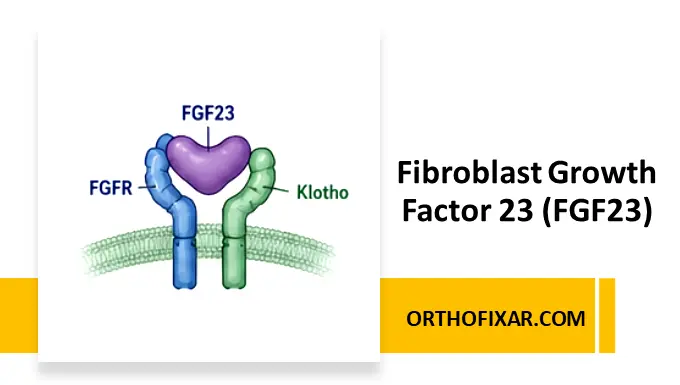
Unlike classical FGFs that bind FGF receptors (FGFRs) with high affinity via heparan sulfate proteoglycans, FGF23 requires the single-pass transmembrane co-receptor αKlotho to achieve high-affinity binding to FGFRs in target tissues. The FGF23–αKlotho–FGFR1c ternary complex is the canonical signaling unit in the renal proximal and distal tubules. αKlotho confers tissue specificity — only cells expressing adequate αKlotho are principal endocrine targets of FGF23.
FGF Receptor Subtypes Involved
FGF23 preferentially signals through FGFR1c, FGFR3c, and FGFR4 when in the presence of αKlotho. Activation of these receptors triggers intracellular signaling cascades including the MAPK/ERK and PI3K/Akt pathways, leading to rapid downregulation of sodium–phosphate cotransporter expression on the apical brush border of proximal tubular cells.
Key Concept — Klotho-Independent Signaling
At supraphysiological concentrations of FGF23, as seen in advanced CKD, FGF23 can signal through FGFRs in a Klotho-independent manner. This αKlotho-independent signaling is implicated in the cardiovascular and cardiac hypertrophic effects of FGF23 excess, particularly left ventricular hypertrophy (LVH).
Renal Actions of FGF23: Phosphate and Vitamin D Regulation
The kidney is the primary target organ of endocrine FGF23 signaling. FGF23 exerts two major, complementary renal effects that collectively lower serum phosphate and calcitriol levels.
Suppression of Renal Tubular Phosphate Reabsorption
Approximately 85% of filtered phosphate is reabsorbed in the proximal convoluted and straight tubule via sodium-dependent phosphate cotransporters on the apical membrane. FGF23 activates FGFR1c–αKlotho signaling in proximal tubular cells, leading to downregulation and internalization of two key sodium–phosphate cotransporters:
| Cotransporter | Gene | FGF23 Effect | Result |
|---|---|---|---|
| NaPi2a (NPT2a) | SLC34A1 | ↓ Expression & apical membrane insertion | ↓ Proximal tubular Pi reabsorption → phosphaturia |
| NaPi2c (NPT2c) | SLC34A3 | ↓ Expression | ↓ Proximal tubular Pi reabsorption |
| PiT2 | SLC20A2 | ↓ Expression | Minor contribution to phosphaturia |
Internalization of NaPi2a and NaPi2c is mediated downstream through the scaffolding protein NHERF-1 (sodium–hydrogen exchanger regulatory factor 1), which coordinates the crosstalk between FGF23 and PTH signaling pathways. Notably, PTH and FGF23 suppress phosphate transport through overlapping, though not fully synergistic, mechanisms converging at NHERF-1.
Suppression of Calcitriol Synthesis
FGF23 profoundly alters renal vitamin D metabolism through a dual enzymatic mechanism in proximal tubular cells:
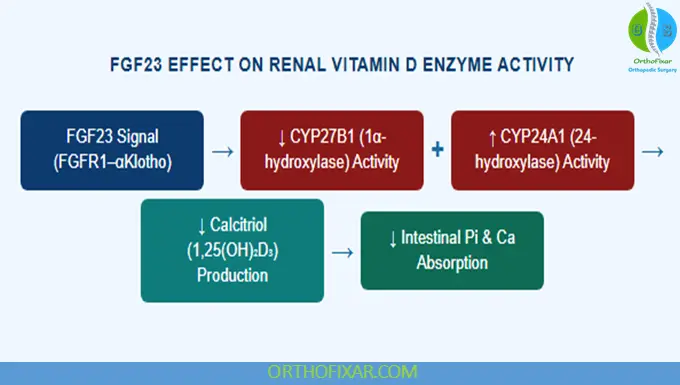
By simultaneously inhibiting CYP27B1 (which converts 25(OH)D to active calcitriol) and inducing CYP24A1 (which degrades calcitriol), FGF23 creates a powerful suppression of vitamin D bioavailability. This is clinically manifest as low or inappropriately normal calcitriol levels in FGF23-excess states, despite the physiological expectation that hypophosphatemia should stimulate calcitriol production.
Effect on Calcium Metabolism
FGF23 also acts on the distal tubule to stimulate calcium reabsorption, partly through upregulation of the epithelial calcium channel TRPV5. This action helps maintain serum calcium despite reduced intestinal absorption from calcitriol suppression. The net effect of FGF23 on the calcium–phosphate product (Ca × Pi) is a reduction, due predominantly to the phosphaturic action and the indirect impairment of intestinal phosphate absorption via calcitriol suppression. This reduction in the calcium–phosphate product impairs skeletal mineralization, as seen in FGF23-excess disorders.
Clinical Pearl
The paradox in FGF23-excess disorders is that hypophosphatemia — which would normally elevate calcitriol — does not do so, because FGF23 itself suppresses 1α-hydroxylase. This blunted calcitriol response is a diagnostic hallmark that distinguishes FGF23-mediated from non-FGF23-mediated hypophosphatemia.
Extra-Renal Actions of FGF23
Parathyroid Gland Suppression
FGF23 acts on parathyroid cells, which express both FGFR1 and αKlotho, to inhibit synthesis and secretion of parathyroid hormone (PTH). This creates an important negative feedback loop: elevated phosphate stimulates both PTH (to promote phosphaturia) and FGF23 (to suppress PTH), preventing runaway PTH secretion. In CKD, however, progressive αKlotho depletion in parathyroid tissue impairs FGF23-mediated PTH suppression, contributing to secondary hyperparathyroidism.
Cardiovascular Actions
Emerging evidence from clinical and experimental studies links chronically elevated FGF23 to adverse cardiovascular outcomes, particularly in CKD. FGF23 activates FGFR4 on cardiac myocytes in a Klotho-independent manner, inducing hypertrophic signaling through the PLCγ/calcineurin/NFAT pathway, resulting in left ventricular hypertrophy (LVH). High FGF23 levels in dialysis patients have been associated with a nearly sixfold higher one-year mortality risk compared to low FGF23 quartiles.
Bone Mineralization Regulation
Within bone itself, FGF23 acts in an autocrine/paracrine fashion to suppress alkaline phosphatase (ALP) expression in osteocytes and osteoblasts — independent of αKlotho signaling. Alkaline phosphatase normally degrades inorganic pyrophosphate (PPi), a potent mineralization inhibitor. FGF23-mediated ALP suppression therefore locally impairs bone mineralization, contributing to the osteomalacic phenotype of FGF23-excess disorders.
Immune and Hematopoietic Roles
FGF23 has been shown to suppress neutrophil recruitment and innate immune defenses in sepsis models, raising interest in its role during acute illness. Iron deficiency anemia significantly elevates FGF23 transcription, and intravenous iron formulations (e.g., iron carboxymaltose) can cause transient, clinically significant hypophosphatemia by acutely elevating intact FGF23 levels.
FGF23 Regulatory Feedback Loop
FGF23 operates within a tightly controlled endocrine feedback network linking bone, kidney, gut, and parathyroid gland. Understanding this loop is essential for interpreting both physiological phosphate homeostasis and the pathophysiology of FGF23-related disorders.
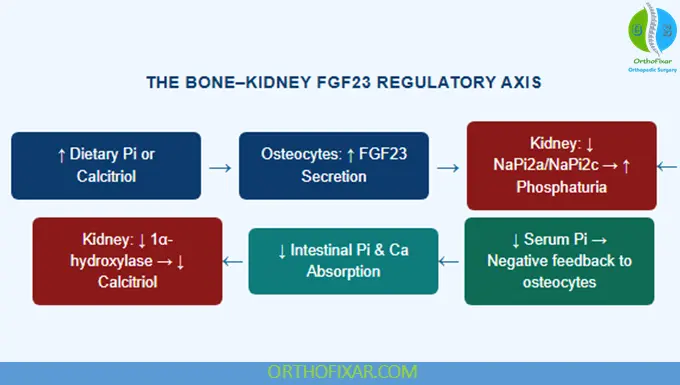
Key features of this regulatory circuit include:
Calcitriol amplifies its own catabolism through FGF23: rising calcitriol stimulates FGF23, which suppresses further calcitriol synthesis — a critical autoregulatory brake. PTH simultaneously promotes phosphaturia and stimulates FGF23, while FGF23 in turn suppresses PTH, forming a counter-regulatory loop. The net physiological outcome is maintenance of narrow serum phosphate concentrations (normal: 0.8–1.5 mmol/L in adults) despite wide variation in dietary phosphate intake.
Recombinant FGF23: Research and Translational Applications
Role of Recombinant FGF23 in Establishing Hormonal Function
The hormonal identity of FGF23 was established through landmark experiments using recombinant FGF23 protein. Administration of recombinant FGF23 to mice and rats consistently induced phosphaturia and hypophosphatemia in vivo, confirming that FGF23 is a potent phosphaturic hormone acting through systemic endocrine mechanisms rather than local paracrine signaling.
The NEJM landmark study by Jonsson et al. (2003) developed a two-site ELISA using affinity-purified polyclonal antibodies against synthetic FGF23 peptides and demonstrated that recombinant human FGF23 is equivalently detected alongside the mutant form and endogenous circulating FGF23 in oncogenic osteomalacia and XLH patients. This validated recombinant FGF23 as the reference standard for immunometric FGF23 assays.
Use of Recombinant FGF23 in Animal Models
Transgenic mice overexpressing human FGF23 recapitulate the phenotype of X-linked hypophosphatemia: hypophosphatemia, reduced NaPi2a expression in proximal tubules, elevated urinary phosphate excretion, low calcitriol, and rachitic bone abnormalities. Conversely, Fgf23 knockout mice develop hyperphosphatemia, elevated calcitriol, ectopic calcification, and premature aging — mirroring familial tumoral calcinosis in humans. These animal models using recombinant FGF23 overexpression or FGF23 gene deletion have been indispensable for elucidating the physiological functions of this hormone.
Recombinant FGF23 and Assay Development
Recombinant FGF23 protein serves as the calibration standard and reference material for commercially available FGF23 ELISA kits (e.g., Kainos intact FGF23 ELISA, Immutopics C-terminal FGF23 ELISA). The use of recombinant FGF23 calibrators ensures inter-laboratory comparability of FGF23 measurements and underpins clinical decision thresholds (e.g., iFGF23 >30 pg/mL as a diagnostic criterion for XLH).
Research Insight
The availability of recombinant FGF23 has enabled the development of burosumab — a recombinant fully human monoclonal IgG1 antibody that neutralizes excess FGF23 by binding its N-terminal FGF homology domain — which was subsequently approved for the treatment of XLH and TIO. Recombinant FGF23 was essential in characterizing burosumab’s binding epitope and pharmacodynamic activity in preclinical studies.
Genetic Disorders of Elevated FGF23 Activity
A reduction in the calcium × phosphate product due to excess FGF23 activity results in impaired skeletal mineralization. The clinical picture is one of hypophosphatemia, inappropriately low or normal calcitriol, elevated alkaline phosphatase, and, depending on age of onset, rickets (in growing children) or osteomalacia (in adults).
X-Linked Hypophosphatemia (XLH)
PHEX Gene Mutation
The most prevalent form of hereditary hypophosphatemic rickets (1:20,000). Inactivating mutations in PHEX (phosphate-regulating endopeptidase homolog, X-linked) lead to impaired cleavage of FGF23, causing its overaccumulation in osteocytes. Manifests as lower-limb deformities, short stature, bone pain, enthesopathy, and spontaneous dental abscesses.
Autosomal Dominant Hypophosphatemic Rickets (ADHR)
FGF23 Gain-of-Function
Caused by missense mutations at Arg176 or Arg179 in the FGF23 RXXR cleavage motif, rendering FGF23 resistant to proteolytic inactivation. Results in constitutively elevated intact FGF23, phosphaturia, and rickets/osteomalacia. Variable penetrance and clinical severity; iron deficiency can unmask or worsen the phenotype.
Autosomal Recessive Hypophosphatemic Rickets Type 1 (ARHR1)
DMP1 Mutation (Chromosome 4q22)
Loss-of-function mutations in DMP1 (dentin matrix protein 1) disrupt the regulatory inhibition of FGF23 production in osteocytes, resulting in FGF23 overproduction, renal phosphate wasting, and rickets/osteomalacia clinically similar to XLH.
Autosomal Recessive Hypophosphatemic Rickets Type 2 (ARHR2)
ENPP1 Mutation
Caused by loss-of-function mutations in ENPP1 (ectonucleotide pyrophosphatase/phosphodiesterase 1). ENPP1 normally degrades inorganic pyrophosphate; its loss also secondarily increases FGF23 production, causing hypophosphatemia. ENPP1 deficiency may also cause generalized arterial calcification of infancy (GACI).
Shared Pathophysiological Mechanism
In all four genetic syndromes above, the final common pathway is excess FGF23 activity in osteocytes leading to:
| Disorder | Gene | Inheritance | FGF23 Mechanism | FGF23 Level |
|---|---|---|---|---|
| XLH | PHEX | X-linked dominant | Loss-of-function → impaired FGF23 proteolysis | ↑↑ Intact FGF23 |
| ADHR | FGF23 | Autosomal dominant | Gain-of-function → protease-resistant FGF23 | ↑↑ Intact FGF23 |
| ARHR1 | DMP1 | Autosomal recessive | Loss-of-function → FGF23 overproduction | ↑ Intact FGF23 |
| ARHR2 | ENPP1 | Autosomal recessive | Loss-of-function → FGF23 overproduction | ↑ Intact FGF23 |
Diagnostic Pitfall
Errant or delayed diagnosis of FGF23-mediated hypophosphatemic disorders is common. The presence of hypophosphatemia with inappropriately low/normal calcitriol and elevated alkaline phosphatase should always prompt FGF23 measurement. These conditions are frequently misdiagnosed as nutritional rickets or vitamin D deficiency, leading to years of inappropriate treatment.
Disorders of Deficient FGF23 Activity: Familial Tumoral Calcinosis
Loss-of-function mutations that reduce FGF23 activity result in the opposite biochemical phenotype — hyperphosphatemia — and the clinical syndrome of familial tumoral calcinosis (FTC). Conversely to FGF23-excess states, absent or markedly reduced FGF23 signaling allows unrestrained renal phosphate reabsorption, leading to progressive soft-tissue and periarticular calcium–phosphate deposition.
Genetic Causes of Familial Tumoral Calcinosis
Three genetic mechanisms have been identified:
| Gene | Protein | FGF23 Effect | Mechanism |
|---|---|---|---|
| FGF23 | FGF23 (loss-of-function mutation) | ↓↓ Intact FGF23 | Missense mutations impair FGF23 secretion or receptor binding |
| KLOTHO | αKlotho | Normal FGF23, loss of co-receptor | FGF23 cannot signal without αKlotho → functional FGF23 deficiency |
| GALNT3 | GalNAc-T3 (O-glycosyltransferase) | ↓ Intact FGF23 (↑ C-terminal fragments) | Loss of O-glycosylation at Thr178 → increased proteolytic cleavage → reduced intact FGF23 |
Clinical Features of Familial Tumoral Calcinosis
FTC presents with lobulated, periarticular calcified masses at large joints (hips, elbows, shoulders), dental pulp calcifications, angioid streaks, and in some cases, vascular calcification. Serum phosphate is elevated, calcitriol is elevated (due to unrestrained 1α-hydroxylase activity), and calcium may be elevated. Treatment is aimed at reducing dietary phosphate and using phosphate binders to reduce the hyperphosphatemic state driving ectopic calcification.
FGF23 in Chronic Kidney Disease (CKD)
Progressive Rise of FGF23 in CKD
One of the earliest adaptive responses in CKD is a marked, progressive rise in circulating FGF23 levels, detectable even at CKD stage 2–3 — long before serum phosphate becomes measurably elevated. As nephron mass decreases, the remaining nephrons cannot excrete adequate phosphate; osteocytes respond to rising phosphate load by dramatically upregulating FGF23 production. In end-stage renal disease (ESRD), FGF23 concentrations can exceed 1,000-fold above normal.
While this compensatory FGF23 surge initially maintains near-normal serum phosphate levels, it has significant collateral consequences:
| System | FGF23-Mediated Effect | Clinical Consequence |
|---|---|---|
| Kidney (renal tubule) | ↓ Calcitriol synthesis (CYP27B1 suppression) | Vitamin D deficiency → secondary hyperparathyroidism |
| Parathyroid gland | Loss of αKlotho → impaired FGF23-mediated PTH suppression | Secondary/tertiary hyperparathyroidism; renal osteodystrophy |
| Heart / cardiovascular | FGFR4 activation (Klotho-independent) → PLCγ–calcineurin–NFAT pathway | Left ventricular hypertrophy (LVH); increased cardiovascular mortality |
| Immune system | ↓ Neutrophil recruitment | Increased susceptibility to infection |
| Bone | Low calcitriol → impaired intestinal calcium/phosphate absorption | Adynamic bone disease; renal osteodystrophy |
FGF23 as a Prognostic Biomarker in CKD
High serum FGF23 concentrations have been shown in prospective studies to predict faster CKD progression in non-dialysis patients and increased mortality in maintenance hemodialysis patients, independently of serum phosphate. In hemodialysis patients, the highest FGF23 quartile carried a nearly sixfold higher one-year mortality risk compared to the lowest quartile. Importantly, FGF23 was a stronger mortality predictor than serum phosphate in these populations, establishing its potential as a therapeutic target in CKD management.
Clinical Warning — CKD Complexity
In patients with CKD and co-existing genetic hypophosphatemic disorders such as XLH, circulating intact FGF23 levels can reach extreme values (e.g., >4,000 ng/mL) due to the combined effects of both conditions. This dramatically complicates the interpretation of FGF23 assay results and titration of therapeutic anti-FGF23 antibodies such as burosumab.
Tumor-Induced Osteomalacia (TIO)
Pathophysiology
Tumor-induced osteomalacia (TIO), also termed oncogenic osteomalacia (OOM), is a rare acquired paraneoplastic syndrome in which FGF23-secreting mesenchymal tumors cause renal phosphate wasting and osteomalacia. TIO represents the paradigmatic acquired form of FGF23-excess disease. The causative tumors — most commonly phosphaturic mesenchymal tumors of mixed connective tissue type (PMTMCT) — abundantly express FGF23 mRNA, flooding the circulation with intact FGF23 and inducing the full biochemical phenotype of FGF23 excess: hypophosphatemia, low/normal calcitriol, phosphaturia, and elevated alkaline phosphatase.
Clinical Features
TIO typically presents insidiously in middle-aged adults with progressive bone pain, muscle weakness, fatigue, and stress or insufficiency fractures. Serum phosphate is low, TmP/GFR (tubular maximum for phosphate reabsorption / GFR) is reduced, calcitriol is inappropriately low, and FGF23 levels are elevated. Fewer than 500 cases have been reported in the literature since TIO was first described in 1947, making accurate diagnosis challenging and delays of several years common.
Tumor Localization
The causative tumors are frequently small, located anywhere on the body (including nasal sinuses, soft tissue, and bone), and may be radiographically occult. Localization strategies include whole-body FDG-PET/CT, somatostatin receptor scintigraphy (⁶⁸Ga-DOTATOC PET/CT), and selective venous sampling for FGF23 to identify a regional gradient pointing to the tumor location. Surgical resection is curative.
Diagnosis
TIO should be suspected in any adult with unexplained hypophosphatemia and phosphaturia, especially with normal or elevated FGF23. It is important to note that occasional TIO cases present with C-terminal FGF23 levels within the reference range despite biochemical evidence of phosphate wasting — mandating intact FGF23 assay for accurate diagnosis.
Clinical Pearl — TIO Diagnosis
In TIO, measurement of intact FGF23 (iFGF23) is preferred over C-terminal FGF23, as the latter may be falsely normal in some cases due to differential processing of tumor-derived FGF23 fragments. Tissue immunohistochemistry using ELISA-like methods (quantitative FGF23 IHC) can confirm FGF23 overexpression in surgically resected specimens.
Clinical Measurement of FGF23
Assay Types
Two complementary immunometric assay platforms are available for clinical measurement of FGF23:
| Assay Type | What It Detects | Reference Range | Clinical Use |
|---|---|---|---|
| Intact FGF23 (iFGF23) e.g., Kainos ELISA (2-site sandwich ELISA) | Full-length biologically active FGF23 only | ~16–42 pg/mL (adults) | Preferred for XLH, ADHR, TIO diagnosis; XLH criterion: iFGF23 >30 pg/mL |
| C-terminal FGF23 e.g., Immutopics ELISA | Both intact and cleaved C-terminal fragments | ~25–125 RU/mL | CKD monitoring; broader sensitivity; may overestimate biologically active hormone |
Clinical Indications for FGF23 Testing
Per Mayo Clinic Laboratories and NCBI clinical guidance, FGF23 serum testing is indicated for:
| Indication | Preferred Assay |
|---|---|
| Diagnosis and monitoring of tumor-induced osteomalacia (TIO) | Intact FGF23 |
| Diagnosis of X-linked hypophosphatemia (XLH) | Intact FGF23 |
| Diagnosis of autosomal dominant hypophosphatemic rickets (ADHR) | Intact FGF23 |
| Differential diagnosis of hypophosphatemia (FGF23 vs. non-FGF23-mediated) | Intact or C-terminal FGF23 |
| Diagnosis of familial tumoral calcinosis (to document FGF23 deficiency) | Intact FGF23 |
| CKD-MBD risk stratification and monitoring | C-terminal or intact FGF23 |
| Monitoring burosumab therapy response | Intact FGF23 (prior to dose adjustment) |
Pre-Analytical Considerations
FGF23 is rapidly degraded at room temperature. Serum samples should be separated and frozen within 2 hours of collection. Samples stored at −80°C maintain stability for several months. In patients with kidney failure, dramatic FGF23 elevations due to CKD should be distinguished from genetic causes, as the clinical context and mutation analysis are essential for accurate interpretation.
Therapeutic Strategies: Anti-FGF23 Approaches and Emerging Treatments
Conventional Treatment of FGF23-Excess Disorders
Prior to the availability of targeted anti-FGF23 therapies, the standard of care for XLH and inoperable TIO consisted of combination oral phosphate supplementation (multiple daily doses) plus active vitamin D analogs (calcitriol or alfacalcidol). While this regimen can partially correct hypophosphatemia, it requires frequent dosing, is associated with poor adherence, and carries risks of nephrocalcinosis, secondary hyperparathyroidism, and gastrointestinal side effects. Importantly, it does not address the root cause — excess FGF23 activity.
Burosumab: Anti-FGF23 Monoclonal Antibody
Burosumab (Crysvita®; Kyowa Kirin / Ultragenyx) is a recombinant fully human IgG1 monoclonal antibody that binds and neutralizes excess circulating FGF23, blocking its interaction with the FGFR–Klotho complex on renal tubular cells. By inhibiting FGF23, burosumab restores NaPi2a/NaPi2c expression, increases tubular phosphate reabsorption, and disinhibits 1α-hydroxylase, allowing calcitriol to normalize.
| Parameter | Details |
|---|---|
| Mechanism of action | Anti-FGF23 monoclonal antibody; binds FGF23 N-terminal homology domain; blocks FGFR–αKlotho activation |
| Approved indications | X-linked hypophosphatemia (XLH) — adults and children ≥6 months; TIO (adults with inoperable/unlocatable tumors) |
| Route / frequency | Subcutaneous injection; every 2 weeks (pediatric XLH), every 4 weeks (adult XLH and TIO) |
| Pediatric dose | 0.8 mg/kg SC Q2W (rounded to nearest 10 mg; max 90 mg) |
| Adult dose (TIO) | 0.3 mg/kg SC Q4W; titrated based on serum phosphate and intact FGF23 levels |
| Key efficacy outcomes | ↑ Serum phosphate to reference range; ↑ serum calcitriol; ↓ rickets severity score (RSS); ↑ linear growth velocity in children; ↓ bone pain and fatigue in adults |
| Principal safety concerns | Hyperphosphatemia (dose-dependent); injection-site reactions; must not use concomitantly with oral phosphate or active vitamin D analogs (risk of hypercalcemia/hyperphosphatemia) |
The Phase 3 AXLES 1 trial (Insogna et al., 2018, Journal of Bone and Mineral Research) demonstrated that burosumab significantly increased serum phosphate, calcitriol, and TmP/GFR, and improved patient-reported outcomes including pain, fatigue, and physical function, compared to placebo in adults with XLH over 24 weeks. These findings led to FDA and EMA approval of burosumab.
Management of FGF23-Deficiency States (FTC)
For familial tumoral calcinosis, management is aimed at reducing the hyperphosphatemic burden driving ectopic calcification. Strategies include a low-phosphate diet, oral phosphate binders (sevelamer, calcium carbonate), and in some refractory cases, surgical debulking of calcified masses. There is no approved FGF23 replacement therapy for FTC.
FGF23 in CKD: Therapeutic Implications
Dietary phosphate restriction and phosphate-binding agents (e.g., sevelamer carbonate) have been shown to reduce FGF23 levels in CKD, though their impact on hard cardiovascular outcomes remains under active investigation. Experimental anti-FGF23 antibodies are being studied in CKD animal models, but their use in human CKD patients is not yet established due to concerns about precipitating hyperphosphatemia when residual renal phosphate excretion is already impaired.
Future Directions
Novel therapeutic targets in the FGF23 pathway being investigated include: FGFR inhibitors for FGF23-secreting tumors, αKlotho replacement/gene therapy for CKD, and ENPP1 enzyme replacement therapy for ARHR2/GACI. The breadth of FGF23 biology continues to expand its relevance across endocrinology, nephrology, cardiology, and oncology.
Key Takeaways: Fibroblast Growth Factor 23 (FGF23)
- FGF23 is a 251-amino-acid bone-derived (osteocyte) phosphaturic hormone that is the master regulator of renal phosphate excretion and vitamin D bioavailability.
- FGF23 signals through the FGFR1–αKlotho receptor complex in the renal proximal tubule, suppressing NaPi2a/NaPi2c cotransporters and 1α-hydroxylase to reduce serum phosphate and calcitriol.
- FGF23 production is stimulated by calcitriol, dietary phosphate, and PTH; it is suppressed by hypocalcemia. This creates a critical negative feedback loop.
- Recombinant FGF23 established the hormone’s in vivo phosphaturic function and underpins clinical immunoassay calibration and drug development (burosumab).
- Excess FGF23 causes vitamin D-resistant hypophosphatemic rickets/osteomalacia syndromes (XLH, ADHR, ARHR1, ARHR2, TIO). Genetic defects in PHEX, FGF23 itself, DMP1, and ENPP1 all converge on FGF23 overactivity.
- Deficient FGF23 activity causes familial tumoral calcinosis with hyperphosphatemia and ectopic calcification (due to FGF23, GALNT3, or KLOTHO mutations).
- In CKD, FGF23 rises dramatically as compensation for phosphate retention; chronically elevated FGF23 drives left ventricular hypertrophy and independently predicts mortality.
- Burosumab (anti-FGF23 monoclonal antibody) is FDA/EMA-approved for XLH and TIO, representing the first mechanism-targeted therapy for FGF23-excess disorders.
Frequently Asked Questions (FAQ)
What is fibroblast growth factor 23 (FGF23)?
FGF23 is a 251-amino-acid phosphaturic hormone primarily produced and secreted by osteocytes and osteoblasts in bone. It acts on the kidney to suppress phosphate reabsorption through downregulation of sodium–phosphate cotransporters (NaPi2a/NaPi2c) and reduces calcitriol synthesis by inhibiting 1α-hydroxylase and inducing 24-hydroxylase. FGF23 plays a central role in phosphate and vitamin D homeostasis and is the primary bone-derived endocrine signal in the bone–kidney mineral regulatory axis.
What is the role of recombinant FGF23 in research and clinical practice?
Recombinant FGF23 has been used in experimental models to demonstrate that FGF23 induces phosphaturia and hypophosphatemia in vivo, confirming its hormone-like regulatory role in phosphate metabolism. In clinical practice, recombinant FGF23 serves as the calibration standard for immunometric ELISA assays used to measure FGF23 in serum. It was also critical in preclinical development of burosumab, the anti-FGF23 antibody approved for XLH and TIO.
Which genetic disorders are caused by excess FGF23 activity?
Excess FGF23 activity causes hypophosphatemic rickets/osteomalacia syndromes: X-linked hypophosphatemia (XLH, from PHEX mutations — the most common form), autosomal dominant hypophosphatemic rickets (ADHR, from gain-of-function FGF23 mutations), autosomal recessive hypophosphatemic rickets type 1 (ARHR1, from DMP1 mutations), and autosomal recessive hypophosphatemic rickets type 2 (ARHR2, from ENPP1 mutations). Tumor-induced osteomalacia (TIO) is an acquired form. All share the hallmarks of hypophosphatemia, inappropriately low/normal calcitriol, and vitamin D-resistant rickets/osteomalacia.
What happens when FGF23 levels are too low?
Deficient FGF23 activity — from loss-of-function mutations in FGF23, GALNT3, or KLOTHO — leads to familial tumoral calcinosis (FTC). Absent FGF23 signaling removes the phosphaturic brake on the kidney, causing hyperphosphatemia. Elevated phosphate combined with unrestrained calcitriol production leads to ectopic soft-tissue and periarticular calcium–phosphate deposition (tumoral calcinosis). The phenotype is the mirror image of FGF23-excess disorders.
How is FGF23 measured clinically and what are normal levels?
FGF23 is measured in serum using two types of immunometric ELISA assay. Intact FGF23 (iFGF23) assays detect only the biologically active full-length hormone (normal range ~16–42 pg/mL; Kainos ELISA). C-terminal FGF23 assays detect both intact and proteolytically cleaved fragments (normal range ~25–125 RU/mL; Immutopics ELISA). Intact FGF23 is preferred for diagnosing XLH, ADHR, and TIO. Samples must be separated and frozen promptly to prevent ex vivo FGF23 degradation.
What is burosumab and how does it work against FGF23?
Burosumab (Crysvita®) is a recombinant, fully human IgG1 monoclonal antibody that binds to and neutralizes excess circulating FGF23 at its N-terminal FGF homology domain, preventing FGF23 from activating FGFR1–αKlotho complexes on renal tubular cells. This restores NaPi2a/NaPi2c expression, increases tubular phosphate reabsorption, and allows calcitriol to normalize. It is FDA and EMA-approved for children and adults with XLH and for adults with TIO. It is administered subcutaneously every 2–4 weeks depending on indication.
Why does FGF23 rise in chronic kidney disease?
In CKD, declining nephron mass reduces the kidney’s capacity to excrete phosphate. Rising serum phosphate stimulates osteocytes to produce more FGF23 as a compensatory response to enhance remaining nephron phosphaturia. However, the progressive rise in FGF23 also suppresses calcitriol synthesis, worsens vitamin D deficiency, impairs PTH suppression (due to simultaneous αKlotho loss), and directly induces left ventricular hypertrophy via Klotho-independent FGFR4 signaling in cardiac myocytes. Elevated FGF23 in CKD is a powerful independent predictor of cardiovascular mortality.
References & More
- Martínez-Heredia L, Canelo-Moreno JM, García-Fontana B, Muñoz-Torres M. Non-Classical Effects of FGF23: Molecular and Clinical Features. Int J Mol Sci. 2024;25(9):4875. doi:10.3390/ijms25094875. PMID: 38732094. PubMed
- Agoro R, White KE. Regulation of FGF23 Production and Phosphate Metabolism by Bone–Kidney Interactions. Nat Rev Nephrol. 2023;19:185–193. doi:10.1038/s41581-022-00665-x. PubMed
- Courbebaisse M, Lanske B. Biology of Fibroblast Growth Factor 23: From Physiology to Pathology. Cold Spring Harb Perspect Med. 2018;8(5):a031260. doi:10.1101/cshperspect.a031260. PMID: 28778965. PubMed | PMC
- Erben RG. Physiological Actions of Fibroblast Growth Factor-23. Front Endocrinol (Lausanne). 2018;9:267. doi:10.3389/fendo.2018.00267. NCBI PMC
- Rausch S, Föller M. The regulation of FGF23 under physiological and pathophysiological conditions. Pflugers Arch. 2022;474(3):281–292. doi:10.1007/s00424-022-02668-w. NCBI PMC
- Farrow EG, White KE. Recent Advances in Renal Phosphate Handling. Nat Rev Nephrol. 2010;6(4):207–217. doi:10.1038/nrneph.2010.17. PMID: 20177409. PubMed
- Memon I, et al. Fibroblast growth factor 23 and phosphate homeostasis. Curr Opin Nephrol Hypertens. 2019;28(5):452–457. doi:10.1097/MNH.0000000000000532. PMID: 31335449. PubMed
- Isakova T, et al. Clinical relevance of FGF-23 in chronic kidney disease. Nephrol Dial Transplant. 2009;24(12):3735–3737. PMID: 19946326. PubMed
- Komaba H, Fukagawa M. Clinical Significance of FGF-23 in Patients with CKD. Am J Kidney Dis. 2011;57(4 Suppl 2):S21–S26. PMID: 21603159. PubMed | PMC
- Jonsson KB, Zahradnik R, Larsson T, et al. Fibroblast growth factor 23 in oncogenic osteomalacia and X-linked hypophosphatemia. N Engl J Med. 2003;348(17):1656–1663. doi:10.1056/NEJMoa020881. NEJM
- Fukumoto S, Yamashita T. Physiological regulation and disorders of phosphate metabolism — pivotal role of fibroblast growth factor 23. Intern Med. 2008;47(5):337–343. doi:10.2169/internalmedicine.47.0729. PMID: 18310961. PubMed
- Carpenter TO, et al. Hypophosphatemic rickets: lessons from disrupted FGF23 control of phosphorus homeostasis. Curr Osteoporos Rep. 2015;13(4):252–260. doi:10.1007/s11914-015-0281-y. PMID: 25620749. PubMed
- Lim YH, et al. FGF23 and its role in X-linked hypophosphatemia-related morbidity. Orphanet J Rare Dis. 2019;14(1):58. doi:10.1186/s13023-019-1037-3. PMID: 30808384. PMC
- Fukumoto S. X-Linked Hypophosphatemia and FGF23-Related Hypophosphatemic Diseases: Prospect for New Treatment. Endocr Rev. 2018;39(3):274–291. doi:10.1210/er.2017-00220. PMID: 29381780. PubMed
- Insogna KL, Briot K, Imel EA, et al. A Randomized, Double-Blind, Placebo-Controlled, Phase 3 Trial Evaluating the Efficacy of Burosumab, an Anti-FGF23 Antibody, in Adults With X-Linked Hypophosphatemia: Week 24 Primary Analysis. J Bone Miner Res. 2018;33(8):1383–1393. doi:10.1002/jbmr.3475. PubMed
- Hu F, Jiang C, Zhang Q, et al. Quantitative ELISA-Like Immunohistochemistry of Fibroblast Growth Factor 23 in Diagnosis of Tumor-Induced Osteomalacia. J Bone Oncol. 2016;5(1):20–26. PMID: 27034530. PubMed | NCBI PMC
- Mayo Clinic Laboratories. IFG23 — Overview: Intact Fibroblast Growth Factor 23, Serum. mayocliniclabs.com
- Ruppe MD, Jan de Beur SM. Disorders of phosphate homeostasis. In: Rosen CJ, ed. Primer on the Metabolic Bone Diseases and Disorders of Mineral Metabolism. 8th ed. Washington, DC: American Society for Bone and Mineral Research; 2013.
- Royer M, Naassila M. Successful Burosumab Treatment in an Adult Patient with XLH and CKD Stage 3b. Calcif Tissue Int. 2024. doi:10.1007/s00223-023-01180-2. PMID: 38195892. PubMed