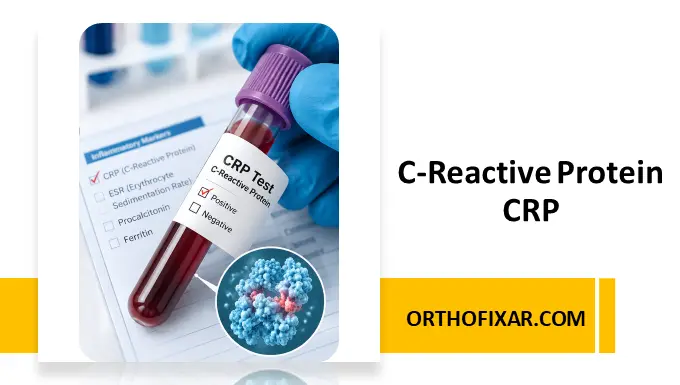
C-reactive protein (CRP) is one of the most commonly used laboratory markers of inflammation in modern medicine. The crp blood test helps clinicians detect inflammatory processes, monitor disease activity, evaluate treatment response, and identify potential infections. Because CRP levels rise rapidly in response to tissue injury, infection, and inflammation, it serves as a valuable tool in many medical specialties.
The c reactive protein blood test does not identify the exact cause of inflammation, but it provides important information about the presence and severity of an inflammatory response within the body.
What is C-Reactive Protein?
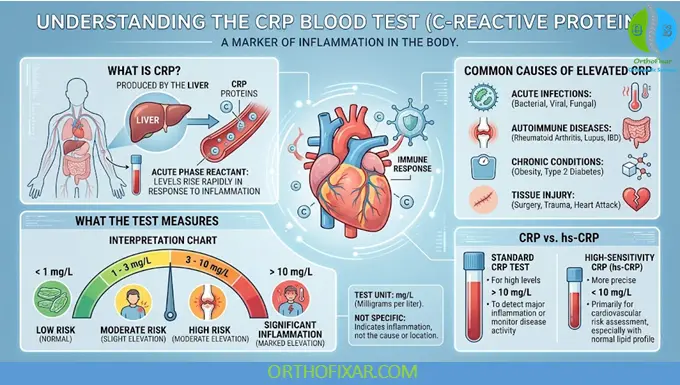
C-reactive protein (CRP) is an acute-phase protein synthesized primarily by the liver in response to inflammatory cytokines, especially interleukin-6 (IL-6). CRP belongs to the pentraxin family of proteins and plays an important role in innate immunity by recognizing damaged cells and pathogens and promoting their clearance.
CRP was first identified in 1930 because it reacted with the C-polysaccharide of Streptococcus pneumoniae, which led to its name.
Physiological Role of CRP
CRP contributes to the body’s defense mechanisms through several functions:
- Activation of the complement system
- Enhancement of phagocytosis
- Recognition of damaged or necrotic cells
- Promotion of pathogen clearance
- Regulation of inflammatory responses
These functions make CRP an important component of the innate immune system.
What Is a CRP Blood Test?
A crp blood test measures the concentration of C-reactive protein in the bloodstream.
Healthcare providers commonly order the test to:
- Detect acute or chronic inflammation
- Evaluate suspected infections
- Monitor autoimmune diseases
- Assess inflammatory disorders
- Track response to treatment
- Help evaluate cardiovascular risk when using high-sensitivity CRP (hs-CRP)
The c reactive protein blood test requires only a standard venous blood sample and does not usually require fasting.
How CRP Responds to Inflammation
One major advantage of CRP is its rapid response to inflammatory stimuli.
Following tissue injury or infection:
- CRP begins to rise within approximately 4–6 hours.
- Levels continue increasing over the next 24–48 hours.
- Peak concentrations often occur within 36–50 hours.
- Values may increase hundreds or even thousands of times above baseline during severe inflammation.
Because CRP changes quickly, it often reflects current inflammatory activity better than the erythrocyte sedimentation rate (ESR).
Normal CRP Levels
Reference ranges vary among laboratories, but generally:
| CRP Level | Interpretation |
|---|---|
| Less than 3 mg/L | Usually normal |
| 3–10 mg/L | Mild inflammation |
| 10–100 mg/L | Moderate inflammation or infection |
| Greater than 100 mg/L | Significant inflammation, severe infection, or major tissue injury |
Interpretation should always be made in conjunction with clinical findings and other laboratory results.
Causes of Elevated C-Reactive Protein
An elevated C-reactive protein level indicates inflammation somewhere in the body but does not specify the source.
Common causes include:
Infections
- Bacterial infections
- Pneumonia
- Osteomyelitis
- Septic arthritis
- Urinary tract infections
Autoimmune Diseases
- Rheumatoid arthritis
- Systemic lupus erythematosus
- Ankylosing spondylitis
- Vasculitis
- Psoriatic arthritis
Tissue Injury
- Trauma
- Surgery
- Burns
- Fractures
Cardiovascular Disease
Low-grade chronic inflammation has been associated with:
- Coronary artery disease
- Myocardial infarction
- Stroke
Malignancy
Certain cancers may elevate CRP due to systemic inflammatory responses.
Chronic Inflammatory Conditions
- Inflammatory bowel disease
- Chronic infections
- Obesity
- Metabolic syndrome
See Also: Erythrocyte Sedimentation Rate (ESR): Normal Values & Clinical Uses
High-Sensitivity CRP (hs-CRP)
The high-sensitivity CRP assay detects much lower concentrations of CRP than the standard test.
It is commonly used for cardiovascular risk assessment.
hs-CRP Cardiovascular Risk Categories
| hs-CRP Level | Cardiovascular Risk |
|---|---|
| Less than 1 mg/L | Low risk |
| 1–3 mg/L | Intermediate risk |
| Greater than 3 mg/L | High risk |
Elevated hs-CRP levels may indicate an increased risk of future cardiovascular events even when no obvious infection or inflammatory disease is present.
CRP vs ESR
Both CRP and ESR are inflammatory markers, but they differ significantly.
| Feature | CRP | ESR |
|---|---|---|
| Response speed | Rapid | Slower |
| Rise after inflammation | Hours | 24–48 hours |
| Return to normal | Rapid | Gradual |
| Influenced by age | Minimal | Significant |
| Influenced by anemia | No | Yes |
| Reflects current inflammation | Better | Less accurately |
CRP is often preferred when monitoring acute changes in inflammatory activity.
Clinical Applications of the CRP Blood Test
Orthopedic Infections
In orthopedic practice, CRP is widely used for:
- Diagnosing prosthetic joint infections
- Detecting postoperative infections
- Monitoring osteomyelitis
- Evaluating septic arthritis
Serial CRP measurements are often more informative than a single result.
Rheumatology
CRP helps assess disease activity in:
- Rheumatoid arthritis
- Ankylosing spondylitis
- Psoriatic arthritis
- Vasculitis
Infectious Diseases
CRP assists clinicians in:
- Evaluating infection severity
- Monitoring response to antibiotics
- Differentiating bacterial from some non-bacterial causes of inflammation
Postoperative Monitoring
After surgery, CRP naturally rises and then gradually declines. Persistently elevated or increasing levels may suggest complications such as infection.
Factors That Can Affect CRP Levels
Several factors may influence CRP concentrations:
- Age
- Obesity
- Smoking
- Pregnancy
- Diabetes mellitus
- Chronic kidney disease
- Certain medications
- Hormone replacement therapy
These factors should be considered when interpreting test results.
Limitations of the C Reactive Protein Blood Test
Although extremely useful, the c reactive protein blood test has limitations:
- It is nonspecific.
- It cannot identify the source of inflammation.
- Normal CRP does not completely exclude disease.
- Elevated values may occur in many unrelated conditions.
- Results must be interpreted alongside history, examination, and additional investigations.
Key Points
- C-reactive protein (CRP) is a major acute-phase protein produced by the liver.
- The crp blood test is a sensitive marker of inflammation.
- CRP rises rapidly during infection, tissue injury, and inflammatory diseases.
- High-sensitivity CRP helps assess cardiovascular risk.
- CRP is often more responsive than ESR for monitoring inflammatory activity.
- Elevated CRP indicates inflammation but does not identify its specific cause.
- Clinical correlation is essential for accurate interpretation.
Conclusion
The C-reactive protein test remains one of the most valuable laboratory investigations for detecting and monitoring inflammation. Whether used in infection, rheumatology, orthopedics, cardiovascular medicine, or postoperative care, the crp blood test provides clinicians with rapid and reliable information about inflammatory activity. Understanding the strengths and limitations of the c reactive protein blood test enables healthcare professionals to make more informed diagnostic and therapeutic decisions.
References & More
- Singh B, Goyal A, Patel BC. C-Reactive Protein: Clinical Relevance and Interpretation. NCBI Bookshelf, StatPearls, 2025. Link
- Gulhar R, Ashraf MA, Jialal I. Physiology, Acute Phase Reactants. NCBI Bookshelf, StatPearls, 2023. Link
- Zhou HH, Tang YL, Xu TH, Cheng B. C-reactive protein: structure, function, regulation, and role in clinical diseases. Frontiers in Immunology. 2024. Link
- Mortensen RF. C-reactive protein, inflammation, and innate immunity. Immunological Research. 2001. Link
- Volanakis JE. Human C-reactive protein: expression, structure, and function. Molecular Immunology. 2001. Link