Calcium is the most abundant mineral in your body, and it plays a central role in keeping your bones strong and resilient. This article explains how much calcium you need, which foods are richest in this mineral, and how to use supplements wisely if your diet falls short. You will also find practical tips to improve absorption and support your bone health beyond calcium alone.
Why Calcium Matters for Bone Health
Your bones are living tissue that constantly breaks down and rebuilds. Calcium is a key building block for this process, providing the hardness and density that allow bones to bear weight and stay strong.
When you do not get enough calcium from your diet, your body pulls it from your bones to maintain normal muscle, nerve, and heart function. Over time, this can reduce bone density and increase the risk of fractures.
- Calcium supports bone structure and strength.
- It helps maintain a healthy balance of bone breakdown and bone formation.
- Achieving peak bone mass in early adulthood helps protect against age-related bone loss.
How Much Calcium Do You Really Need?
Your daily calcium requirement depends on your age, sex, and life stage. Standard recommendations from leading health organizations are a useful starting point, but your personal needs may vary based on medical conditions and medications.
| Age Group | Recommended Daily Calcium (mg) |
|---|---|
| Children 4–8 years | 1,000 mg |
| Teens 9–18 years | 1,300 mg |
| Adults 19–50 years | 1,000 mg |
| Women over 50 years | 1,200 mg |
| Men over 70 years | 1,200 mg |
Pregnancy and breastfeeding usually increase calcium needs, and some digestive conditions can reduce absorption. Your healthcare provider can give you a target that fits your situation.
- Menopause increases bone loss, so calcium needs rise.
- People on long-term corticosteroids often need extra calcium.
- Consuming more than about 2,000 mg per day from supplements is not recommended because it may cause kidney stones or heart issues.
Best Food Sources of Calcium
Food should always be your first choice for calcium. Many foods naturally contain this mineral, and they often provide other nutrients like protein, potassium, and vitamin D that work together for bone health.
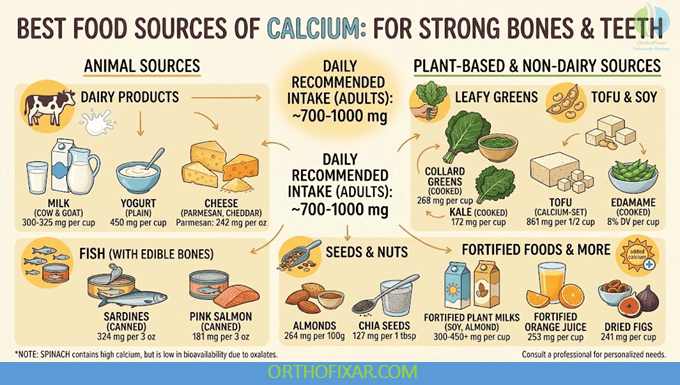
Dairy products are the most well-known sources, but many plant-based and fortified options can help you meet your daily goal.
- Milk, yogurt, and cheese are rich and easy to absorb.
- Leafy greens like kale, bok choy, and broccoli contain moderate amounts.
- Fortified plant milks, tofu made with calcium sulfate, and fortified orange juice are excellent for vegan diets.
- Canned fish with soft bones, such as sardines and salmon, add calcium and omega-3 fats.
- Nuts, seeds, and beans contribute smaller amounts.
To give you a practical sense of portions, one cup of milk has about 300 mg of calcium. A cup of cooked kale provides around 100 mg, and a single serving of fortified cereal can range from 200 to 1,000 mg depending on the brand.
Food first is the best approach. Calcium from food comes with other beneficial nutrients that support your bones.
Should You Take Calcium Supplements?
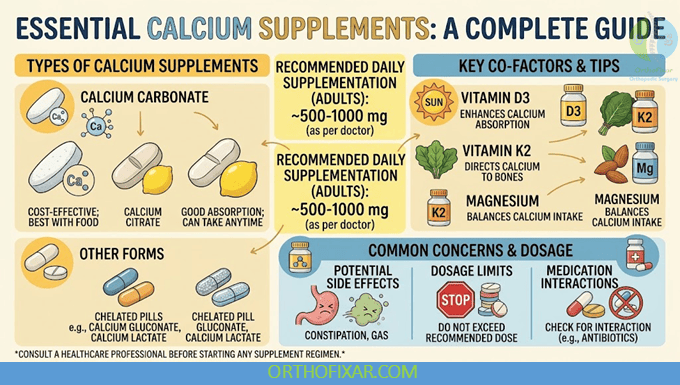
Supplements are useful when you cannot get enough calcium from food due to dietary restrictions, lactose intolerance, or increased needs. They are not meant to replace a healthy diet.
There are two main forms of supplements. Calcium carbonate is common and best absorbed when taken with food. Calcium citrate is well absorbed on an empty stomach and is a better choice for older adults or people with low stomach acid.
- Split your dose into two or three smaller amounts of 500 mg or less for better absorption.
- Check the label for elemental calcium, which is the actual amount your body uses.
- Take calcium carbonate with meals, but calcium citrate can be taken anytime.
- If you use a multivitamin, review its calcium content so you do not overdo it.
If you use supplements, choose the right type and take them properly to get the most benefit.
How to Improve Calcium Absorption
Calcium needs a supportive environment to be well absorbed. Vitamin D is essential because your intestines cannot absorb calcium without it. Spending time outdoors and eating vitamin D rich foods like fatty fish, egg yolks, and fortified milk can help.
Other factors also influence absorption. Oxalates in spinach and rhubarb, as well as phytates in whole grains, can bind calcium and reduce its availability. That is why calcium from low oxalate greens like kale may be absorbed better than from spinach.
- Pair calcium-rich meals with vitamin D sources.
- Avoid taking calcium at the same time as iron or zinc supplements, as they can compete.
- Spread calcium intake throughout the day rather than taking it all at once.
- Reduced stomach acid, gastric bypass surgery, and age can impair absorption, so talk to your doctor if you have concerns.
Calcium and Overall Bone Health: Beyond the Mineral
Calcium is essential, but it is only one part of the bone health picture. Regular weight-bearing exercises like walking, jogging, or resistance training stimulate bone remodeling and strengthen the skeleton.
Adequate protein is also critical, because bones are made of a protein matrix that holds calcium and other minerals. Magnesium, phosphorus, and vitamin K help with bone metabolism as well.
- Eat enough protein from beans, fish, poultry, or dairy.
- Include magnesium from nuts, seeds, and leafy greens.
- Get regular exercise that challenges your bones and muscles.
- Avoid smoking and limit alcohol, as both contribute to bone loss.
Conclusion
Calcium is a cornerstone of bone health, but it works best when combined with a balanced diet, adequate vitamin D, and an active lifestyle. Focus on getting calcium from foods like dairy, greens, and fortified products first. If you need a supplement, choose the right type and take it sensibly. Most importantly, talk to your healthcare provider before starting any new supplement, especially if you have a health condition or take other medicines.
Frequently Asked Questions
Can I get enough calcium from a vegan diet?
Yes. Fortified plant milks, calcium-set tofu, leafy greens, almonds, and fortified juices can help you meet your needs. You may need to plan carefully and sometimes supplement if your intake is not consistent.
Is it better to take calcium with food or on an empty stomach?
Calcium carbonate is best absorbed when taken with food. Calcium citrate can be taken on an empty stomach. Always follow the instructions on the product label.
Can calcium supplements cause constipation?
Some people experience constipation, especially with calcium carbonate. Drinking more water, eating fiber, or switching to calcium citrate may help.
What is the maximum safe daily calcium intake?
The upper limit for most adults is about 2,000 mg per day from both food and supplements. Taking more than that can lead to kidney stones or other health problems.
Do I need a calcium supplement if I already drink milk?
If you consume enough dairy and other calcium-rich foods, you may not need a supplement. Track your typical daily intake and compare it with your recommended amount.
Can calcium help prevent osteoporosis?
Adequate calcium throughout life supports bone density and may reduce the risk of osteoporosis. It works best when combined with vitamin D, exercise, and a healthy lifestyle.
What is the difference between calcium carbonate and calcium citrate?
Carbonate contains more elemental calcium per pill and is cheaper, but requires stomach acid and food for absorption. Citrate is easier to absorb, especially for older adults, and can be taken without food.
Can I take calcium with other medications?
Calcium can interfere with some medications, including thyroid drugs, certain antibiotics, and bisphosphonates. Separate these medications by at least two hours unless your doctor says otherwise.
How long does it take to notice a difference after increasing calcium?
Calcium does not produce immediate symptoms if you are healthy. It works slowly by maintaining bone density over time, so it is important to be consistent for months and years.
What are the signs of low calcium levels in the body?
Mild deficiency usually has no symptoms. Severe hypocalcemia can cause numbness, muscle cramps, fatigue, and irregular heart rhythms. If you are concerned, ask your doctor for a blood test.