A whiplash injury happens when the neck is forced through a sudden, fast back-and-forth movement, most often in a rear-end car crash. It can injure muscles, ligaments, joints, and nerves in the neck, and symptoms often appear hours or even a day later. This guide covers the common symptoms, how doctors diagnose whiplash, treatment options that actually help, and a realistic recovery timeline, plus the warning signs that mean you should get medical care right away.
What Is a Whiplash Injury?
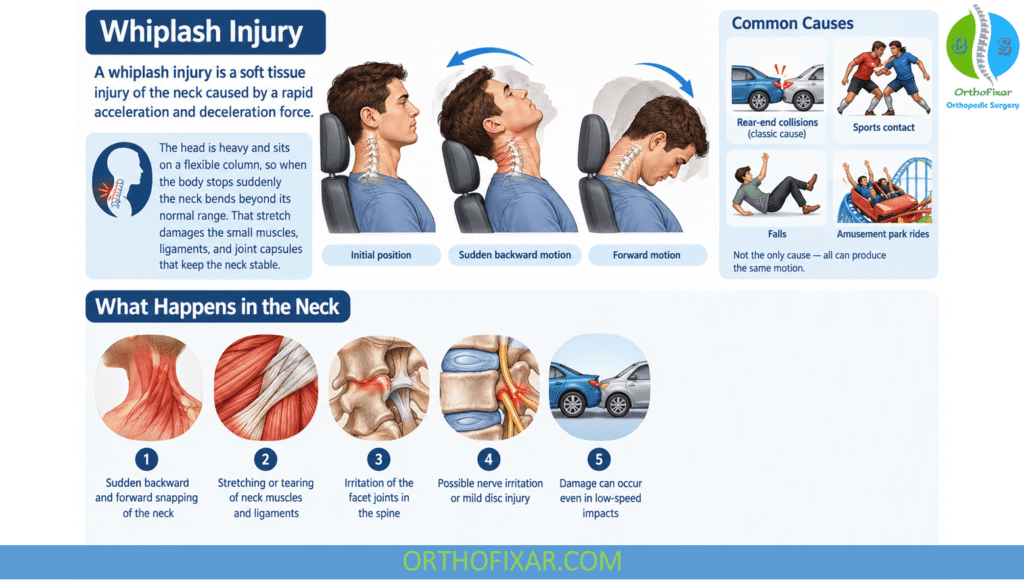
A whiplash injury is a soft tissue injury of the neck caused by a rapid acceleration and deceleration force.
The head is heavy and sits on a flexible column, so when the body stops suddenly the neck bends beyond its normal range. That stretch damages the small muscles, ligaments, and joint capsules that keep the neck stable.
Rear-end collisions are the classic cause, but not the only one. Sports contact, falls, and amusement park rides can all produce the same motion.
- Sudden backward and forward snapping of the neck
- Stretching or tearing of neck muscles and ligaments
- Irritation of the facet joints in the spine
- Possible nerve irritation or mild disc injury
- Damage can occur even in low-speed impacts
Many people feel embarrassed that they are in pain after a minor bump. That reaction is unnecessary — the injury is real, and it is measured by symptoms, not by how fast the cars were going.
Common Symptoms of a Whiplash Injury
Symptoms usually show up within the first 24 hours, but a delay of one to two days is common and normal.
The pain often feels worse the morning after, because stiffness builds up while you sleep. Some people also notice symptoms spreading into the shoulders and upper back.
- Neck pain and stiffness, especially when turning the head
- Headache, often starting at the base of the skull
- Shoulder, upper back, or arm discomfort
- Dizziness or a feeling of unsteadiness
- Jaw pain or difficulty opening the mouth fully
- Tingling, numbness, or weakness in the arms
- Fatigue and poor sleep
- Trouble concentrating or remembering recent details
- Ringing in the ears or blurred vision
- Low mood or feeling anxious about driving
Most people recover from a whiplash injury within a few weeks, but how you handle the first 72 hours often shapes how the rest of recovery goes.
Grades of Whiplash Injury
Doctors sometimes describe whiplash using a grading scale. The grade reflects how much tissue damage and nerve involvement is present, which helps guide treatment.
| Grade | What It Means | Typical Path |
|---|---|---|
| Grade 0 | No neck complaints and no physical signs | No specific treatment needed |
| Grade I | Neck pain, stiffness, or tenderness only | Usually settles within days to a few weeks |
| Grade II | Neck pain plus physical signs such as reduced range of motion or tender points | Often a few weeks with physiotherapy |
| Grade III | Neck pain plus neurological signs such as reduced reflexes, weakness, or altered sensation | Needs assessment and a longer recovery |
| Grade IV | Neck pain plus fracture or dislocation | Specialist care and imaging are required |
Knowing your grade is useful, but it is not a life sentence. Many people with Grade II symptoms recover faster than people with milder findings, because recovery depends on movement, sleep, stress, and general health.
How a Whiplash Injury Is Diagnosed
There is no single test that confirms whiplash. Diagnosis is based on your story, your symptoms, and a physical examination.
Your doctor will ask how the injury happened, what your pain feels like, and whether anything makes it better or worse. They will also ask about headaches, vision, and any numbness in your arms.
- Range of motion testing for the neck
- Palpation to find tender muscles and joints
- A neurological exam checking reflexes, strength, and sensation
- Questions about memory, concentration, and sleep
- X-rays if a fracture is suspected
- CT or MRI in selected cases, such as severe symptoms or nerve problems
Imaging is often normal in whiplash, and that does not mean nothing is wrong. Soft tissue injuries simply do not always appear on scans.
Treatment Options for a Whiplash Injury
The goal of treatment is to control pain, restore movement, and prevent the problem from becoming long term.
Home Care That Helps
Simple measures work well for most mild to moderate cases in the first days.
- Apply ice for 10 to 20 minutes at a time during the first day or two to reduce swelling
- Switch to gentle heat after the first 48 hours to ease muscle tightness
- Keep your neck moving gently rather than holding it still
- Use over-the-counter pain relief only as advised by your doctor or pharmacist
- Sleep with a pillow that keeps your neck in a neutral position
- Adjust your screen so you are not looking down for long stretches
Rest does not mean lying flat for days. Prolonged stillness stiffens the neck and tends to make recovery slower.
Professional Treatment
If symptoms last more than a week or two, structured treatment usually helps.
- Physiotherapy with graded neck and shoulder exercises
- Manual therapy and gentle joint mobilisation
- Soft tissue massage and dry needling in some cases
- Posture and ergonomic coaching for work and driving
- Prescription medication for stronger pain or muscle spasm
- Targeted injections for persistent facet joint pain
- Support for anxiety, low mood, or sleep problems if they develop
Motion is medicine after whiplash — gentle, regular movement almost always beats staying still.
Whiplash Injury Recovery Timeline
Recovery varies widely, but most people follow a fairly predictable pattern.
- First 24 to 72 hours: pain and stiffness usually peak
- Days 3 to 7: symptoms often ease slightly, though headaches may continue
- Weeks 1 to 2: range of motion starts to return with gentle activity
- Weeks 2 to 6: most people return to normal daily activities
- Weeks 6 to 12: lingering stiffness or occasional flare-ups are common
- Beyond 3 months: a minority of people still have ongoing symptoms
Certain factors are linked to slower recovery: high pain levels at the start, heavy stress, poor sleep, and believing that the neck is permanently damaged. Movement and reassurance both matter.
Factors That Can Slow Recovery
- Waiting too long to start gentle activity
- Wearing a soft collar for weeks
- Poor sleep and high stress
- Returning to heavy lifting or contact sport too soon
Warning Signs You Should Not Ignore
Some symptoms suggest something more than a simple soft tissue injury.
- Severe or worsening headache that will not settle
- Numbness, weakness, or clumsiness in the arms or hands
- Weakness or tingling in the legs
- Difficulty walking or keeping your balance
- Changes in bladder or bowel control
- Confusion, memory loss, or repeated vomiting
- Double vision or slurred speech
- Neck pain after a high-speed crash or a fall from height
If any of these appear, seek urgent medical care rather than waiting to see whether things improve.
Practical Tips for Everyday Recovery
Small adjustments make a real difference during the weeks after a whiplash injury.
- Take short walking breaks every 30 to 45 minutes
- Use a headset or raise your phone instead of tilting your head down
- Split heavy shopping bags into two lighter loads
- Recline your car seat slightly and use the headrest correctly
- Note your symptoms in a simple daily diary to spot patterns
- Return to driving only when you can turn your head safely and confidently
- Build activity back gradually rather than testing your limits in one day
- Keep follow-up appointments even when you feel better
Sleep deserves special attention. A pillow that is too thick pushes the neck into a bent position for hours, which often explains why mornings feel worst.
Moving Forward After a Whiplash Injury
A whiplash injury is uncomfortable, but the outlook for most people is good. Symptoms usually peak in the first few days and then gradually settle over several weeks.
The most reliable steps are simple: keep the neck gently moving, protect your sleep, follow a graded return to activity, and get medical advice if anything feels unusual. If pain is still limiting you after several weeks, physiotherapy and a proper reassessment can change the course of recovery.
Recovery is rarely a straight line. Flare-ups after a long day or a bumpy drive do not mean you are back at the start — they usually settle within a day or two with the same basic care.
Frequently Asked Questions About Whiplash Injury
How long does a whiplash injury usually take to heal?
For most people, the worst symptoms settle within one to two weeks, and normal activities resume within four to six weeks. A smaller group still notices stiffness or occasional discomfort after three months, especially if pain was intense at the beginning or if sleep and stress have been poor.
Should I wear a neck collar after whiplash?
Soft collars are generally used only for a very short period, if at all. Wearing one for days or weeks weakens the neck muscles and can delay recovery. Gentle movement within a comfortable range is usually better than immobilisation.
Is ice or heat better for a whiplash injury?
Ice is helpful in the first day or two to reduce swelling and calm irritated tissue. After that, heat often feels better for tight, aching muscles. Use either for short sessions of 10 to 20 minutes with a barrier between the pack and your skin.
Can a whiplash injury be serious?
Most cases are not dangerous, but whiplash can involve nerve irritation, disc injury, or, in rare cases, a fracture. Severe headache, arm weakness, balance problems, or changes in bladder control need urgent assessment.
What should I avoid after a whiplash injury?
Avoid long periods of bed rest, heavy lifting, contact sport, and staring down at a phone or laptop for hours. Also avoid pushing through sharp pain — mild discomfort during gentle movement is acceptable, sharp pain is a signal to ease off.
How is a whiplash injury diagnosed?
Diagnosis is clinical. Your doctor checks neck movement, tender points, reflexes, strength, and sensation, and reviews how the injury happened. Imaging such as X-ray, CT, or MRI is used only when a fracture or nerve problem is suspected.
Can whiplash happen without a car accident?
Yes. Any event that snaps the head backward and forward can cause it, including contact sports, falls, and sudden stops on rides or during physical activity. The injury mechanism matters more than the setting.
Why do my symptoms get worse the day after?
Inflammation and muscle guarding build up over several hours, and stiffness accumulates during sleep. That is why many people feel worse the next morning. This pattern is common and does not automatically mean the injury is severe.
When can I return to work and exercise?
Desk work is often possible within a few days with posture breaks. Physical jobs and sport need a graded return, usually starting with light cardio and controlled neck and shoulder exercises. Your doctor or physiotherapist can guide the pace.
Does whiplash cause long-term problems?
Most people recover fully. A minority develop persistent neck pain, headaches, or reduced tolerance for sustained positions. Early gentle movement, good sleep, and addressing stress reduce the chance of symptoms lingering.