Cervical radiculopathy occurs when a nerve root in the cervical spine becomes compressed or inflamed. The result is pain, numbness, tingling, or weakness that travels from the neck into the shoulder, arm, or hand. Because the affected nerve carries signals to a specific region of the upper limb, symptoms often appear far from the neck itself. That is why two people with the same diagnosis can describe very different problems: one may feel a burning streak down the back of the arm, while another notices a weak grip and numb fingertips. Understanding the underlying causes, recognizing warning signs, and choosing the right treatment can make a significant difference in recovery.
What Is Cervical Radiculopathy?
Cervical radiculopathy is the medical term for a pinched nerve in the neck. The cervical spine is the upper portion of the backbone, consisting of seven vertebrae labeled C1 through C7. Between these vertebrae, nerve roots branch out from the spinal cord and travel down into the shoulders, arms, and hands. Each nerve root serves a specific area of sensation and muscle control, which is why the location of your symptoms points to the nerve that is irritated.
The condition differs from a general neck strain. A strain affects muscles and causes localized aching, while cervical radiculopathy affects a nerve root and typically causes symptoms that radiate into the arm. A strained neck usually hurts most at the neck itself; a pinched nerve often hurts most somewhere along the arm, even though the problem sits in the spine.
How Common Is It?
Cervical radiculopathy is a common reason people seek medical care for neck and arm pain. It most often affects middle-aged adults, though it can occur at any age. Men are affected slightly more often than women. Many people recover without surgery, and with appropriate care, most cases improve within weeks to a few months.
What Causes a Pinched Nerve in the Neck?
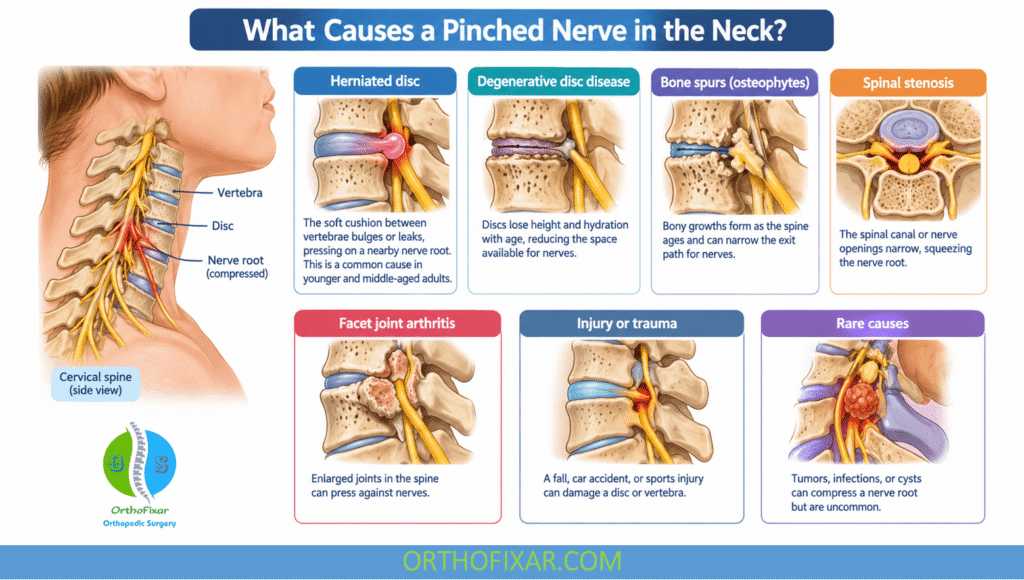
Anything that narrows the space where a nerve root exits the spine can cause cervical radiculopathy. Several conditions can lead to this narrowing:
- Herniated disc: The soft cushion between vertebrae bulges or leaks, pressing on a nearby nerve root. This is a common cause in younger and middle-aged adults.
- Degenerative disc disease: Discs lose height and hydration with age, reducing the space available for nerves.
- Bone spurs (osteophytes): Bony growths form as the spine ages and can narrow the exit path for nerves.
- Spinal stenosis: The spinal canal or nerve openings narrow, squeezing the nerve root.
- Facet joint arthritis: Enlarged joints in the spine can press against nerves.
- Injury or trauma: A fall, car accident, or sports injury can damage a disc or vertebra.
- Rare causes: Tumors, infections, or cysts can compress a nerve root but are uncommon.
In many people, more than one factor is present at the same time. For example, a person with degenerative disc disease may also develop bone spurs that further narrow the nerve pathway. This overlap helps explain why symptoms sometimes build gradually rather than appearing after a single event.
Symptoms of Cervical Radiculopathy
The symptoms depend on which nerve root is affected. Each nerve root supplies a specific area of the shoulder, arm, and hand. Doctors refer to this area as a dermatome for sensation and a myotome for muscle control.
Common symptoms include:
- Sharp, shooting, or burning pain that travels from the neck into the arm
- Numbness or a “pins and needles” feeling in the arm, hand, or fingers
- Weakness in the arm or hand, such as dropping objects or difficulty gripping
- Pain that worsens with certain neck movements, coughing, or sneezing
- Pain that improves when you rest your arm on your head
- A dull ache or deep pain in the shoulder blade
- Reduced reflexes in the arm
The pain can be severe and may interfere with sleep. Some people describe it as an electric shock running down the arm. Others notice only numbness and weakness, with little or no pain at all.
Which Nerve Root Causes Which Symptoms?
Doctors use the pattern of symptoms to help identify the affected nerve. The table below provides a general guide.
| Nerve Root | Common Pain Area | Possible Weakness | Reflex Change |
|---|---|---|---|
| C5 | Shoulder and outer upper arm | Raising the arm (deltoid) | Biceps reflex |
| C6 | Outer arm, forearm, thumb, and index finger | Bending the elbow, wrist extension | Biceps and brachioradialis reflex |
| C7 | Back of the arm, middle finger | Straightening the elbow, wrist flexion | Triceps reflex |
| C8 | Inner forearm, ring and little finger | Gripping and finger bending | Often no change |
| T1 | Inner arm and hand | Finger spreading | Often no change |
This table is a general guide only. Nerve roots overlap, and individual anatomy varies. A doctor will use a full examination to confirm which nerve is involved.
When to See a Doctor
Many cases of neck and arm pain improve on their own. However, some symptoms require urgent medical attention.
Seek emergency care if you experience:
- Sudden weakness or paralysis in your arms or legs
- Loss of bladder or bowel control
- Numbness in the groin or saddle area
- Severe neck pain after a serious injury
- Difficulty walking or balancing
These can be signs of a spinal cord problem, which is a medical emergency. They are not typical of cervical radiculopathy, which affects a single nerve root rather than the cord itself.
See your doctor soon if you have:
- Pain that does not improve after a few weeks
- Weakness that is getting worse
- Numbness that spreads or affects both arms
- Fever, unexplained weight loss, or a history of cancer
- Pain that wakes you from sleep every night
How Cervical Radiculopathy Is Diagnosed
Diagnosis begins with a conversation and a physical examination. Your doctor will ask about your symptoms, when they started, and what makes them better or worse. Be specific about which fingers feel numb and which movements feel weak; those details narrow down the likely nerve root.
During the exam, your doctor may:
- Test muscle strength in the arms and hands
- Check your reflexes
- Test sensation in different parts of your arm
- Perform the Spurling test, where your head is tilted and pressed to reproduce pain
- Perform the shoulder abduction test, where resting your hand on your head relieves pain
- Check your neck’s range of motion
Imaging and Tests
If symptoms are severe or not improving, your doctor may order imaging or other tests.
- X-ray: Shows bone alignment, fractures, and bone spurs but does not show nerves.
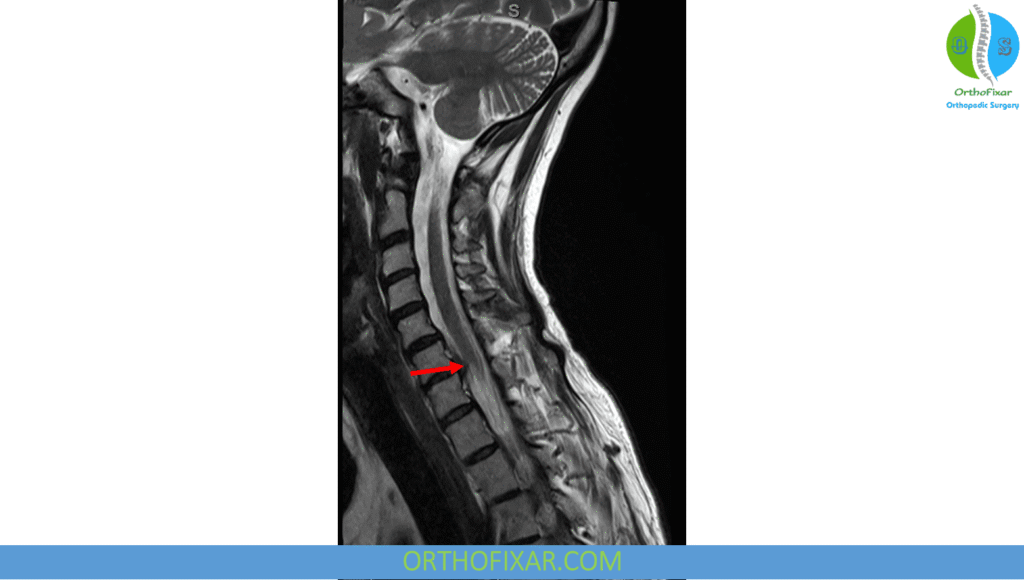
- MRI: The best test for viewing discs, nerves, and soft tissue. It can reveal a herniated disc or nerve compression.
- CT scan: Useful when MRI is not possible or when detailed bone imaging is needed.
- Electromyography (EMG): Measures electrical activity in muscles and can confirm nerve damage.
- Nerve conduction study: Often performed with EMG to check how well nerves carry signals.
Imaging is not always necessary. Many people with clear symptoms can be diagnosed through a physical exam alone. Even when an MRI shows a disc bulge, that finding may not be the source of your pain, since bulges are common in people without symptoms.
Treatment Options for Cervical Radiculopathy
Most people improve with non-surgical treatment. The goals are to reduce pain, restore function, and prevent the problem from returning. Treatment usually starts with the least invasive options and escalates only if needed.
1. Rest and Activity Modification
Short-term rest can help during a flare-up, but prolonged rest can weaken muscles and slow recovery. Avoid activities that clearly worsen your pain, such as heavy lifting or looking down for long periods. Good posture matters. Keep your screen at eye level and take breaks from your phone or laptop.
2. Medications
Doctors may recommend:
- Over-the-counter pain relievers: Such as acetaminophen or NSAIDs like ibuprofen.
- Muscle relaxants: To ease muscle spasms.
- Oral corticosteroids: A short course to reduce nerve inflammation.
- Neuropathic pain medicines: Such as gabapentin or pregabalin for nerve-related pain.
- Antidepressants: Certain types can help with chronic nerve pain.
Always follow your doctor’s instructions and ask about side effects and interactions. NSAIDs are not safe for everyone, particularly people with kidney problems, ulcers, or certain heart conditions.
3. Physical Therapy
Physical therapy is a core treatment. A therapist can teach you exercises to strengthen neck and shoulder muscles, improve posture, and relieve nerve pressure. Common techniques include:
- Cervical traction to gently stretch the neck
- Strengthening exercises for the deep neck flexors
- Stretching for tight muscles
- Manual therapy to improve joint mobility
- Posture and ergonomic training
Progress is often gradual. Give a new exercise program a few weeks before judging whether it is helping, and tell your therapist if any movement consistently increases your arm symptoms.
4. Steroid Injections
An epidural steroid injection delivers medicine near the inflamed nerve root. It can reduce pain and swelling, often enough to allow you to participate in physical therapy. Relief may last weeks to months. Injections are usually considered when oral medicines and therapy have not provided enough relief.
5. Surgery
Surgery is an option when symptoms are severe, worsening, or not improving after several weeks to months of other treatments. It may also be needed if there is significant weakness or spinal cord involvement. Common procedures include:
- Anterior cervical discectomy and fusion (ACDF): Removes the damaged disc and fuses the vertebrae.
- Artificial disc replacement: Replaces the disc with a moving implant.
- Posterior foraminotomy: Widens the opening where the nerve exits.
Surgery is not right for everyone. Your doctor will weigh the benefits and risks with you, including the recovery time and the small chance that symptoms persist afterward.
Home Remedies and Self-Care
Simple steps can ease symptoms while your nerve recovers.
- Apply a warm compress to relax tight muscles.
- Use an ice pack to reduce inflammation during a flare-up.
- Sleep with a supportive pillow that keeps your neck neutral.
- Avoid sleeping on your stomach, which twists the neck.
- Take frequent breaks from screens and phones.
- Use a headset or speakerphone for long calls.
- Keep your car seat and workstation set up to support good posture.
- Do gentle range-of-motion exercises if your doctor approves.
Avoid heavy lifting, contact sports, or activities that cause sharp pain until you have recovered. If a movement sends pain shooting down your arm, stop and rest rather than pushing through it.
Exercises That May Help
These are general examples. Ask your doctor or physical therapist before starting any exercise, and stop if your arm symptoms worsen.
Chin Tucks
Sit or stand tall. Gently pull your chin straight back, as if making a double chin. Hold for a few seconds and repeat. This strengthens deep neck muscles and improves posture.
Neck Rotation
Slowly turn your head to one side until you feel a mild stretch. Hold briefly, then turn to the other side. Stop if you feel pain or tingling.
Shoulder Blade Squeezes
Squeeze your shoulder blades together as if holding a pencil between them. Hold a few seconds and release. This helps support the neck.
Nerve Glides
Nerve gliding exercises gently move the nerve to reduce irritation. These should be taught by a professional because doing them incorrectly can worsen symptoms.
Ergonomic Tips for Daily Life
Small changes to how you sit, stand, and work can reduce strain on your neck.
- Position your monitor so the top is at or slightly below eye level.
- Keep your keyboard and mouse close so you do not reach forward.
- Use a chair with good lower back support.
- Keep your feet flat on the floor or on a footrest.
- Hold your phone up instead of looking down at it.
- Take a short movement break every 30 to 45 minutes.
- Avoid carrying heavy bags on one shoulder.
- Use a pillow that supports the natural curve of your neck.
How Long Does Recovery Take?
Recovery varies from person to person. Many people notice improvement within a few weeks. Most feel much better within two to three months with non-surgical care. Some people have lingering numbness or mild weakness that improves slowly. A small number continue to have symptoms and may need further treatment or surgery.
Factors that affect recovery include age, overall health, the cause of the pinched nerve, and how well you follow your treatment plan. Pain usually improves before numbness and weakness do, so do not be alarmed if some tingling remains after the aching has eased.
Preventing Cervical Radiculopathy
You cannot prevent every cause, such as age-related changes. But you can lower your risk.
- Keep your neck and core muscles strong.
- Maintain good posture during work and rest.
- Avoid repetitive neck strain and heavy lifting with poor form.
- Stay active with low-impact exercise.
- Manage your weight to reduce strain on the spine.
- Do not smoke, since smoking harms disc health.
- Warm up before sports or physical activity.
- Use proper technique when lifting objects.
Outlook for People With a Pinched Nerve
The outlook for cervical radiculopathy is generally good. Most people recover with time and conservative treatment. If symptoms return, they can often be managed again with the same approaches. Staying active and maintaining good posture can reduce the chance of another flare-up. Talk with your doctor about any new or worsening symptoms. Early treatment usually leads to better results.
Conclusion
Cervical radiculopathy is a pinched nerve in the neck that causes pain, numbness, tingling, or weakness in the arm. It is usually caused by a herniated disc, bone spurs, or age-related changes in the spine. Most people improve without surgery through rest, medication, physical therapy, and self-care. If symptoms are severe or do not improve, injections or surgery may help. See your doctor early, follow your treatment plan, and give your nerve time to heal.
Frequently Asked Questions
What is the fastest way to relieve a pinched nerve in the neck?
There is no single fastest method, but many people find relief by resting the arm, using over-the-counter pain relievers, applying ice or heat, and avoiding positions that worsen pain. A doctor may recommend a short course of medication or a steroid injection if symptoms are severe.
Can cervical radiculopathy go away on its own?
Yes. Many cases improve on their own within weeks to a few months. Conservative treatment such as physical therapy and medication can speed recovery and reduce pain.
Is a pinched nerve in the neck serious?
Most cases are not emergencies and improve with treatment. However, it can be serious if it causes severe weakness, loss of bladder or bowel control, or numbness in the groin area. These symptoms need urgent medical care.
What is the difference between cervical radiculopathy and a neck strain?
A neck strain affects muscles and causes localized aching. Cervical radiculopathy affects a nerve root and typically causes pain, numbness, or weakness that travels into the arm or hand.
Can I exercise with cervical radiculopathy?
Gentle exercises can help, but you should avoid movements that increase pain or tingling. Ask your doctor or physical therapist which exercises are safe for your specific case.
How long does it take for a pinched nerve to heal?
Many people feel better within a few weeks. Full recovery can take two to three months or longer. Numbness and weakness may take more time to improve than pain.
When should I consider surgery?
Surgery is usually considered when symptoms are severe, getting worse, or not improving after several weeks to months of non-surgical treatment. It may also be needed if there is significant weakness or spinal cord involvement.
Can poor posture cause cervical radiculopathy?
Poor posture does not directly pinch a nerve, but it can strain the neck and worsen symptoms. Maintaining good posture can help reduce strain and support recovery.
Are steroid injections safe for a pinched nerve?
Epidural steroid injections are generally safe when performed by a trained professional. They can reduce pain and inflammation. As with any procedure, there are risks, so discuss them with your doctor.
Can cervical radiculopathy come back?
Yes, symptoms can return. Keeping your neck and core muscles strong, maintaining good posture, and avoiding repetitive strain can lower the chance of another flare-up.