What Is the Trendelenburg Position?
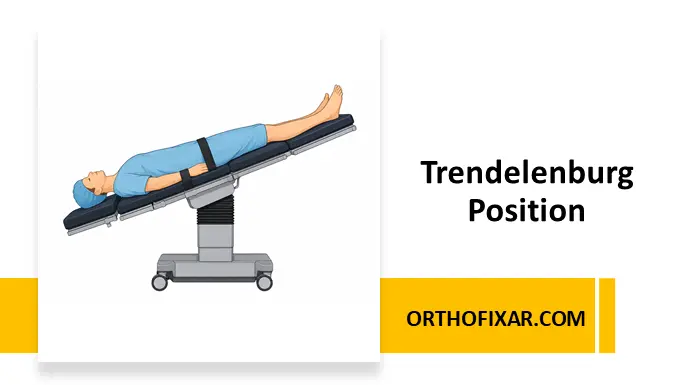
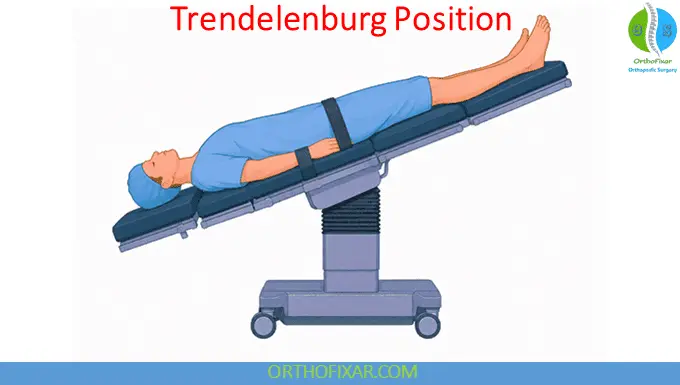
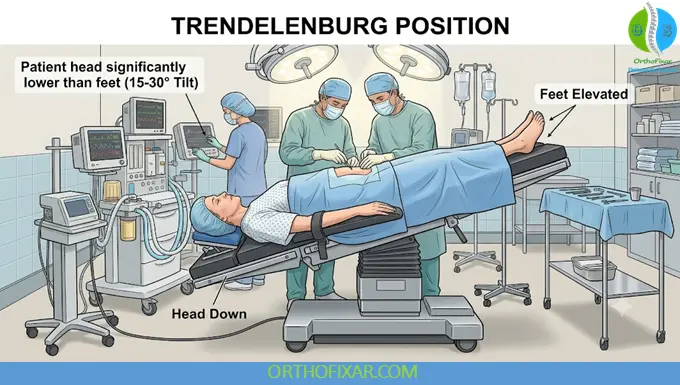
The Trendelenburg position is a patient positioning technique in which the individual lies supine on a tilted table or bed with the head positioned lower than the feet, typically at an angle of 15° to 30°.
The position was introduced by the German surgeon Friedrich Trendelenburg (1844–1924) to improve surgical exposure of the pelvic organs. Although originally developed for abdominal and pelvic surgery, it has since been used in numerous medical specialties including emergency medicine, anesthesia, intensive care, gynecology, urology, and vascular surgery.
Modern evidence has challenged several traditional indications, particularly its routine use for treating hypotension and shock.
Anatomy and Physiological Effects
Placing the patient in the Trendelenburg position causes gravitational redistribution of blood and abdominal contents, leading to several physiological changes.
Cardiovascular Effects
Initially, the position may:
- Increase venous return
- Increase central venous pressure
- Produce a transient increase in cardiac preload
- Cause a brief increase in cardiac output
However, studies demonstrate that these effects are generally:
- Short-lived
- Clinically insignificant in most critically ill patients
- Not effective as a long-term treatment for hypotension
Respiratory Effects
The diaphragm shifts upward because abdominal organs move toward the thorax, resulting in:
- Reduced lung compliance
- Decreased functional residual capacity (FRC)
- Increased airway pressures
- Higher work of breathing
- Greater risk of atelectasis
These effects are especially important in:
- Obese patients
- Pregnant patients
- Patients with chronic lung disease
- Mechanically ventilated patients
Neurological Effects
Trendelenburg positioning may increase:
- Intracranial pressure (ICP)
- Intraocular pressure (IOP)
- Cerebral venous congestion
For this reason, it should be avoided in patients with:
- Traumatic brain injury
- Intracranial hemorrhage
- Glaucoma
- Recent eye surgery
Gastrointestinal Effects
The position promotes cephalad displacement of abdominal viscera, which may:
- Increase gastric pressure
- Increase aspiration risk
- Promote gastroesophageal reflux
How to Place a Patient in the Trendelenburg Position
- Position the patient supine.
- Secure the patient using safety straps if the table is tilted.
- Tilt the entire operating table or bed.
- Lower the head approximately 15°–30° below the feet.
- Ensure proper alignment of:
- Head
- Neck
- Spine
- Protect pressure points.
- Continuously monitor:
- Blood pressure
- Oxygen saturation
- Airway
- Ventilation
- Neurological status
Degrees of Trendelenburg Position
Mild Trendelenburg
- 10–15°
- Used for minor venous access procedures
Standard Trendelenburg
- 15–30°
- Most common surgical position
Steep Trendelenburg
- 30–45° or greater
- Frequently used during robotic pelvic surgery
- Associated with increased physiological complications
Clinical Uses of the Trendelenburg Position
Central Venous Catheter Placement
One of the most evidence-supported indications.
Benefits include:
- Distends the internal jugular vein
- Reduces risk of air embolism
- Improves ultrasound visualization
- Facilitates catheter insertion
Pelvic Surgery
Widely used during:
- Gynecologic surgery
- Robotic hysterectomy
- Radical prostatectomy
- Rectal surgery
- Laparoscopic pelvic procedures
The abdominal organs shift away from the pelvis, improving surgical visualization.
Laparoscopic Surgery
Provides:
- Better exposure
- Improved access to pelvic organs
- Greater working space for laparoscopic instruments
Urologic Procedures
Common during:
- Robotic prostatectomy
- Bladder surgery
- Pelvic lymph node dissection
Gynecologic Procedures
Examples include:
- Hysterectomy
- Oophorectomy
- Endometriosis surgery
- Pelvic reconstructive surgery
Management of Venous Air Embolism
In selected situations, Trendelenburg positioning may help prevent air migration toward the cerebral circulation, although current evidence is limited and management primarily focuses on definitive supportive measures.
Is Trendelenburg Position Recommended for Shock?
Historically, the Trendelenburg position was recommended for:
- Hypotension
- Hemorrhagic shock
- Septic shock
- Syncope
Current evidence shows:
- Only a temporary increase in preload
- No sustained improvement in blood pressure
- No improvement in tissue perfusion
- No mortality benefit
Consequently, major critical care guidelines do not recommend routine Trendelenburg positioning as a treatment for shock.
Instead, clinicians should identify and treat the underlying cause while using evidence-based fluid resuscitation and vasopressor therapy when indicated.
Indications
The Trendelenburg position may be indicated for:
- Central venous catheter insertion
- Pelvic surgery
- Robotic surgery
- Laparoscopic gynecologic procedures
- Certain urologic operations
- Selected vascular procedures
- Some interventional radiology procedures
Contraindications
Avoid or use extreme caution in patients with:
Absolute or Strong Contraindications
- Elevated intracranial pressure
- Acute glaucoma
- Penetrating eye injury
- Unstable cervical spine injury
Relative Contraindications
- Severe obesity
- Congestive heart failure
- Pulmonary edema
- Chronic obstructive pulmonary disease
- Severe respiratory insufficiency
- Pregnancy (late gestation)
- Hiatal hernia
- Gastroesophageal reflux disease
- Uncontrolled hypertension
Advantages of the Trendelenburg Position
Advantages include:
- Excellent exposure of pelvic anatomy
- Easier laparoscopic surgery
- Improved central venous catheter insertion
- Reduced risk of venous air embolism during catheter placement
- Better visualization during robotic surgery
Disadvantages
Potential disadvantages include:
- Respiratory compromise
- Facial edema
- Increased intracranial pressure
- Increased intraocular pressure
- Airway swelling
- Nerve injuries
- Pressure injuries
- Aspiration risk
- Hemodynamic instability in susceptible patients
Complications
Respiratory Complications
- Atelectasis
- Hypoxemia
- Reduced pulmonary compliance
- Difficult ventilation
Cardiovascular Complications
- Bradycardia
- Arrhythmias
- Reduced cardiac output after prolonged positioning
Neurological Complications
- Increased intracranial pressure
- Cerebral edema
- Facial swelling
Ophthalmologic Complications
Steep Trendelenburg can cause:
- Elevated intraocular pressure
- Corneal edema
- Ischemic optic neuropathy (rare)
- Temporary postoperative visual disturbances
Peripheral Nerve Injury
Possible injuries include:
- Brachial plexus injury
- Ulnar nerve compression
- Peroneal nerve injury
Reverse Trendelenburg Position
The Reverse Trendelenburg position is the opposite configuration:
- Head elevated
- Feet lower than the head
Common uses include:
- Upper abdominal surgery
- Thyroid surgery
- Bariatric surgery
- Neurosurgery
- Reducing intracranial pressure
- Improving ventilation in obese patients
Trendelenburg Position vs Reverse Trendelenburg
| Feature | Trendelenburg | Reverse Trendelenburg |
|---|---|---|
| Head | Down | Up |
| Feet | Up | Down |
| Surgical exposure | Pelvis | Upper abdomen |
| Venous return | Increased temporarily | Decreased |
| Intracranial pressure | Increased | Reduced |
| Intraocular pressure | Increased | Reduced |
| Ventilation | More difficult | Often improved |
Nursing Considerations
Healthcare providers should:
- Confirm the indication before positioning.
- Secure the patient to prevent sliding.
- Pad all pressure points.
- Protect the eyes from pressure.
- Monitor airway pressures.
- Reassess blood pressure and oxygenation regularly.
- Limit duration, especially in steep Trendelenburg.
- Inspect for postoperative edema and nerve injury.
Evidence-Based Recommendations
Current literature supports:
- Routine use during pelvic and robotic surgery
- Use during central venous catheter placement
- Avoidance as routine therapy for hypotension or shock
- Careful patient selection in those with pulmonary, neurologic, or ophthalmologic disease
- Limiting prolonged steep Trendelenburg whenever possible
Clinical Pearls
- Trendelenburg positioning was originally designed to improve pelvic surgical exposure.
- Central venous catheter placement remains one of its strongest indications.
- It is not recommended as routine treatment for shock.
- Steep Trendelenburg significantly increases intraocular and intracranial pressures.
- Prolonged positioning raises the risk of facial edema, airway swelling, and nerve injury.
- Patient positioning should always balance surgical access with physiological safety.
Frequently Asked Questions (FAQs)
What is the Trendelenburg position?
It is a supine position in which the patient’s head is lower than the feet by approximately 15–30 degrees.
Why is the Trendelenburg position used?
It improves surgical exposure of the pelvis, facilitates central venous catheter insertion, and is commonly used during robotic and laparoscopic pelvic surgery.
Is the Trendelenburg position used for hypotension?
Current evidence does not support its routine use for treating hypotension or shock because any increase in cardiac output is temporary and clinically limited.
What are the complications of prolonged Trendelenburg positioning?
Potential complications include facial edema, increased intracranial and intraocular pressures, respiratory compromise, aspiration, nerve injuries, and pressure-related skin injuries.
What is the difference between Trendelenburg and Reverse Trendelenburg?
Trendelenburg places the head lower than the feet to improve pelvic access, whereas Reverse Trendelenburg elevates the head above the feet to improve upper abdominal exposure and ventilation.
Key Takeaways
- The Trendelenburg position is a fundamental patient positioning technique in surgery and critical care.
- Its primary modern applications are pelvic surgery and central venous catheter placement.
- Evidence does not support routine use for treating shock or hypotension.
- Careful patient selection, appropriate monitoring, and limiting prolonged steep positioning help minimize complications.
- Understanding the physiological effects and contraindications is essential for safe clinical practice.
References & More
- Armstrong M, Moore RA. Anatomy, Patient Positioning. [Updated 2022 Oct 31]. In: StatPearls [Internet]. Treasure Island (FL): StatPearls Publishing; 2026 Jan-. Available from: https://www.ncbi.nlm.nih.gov/books/NBK513320/
- Zhang, Tony et al. “The Role of Trendelenburg Positioning for the Acute Symptomatic Management of Spontaneous Intracranial Hypotension.” The Neurohospitalist, vol. 16,3 19418744251399726. 16 Nov. 2025, doi:10.1177/19418744251399726. Link
- Wu, Chih-Chung et al. “The Trendelenburg position decreases the threshold of dynamic variables in predicting fluid responsiveness: A prospective observational study.” Journal of the Chinese Medical Association : JCMA vol. 88,10 (2025): 783-789. doi:10.1097/JCMA.0000000000001284. Link