Parathyroid hormone (PTH) is the principal endocrine regulator of calcium and phosphate metabolism. It plays a critical role in maintaining extracellular calcium concentrations within a narrow physiological range, ensuring proper neuromuscular function, bone remodeling, blood coagulation, and intracellular signaling.
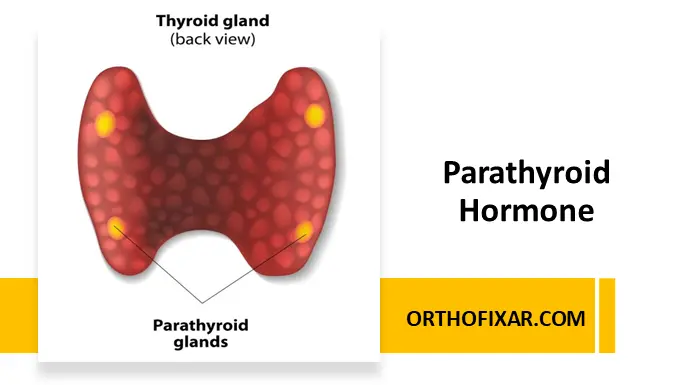
PTH is secreted by the four parathyroid glands located posterior to the thyroid gland. Even small alterations in serum ionized calcium rapidly modify PTH secretion through the calcium-sensing receptor (CaSR), making it one of the body’s fastest endocrine feedback systems.
Understanding Parathyroid hormone, recombinant PTH, PTH therapy, and the relationship between calcium and hypoparathyroidism is essential for clinicians managing endocrine, renal, and musculoskeletal disorders.
What is Parathyroid Hormone (PTH)?
Parathyroid hormone is an 84-amino acid peptide hormone synthesized by the chief cells of the parathyroid glands.
Its primary function is to:
- Increase serum ionized calcium
- Decrease serum phosphate
- Stimulate activation of vitamin D
- Maintain skeletal calcium stores
- Preserve neuromuscular function
PTH works primarily on:
- Bone
- Kidneys
- Intestine (indirectly through vitamin D)
Together these organs maintain calcium homeostasis.
Physiology of PTH Secretion
Calcium-Sensing Receptor (CaSR)
The major regulator of PTH secretion is the ionized calcium concentration.
The calcium-sensing receptor (CaSR), located on parathyroid chief cells, continuously monitors circulating calcium levels.
Low Calcium
When serum calcium falls:
- CaSR activation decreases
- PTH secretion rapidly increases
- Calcium conservation mechanisms begin within minutes
High Calcium
When calcium rises:
- CaSR activation increases
- PTH secretion is suppressed
- Bone resorption decreases
- Urinary calcium excretion increases
This negative feedback maintains serum calcium within approximately 8.5–10.5 mg/dL (2.12–2.62 mmol/L).
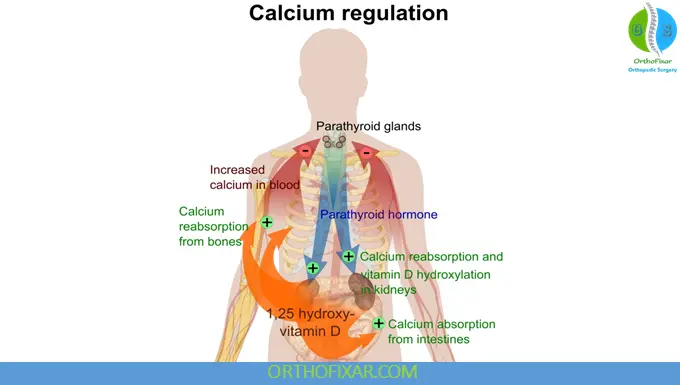
Synthesis of Parathyroid Hormone
PTH is synthesized in several stages:
- Prepro-PTH
- Pro-PTH
- Mature PTH (1–84)
After secretion, intact PTH has a plasma half-life of approximately 2–4 minutes before degradation in the liver and kidneys.
Regulation of PTH Secretion
Several factors influence PTH release.
Stimulators
- Hypocalcemia
- Hyperphosphatemia
- Mild hypomagnesemia
- Reduced active vitamin D
Inhibitors
- Hypercalcemia
- Calcitriol (1,25-dihydroxyvitamin D)
- Severe hypomagnesemia
- Calcimimetic medications
Actions of Parathyroid Hormone
Effects on Bone
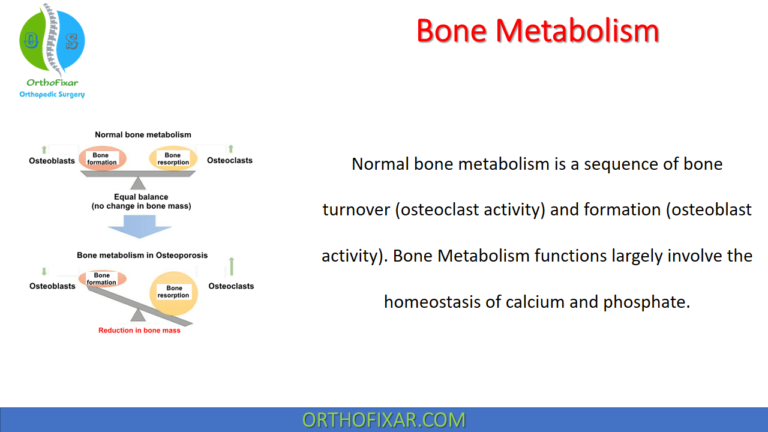
Bone serves as the body’s major calcium reservoir.
PTH does not directly activate osteoclasts.
Instead, it acts on osteoblasts, causing them to:
- Increase RANKL expression
- Reduce osteoprotegerin (OPG)
- Stimulate osteoclast differentiation
- Increase bone resorption
The result is:
- Calcium release
- Phosphate release
- Increased serum calcium
Continuous elevation of PTH promotes bone loss, whereas intermittent exposure stimulates bone formation.
Effects on the Kidney
The kidneys are the primary target organ for PTH.
PTH:
Increases Calcium Reabsorption
Occurs mainly in the distal convoluted tubule.
Result:
- Less urinary calcium loss
- Higher serum calcium
Decreases Phosphate Reabsorption
Occurs in the proximal tubule.
PTH inhibits sodium-phosphate cotransporters.
Result:
- Increased phosphaturia
- Lower serum phosphate
Activates Vitamin D
PTH stimulates renal 1α-hydroxylase, converting:
25-hydroxyvitamin D →
1,25-dihydroxyvitamin D (calcitriol)
Calcitriol then enhances intestinal calcium absorption.
Effects on the Intestine
PTH has no direct intestinal action.
Instead, calcitriol increases:
- Calcium absorption
- Phosphate absorption
This indirect mechanism is essential for long-term calcium balance.
Summary of PTH Actions
| Target Organ | Effect |
|---|---|
| Bone | Increases bone resorption |
| Kidney | Increases calcium reabsorption |
| Kidney | Increases phosphate excretion |
| Kidney | Activates vitamin D |
| Intestine | Increases calcium absorption indirectly |
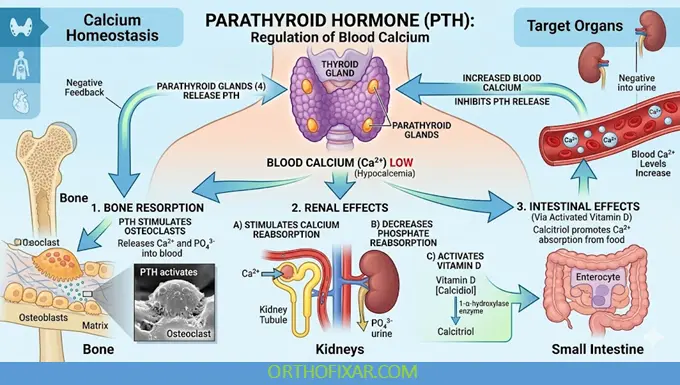
PTH and Vitamin D
PTH and vitamin D function together.
Low calcium →
↑ PTH →
↑ 1α-hydroxylase →
↑ Calcitriol →
↑ Intestinal calcium absorption
Calcitriol subsequently suppresses excessive PTH secretion, completing a negative feedback loop.
Laboratory Evaluation of PTH
Common investigations include:
- Intact PTH
- Ionized calcium
- Total calcium
- Phosphate
- Magnesium
- Albumin
- 25-hydroxyvitamin D
- Creatinine
- Estimated GFR
- Alkaline phosphatase
These tests help differentiate disorders of calcium metabolism.
Normal PTH Levels
Reference ranges vary by assay.
Typical adult intact PTH:
10–65 pg/mL (1.1–6.9 pmol/L)
Interpret results alongside calcium levels.
Hyperparathyroidism
Hyperparathyroidism is characterized by excessive PTH secretion.
Primary Hyperparathyroidism
Usually caused by:
- Single adenoma (approximately 80–85%)
- Multigland hyperplasia
- Rarely carcinoma
Laboratory findings:
- High calcium
- High or inappropriately normal PTH
- Low phosphate
Clinical manifestations:
- Kidney stones
- Osteoporosis
- Bone pain
- Constipation
- Fatigue
- Neuropsychiatric symptoms
Secondary Hyperparathyroidism
Occurs because of chronic hypocalcemic stimuli.
Common causes:
- Chronic kidney disease
- Vitamin D deficiency
- Malabsorption
Laboratory findings:
- High PTH
- Normal or low calcium
- High phosphate in CKD
Tertiary Hyperparathyroidism
Develops after prolonged secondary hyperparathyroidism.
Features:
- Autonomous PTH secretion
- Hypercalcemia
- Very high PTH
Common in advanced chronic kidney disease after long-standing secondary hyperparathyroidism.
Hypoparathyroidism
Hypoparathyroidism results from insufficient PTH production.
Causes
- Thyroid surgery (most common)
- Autoimmune disease
- Congenital syndromes
- Radiation
- Activating CaSR mutations
- Severe hypomagnesemia
Clinical Features
Symptoms of hypocalcemia include:
- Paresthesia
- Muscle cramps
- Tetany
- Carpopedal spasm
- Seizures
- Laryngospasm
- Prolonged QT interval
Laboratory Findings
- Low calcium
- High phosphate
- Low PTH
- Low or normal calcitriol
Calcium and Hypoparathyroidism
The relationship between calcium and hypoparathyroidism is fundamental.
Without adequate PTH:
- Renal calcium conservation decreases
- Bone calcium mobilization declines
- Vitamin D activation decreases
- Intestinal calcium absorption falls
Consequently, chronic hypocalcemia develops despite calcium intake.
Management requires lifelong monitoring of calcium, phosphate, renal function, urinary calcium, and vitamin D status.
Recombinant PTH
Recombinant PTH is a bioengineered form of human parathyroid hormone used as hormone replacement therapy in selected patients.
Available formulations include:
- Recombinant human PTH (1–84)
- Teriparatide (PTH 1–34)
These agents mimic physiologic PTH activity and may reduce dependence on high-dose calcium and active vitamin D in selected patients.
PTH Therapy
PTH therapy has transformed the management of selected patients with chronic hypoparathyroidism.
Potential benefits include:
- Reduced oral calcium requirements
- Reduced calcitriol requirements
- More physiologic calcium regulation
- Lower urinary calcium excretion
- Improved quality of life in selected patients
Patients receiving recombinant PTH require:
- Frequent calcium monitoring
- Renal function assessment
- Urinary calcium measurements
- Dose adjustments based on biochemical response
Long-term safety continues to be evaluated, and therapy should be individualized according to current endocrine guidelines and product availability.
Clinical Indications for Recombinant PTH
Current indications may include carefully selected adults with chronic hypoparathyroidism who:
- Cannot maintain stable calcium levels
- Require very high calcium supplementation
- Develop hypercalciuria
- Experience renal complications
- Have poor quality of life despite conventional therapy
Routine use is not recommended for every patient.
PTH and Osteoporosis
Intermittent exposure to PTH has anabolic effects on bone.
Teriparatide stimulates:
- Osteoblast activity
- Bone formation
- Bone mineral density
- Fracture healing
It is widely used for patients with severe osteoporosis who are at high risk of fractures.
Disorders Associated with CaSR Mutations
Inactivating Mutations
Cause:
Familial hypocalciuric hypercalcemia (FHH)
Features:
- Mild hypercalcemia
- Low urinary calcium
- Mildly elevated or normal PTH
Activating Mutations
Cause:
Autosomal dominant hypocalcemia
Features:
- Low calcium
- Low PTH
- Hypercalciuria
Recognition prevents unnecessary surgery or inappropriate treatment.
Interpretation of Calcium and PTH
| Calcium | PTH | Likely Diagnosis |
|---|---|---|
| High | High | Primary hyperparathyroidism |
| High | Low | Malignancy-related hypercalcemia |
| Low | High | Secondary hyperparathyroidism |
| Low | Low | Hypoparathyroidism |
| Normal | High | Normocalcemic hyperparathyroidism or vitamin D deficiency |
Key Clinical Pearls
- PTH is the principal regulator of extracellular calcium.
- Ionized calcium controls PTH secretion through the calcium-sensing receptor.
- PTH increases serum calcium while lowering phosphate.
- Kidney activation of vitamin D is one of PTH’s most important actions.
- Chronic PTH excess causes bone loss.
- Intermittent PTH administration stimulates bone formation.
- Recombinant PTH provides hormone replacement for selected patients with chronic hypoparathyroidism.
- Careful monitoring is essential during PTH therapy.
Frequently Asked Questions (FAQ)
What is parathyroid hormone?
Parathyroid hormone (PTH) is a peptide hormone produced by the parathyroid glands that regulates calcium, phosphate, and vitamin D metabolism to maintain normal blood calcium levels.
What stimulates PTH secretion?
The strongest stimulus is a decrease in ionized serum calcium. Low calcium reduces activation of the calcium-sensing receptor, resulting in rapid PTH release.
What does recombinant PTH do?
Recombinant PTH replaces deficient hormone activity, helping regulate calcium levels more physiologically in selected patients with chronic hypoparathyroidism.
Is PTH therapy safe?
When prescribed appropriately and monitored carefully, PTH therapy can effectively manage selected patients with chronic hypoparathyroidism. Regular monitoring of calcium, phosphate, kidney function, and urinary calcium is essential.
Why is calcium low in hypoparathyroidism?
Low PTH reduces calcium reabsorption by the kidneys, decreases activation of vitamin D, and limits calcium release from bone, resulting in persistent hypocalcemia.
Conclusion
Parathyroid hormone is the cornerstone of calcium homeostasis, coordinating the activities of bone, kidneys, and the gastrointestinal tract to maintain stable extracellular calcium concentrations. Disorders of PTH secretion produce significant abnormalities in mineral metabolism ranging from hyperparathyroidism to chronic hypocalcemia. Advances in recombinant PTH and PTH therapy have expanded treatment options for selected patients with calcium and hypoparathyroidism, offering a more physiologic approach to hormone replacement. Accurate interpretation of calcium, phosphate, vitamin D, and PTH levels remains fundamental for diagnosis and long-term management.
References
- Bilezikian JP, Brandi ML, Cusano NE, et al. Management of Hypoparathyroidism: Present and Future. Journal of Clinical Endocrinology & Metabolism. Link
- Lofrese JJ, Basit H, Lappin SL. Physiology, Parathyroid. [Updated 2023 Jul 17]. In: StatPearls [Internet]. Treasure Island (FL): StatPearls Publishing; 2026 Jan-. Available from: https://www.ncbi.nlm.nih.gov/books/NBK482510/
- Khan M, Jose A, Sharma S. Physiology, Parathyroid Hormone. [Updated 2022 Oct 29]. In: StatPearls [Internet]. Treasure Island (FL): StatPearls Publishing; 2026 Jan-. Available from: https://www.ncbi.nlm.nih.gov/books/NBK499940/
- Blom, A., Warwick, D., & Whitehouse, M. R. (2018). Apley & Solomon’s system of orthopaedics and trauma (10th ed.). CRC Press