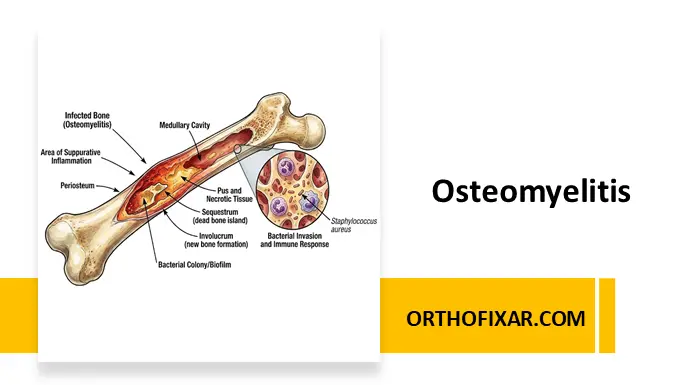
Osteomyelitis is a serious bone infection characterized by inflammation and destruction of bone tissue caused by microorganisms, most commonly bacteria. This condition can be acute or chronic and may affect individuals of all ages. The term “osteomyelitis” literally means inflammation of bone and bone marrow, although infection is the primary underlying cause.
As a significant bone disease, osteomyelitis requires prompt diagnosis and treatment to prevent permanent bone damage, systemic infection, and other severe complications. Advances in imaging techniques and antimicrobial therapy have significantly improved patient outcomes over the past several decades.
Understanding Bone Disease Osteomyelitis
Bone disease osteomyelitis occurs when infectious organisms invade bone tissue through one of several pathways:
- Spread through the bloodstream (hematogenous osteomyelitis)
- Direct inoculation after trauma or surgery
- Extension from nearby infected soft tissues or joints
- Chronic wounds, especially diabetic foot ulcers
Healthy bone is generally resistant to infection. However, trauma, reduced blood supply, implanted medical devices, and compromised immunity can increase susceptibility to osteomyelitis of bone.
Causes of Osteomyelitis
Bacterial Causes
The most common cause of osteomyelitis is Staphylococcus aureus, including methicillin-resistant Staphylococcus aureus (MRSA). Other bacterial pathogens include:
- Streptococcus species
- Enterococcus species
- Escherichia coli
- Pseudomonas aeruginosa
- Enterobacter species
- Anaerobic bacteria
Fungal and Other Causes
Although less common, osteomyelitis may also be caused by:
- Candida species
- Aspergillus species
- Mycobacterium tuberculosis
- Other atypical organisms
The causative pathogen often depends on the patient’s age, immune status, underlying diseases, and route of infection.
Types of Osteomyelitis
Acute Osteomyelitis
Acute osteomyelitis develops rapidly, usually within days to weeks after infection. Early diagnosis and treatment often result in favorable outcomes.
Chronic Osteomyelitis
Chronic osteomyelitis develops when infection persists for months or years. It is characterized by:
- Necrotic bone formation
- Sinus tract development
- Recurrent infections
- Increased treatment difficulty
Brodie’s Abscess
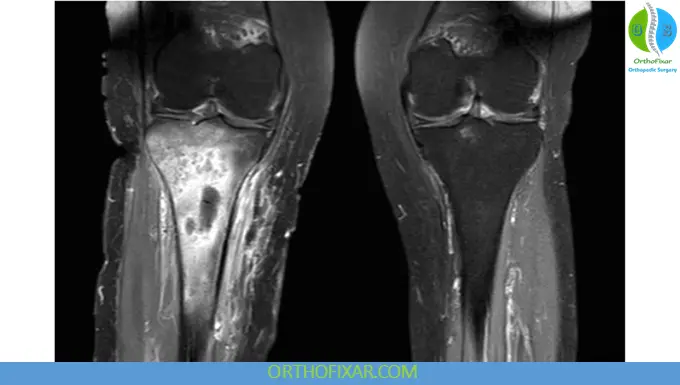
Brodie’s abscess is a localized form of subacute osteomyelitis characterized by a well-defined collection of pus within bone, most commonly caused by Staphylococcus aureus. It typically affects children and young adults and is most often found in the metaphysis of long bones, particularly the tibia.
Patients usually present with persistent localized bone pain, often with few or no systemic symptoms.
Imaging studies, especially MRI, are highly useful for diagnosis and may demonstrate the characteristic penumbra sign.
Treatment generally involves culture-directed antibiotic therapy, with surgical drainage or curettage reserved for selected cases. When diagnosed and treated promptly, the prognosis is excellent.
Hematogenous Osteomyelitis
This type results from bacteria spreading through the bloodstream and is more common in children.
Contiguous Osteomyelitis
Occurs when infection spreads from nearby tissues, wounds, or surgical sites.
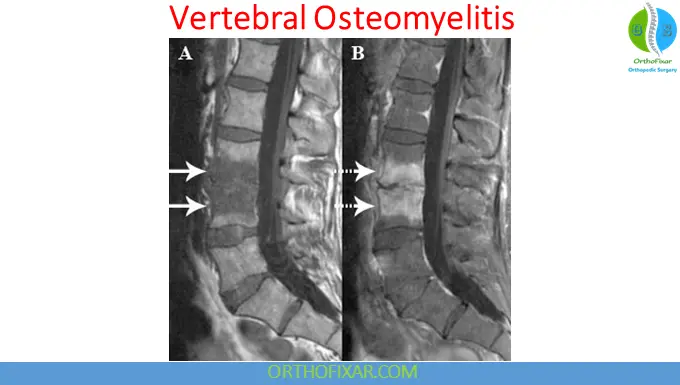
Vertebral Osteomyelitis
Affects the spine and is more common in adults. Patients typically present with persistent back pain and elevated inflammatory markers.
Risk Factors for Osteomyelitis
Several factors increase the risk of developing osteomyelitis:
Diabetes Mellitus
Diabetic foot ulcers are among the most common causes of osteomyelitis of bone in adults.
Peripheral Vascular Disease
Poor circulation reduces immune defense and impairs wound healing.
Trauma and Fractures
Open fractures can directly expose bone to bacteria.
Orthopedic Surgery
Joint replacements and fixation devices may serve as sites for bacterial colonization.
Intravenous Drug Use
Bacteremia associated with IV drug use can seed infection in bone tissue.
Immunosuppression
Patients with cancer, HIV infection, or immunosuppressive therapy are at higher risk.
Symptoms of Osteomyelitis
The symptoms vary according to the severity and location of infection.
Local Symptoms
- Bone pain
- Tenderness
- Swelling
- Warmth over the affected area
- Redness
- Reduced range of motion
Systemic Symptoms
- Fever
- Chills
- Fatigue
- Malaise
- Weight loss in chronic cases
Symptoms in Chronic Osteomyelitis
- Persistent draining sinus tracts
- Recurrent pain
- Non-healing ulcers
- Chronic wound discharge
Common Sites of Osteomyelitis
The location of infection varies with age and underlying conditions.
In Children
Commonly affected bones include:
- Femur
- Tibia
- Humerus
In Adults
Frequently involved sites include:
- Vertebral bodies
- Pelvis
- Feet (especially in diabetic patients)
- Long bones following trauma
How Osteomyelitis Is Diagnosed
Early diagnosis is essential for preventing complications and preserving bone integrity.
Medical History and Physical Examination
Clinicians evaluate:
- Risk factors
- Duration of symptoms
- Previous infections
- Presence of wounds or ulcers
Laboratory Tests
Common investigations include:
Complete Blood Count (CBC)
May reveal elevated white blood cell counts.
C-Reactive Protein (CRP)
Useful for monitoring treatment response.
Erythrocyte Sedimentation Rate (ESR)
Often elevated in active infection.
Blood Cultures
Can identify causative organisms in hematogenous infections.
Imaging Studies
X-rays
Usually the initial imaging study but may not detect early infection.
Magnetic Resonance Imaging (MRI)
MRI is considered the most sensitive imaging modality for diagnosing osteomyelitis and assessing disease extent.
Bone Scans
May help identify areas of increased bone activity.
Computed Tomography (CT)
Useful for evaluating bone destruction and surgical planning.
Bone Biopsy
Bone biopsy remains the gold standard for definitive diagnosis and pathogen identification. It helps guide targeted antimicrobial therapy.
See Also: Bone Biopsy
Bone Infection Treatment
Successful bone infection treatment often requires a combination of medical and surgical approaches.
Antibiotic Therapy
Treatment is guided by culture results whenever possible.
Common antibiotic regimens may include:
- Vancomycin
- Ceftriaxone
- Cefepime
- Piperacillin-tazobactam
- Other organism-specific agents
Therapy frequently continues for 4 to 6 weeks or longer, depending on infection severity and patient response.
Surgical Management
Surgery may be necessary to:
- Remove dead bone (sequestrectomy)
- Drain abscesses
- Debride infected tissue
- Restore blood supply
- Remove infected implants
Management of Chronic Osteomyelitis
Chronic infections often require:
- Repeated debridement
- Long-term antimicrobial therapy
- Reconstructive surgery
- Advanced wound care
Hyperbaric Oxygen Therapy
Selected patients with refractory osteomyelitis may benefit from hyperbaric oxygen therapy as an adjunctive treatment.
Complications of Osteomyelitis
Untreated or poorly managed osteomyelitis can result in:
Bone Necrosis
Loss of blood supply may cause death of bone tissue.
Pathologic Fractures
Infected bone becomes structurally weakened.
Chronic Infection
Persistent infection may recur repeatedly.
Septic Arthritis
Infection may spread into adjacent joints.
Sepsis
Severe infections can spread systemically and become life-threatening.
Growth Disturbances
Children may develop abnormalities in bone growth and development.
Prevention of Osteomyelitis
Preventive strategies include:
- Prompt treatment of wounds
- Good diabetic foot care
- Proper management of fractures
- Sterile surgical techniques
- Early treatment of bloodstream infections
- Smoking cessation
- Optimization of vascular health
Prognosis
The prognosis depends on:
- Early diagnosis
- Causative organism
- Patient health status
- Presence of chronic disease
- Adequacy of treatment
Acute osteomyelitis generally has an excellent prognosis when treated promptly. Chronic osteomyelitis has a higher risk of recurrence and may require prolonged multidisciplinary management.
Frequently Asked Questions (FAQ)
Is osteomyelitis a serious condition?
Yes. Osteomyelitis is a potentially serious bone infection that can lead to permanent bone damage, chronic infection, or sepsis if not treated appropriately.
What is the most common cause of osteomyelitis?
Staphylococcus aureus is the most common bacterial cause of osteomyelitis worldwide.
Can osteomyelitis be cured?
Many cases can be successfully cured with appropriate antibiotics and surgical treatment. Chronic osteomyelitis may require long-term management.
How long does bone infection treatment take?
Most patients require at least 4 to 6 weeks of antibiotic therapy, although treatment duration varies depending on disease severity.
Is osteomyelitis contagious?
No. Osteomyelitis itself is not contagious and does not spread directly from person to person.
Conclusion
Osteomyelitis is a potentially debilitating bone infection that requires early recognition and aggressive management. Whether occurring through bloodstream spread, trauma, surgery, or chronic wounds, osteomyelitis of bone can cause significant morbidity if left untreated. Accurate diagnosis through imaging, laboratory testing, and bone biopsy enables targeted therapy. Modern bone infection treatment combines prolonged antimicrobial therapy with surgical intervention when necessary, providing improved outcomes for both acute and chronic disease.
References & More
- Nimmana BK, Savaliya V. Osteomyelitis. [Updated 2023 May 31]. In: StatPearls [Internet]. Treasure Island (FL): StatPearls Publishing; 2026 Jan-. Available from: https://www.ncbi.nlm.nih.gov/sites/books/NBK532250/
- Hall WA, Graeber A, Cecava ND. Vertebral Osteomyelitis. [Updated 2024 Nov 25]. In: StatPearls [Internet]. Treasure Island (FL): StatPearls Publishing; 2026 Jan-. Available from: https://www.ncbi.nlm.nih.gov/sites/books/NBK532256/
- Fritz JM, McDonald JR. Osteomyelitis: approach to diagnosis and treatment. Phys Sportsmed. 2008 Dec;36(1):nihpa116823. doi: 10.3810/psm.2008.12.11. PMID: 19652694; PMCID: PMC2696389. Link
- Mader JT, Calhoun J. Bone, Joint, and Necrotizing Soft Tissue Infections. In: Baron S, editor. Medical Microbiology. 4th edition. Galveston (TX): University of Texas Medical Branch at Galveston; 1996. Chapter 100. Available from: https://www.ncbi.nlm.nih.gov/books/NBK8029/