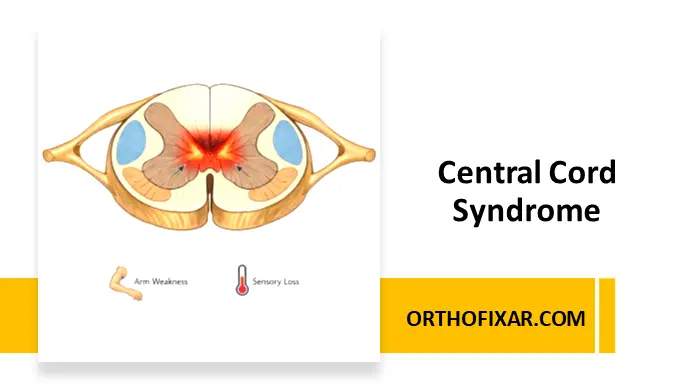
Central Cord Syndrome (CCS) is the most common form of incomplete spinal cord injury, characterized by disproportionately greater motor impairment in the upper extremities than in the lower extremities. It is typically associated with damage to the central portion of the cervical spinal cord.
Central Cord Syndrome Definition
Central Cord Syndrome is an incomplete spinal cord injury where there is selective damage to the central fibers of the spinal cord, especially affecting the cervical region. These central fibers correspond to upper limb motor function, explaining the characteristic clinical pattern.
Epidemiology & Pathophysiology
- Most commonly seen in older adults with pre-existing cervical spondylosis
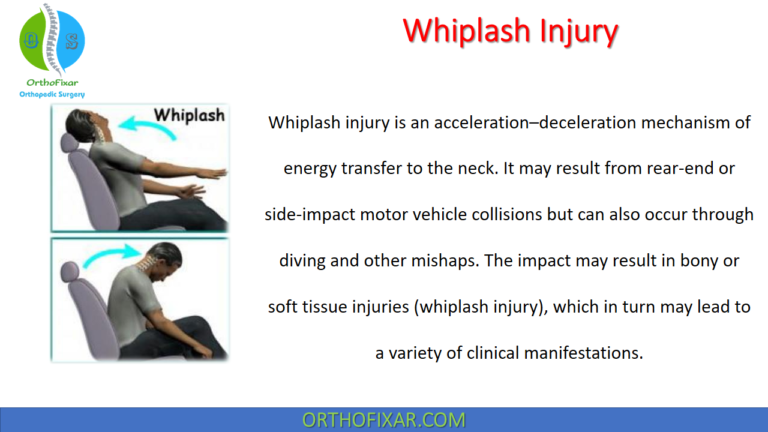
- Frequently occurs after hyperextension injuries (e.g., falls, low-velocity trauma)
- Also seen in younger patients following high-energy trauma
The underlying mechanism involves injury to the central gray matter and medial white matter tracts of the spinal cord:
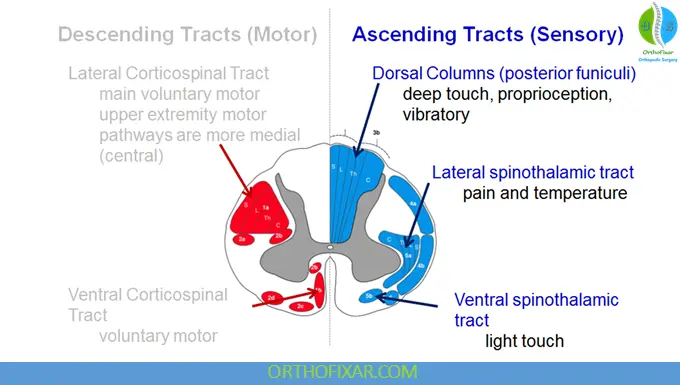
- Corticospinal tract organization: Fibers controlling the upper limbs are more centrally located, while lower limb fibers are more peripheral
- Central injury → greater upper limb weakness
- Possible involvement of:
- Spinothalamic tracts → pain and temperature deficits
- Autonomic pathways → bladder dysfunction
See Also: Brown-Séquard Syndrome
Common causes of Central Cord Syndrome include:
- Cervical hyperextension injury
- Pre-existing spinal canal narrowing (e.g., spondylosis)
- Edema, hemorrhage, or ischemia of central cord tissue
Symptoms of Central Cord Syndrome
Motor Findings
- Weakness more severe in upper extremities than lower
- Hand function often most affected
Sensory Findings
- Variable sensory loss below the level of injury
- Pain and temperature sensation may be impaired
Other Features
- Bladder dysfunction (urinary retention common)
- Possible sacral sparing (a hallmark of incomplete injuries)
Diagnosis
Clinical Evaluation
- Neurological examination is essential
- Assessment using standardized tools such as the ASIA Impairment Scale
Imaging
- MRI (gold standard):
- Detects cord edema, hemorrhage, or compression
- CT scan:
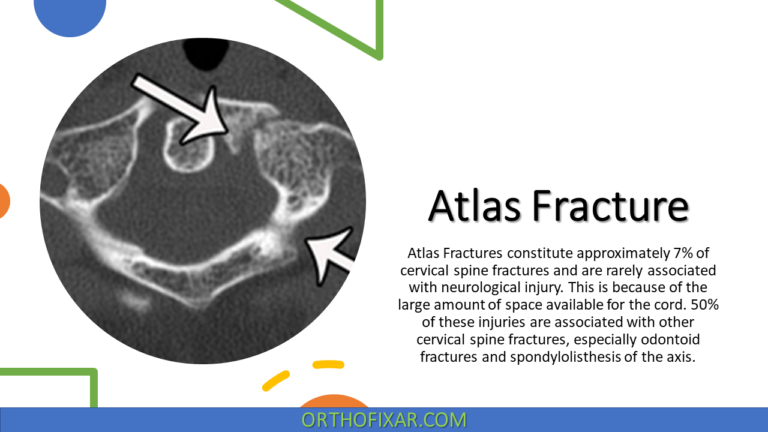
- Useful for identifying fractures or bony abnormalities
Central Cord Syndrome Treatment
Initial Treatment
- Follow Advanced Trauma Life Support (ATLS) principles
- Cervical spine immobilization
- Hemodynamic stabilization
Non-Surgical Treatment
- Indicated in many cases without significant compression
- Includes:
- Immobilization
- Physical and occupational therapy
- Supportive care
Surgical Treatment
Considered when:
- Persistent cord compression
- Progressive neurological deterioration
- Spinal instability
Procedures may include:
- Decompression
- Stabilization (fusion)
Prognosis
- Generally favorable compared to other spinal cord injuries
- Recovery pattern:
- Lower extremities
- Bladder function
- Upper extremities (last, often incomplete)
Prognostic factors:
- Age (younger patients recover better)
- Severity of initial neurological deficit
- Presence of hemorrhage on MRI (worse prognosis)
Complications
- Chronic pain
- Spasticity
- Persistent hand dysfunction
- Neurogenic bladder
Key Points
- Most common incomplete spinal cord injury
- Upper limb weakness > lower limb weakness
- Often occurs in elderly after hyperextension injury
- MRI is essential for diagnosis
- Many patients improve, but hand function recovery may be limited
References & More
- Engel-Haber E, Snider B, Kirshblum S. Central cord syndrome definitions, variations and limitations. Spinal Cord. 2023 Nov;61(11):579-586. doi: 10.1038/s41393-023-00894-2. Epub 2023 Apr 5. PMID: 37015975. Pubmed
- Divi SN, Schroeder GD, Mangan JJ, et al. Management of Acute Traumatic Central Cord Syndrome: A Narrative Review. Global Spine J. 2019;9(1 Suppl):89S-97S. doi:10.1177/2192568219830943. Pubmed
- Ameer MA, Tessler J, Munakomi S, et al. Central Cord Syndrome. [Updated 2023 Aug 13]. In: StatPearls [Internet]. Treasure Island (FL): StatPearls Publishing; 2026 Jan-. Available from: Pubmed