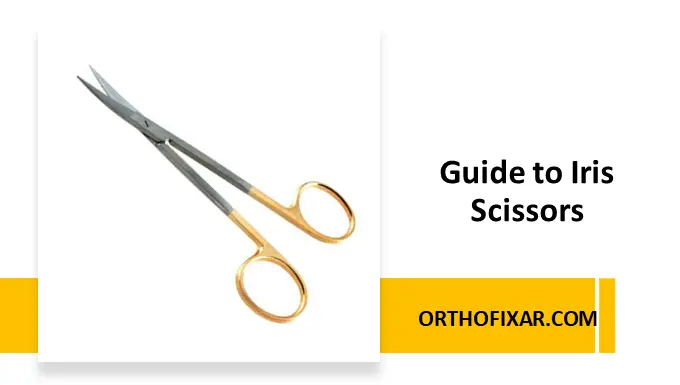
In the field of precision medicine and performance of minor surgeries, the quality and design of medical devices is a key issue. As to which tools are the most used in operating rooms, clinics, and also in special labs, they have iris scissors. They may be small in size, but what they lack in that is made up for in performance. They do a great job of providing accurate and controlled cuts in very delicate settings that require high precision.
What Are Iris Scissors?
Iris scissors, which are small and very much a fine art in design, are primarily for ophthalmic procedures that involve the iris of the eye. With time, though, their use grew beyond the ophthalmic field due to their precise cut. Today they are used in many medical fields, including dermatology, plastic surgery, veterinary medicine, and general surgery.
These scissors, which usually range from 3 to 4.5 inches in length, have fine pointed tips that allow for very controlled dissections. They may have straight or curved blades based on what the procedure requires. The sharpness and narrow blade profile of these do very well for tissue trimming, suture cutting, and very detailed surgical work.
Key Design Features
Precision. What the surgical team sees in these surgical scissors is a different set of features, which include:
- Fine, Sharp Tips: Surgeons are able to reach into small and confined areas with the help of these narrow pointed tips.
- Lightweight Construction: Their small size, which in turn reduces hand fatigue during long procedures.
- Straight or Curved Blades: Straight blades are for surface-level cutting, which is different from the use of curved blades, which offer better visibility and control when working deep into tissue layers.
- High-Quality Stainless Steel: Most medical-grade stainless steel is used in the manufacturing of iris scissors, which in turn guarantees durability, corrosion resistance, and easy sterilization.
These are the most flexible instruments in any surgical kit.
Common Medical Applications
Although at first used for ophthalmic procedures, iris scissors are now used in many medical fields.
- Ophthalmology
In ophthalmic surgery, which requires very high degrees of accuracy, iris scissors are used to cut the delicate eye tissues, which in turn minimizes the trauma. Also, they have very fine blades, which permit precise incisions in the very sensitive parts of the eye. - Dermatology
Dermatologists use iris scissors for a large range of minor skin procedures, which include lesion removal and biopsy work. The precise points of these scissors do very delicate work, which at the same time is very efficient. - Plastic and Reconstructive Surgery
In cosmetic and reconstructive surgeries, which have as an outcome clean, precise incisions, they see that iris scissors do the work of trimming fine tissue and sutures with accuracy. - Veterinary Medicine
Veterinarians also use iris scissors for small animal procedures. They are also precise, which makes them very useful for work done on delicate anatomic structures. - Laboratory and Clinical Use
In nonsurgical environments these scissors are used in laboratories for dissection and also in the preparation of specimens. Also, they have fine blades, which make them very useful for in-depth work that requires great care.
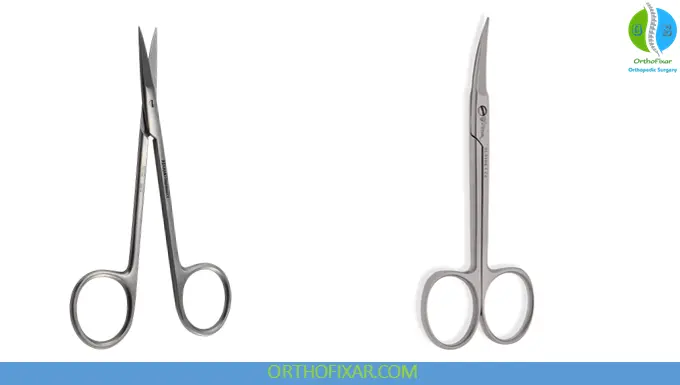
Straight vs. Curved Iris Scissors
In many cases the choice between straight and curved iris scissors is up to the intended use.
- Straight Iris Scissors: Suitable for use in suture work and also for surface-level procedures. They see them to be very easy to use in a general practice setting.
- Curved Iris Scissors: For use with procedures which require access to areas beneath tissue. The curved design which improves visibility and maneuver in tight spaces.
Many professionals have both at their disposal which is to be ready for a variety of procedures.
Importance of Quality in Surgical Instruments
In terms of surgical instruments quality must not be sacrificed. They use high quality materials and precise manufacturing which in turn gives them consistent performance, sharpness retention, and resistance to wear over time. Low quality scissors for instance may dull out fast, require constant replacement, and in the end may also put procedural efficiency at risk.
Investment in high quality iris scissors has proven to be very beneficial in terms of their impact on surgery. They see that consistent quality from which they expect is a reduction in the number of procedures which in turn is to the patients’ benefit by which they mean less injury to tissue and a better standard of care as a whole.
Proper Care and Maintenance
Proper maintenance of surgical instruments increases their wear life and performance. For iris scissors, they should be:
- Thoroughly cleaned immediately after use
- Sterilized according to medical standards
- Examined frequently for alignment and sharpness
- Stored in protective cases to prevent tip damage
A routine checkup of the blades’ alignment is done. Also, a very small degree of misalignment may affect cutting precision, especially in delicate procedures.
Why Precision Matters in Modern Medicine
Modern medical practices are moving towards less invasive procedures and quicker recovery. They see the use of smaller incisions and more precise treatment of tissue, which in turn reduces scarring, lowers infection rates, and improves healing.
In tools like the iris scissors, they see a basic element that supports their goals. Their fine blades, which are a feature of these instruments, allow for exact cuts, which in turn cause minimal damage to the nearby tissue. This precision in technique is what they align with in terms of best practices for patient-centered care.
Selecting the Right Surgical Supplier
Health care providers should also look at the issue of which instrument suppliers to use. They see that quality-oriented companies put stress on quality control, use the best materials, and pay attention to ergonomics. By choosing reliable sources, healthcare facilities may count on instruments that meet professional standards and do so in the most demanding of settings.
When in the process of selecting suppliers, pay attention to:
- Material certification
- Manufacturing standards
- Instrument finish and craftsmanship
- Availability of different blade configurations
- Customer support and replacement policies
High-quality surgical tools are an investment in safety, efficiency, and long-term performance.
Conclusion
Though of a small scale and in some cases ignored outside of medical settings, iris scissors are a key tool in many health care fields. What they lack in size they make up for in performance, which is precise, flexible, and very refined, which is what makes them an integral part of very detailed procedures.
In ophthalmic and dermatological procedures as well as in the lab, they see that these specialty scissors give clinicians the control they need for best results. By choosing quality tools and taking care of them as they should, health care providers report consistent performance, which in turn upholds the very high standards of patient care.