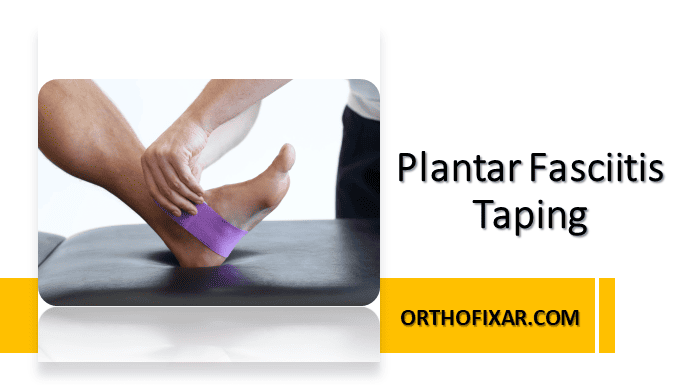
Plantar fasciitis taping technique provides mechanical support to the medial longitudinal arch while offloading tension from the plantar fascia, creating an optimal environment for tissue healing and symptom resolution.
Plantar Fasciitis Taping Indications
The Plantar Fasciitis Taping Technique is indicated for both acute and chronic presentations of plantar fasciitis, arch pain, and medial tibial stress syndrome (MTSS). The technique is particularly valuable during the inflammatory phase of plantar fasciitis when direct pressure and stretch on the plantar fascia exacerbate symptoms. It serves as an adjunct to other conservative treatments including stretching protocols, strengthening exercises, and activity modification.
Therapeutic Mechanism
The primary function of the Plantar Fasciitis Taping is to provide structural support to the medial longitudinal arch, thereby reducing mechanical stress on the plantar fascia during weight-bearing activities. By maintaining the arch in a more neutral position, the tape reduces the tensile forces that occur during the loading response and push-off phases of gait. This mechanical unloading allows the inflamed plantar fascia to heal while the patient maintains functional activities.
See Also: Gait Cycle: Phases & Biomechanics
Plantar Fasciitis Taping Technique
Materials and Preparation
The Plantar fasciitis taping requires 3.8-cm rigid tape (such as Leukotape P for enhanced durability) and 5-cm elastic adhesive bandage (EAB). The rigid tape provides the primary structural support, while the EAB offers secondary reinforcement and edge finishing. Patient positioning involves sitting on the treatment plinth with the affected foot relaxed over the edge, ensuring the foot is in a neutral, non-weight-bearing position.
Technique
Primary Strapping Phase
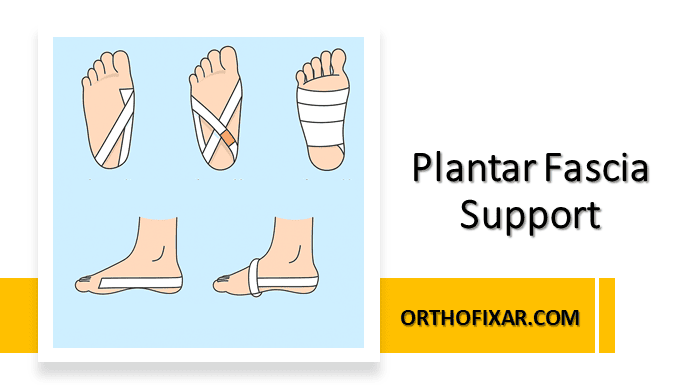
The initial application involves placing the first strap around the midfoot from lateral to medial, beginning on the dorsum below the base of the fifth metatarsal and terminating on the dorsum below the base of the first metatarsal. This placement is crucial as it targets the midfoot region where arch support is most effective. The tape should be placed around the foot without tension – pulling the strap can alter foot biomechanics and potentially worsen symptoms.
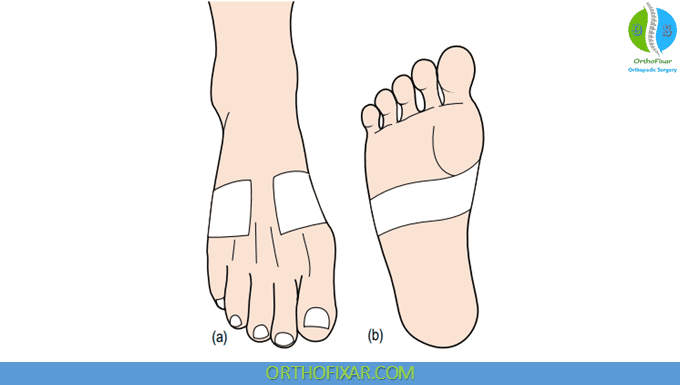
A critical aspect of the Plantar fasciitis taping technique is maintaining a gap between the tape edges on the dorsum of the foot. Complete circumferential wrapping should be avoided as this can create a tourniquet effect and compromise circulation. The overlapping pattern involves four to five straps, with each subsequent strap overlapping the previous one by half its width. This creates a graduated support system that distributes forces evenly across the plantar surface.
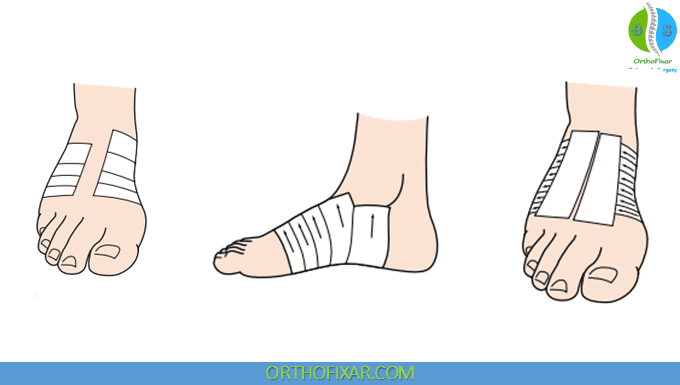
Terminal Positioning
The final strap positioning requires careful attention to anatomical landmarks. The last strap must not terminate at the origin of the plantar fascia on the calcaneum, as this placement can create a focal point of irritation and potentially aggravate the condition. Instead, the final strap may extend to the medial malleolus area, maintaining a straight line configuration that prevents wrinkle formation under the foot.
The taping should not extend significantly into the heel region, stopping just posterior to the plantar fascia origin on the calcaneus. This positioning ensures that the tape provides arch support without creating additional tension at the most sensitive area of plantar fascia attachment.
Finishing Techniques
Two lock strips are applied to secure the loose ends on the dorsum of the foot, maintaining the central gap to prevent circumferential compression. The strapping is completed with one or two lightly applied layers of 5-cm EAB over the existing rigid tape, finishing on the dorsum. A small strip of rigid tape can secure the EAB edge, preventing unraveling during activity.
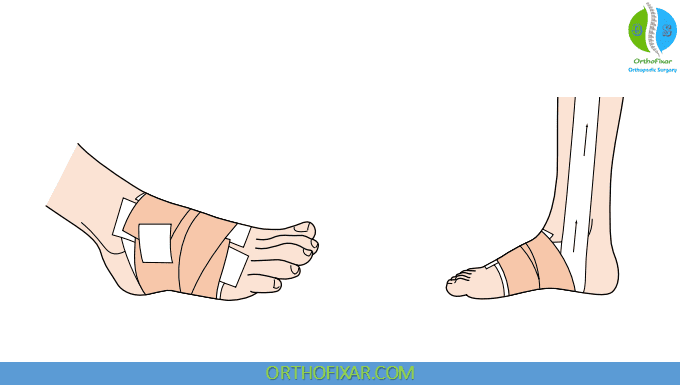
Functional Assessment
Following application of the Plantar Fasciitis Taping, the patient should be assessed during weight-bearing activities including walking and, if appropriate, running. The taping should provide noticeable symptom relief during these functional movements. For athletes participating in contact sports such as rugby, the taping may require reinforcement during competition due to the high mechanical stresses encountered.
Clinical Contraindications and Precautions
Several critical precautions must be observed during application of the Plantar Fasciitis Taping. The tape must never be pulled with tension during the lateral to medial application, as this can alter normal foot biomechanics and potentially worsen symptoms. The terminal positioning of the tape is equally important – termination at the calcaneal origin of the plantar fascia can create a focal point of irritation and therapeutic failure.
Clinicians should monitor for signs of compromised circulation, particularly in patients with diabetes or peripheral vascular disease. The gap maintained on the dorsum of the foot serves as both a circulation check and a safety measure. Patients should be educated on signs of impaired circulation and instructed to remove the tape if numbness, tingling, or color changes occur.
Integration with Comprehensive Treatment
The plantar fasciitis taping technique should be viewed as one component of a comprehensive treatment approach. While it provides immediate mechanical support and symptom relief, it should be combined with addressing underlying biomechanical factors, strength deficits, and flexibility limitations. The tape can facilitate participation in therapeutic exercises by reducing pain during movement, ultimately supporting the rehabilitation process.
References & More
- Macdonald, Rose. Pocketbook of Taping Techniques. 2nd ed., Churchill Livingstone, 2010.
- Podolsky R, Kalichman L. Taping for plantar fasciitis. J Back Musculoskelet Rehabil. 2015;28(1):1-6. doi: 10.3233/BMR-140485. PMID: 24867905. Pubmed