Achilles Reflex Test
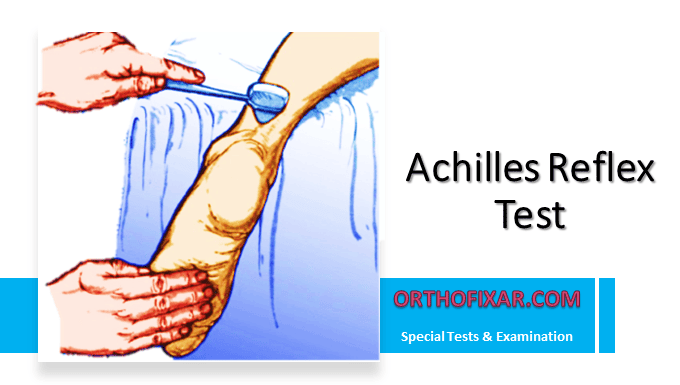
The Achilles Tendon Reflex or ankle jerk is obtained by striking the Achilles tendon just above its insertion…
Read Full Entry →Neurological Examination contains all special test used to evaluate the nervous system, sensory and motor responses, especially reflexes.
The Achilles Tendon Reflex or ankle jerk is obtained by striking the Achilles tendon just above its insertion…
Read Full Entry →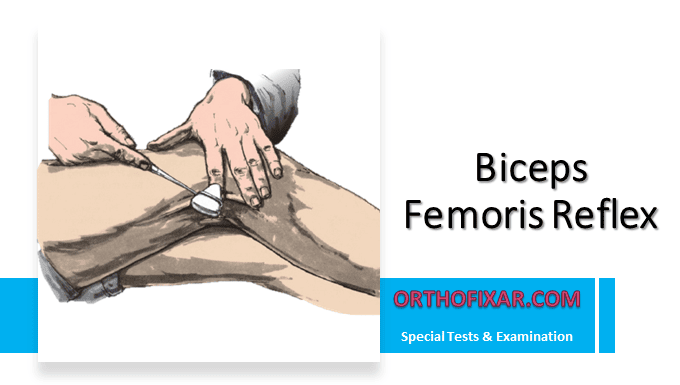
With the patient sitting, recumbent, or lying on the opposite side and the knee moderately flexed, the examiner’s…
Read Full Entry →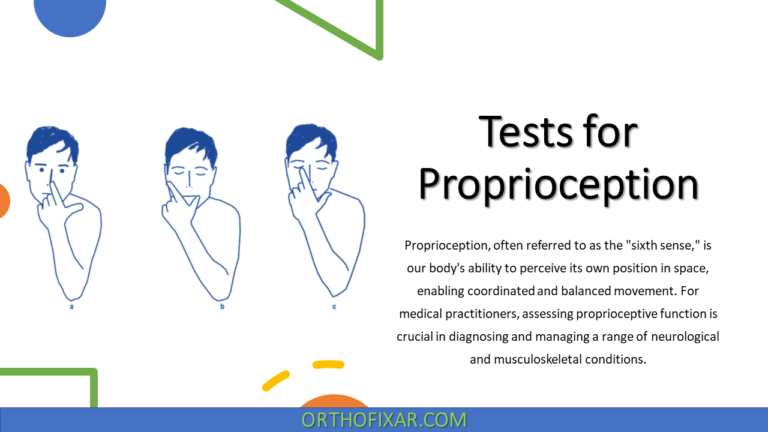
Proprioception, often referred to as the "sixth sense," is our body's ability to perceive its own position in…
Read Full Entry →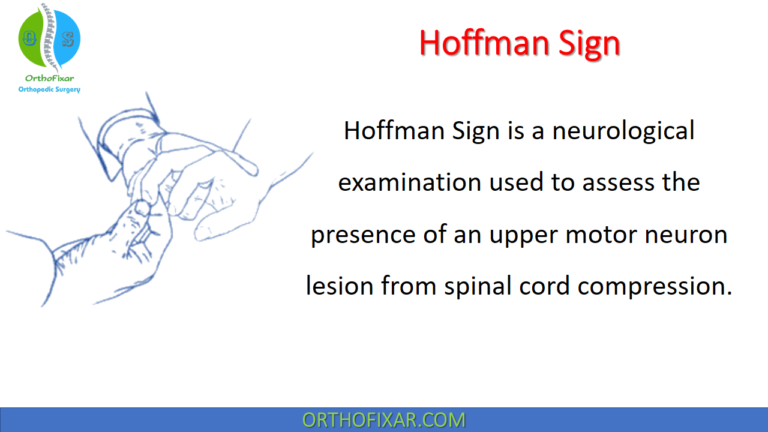
Hoffman Sign is a neurological examination used to assess the presence of an upper motor neuron lesion from…
Read Full Entry →
The MMT Grades has six levels (Grades 0 to 5): Grade 0: No visible or palpable contraction. Grade…
Read Full Entry →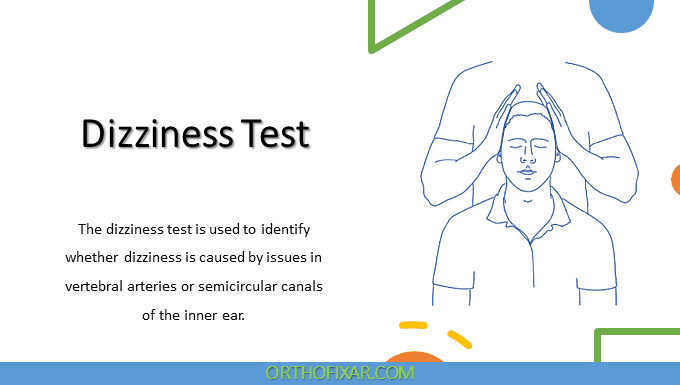
The dizziness test is used to identify whether dizziness is caused by issues in vertebral arteries or semicircular…
Read Full Entry →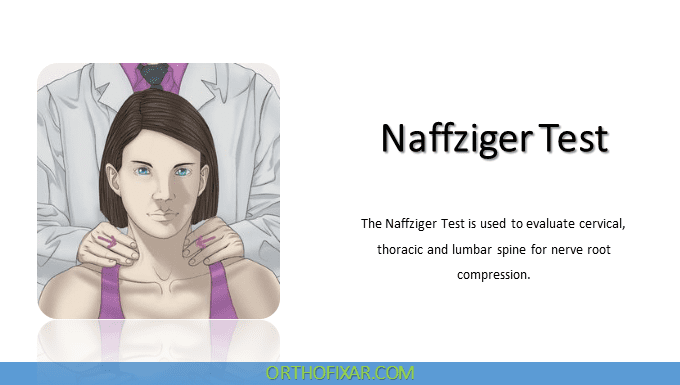
The patient is seated, and the examiner stands behind the patient with his or her fingers over the…
Read Full Entry →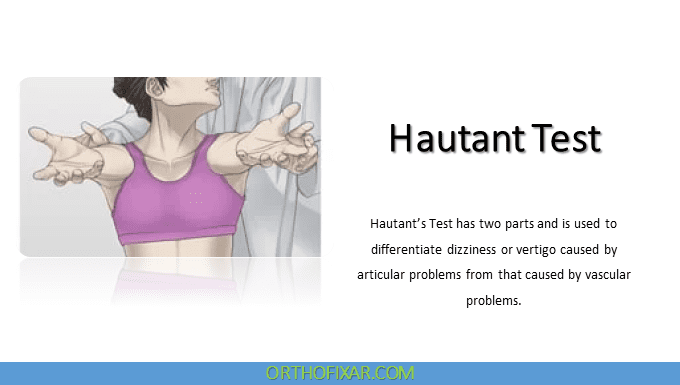
Hautant’s Test has two parts and is used to differentiate dizziness or vertigo caused by articular problems from…
Read Full Entry →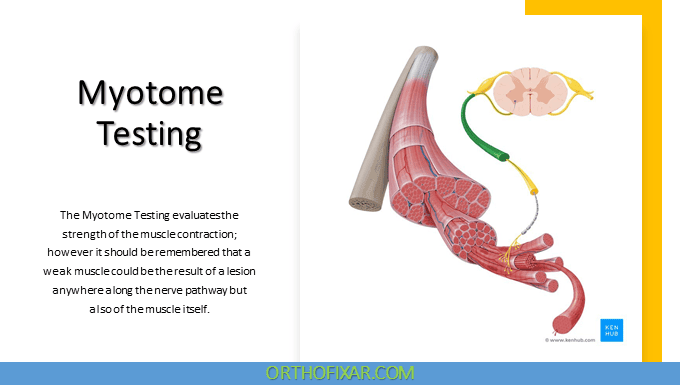
The Myotome Testing evaluates the strength of the muscle contraction; however it should be remembered that a weak…
Read Full Entry →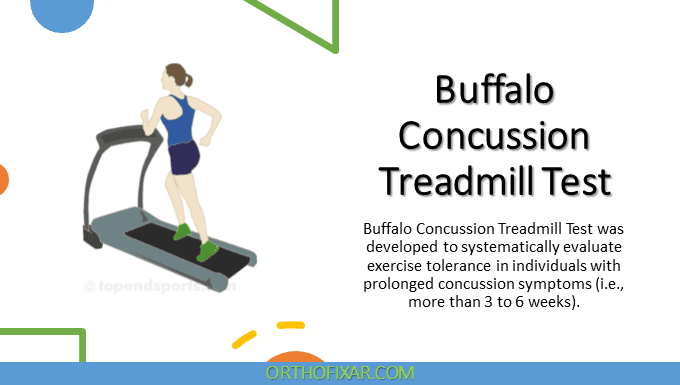
What is the Buffalo concussion treadmill test used for? 1. To investigate exercise tolerance in patients with postconcussive…
Read Full Entry →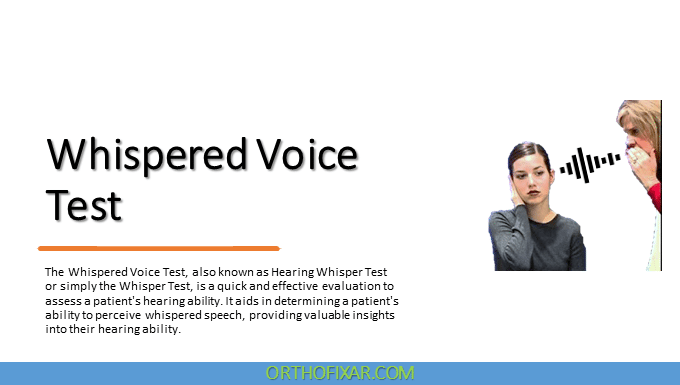
The Whispered Voice Test is a straightforward evaluation to assess a patient's hearing ability. During the test, the…
Read Full Entry →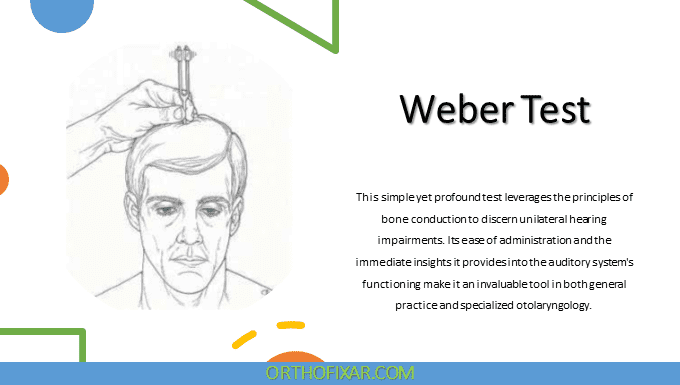
The Weber Test remains a cornerstone in the audiological assessment, offering a quick and effective means to evaluate…
Read Full Entry →