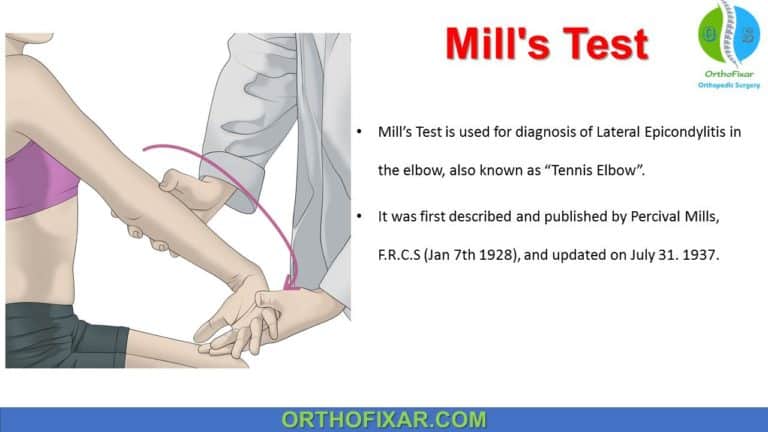
Mill’s Test Explained: Procedure, Positive Sign & Diagnosis of Tennis Elbow
Mill’s Test is used to diagnosis lateral epicondylitis or “Tennis Elbow”. It is a passive stretch test designed…
Read Full Entry →In addition to an accurate elbow examination, there are a series of functional tests to help ensure the correct diagnosis.
Mill’s Test is used to diagnosis lateral epicondylitis or “Tennis Elbow”. It is a passive stretch test designed…
Read Full Entry →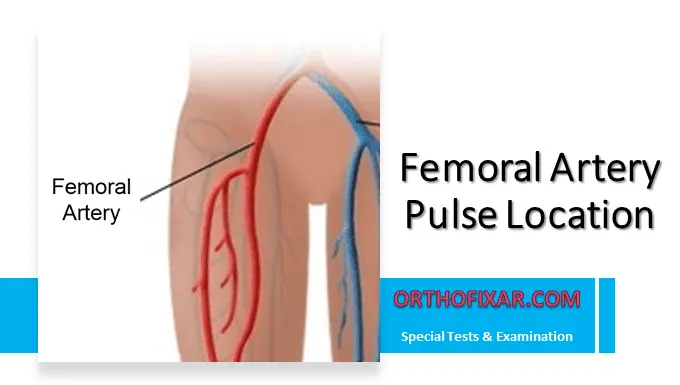
The femoral artery pulse is one of the most important peripheral pulses assessed during a physical examination. Accurate…
Read Full Entry →
The Wadsworth Elbow Flexion Test is a provocative clinical examination technique used to assess for cubital tunnel syndrome,…
Read Full Entry →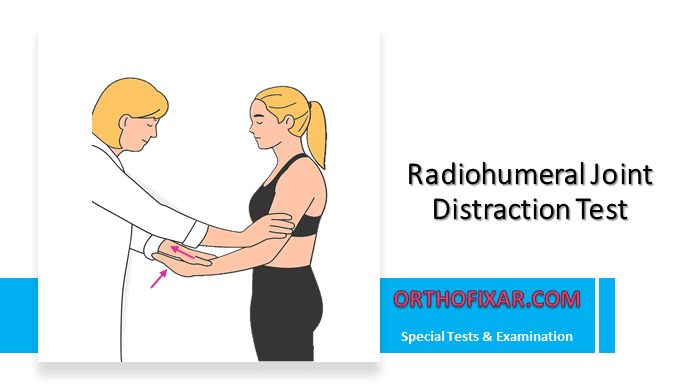
The Radiohumeral Joint Distraction Test is used to assess for the presence of loose bodies within the radiohumeral…
Read Full Entry →
The Active Radiocapitellar Compression Test is a clinical examination technique used to evaluate potential osteochondritis dissecans of the…
Read Full Entry →
The Arm Bar Test, also known as the Posteromedial Impingement Test, is used to evaluate posterior impingement syndrome…
Read Full Entry →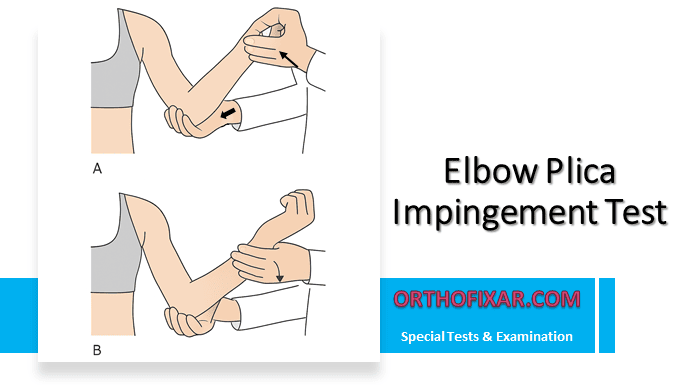
The elbow plica impingement test is an essential diagnostic procedure for evaluating potential plica syndrome and radiocapitellar joint…
Read Full Entry →
Polk Test is used to differentiate between lateral and medial epicondylitis (commonly known as tennis elbow and golfer's…
Read Full Entry →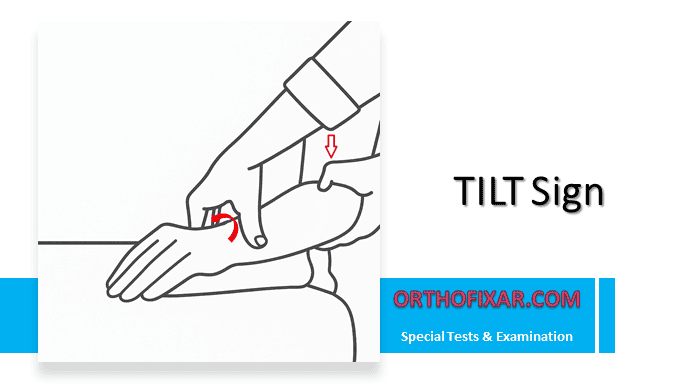
The TILT sign represents a valuable clinical examination technique for detecting partial tears of the distal biceps tendon.…
Read Full Entry →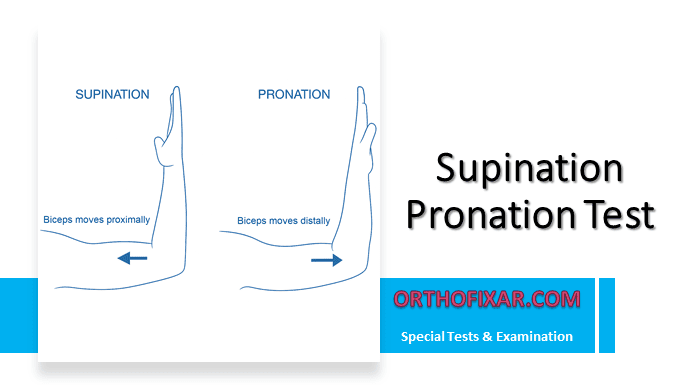
The supination pronation test is used to assess the integrity of the distal biceps tendon at the elbow…
Read Full Entry →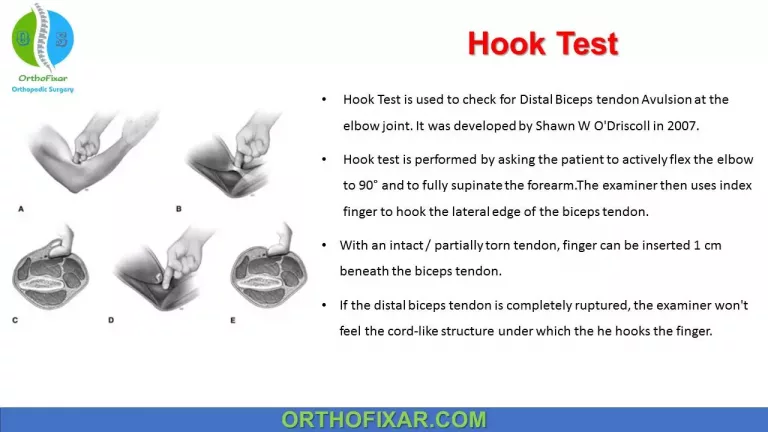
Hook Test is used to check for Distal Biceps tendon Avulsion at the elbow joint. It was developed…
Read Full Entry →
The Bicipital Aponeurosis Flex Test is used to assess the integrity of the bicipital aponeurosis when evaluating suspected…
Read Full Entry →