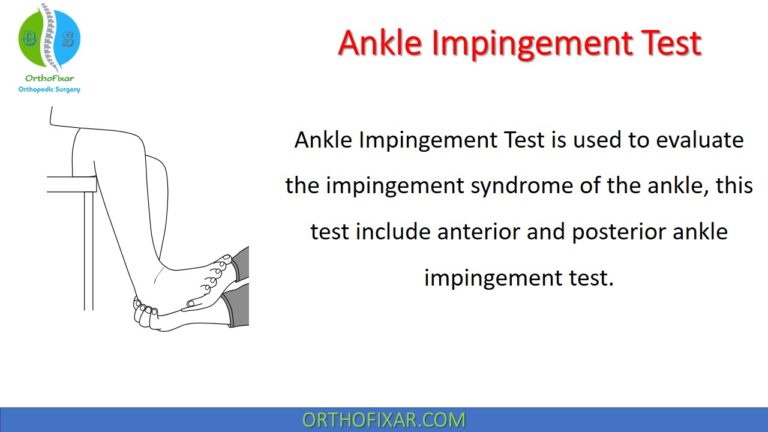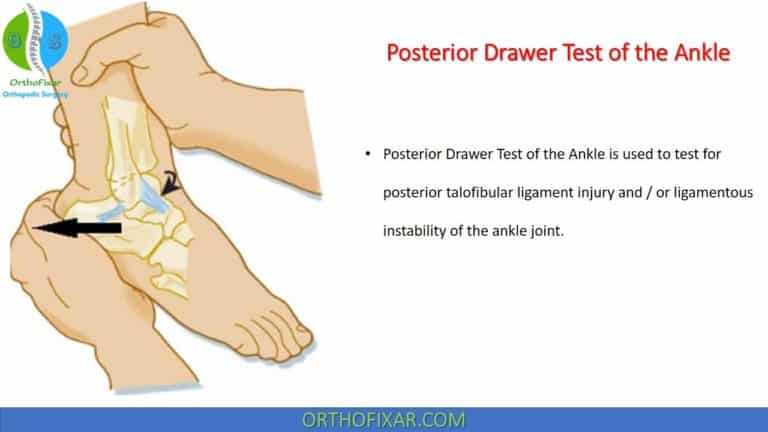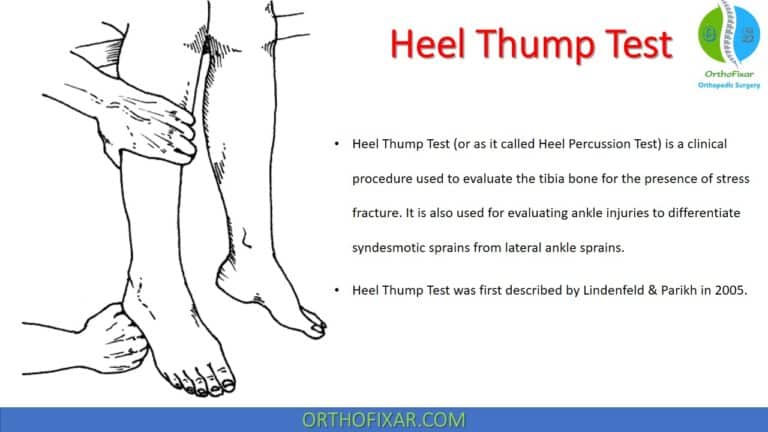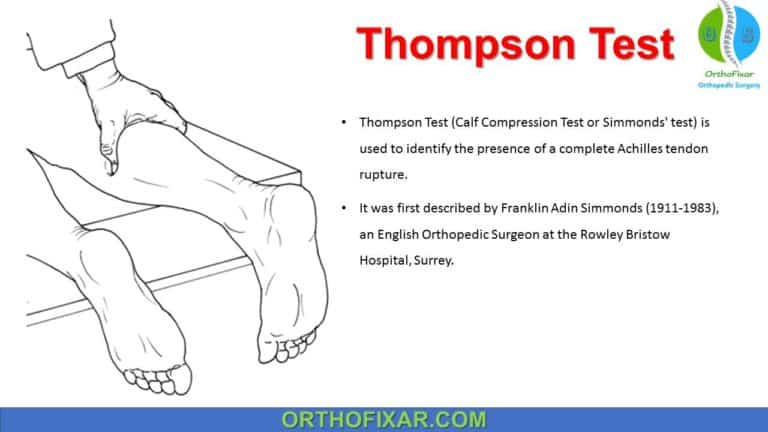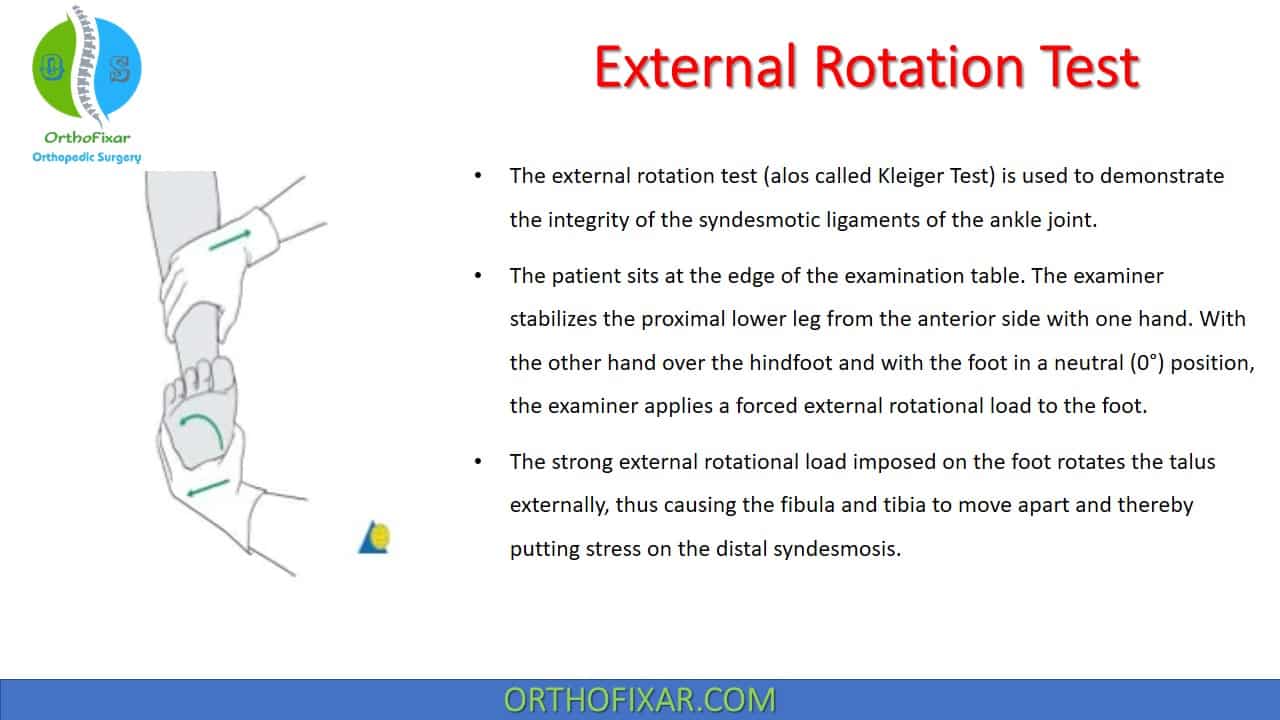
The external rotation test (alos called Kleiger Test) is used to demonstrate the integrity of the syndesmotic ligaments of the ankle joint. This Test can also be used to assess the integrity of the medial (deltoid) ligament of the ankle complex.
How do you perform the External Rotation Test?
- The patient sits at the edge of the examination table with the leg hanging over the examining table with the knee at 90°.
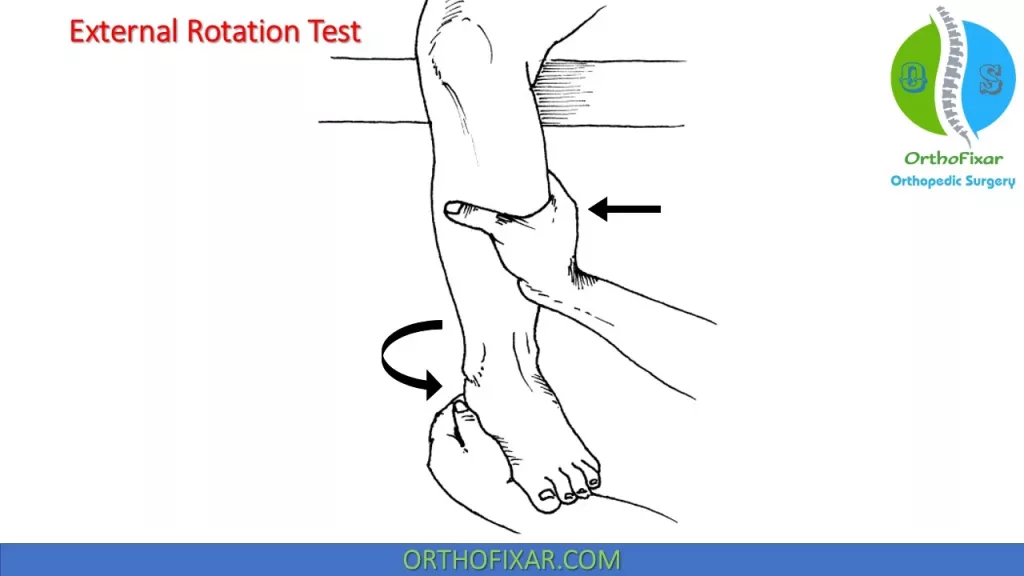
- The examiner stabilizes the proximal lower leg from the anterior side with one hand.
- With the other hand over the hindfoot and with the foot in a neutral (0°) position, the examiner applies a forced external rotational load to the foot.
- To stress the syndesmosis, place the ankle in dorsiflexion.
- To stress the deltoid ligament, place the ankle in a neutral position or in slight plantarflexion
See Also: Ankle Anatomy
What does a positive External Rotation Test mean?
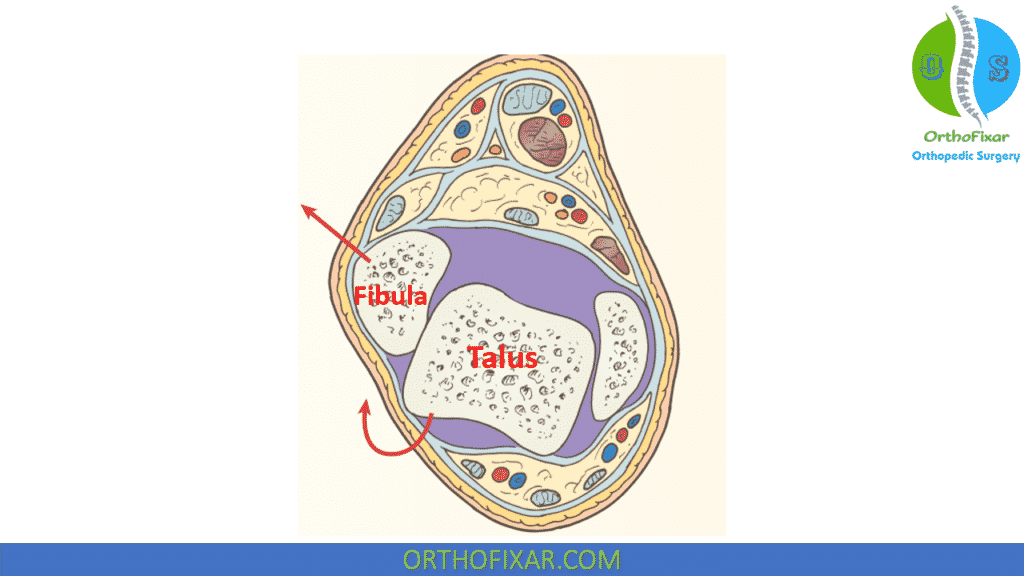
- The strong external rotational load imposed on the foot rotates the talus externally, thus causing the fibula and tibia to move apart and thereby putting stress on the distal syndesmosis.
- Pain experienced during the test in the anterolateral aspect of the ankle joint suggests injury to the syndesmosis.
- Pain on the medial side of the injured ankle during the external rotation stress test, with the ankle positioned in plantar flexion, may indicate injury to the deltoid ligament.
- If this test is positive, further testing is necessary to determine the source of the symptoms.
- Pain arising from the distal tib-fib syndesmosis during this test is associated with a prolonged recovery time.
Sensitivity & Specificity
A Comparative Study to determine the sensitivity and specificity of both the ankle external rotation stress test and squeeze test for syndesmotic injury secondary to lateral ankle sprain, the sensitivity and specificity of ankle external rotation test was as following:
- Sensitivity: 20%
- Specificity: 84.8%
Alonso et al. reported that the external rotation stress test is more reliable than the squeeze test and the dorsiflexion–compression test for diagnosing syndesmosis injuries.
References
- de César PC, Avila EM, de Abreu MR. Comparison of magnetic resonance imaging to physical examination for syndesmotic injury after lateral ankle sprain. Foot Ankle Int. 2011 Dec;32(12):1110-4. doi: 10.3113/FAI.2011.1110. PMID: 22381194. PubMed
- Alonso A, Khoury L, Adams R. Clinical tests for ankle syndesmosis injury: reliability and prediction of return to function. J Orthop Sports Phys Ther. 1998 Apr;27(4):276-84. doi: 10.2519/jospt.1998.27.4.276. PMID: 9549711. PubMed
- Hertel J, et al: Talocrural and subtalar instability after lateral ankle sprain. Med Sci Sports Exer, 31:1501, 1999.
- Sman AD, Hiller CE, Refshauge KM. Diagnostic accuracy of clinical tests for diagnosis of ankle syndesmosis injury: a systematic review. Br J Sports Med. 2013;47(10):620–628. PubMed
- Clinical Tests for the Musculoskeletal System 3rd Edition.
- Dutton’s Orthopaedic Examination, Evaluation, And Intervention 3rd Edition.