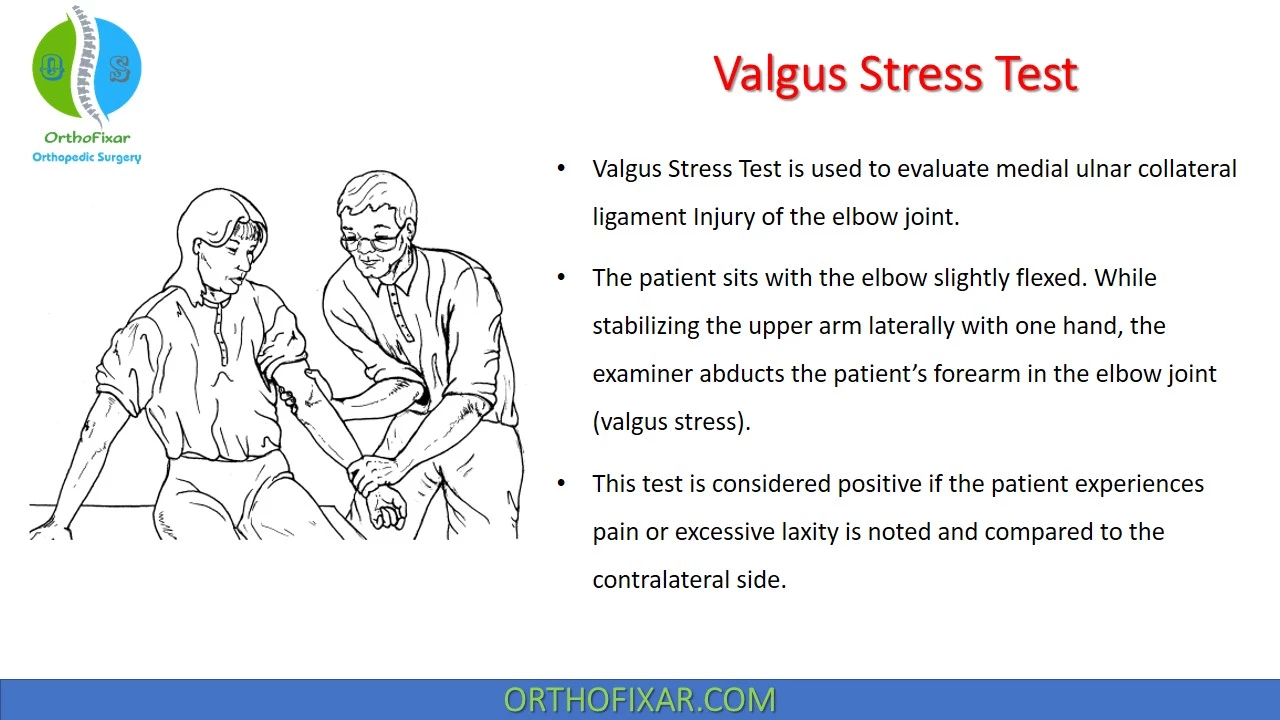
The Elbow Valgus Stress Test is a fundamental orthopedic examination used to assess medial elbow stability, particularly the integrity of the ulnar collateral ligament (UCL). This ligament is the primary restraint against valgus stress, especially during overhead throwing motions.
UCL injuries are common in athletes such as baseball pitchers and can lead to valgus instability, pain, and reduced performance.
Related Anatomy
The Valgus Stress Test of the elbow primarily evaluates the:
- Ulnar Collateral Ligament (UCL) (medial collateral ligament of the elbow)
- Anterior bundle (AMCL) – the most important stabilizer
- Flexor-pronator muscle group (dynamic stabilizers)
The UCL resists valgus stress mainly between 30° and 120° of elbow flexion, where instability is most pronounced.
How do you perform the Elbow Valgus Stress Test?
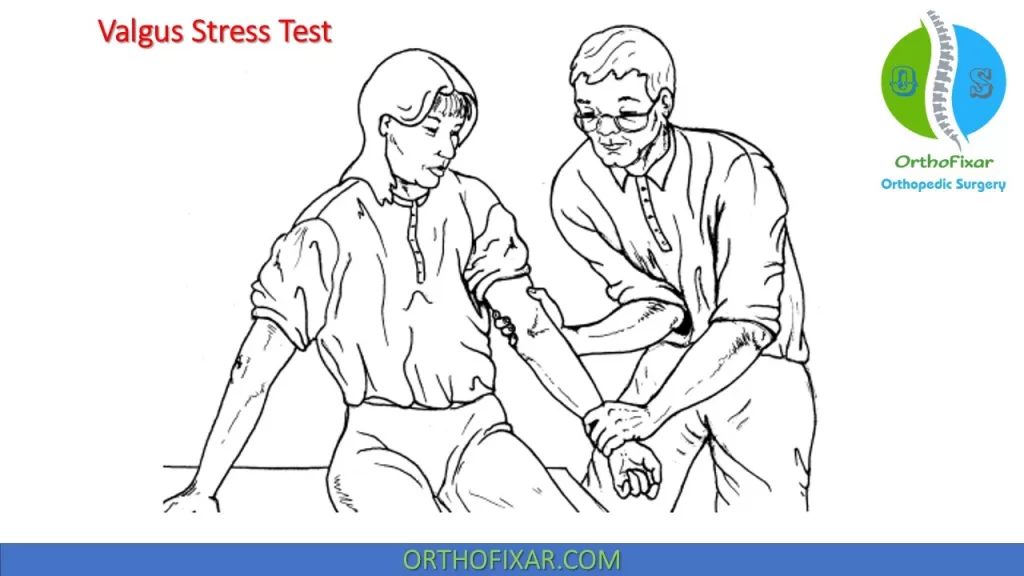
- With the patient Standing, sitting, or supine. The glenohumeral joint is in neutral and the elbow is flexed 10°–25°.
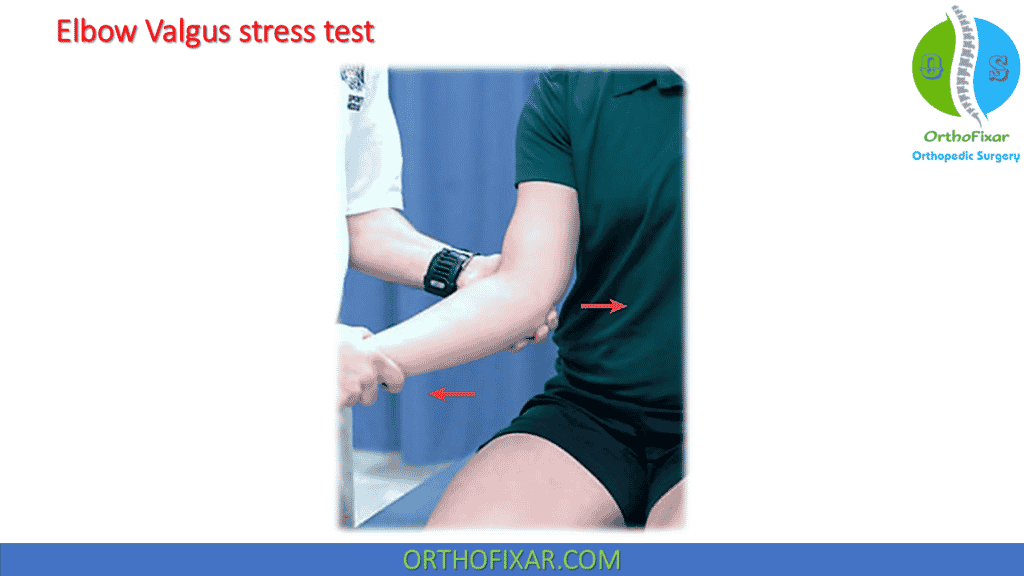
- The examiner stands lateral to the joint being tested, with one hand supports the lateral elbow with the fingers reaching behind the joint to palpate the medial joint, and the opposite hand grasps the distal forearm.
- A valgus force is applied to the joint.
- The procedure is repeated with the elbow in various degrees of flexion.
The patient can be positioned with the glenohumeral joint in external rotation for better stabilization. This position should be avoided in patients with anterior glenohumeral instability.
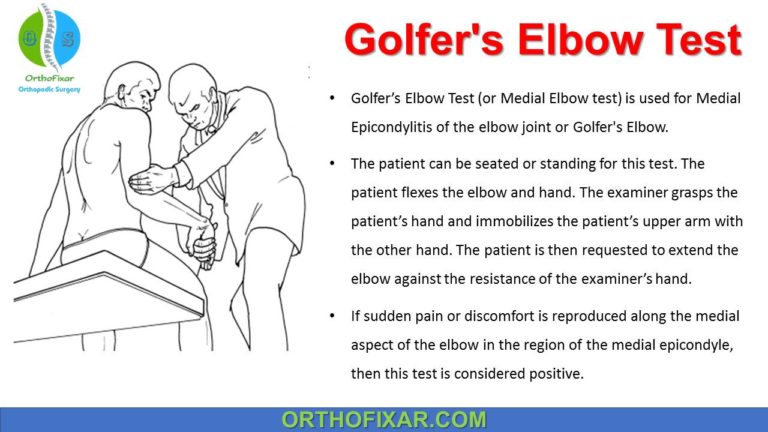
See Also: Medial Epicondylitis Test (Golfer's Elbow Test)
What does a positive Elbow Valgus Stress Test mean?
This test is considered positive if the patient experiences pain or excessive laxity is noted compared to the contralateral side.
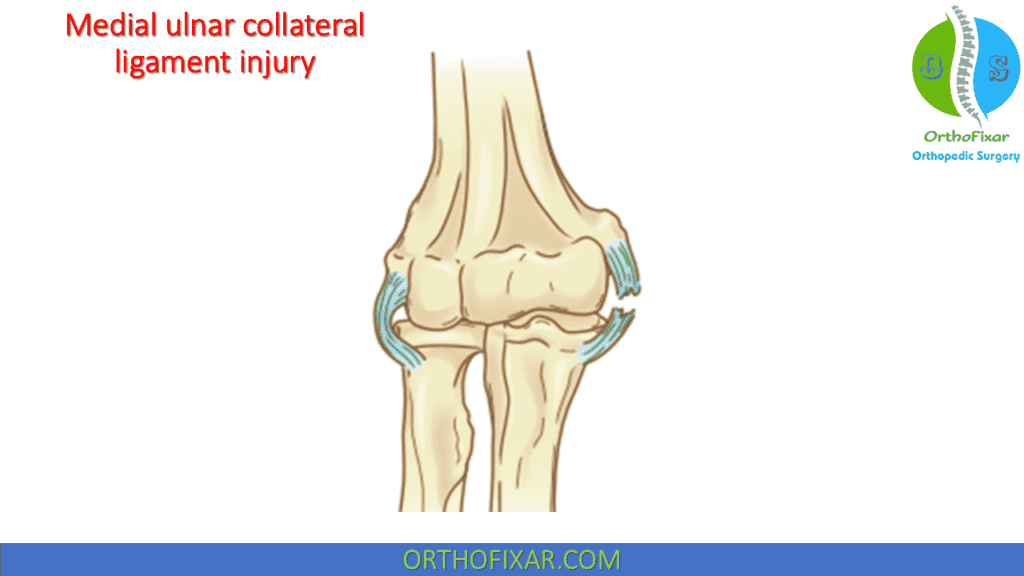
Positive Elbow Valgus Stress Test may indicate:
- Sprain of the ulnar collateral ligament, especially the anterior bundle.
- Laxity beyond 60° of flexion also implicates involvement of the posterior bundle.
- Laxity in full extension is indicative of an olecranon or humeral fracture.
- Laxity may also indicate epiphyseal injury.
Sensitivity & Specificity
- Sensitivity: 66 %
- Specificity: 60 %
A study on 21 patients referred with chronic medial collateral ligament injuries, the Elbow Valgus stress test at 30, 60, 70, or 90 degrees of elbow flexion was performed (The Reference Standard was Surgical visualization ). If the clinician identifies laxity or the patient reports pain, the test is considered positive. The reliability of the test was:
| Sens | Spec | +LR | −LR |
|---|---|---|---|
| Pain: 65% Laxity: 19% | Pain: 50% Laxity: 100 % | Pain: 1.3 Laxity: Undefined | Pain: 0.70 Laxity: 0.81 |
Note
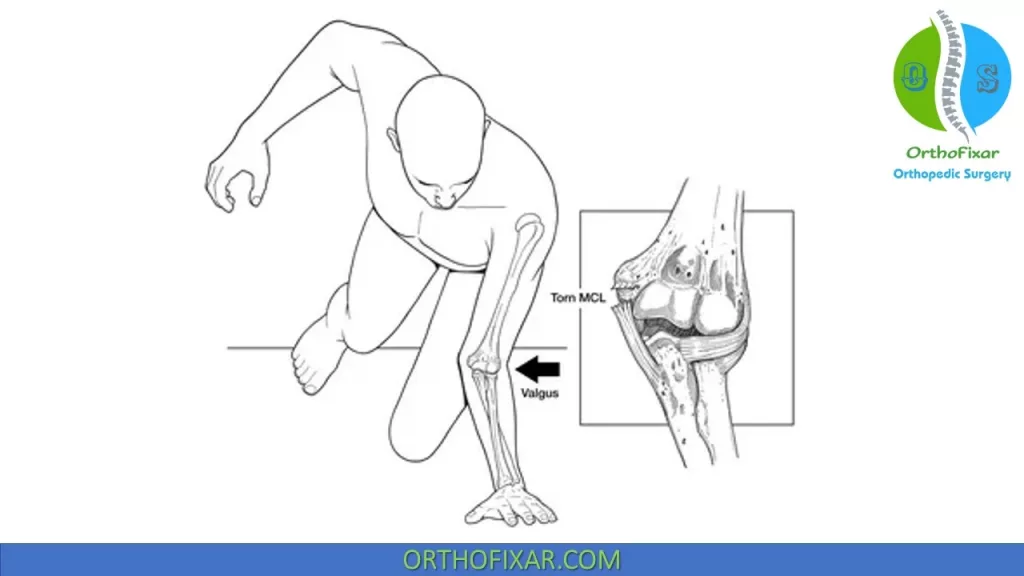
- Valgus instability occurs post traumatically (medial collateral ligament injury or fracture of the radial head) or by chronic stress on the medial capsule ligament apparatus (pitching arm ).
- Injuries to the medial collateral ligament occur in athletes who throw, such as pitchers, European handball players, and
javelin throwers. - The throwing motion produces valgus and extension stress.
- Chronic overload can lead to arthritis, ulnar nerve neuritis, and tendinitis at the insertions of the pronator teres muscle and the flexor carpi radialis and ulnaris muscles.
See Also: Elbow Anatomy
Comparison with Other Tests
Moving Valgus Stress Test
A more dynamic and sensitive alternative:
- Performed while moving elbow from flexion to extension under valgus load
- Pain typically occurs between 70°–120° of flexion
- Sensitivity: 100%
- Specificity: 75%
Milking Maneuver
- Applies valgus stress via the thumb
- Useful for isolating the anterior bundle of the UCL
Reference
- Lauren E. Karbach, MD and John Elfar, MD: Elbow Instability: Anatomy, Biomechanics, Diagnostic Maneuvers, and Testing. J Hand Surg Am. Author manuscript; available in PMC 2018 Feb 21. PMID: 28160902. Pubmed
- O’Driscoll SW, Lawton RL, Smith AM. The “moving valgus stress test” for medial collateral ligament tears of the elbow. Am J Sports Med. 2005;33:231- 239. Pubmed
- Seiber K, Bales C, Wörner E, Lee T, Safran MR. Assessment of the reliability of a non-invasive elbow valgus laxity measurement device. J Exp Orthop. 2020 Sep 28;7(1):74. doi: 10.1186/s40634-020-00290-2. PMID: 32989568; PMCID: PMC7522144. Pubmed
- Clinical Tests for the Musculoskeletal System 3rd Edition.
- Dutton’s Orthopaedic Examination, Evaluation, And Intervention 3rd Edition.