Calcium Pyrophosphate Deposition Disease (CPPD) is a crystal-induced arthropathy caused by the deposition of calcium pyrophosphate dihydrate (CPP) crystals in cartilage, synovial tissue, and periarticular structures. CPPD is one of the most common inflammatory arthritis disorders in older adults and is considered the third most common inflammatory arthropathy after osteoarthritis and gout.
The disease can present in several forms, ranging from asymptomatic crystal deposition to acute inflammatory arthritis known as pseudogout, as well as chronic inflammatory arthritis that may mimic rheumatoid arthritis.
Key Facts About CPPD
- It is caused by deposition of calcium pyrophosphate crystals in joints.
- Pseudogout is an acute manifestation of CPPD.
- The knee is the most commonly affected joint.
- Incidence increases significantly with age.
- It may coexist with osteoarthritis.
- Diagnosis is confirmed by identification of CPP crystals in synovial fluid.
- Treatment focuses on controlling inflammation because no therapy currently removes existing CPP crystals.
Understanding Calcium Pyrophosphate Deposition Disease
CPPD develops when calcium pyrophosphate crystals accumulate within articular cartilage and fibrocartilage. These crystals trigger an inflammatory response when released into the joint space, resulting in pain, swelling, redness, and restricted joint movement.
The European Alliance of Associations for Rheumatology (EULAR) classifies CPPD into several clinical phenotypes:
Asymptomatic CPPD
Patients have crystal deposits visible on imaging studies but experience no symptoms.
Acute CPP Crystal Arthritis (Pseudogout)
This is the classic inflammatory presentation characterized by sudden attacks of painful swollen joints.
Osteoarthritis with CPPD
Patients exhibit degenerative joint disease accompanied by crystal deposition.
Chronic CPP Crystal Inflammatory Arthritis
Persistent inflammation can mimic rheumatoid arthritis and cause chronic joint damage.
What is Pseudogout?
Pseudogout refers to acute episodes of arthritis caused by calcium pyrophosphate crystal deposition. The term means “false gout” because symptoms closely resemble gout attacks.
During a pseudogout flare, patients may experience:
- Sudden severe joint pain
- Joint swelling
- Warmth and redness
- Limited range of motion
- Fever in some cases
Unlike gout, which often affects the big toe, pseudogout most commonly affects larger joints such as the knee and wrist.
See Also: Gout: Symptoms, Causes & treatment
Causes and Risk Factors
The exact mechanism of crystal formation remains incompletely understood. However, several factors increase the risk of developing CPPD.
Advanced Age
Age is the strongest risk factor. CPPD prevalence rises dramatically after age 60.
Joint Trauma
Previous injuries, surgery, or mechanical stress may promote crystal deposition.
Genetic Factors
Mutations involving phosphate metabolism pathways, particularly the ANKH gene, have been associated with familial CPPD.
Metabolic and Endocrine Disorders
Several medical conditions increase CPPD risk, including:
- Hemochromatosis
- Hyperparathyroidism
- Hypomagnesemia
- Hypophosphatasia
- Chronic kidney disease
Osteoarthritis
Many patients with CPPD also have underlying osteoarthritis.
CPPD Symptoms
Symptoms vary according to the disease subtype.
Acute Symptoms
- Sudden onset joint pain
- Swelling
- Redness
- Warmth
- Joint stiffness
- Fever and malaise
Chronic Symptoms
- Persistent joint pain
- Morning stiffness
- Progressive loss of function
- Recurrent inflammatory episodes
- Joint deformity in advanced disease
Commonly Affected Joints
Although CPPD can affect nearly any joint, the most frequently involved sites include:
- Knee
- Wrist
- Shoulder
- Hip
- Ankle
- Elbow
- Metacarpophalangeal joints
The knee remains the most commonly affected joint in both acute and chronic cppd arthropathy.
How is CPPD Diagnosed?
Accurate diagnosis is essential because CPPD often mimics gout, septic arthritis, and rheumatoid arthritis.
Synovial Fluid Analysis
Joint aspiration remains the gold standard diagnostic test.
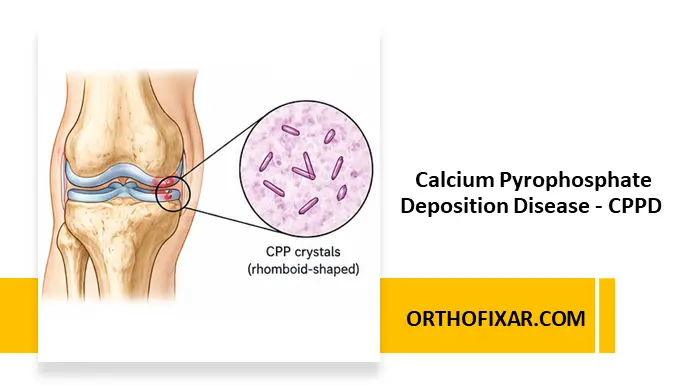
Under polarized light microscopy, CPP crystals appear:
- Rhomboid-shaped
- Weakly positively birefringent
This finding confirms calcium pyrophosphate deposition disease.
Imaging Studies
X-rays
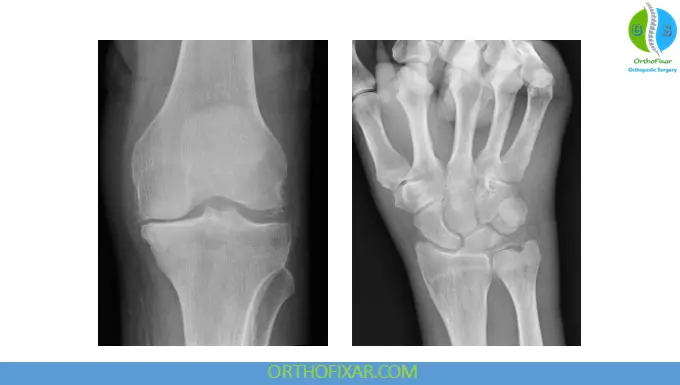
Radiographs may reveal:
- Chondrocalcinosis
- Joint space narrowing
- Osteoarthritic changes
Ultrasound
Ultrasound can identify crystal deposits and inflammation.
CT Scan
Computed tomography may be useful in atypical cases, particularly axial CPPD.
Laboratory Testing
Blood tests help identify associated metabolic conditions, including:
- Serum calcium
- Magnesium
- Phosphate
- Iron studies
- Parathyroid hormone levels
Difference Between Gout and Pseudo Gout
One of the most common questions patients ask is about the difference between gout and pseudo gout.
| Feature | Gout | Pseudogout |
|---|---|---|
| Crystal Type | Monosodium urate crystals | Calcium pyrophosphate crystals |
| Common Age Group | Middle-aged adults | Older adults |
| Most Common Joint | Big toe (first MTP) | Knee |
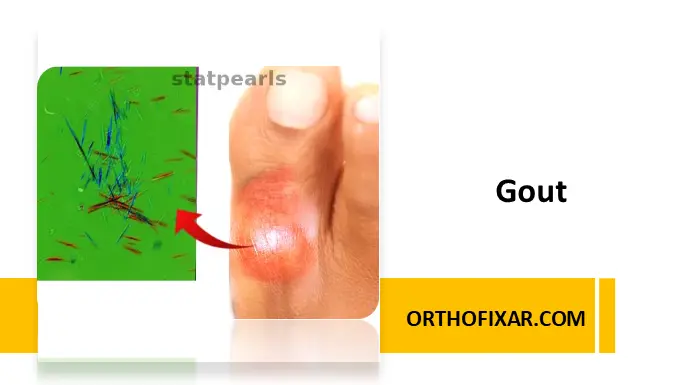
| Crystal Shape | Needle-shaped | Rhomboid-shaped |
| Birefringence | Strongly negative | Weakly positive |
| Cause | Hyperuricemia | CPP crystal deposition |
| Definitive Diagnosis | Synovial fluid urate crystals | Synovial fluid CPP crystals |
Although both conditions cause acute inflammatory arthritis, they are distinct diseases requiring different long-term management strategies.
CPPD Arthropathy: Long-Term Joint Damage
CPPD arthropathy refers to chronic structural joint damage caused by persistent crystal deposition and inflammation.
Features include:
- Progressive cartilage degeneration
- Joint space narrowing
- Osteophyte formation
- Functional disability
- Chronic pain
Patients with chronic cppd arthropathy may experience symptoms similar to severe osteoarthritis or rheumatoid arthritis.
Treatment of Calcium Pyrophosphate Deposition Disease
Currently, there is no cure that eliminates CPP crystals. Treatment focuses on controlling inflammation and preventing recurrent attacks.
Nonsteroidal Anti-Inflammatory Drugs (NSAIDs)
NSAIDs are commonly used during acute attacks to reduce pain and inflammation.
Examples include:
- Ibuprofen
- Naproxen
- Indomethacin
Colchicine
Low-dose colchicine can:
- Treat acute flares
- Reduce recurrence frequency
- Prevent future attacks in selected patients
Corticosteroids
Options include:
Oral Corticosteroids
Useful when NSAIDs are contraindicated.
Intra-Articular Corticosteroid Injection
Particularly effective for monoarticular disease.
Joint Aspiration
Removing inflammatory joint fluid can:
- Relieve pain
- Improve mobility
- Confirm diagnosis
Management of Underlying Disorders
Correcting associated metabolic abnormalities may help reduce disease progression.
Examples include:
- Treating hyperparathyroidism
- Correcting magnesium deficiency
- Managing hemochromatosis
Lifestyle and Prevention Strategies
Although no specific diet prevents CPPD, maintaining joint health may reduce symptoms.
Recommended strategies include:
- Regular low-impact exercise
- Weight management
- Physical therapy
- Adequate hydration
- Management of metabolic disorders
Unlike gout, dietary purines do not appear to play a major role in CPPD development.
Prognosis
The prognosis varies according to disease severity and comorbidities.
Many patients experience intermittent attacks with long symptom-free periods. Others develop chronic inflammatory arthritis or progressive cppd arthropathy resulting in functional limitations.
Early diagnosis and appropriate treatment can significantly improve quality of life and reduce disability.
Frequently Asked Questions (FAQ)
Is CPPD the same as pseudogout?
Not exactly. CPPD is the underlying disease process, while pseudogout refers specifically to acute inflammatory attacks caused by CPP crystal deposition.
Can CPPD be cured?
Currently, there is no cure that removes calcium pyrophosphate crystals from joints. Treatment focuses on symptom control and prevention of recurrent flares.
Is CPPD hereditary?
Most cases are sporadic, but familial forms associated with genetic mutations have been identified.
Which joint is most commonly affected by CPPD?
The knee is the most frequently involved joint.
What is the main difference between gout and pseudo gout?
Gout is caused by monosodium urate crystals, whereas pseudogout results from calcium pyrophosphate crystal deposition.
Conclusion
Calcium Pyrophosphate Deposition Disease is a common crystal-induced arthritis that predominantly affects older adults. The disease encompasses multiple clinical presentations, including asymptomatic crystal deposition, chronic cppd arthropathy, and acute attacks known as pseudo-gout. Understanding the difference between gout and pseudo gout is essential for accurate diagnosis and treatment. Synovial fluid crystal analysis remains the diagnostic gold standard, while treatment focuses on controlling inflammation and preserving joint function through medications, joint aspiration, and management of associated metabolic disorders.
References & More
- Azam A, Minalyan A, Naik R. Calcium Pyrophosphate Deposition Disease. [Updated 2025 Dec 13]. In: StatPearls [Internet]. Treasure Island (FL): StatPearls Publishing; 2026 Jan-. Available from: https://www.ncbi.nlm.nih.gov/books/NBK540151/
- Azam, Abeera, et al. “Calcium Pyrophosphate Deposition Disease.” StatPearls, StatPearls Publishing, 13 December 2025.
- Cowley S, McCarthy G. Diagnosis and Treatment of Calcium Pyrophosphate Deposition (CPPD) Disease: A Review. Open Access Rheumatol. 2023 Mar 22;15:33-41. doi: 10.2147/OARRR.S389664. PMID: 36987530; PMCID: PMC10040153. Link
- Blom, A., Warwick, D., & Whitehouse, M. R. (2018). Apley & Solomon’s system of orthopaedics and trauma (10th ed.). CRC Press