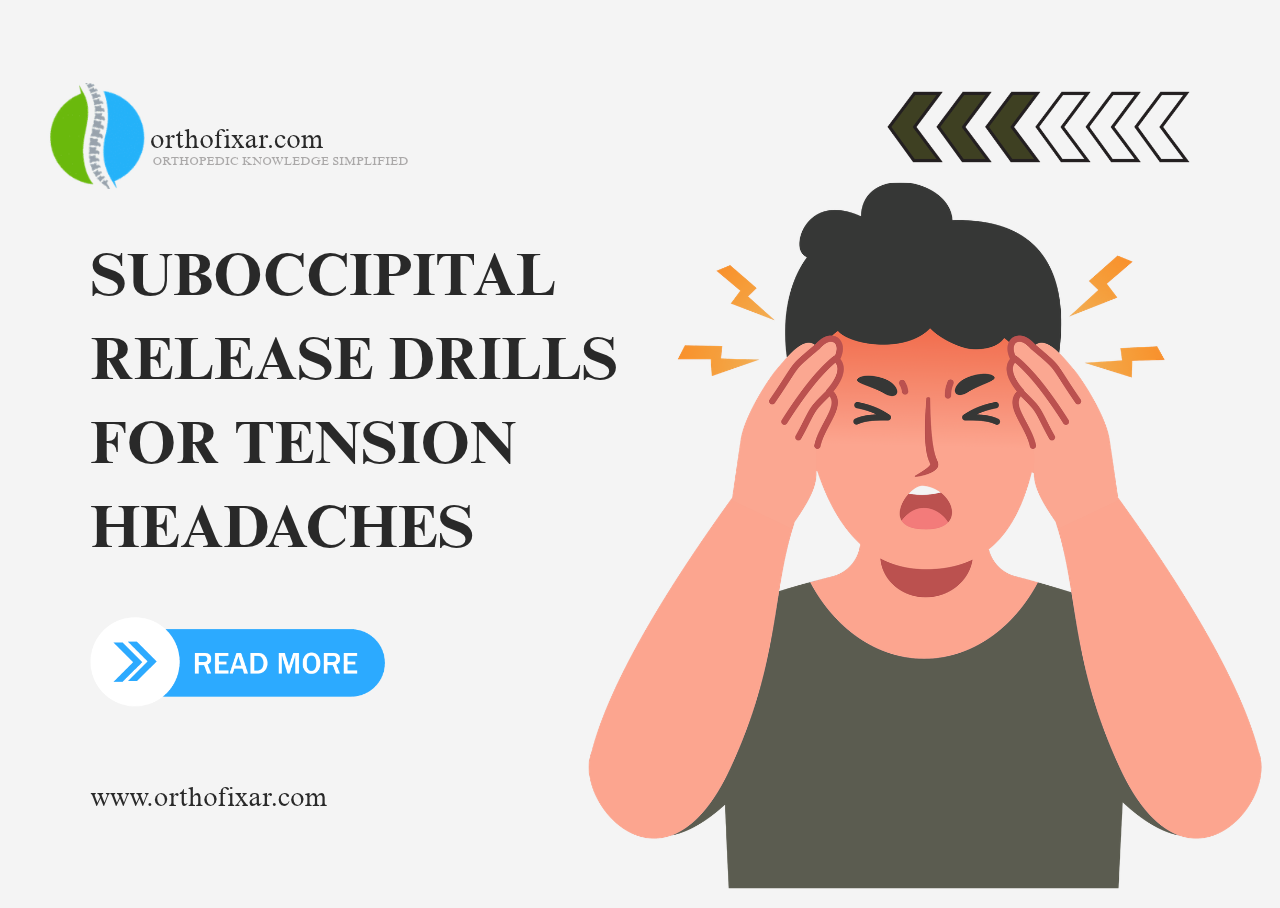
Tension-type headaches that begin with tightness at the base of the skull are common, and targeted suboccipital release work is one of the most practical self-management tools for them. This guide explains which muscles are involved, how to perform release drills safely, when to use them, and when a headache needs medical assessment instead. You will find step-by-step techniques, a comparison table, supporting habit changes, and answers to the questions patients ask most often in the clinic.
Why the Suboccipital Muscles Matter in Tension Headaches
The suboccipital group is a set of small, deep muscles that connect the base of the skull to the upper two cervical vertebrae. These muscles fine-tune head position and play a major role in neck stability and posture. Because they are densely packed with nerve endings and attach directly to the skull, even modest sustained tension in this region can produce symptoms that feel far larger than the muscles themselves.
When the suboccipitals stay tight for long periods, they can refer pain upward into the back of the head, behind the eyes, or around the temples. This referral pattern is one reason a headache can feel like it starts in the skull when the driver is actually in the neck. The trigeminal and upper cervical nerves converge in the brainstem, which helps explain why neck dysfunction so readily masquerades as head pain.
Clinically, this pattern appears most often in people who spend long hours at a screen, drive frequently, or hold their head in a forward position. The muscles shorten, the upper neck stiffens, and headache symptoms follow. Jaw clenching and shallow chest breathing compound the problem by keeping the entire cervicocranial region in a guarded, high-tone state.
- Common triggers include sustained desk work, phone use, poor pillow support, and stress-related jaw clenching.
- Typical symptoms include a band-like ache at the back of the head, scalp tenderness, and stiffness turning the head.
- Release drills aim to reduce muscle tension, restore gentle upper-neck movement, and lower headache frequency.
What Suboccipital Release Drills Actually Do
Release drills combine gentle sustained pressure, slow movement, and relaxed breathing. The goal is not to force the muscles to stretch but to help them let go. Sustained low-level pressure appears to calm overactive muscle spindles and reduce protective guarding, while slow breathing shifts the nervous system out of a stress response that keeps muscles tight.
These drills work best as part of a broader routine that includes posture changes, ergonomic adjustments, and general neck and shoulder strengthening. Used alone, they offer relief but rarely solve a recurring pattern. Think of release work as opening a door: strengthening and daily habits are what keep it from swinging shut again.
In practice, patients who pair release drills with small daily habit changes tend to report fewer headaches than those who rely on release work alone.
Before You Start: Safety Checks
Suboccipital work is generally gentle and low risk for most people with tension-type headaches. A few situations call for medical review first.
- Seek medical assessment for a sudden severe headache, headache after head trauma, fever with neck stiffness, or neurological symptoms such as weakness or vision loss.
- Avoid strong pressure on the front and sides of the neck, where major blood vessels run.
- Stop any drill that increases dizziness, nausea, or radiating arm symptoms.
- If you have known cervical spine conditions, discuss the drills with your clinician before starting.
For general information on headache types and red flags, the World Health Organization headache disorders fact sheet is a useful starting point.
How to Perform Suboccipital Release Drills
Setup and Positioning
Most release drills are easiest lying on your back with the head supported. A folded towel under the skull keeps the neck in a neutral position and lets the muscles relax rather than work to hold the head up.
- Lie on a firm surface with knees bent and head resting on a small towel roll.
- Let the jaw relax and breathe slowly through the nose.
- Keep the chin gently tucked, not pressed down.
Technique 1: Sustained Thumb or Finger Pressure
Place the fingertips or thumbs just below the ridge at the base of the skull, slightly off the midline. Apply gentle, steady pressure and hold. The target is the soft tissue between the bony ridge and the first vertebra, not the bone itself.
- Hold each point for 20 to 30 seconds while breathing slowly.
- Use light pressure; the muscles should soften rather than be pushed.
- Work both sides evenly, avoiding the center of the neck.
Technique 2: Occipital Cradle Release
Interlace the fingers behind the head and let the weight of the skull rest into the hands. This provides a broad, gentle stretch to the suboccipital region without pinpoint pressure.
- Rest for one to two minutes with the head fully supported.
- Allow the chin to drop slightly as the muscles relax.
- Use this drill after long periods of screen work.
Technique 3: Slow Chin Nod (Cranio-cervical Flexion)
This drill trains the deep neck flexors while the suboccipital muscles lengthen. It is a controlled nod, not a full head lift. Keeping the movement small is what makes it effective; large nodding motions recruit the very muscles you are trying to calm.
- Start with the head supported and nod the chin gently toward the throat.
- Hold for five seconds, then return slowly.
- Repeat eight to ten times, keeping the movement small.
Technique 4: Gentle Upper-Neck Rotation
Turn the head slowly to one side while keeping the shoulders relaxed. Pause at the point of mild resistance, not pain. The motion should come from the top of the neck, with the lower neck staying quiet.
- Hold each side for 15 to 20 seconds.
- Perform three to five slow repetitions per side.
- Avoid forcing the end range or holding your breath.
Technique 5: Towel Roll Traction
A rolled towel placed under the upper neck can provide gentle traction while you lie still. This is a passive drill that suits people with very tight muscles or those who find active techniques aggravating.
- Place the towel roll under the upper neck, not the mid-back.
- Rest for five to ten minutes in a relaxed position.
- Use it in the evening if headaches tend to build during the day.
Building a Daily Routine
A short, consistent routine usually works better than a long session done occasionally. Ten minutes daily is a realistic starting point for most people, and the routine can be split into small blocks that fit around work and rest.
- Morning: one minute of occipital cradle release before starting work.
- Midday: two minutes of sustained pressure and slow chin nods.
- Evening: five minutes of towel roll traction and gentle rotation.
Increase duration gradually rather than intensity. If symptoms worsen, reduce the time and pressure. Consistency over weeks matters more than any single session, and a brief routine you actually complete beats an ambitious one you skip.
Comparing Common Suboccipital Release Approaches
| Approach | Best For | Time Needed | Key Cautions |
|---|---|---|---|
| Sustained finger pressure | Focal tightness at the skull base | 2–5 minutes | Avoid heavy pressure; stay off the midline |
| Occipital cradle release | General tension after screen work | 1–2 minutes | Keep the head fully supported |
| Slow chin nods | Improving deep neck control | 3–5 minutes | Keep the movement small and controlled |
| Gentle rotation | Stiffness turning the head | 2–3 minutes | Do not force end range |
| Towel roll traction | Passive relaxation in the evening | 5–10 minutes | Position the roll under the upper neck only |
Supporting Habits That Make Release Drills More Effective
Release drills work best when the muscles are not re-tightened immediately afterward. Small daily changes matter more than occasional big efforts, because headaches driven by sustained postures respond to the cumulative load of the whole day.
- Raise your screen so the top edge sits near eye level.
- Take a short movement break every 30 to 45 minutes.
- Choose a pillow that keeps the neck in a neutral line.
- Keep the jaw relaxed and avoid clenching during stressful tasks.
- Stay hydrated and keep regular sleep hours.
- Build gradual strength in the upper back and shoulders so posture is supported by muscle rather than effort.
For broader guidance on managing headaches, including when to seek care, the NHS headaches guidance is a reliable reference.
When to See a Physical Therapist or Doctor
Self-release drills suit mild to moderate tension headaches with a clear neck component. Some patterns need professional assessment.
- Headaches that are worsening despite consistent self-care.
- Neck stiffness with arm pain, numbness, or weakness.
- Headaches that disturb sleep or occur most mornings.
- Any new headache pattern in someone over 50.
A physical therapist can assess posture, upper-neck mobility, and muscle tone, then tailor a program. The American Physical Therapy Association directory helps patients find a licensed physical therapist.
Common Mistakes to Avoid
Most problems with suboccipital release drills come from too much force or poor positioning, not from the technique itself.
- Pressing hard enough to cause pain or headache flare-ups.
- Working the front of the neck instead of the base of the skull.
- Skipping the slow breathing that helps muscles relax.
- Doing drills only when a headache is already severe.
- Ignoring posture and workstation setup after release work.
Conclusion
Suboccipital release drills are a practical, low-cost way to reduce tension-type headache symptoms linked to upper-neck tightness. Use gentle, sustained techniques, keep sessions short and consistent, and pair them with everyday posture and movement changes. If headaches are worsening, unusual, or accompanied by neurological symptoms, seek professional assessment rather than relying on self-care alone.
Frequently Asked Questions
How often should I do suboccipital release drills?
Most people do well with one short session daily, usually ten minutes or less. If headaches are frequent, a brief midday session can help. Increase gradually and reduce the routine if symptoms worsen.
Can suboccipital release drills cure tension headaches?
They can reduce symptoms and muscle tension, but they are one part of a broader plan. Posture, ergonomics, stress management, and strengthening all contribute to long-term improvement.
Should release work hurt?
No. Gentle pressure that produces a mild stretch or softening sensation is ideal. Sharp pain, dizziness, or a worsening headache means you should stop and reassess.
Can I do these drills if I have neck arthritis?
Many people with mild degenerative changes can perform gentle release work safely. If movement causes pain, numbness, or radiating symptoms, speak with your clinician before continuing.
Are these drills safe during pregnancy?
Gentle release work is often well tolerated, but pregnancy can change joint mobility and headache patterns. Check with your healthcare provider first, especially for new or severe headaches.
How long does it take to notice a difference?
Some people feel relief within a session. For a lasting reduction in headache frequency, consistent practice over several weeks alongside habit changes is usually needed.
Can I use a massage ball for suboccipital release?
A soft ball can work, but it is harder to control pressure than your hands. Use light pressure, avoid the center of the neck, and stop if symptoms increase.
Do suboccipital drills help cervicogenic headaches?
They can help, because cervicogenic headaches involve the upper neck. However, these headaches often need a full assessment and a targeted exercise program from a physical therapist.
What if my headache gets worse during the drill?
Stop the drill, breathe slowly, and rest. If the worsening persists or comes with dizziness, nausea, or neurological symptoms, seek medical advice.
Can children do suboccipital release drills?
Older children and teens can often use gentle versions with adult supervision. For younger children or recurring headaches, consult a pediatric clinician first.