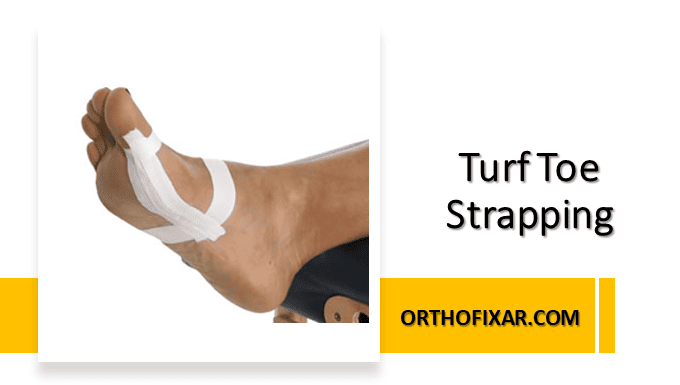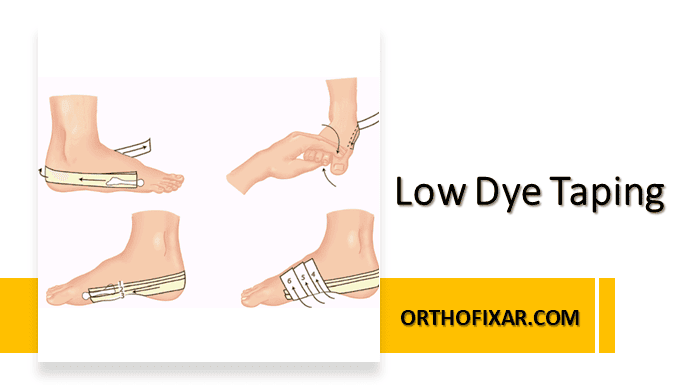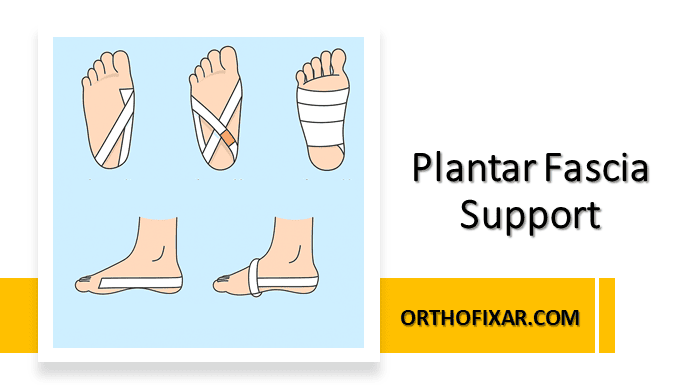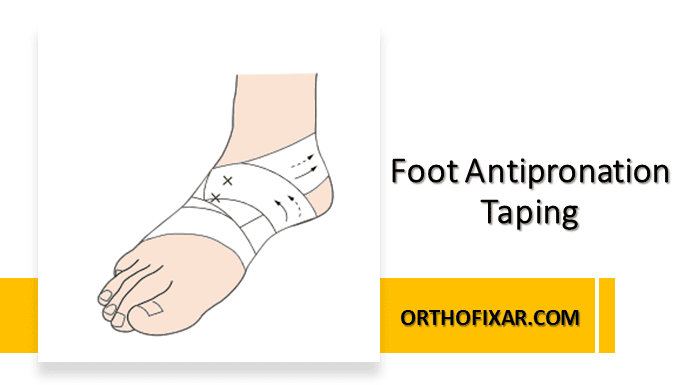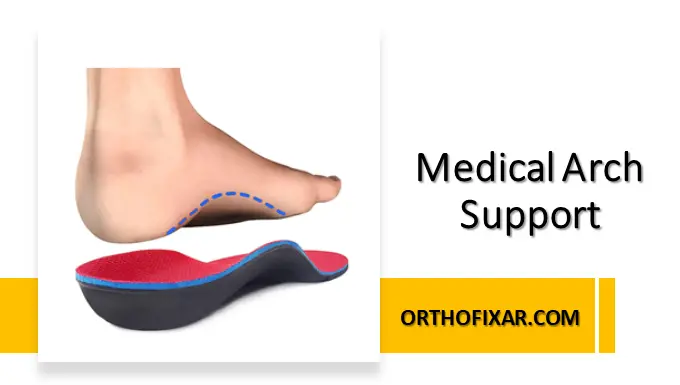
Medical arch support is one of the most underestimated tools in conservative musculoskeletal management. In physiotherapy practice, proper arch support is not an accessory—it is a biomechanical intervention that directly influences lower-limb alignment, load distribution, gait efficiency, and injury recovery. Ignoring the medial longitudinal arch is a mistake that leads to recurrent pain and failed rehabilitation programs.
What Is Medical Arch Support?
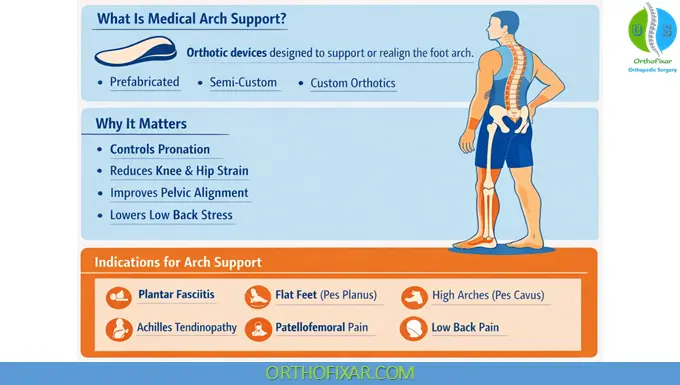
Medical arch support refers to therapeutic orthotic devices designed to support or correct the foot arch, particularly the medial longitudinal arch. Unlike commercial shoe inserts, medical arch supports are used to influence lower-limb biomechanics and kinetic chain alignment.
Types include:
- Prefabricated medical arch supports
- Semi-custom orthotics
- Custom-made orthotic arch supports
The purpose is mechanical correction, not comfort marketing.
Why Medical Arch Support Matters in Physiotherapy
The foot is the foundation of human movement. Dysfunction at the arch level leads to abnormal force transmission through the ankle, knee, hip, and lumbar spine.
In physiotherapy, medical arch support helps:
- Control excessive pronation or supination
- Reduce tibial rotation stress
- Improve knee tracking
- Optimize pelvic alignment
- Reduce compensatory lumbar loading
Ignoring foot biomechanics guarantees incomplete rehabilitation.
Indications for Medical Arch Support
Medical arch support is clinically indicated in:
- Plantar fasciitis
- Flat foot (pes planus)
- High arch foot (pes cavus)
- Posterior tibial tendon dysfunction
- Achilles tendinopathy
- Patellofemoral pain syndrome
- Medial tibial stress syndrome
- Mechanical low back pain
Clinical rule: If lower-limb pain keeps recurring, the foot is usually the missing link.
Arch Types and Appropriate Support Strategy
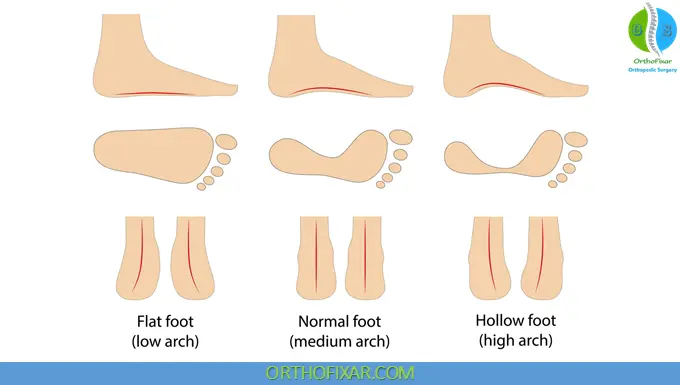
Flat Foot (Pes Planus)
- Excessive pronation
- Requires medial arch support and rearfoot stability
- Must be combined with intrinsic foot strengthening
Normal Arch
- Preventive or activity-specific support
- Focus on load distribution and shock absorption
High Arch (Pes Cavus)
- Reduced shock absorption
- Requires cushioned arch support, not rigid correction
Generic arch supports fail because feet are not generic.
Role of Arch Support in Physiotherapy Rehabilitation
Medical arch support should be viewed as:
- A temporary biomechanical modifier
- A load-management tool during tissue healing
- A supportive adjunct to exercise therapy
Effective physiotherapy combines arch support with:
- Short-foot exercises
- Calf and posterior chain strengthening
- Gait retraining
- Proprioceptive training
Orthotics without active therapy create dependency—not recovery.
Foot Assessment Before Prescribing Arch Support
Proper physiotherapy assessment includes:
- Static foot posture evaluation
- Dynamic gait analysis
- Navicular drop test
- Single-leg stance control
- Relationship to knee, hip, and spine mechanics
Prescribing arch support without assessment is poor clinical practice.
Common Clinical Mistakes with Arch Support
- Using arch supports without biomechanical evaluation
- Overcorrecting flexible feet
- Ignoring patient footwear quality
- Failing to reassess after symptom improvement
- Making orthotics a permanent solution
Good physiotherapy reduces orthotic reliance over time.
Evidence-Based Benefits of Medical Arch Support
Clinical research supports medical arch support for:
- Pain reduction in plantar fasciitis
- Functional improvement in overuse injuries
- Load redistribution during rehabilitation phases
Long-term success requires combining arch support with active physiotherapy interventions.
Key Takeaways for Physiotherapy Learning
- Medical arch support is a therapeutic tool, not a comfort product
- Foot biomechanics influence the entire kinetic chain
- Assessment determines effectiveness
- Exercise remains the foundation of treatment
- The goal is function, not lifelong orthotic use