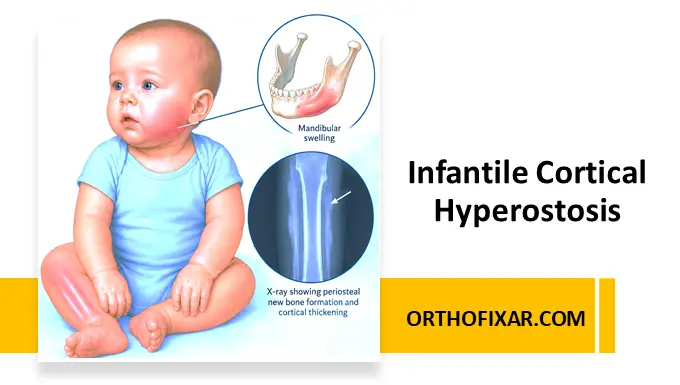
Infantile Cortical Hyperostosis (ICH), commonly known as Caffey Disease, is a rare self-limiting inflammatory bone disorder that primarily affects infants during the first months of life. The condition is characterized by painful soft-tissue swelling, irritability, fever, and excessive subperiosteal new bone formation, most commonly involving the mandible, clavicles, ribs, and long bones.
First described by John Caffey and Silverman in 1945, the disease remains an important differential diagnosis for osteomyelitis, trauma, child abuse, and other causes of periosteal bone reactions in infancy. Although the exact pathogenesis remains incompletely understood, genetic studies have identified mutations in the COL1A1 gene in many familial cases.
What is Infantile Cortical Hyperostosis?
Infantile Cortical Hyperostosis is a rare skeletal disorder characterized by inflammation of the periosteum and excessive cortical bone formation. The disease typically develops between birth and 5 months of age and often resolves spontaneously before the age of 2 years.
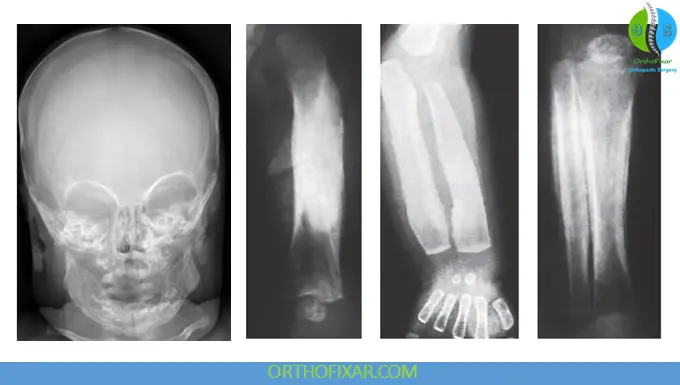
The hallmark radiological finding is subperiosteal cortical hyperostosis, resulting in cortical thickening of affected bones.
Epidemiology
Incidence and Prevalence
ICH is extremely rare, with only a few hundred cases reported in the medical literature. The true prevalence is likely underestimated because many cases resolve spontaneously and remain undiagnosed.
Age of Onset
Most cases present:
- Between birth and 5 months of age
- Peak presentation around 2 months of age
- Rarely after the first year of life
Gender Distribution
No significant sex predilection has been consistently reported.
Etiology and Pathogenesis
The exact cause of Caffey Disease remains uncertain.
Genetic Factors
Research has demonstrated an association between Infantile Cortical Hyperostosis and mutations in the COL1A1 gene, which encodes the alpha-1 chain of type I collagen. The disease may follow an autosomal dominant inheritance pattern in familial cases.
Proposed Mechanisms
Several theories have been proposed:
- Genetic abnormalities affecting collagen synthesis
- Inflammatory reactions involving the periosteum
- Viral infections acting as triggering factors
- Immune-mediated mechanisms
Despite these theories, the precise pathophysiology remains incompletely understood.
Clinical Features
Common Symptoms
Affected infants typically present with:
- Painful soft-tissue swelling
- Irritability
- Fever
- Reduced movement of affected limbs (pseudoparalysis)
- Feeding difficulties when the mandible is involved
Physical Examination Findings
Examination may reveal:
- Firm localized swelling over affected bones
- Tenderness
- Limited limb movement due to pain
- Absence of overt skin inflammation
Unlike bacterial osteomyelitis, redness, warmth, and fluctuance are usually absent.
Bones Commonly Affected
Mandible
The mandible is the most frequently affected bone and is considered highly characteristic of Caffey Disease.
Long Bones
Commonly involved long bones include:
- Tibia
- Femur
- Humerus
- Radius
- Ulna
Other Skeletal Sites
Additional sites may include:
- Clavicles
- Ribs
- Scapulae
- Cranial bones
The disease may involve a single bone or multiple skeletal sites simultaneously.
Laboratory Findings
Laboratory abnormalities are nonspecific but often indicate inflammation.
Common findings include:
- Elevated erythrocyte sedimentation rate (ESR)
- Elevated C-reactive protein (CRP)
- Leukocytosis
- Mild anemia in some cases
- Thrombocytosis in rare cases
These findings may mimic infection and contribute to diagnostic confusion.
Radiographic Features
Characteristic X-Ray Findings
Plain radiographs typically demonstrate:
- Subperiosteal new bone formation
- Cortical thickening
- Hyperostosis of affected bones
- Diaphyseal involvement with sparing of epiphyses
Distribution Pattern
Radiographic changes commonly affect:
- Mandible
- Clavicles
- Ribs
- Long bone diaphyses
The radiological appearance is often diagnostic when correlated with clinical findings.
Differential Diagnosis
Because the clinical presentation can mimic other conditions, careful evaluation is essential.
Osteomyelitis
Both conditions may present with:
- Fever
- Pain
- Elevated inflammatory markers
However, osteomyelitis usually demonstrates clear signs of infection and may require microbiological confirmation.
Scurvy
Scurvy can produce periosteal reactions and bone pain but is associated with vitamin C deficiency and characteristic radiographic findings.
Child Abuse
ICH may occasionally be mistaken for non-accidental injury due to bone abnormalities. Important distinguishing features include:
- Typical age of onset
- Symmetrical involvement
- Absence of fractures
- Characteristic periosteal bone formation
Other Conditions
Additional differential diagnoses include:
- Hypervitaminosis A
- Bone tumors
- Ewing sarcoma
- Congenital syphilis
- Prostaglandin-induced hyperostosis
Diagnostic Approach
Clinical Assessment
Diagnosis begins with:
- Detailed history
- Family history evaluation
- Comprehensive physical examination
Imaging Studies
Diagnostic imaging includes:
Plain Radiographs
The primary imaging modality for diagnosis.
Ultrasound
May detect prenatal manifestations in rare cases.
Advanced Imaging
CT or MRI is rarely required but may help exclude alternative diagnoses.
Genetic Testing
Testing for COL1A1 mutations may confirm the diagnosis, particularly in familial or atypical cases.
Management
Supportive Treatment
Most cases require only supportive care.
Management may include:
- Analgesics
- Antipyretics
- Anti-inflammatory medications
- Observation and follow-up
Role of Antibiotics
Antibiotics are sometimes administered when infection is initially suspected. However, there is no evidence that antibiotics alter the natural course of uncomplicated Caffey Disease.
Corticosteroids
In severe symptomatic cases, corticosteroids have been reported to provide symptomatic relief, although their use is not routinely required.
Prognosis
Short-Term Outcome
The prognosis is generally excellent.
Most patients experience:
- Gradual symptom resolution
- Reduction in swelling
- Normalization of inflammatory markers
- Improvement within weeks to months
Long-Term Outcome
Most children recover completely without permanent skeletal abnormalities.
However, some individuals may develop:
- Recurrent episodes
- Residual bone deformities
- Short stature
- Increased fracture risk
- Joint hypermobility
These complications are uncommon.
Complications
Potential complications include:
- Recurrent hyperostosis
- Bone deformity
- Growth disturbances
- Chronic pain in rare cases
- Functional limitations during acute episodes
Fortunately, severe long-term complications are uncommon.
Key Points for Medical Students and Clinicians
- Infantile Cortical Hyperostosis (Caffey Disease) is a rare inflammatory bone disorder of infancy.
- Presentation usually occurs during the first 5 months of life.
- Mandibular involvement is highly characteristic.
- Elevated ESR and inflammatory markers are common.
- X-rays reveal subperiosteal new bone formation and cortical thickening.
- The condition is often mistaken for osteomyelitis or child abuse.
- Many cases are associated with mutations in the COL1A1 gene.
- The disease is generally self-limiting and resolves spontaneously.
Conclusion
Infantile Cortical Hyperostosis, or Caffey Disease, is a rare but important pediatric skeletal disorder characterized by painful swelling, fever, irritability, and distinctive periosteal new bone formation. Recognition of its characteristic clinical and radiographic features is essential to avoid unnecessary investigations and inappropriate treatment. Although the disease can mimic infection or trauma, its typically benign and self-limiting course allows most affected infants to achieve full recovery with supportive care and monitoring.
References & More
- Kirby K, Ponnarasu S, Alsaleem M, et al. Infantile Cortical Hyperostosis. [Updated 2022 Sep 12]. In: StatPearls [Internet]. Treasure Island (FL): StatPearls Publishing; 2026 Jan-. Available from: https://www.ncbi.nlm.nih.gov/books/NBK532878/
- Frána L, Sekanina M. Infantile cortical hyperostosis. Arch Dis Child. 1976 Aug;51(8):589-95. doi: 10.1136/adc.51.8.589. PMID: 786183; PMCID: PMC1546092. Link
- Guerin A, Dupuis L, Mendoza-Londono R. Caffey Disease. 2012 Aug 2 [Updated 2024 May 23]. In: Adam MP, Bick S, Mirzaa GM, et al., editors. GeneReviews® [Internet]. Seattle (WA): University of Washington, Seattle; 1993-2026. Available from: https://www.ncbi.nlm.nih.gov/sites/books/NBK99168/
- Blom, A., Warwick, D., & Whitehouse, M. R. (2018). Apley & Solomon’s system of orthopaedics and trauma (10th ed.). CRC Press