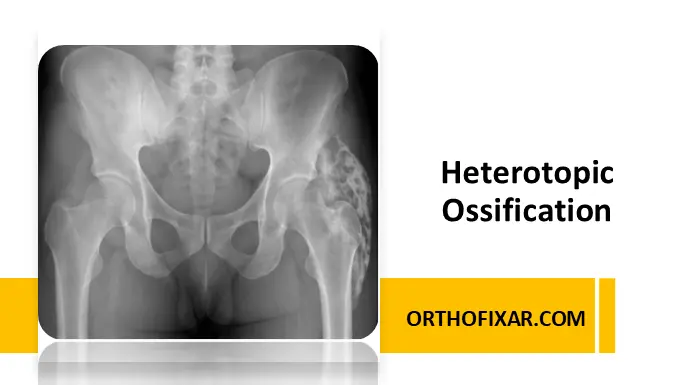
Heterotopic ossification (HO) is the pathological formation of mature, lamellar bone in extraskeletal soft tissues — including muscles, tendons, and ligaments — without direct continuity to the periosteum. It represents one of the most clinically significant complications encountered in rehabilitation and surgical settings
First described as “paraosteoarthropathy” in paraplegic soldiers during World War I, HO continues to present a substantial burden in both civilian and military populations. It is encountered after orthopaedic procedures such as total hip arthroplasty (THA), trauma, burns, spinal cord injury (SCI), traumatic brain injury (TBI), stroke, and joint replacement surgeries.
📌 Clinical Definition
Heterotopic ossification is characterized by the formation of mature, lamellar bone within extraskeletal soft tissue where bone does not normally develop — a process driven by inappropriate mesenchymal stem cell differentiation into osteoblasts, often triggered by inflammation, tissue hypoxia, and neural injury.
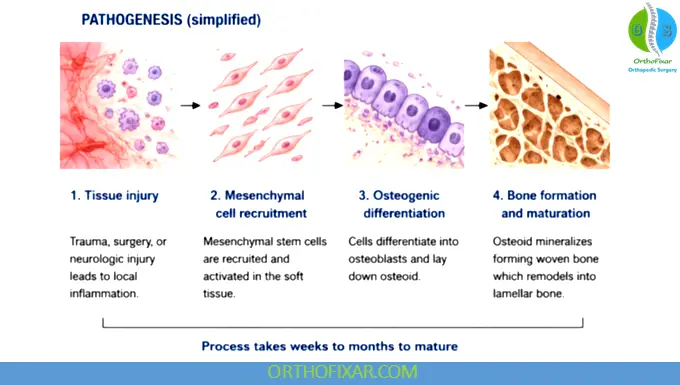
The pathogenesis involves an initial inciting event — typically soft-tissue trauma — followed by an inflammatory cascade that recruits mesenchymal stem cells (MSCs) and induces their differentiation into chondrocytes and osteoblasts, ultimately culminating in ectopic bone formation via endochondral ossification.
While acquired HO is the primary concern in orthopaedic and neurorehabilitation practice, rare hereditary forms exist and include fibrodysplasia ossificans progressiva (FOP), progressive osseous heteroplasia, and Albright’s hereditary osteodystrophy.
Etiology & Classification
Heterotopic ossification is classified into three main etiological categories based on the underlying cause:[1]
1. Traumatic Heterotopic ossification (Most Common)
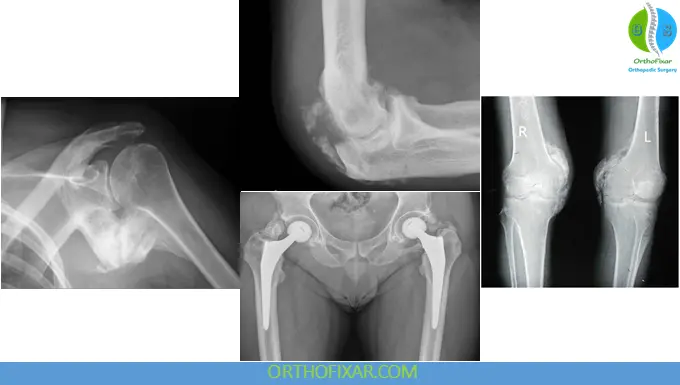
Traumatic HO occurs following injuries such as fractures, joint arthroplasty, muscular trauma, dislocations, or burns. In total joint arthroplasty, HO is most frequently observed after hip, knee, elbow, and shoulder replacements. Chronic muscular trauma can result in myositis ossificans traumatica, with the quadriceps femoris and brachialis muscles being the most commonly affected sites
2. Neurogenic Heterotopic ossification
Neurogenic HO is associated with neurological insults such as stroke, spinal cord injury (SCI), traumatic brain injury (TBI), and brain tumors. It most commonly involves the hips, the extensor side of the elbows, shoulders, and knees, though rare sites include incisions, kidneys, the uterus, corpora cavernosum, and the gastrointestinal tract.
⚠️ High-Risk Factors for Neurogenic HO
- Spasticity near the affected joint
- Older age, prolonged coma
- Pressure ulcers, deep vein thrombosis
- Tracheostomy or gastric tube presence
- Long bone fractures, prior HO at same site
- Immobility and severity of TBI/SCI/stroke
- Gram-negative infection (LPS activation of TLR4)
3. Genetic Heterotopic ossification (Rarest)
The rarest category includes fibrodysplasia ossificans progressiva (FOP), a condition characterized by abnormal, progressive bone formation in soft tissues following minimal injury. FOP manifests at birth with characteristic malformations of the great toe and leads to widespread skeletal immobilization. Minor trauma, intramuscular injections, and surgical procedures can precipitate flare-ups, making early recognition essential to prevent irreversible functional decline.
| Category | Common Triggers | Typical Sites | Key Risk Factors |
|---|---|---|---|
| Traumatic | Fractures, THA, TKA, burns, dislocations, arthroplasty | Hip (most common), knee, elbow, shoulder | Male sex, bilateral THA, ankylosing spondylitis, prior HO, DISH, Paget disease |
| Neurogenic | SCI, TBI, stroke, brain tumors | Hip, extensor elbow, shoulder, knee | Spasticity, coma, pressure ulcers, DVT, immobility, gram-negative infection |
| Genetic | Minimal trauma, intramuscular injections, surgical procedures | Progressive whole-body ossification | ACVR1 gene mutation (FOP); progressive osseous heteroplasia (GNAS mutation) |
Abbreviations: THA = total hip arthroplasty; TKA = total knee arthroplasty; SCI = spinal cord injury; TBI = traumatic brain injury; DISH = diffuse idiopathic skeletal hyperostosis; DVT = deep vein thrombosis; FOP = fibrodysplasia ossificans progressiva.
Epidemiology
The prevalence of Heterotopic ossification varies significantly depending on the underlying clinical context and the population studied. Key epidemiological data from the literature include:
| Clinical Setting | Reported Incidence | Notes |
|---|---|---|
| Total Hip Arthroplasty (THA) | 8% – 90% (avg. ~53%) | Higher in men, cemented components, older age |
| Acetabular Fractures | 17% – 100% | Extremely variable; surgical approach is a major factor |
| Burn Injuries | 0.2% – 4% | Proportional to burn severity; elbow most affected |
| Spinal Cord Injury (SCI) | 20% – 30% | Hip most affected; onset 1–4 months post-injury |
| Traumatic Brain Injury (TBI) | 10% – 20% | Hip, knee, elbow, shoulder affected |
| Pediatric TBI | 3% – 20% | Lower incidence than adults; elbow predominant |
| Neurological Injury (general) | 10% – 20% | Neurogenic HO classification applies |
HO is approximately twice as common in men as in women; however, women aged 65 and older may also have an elevated risk. Clinically, HO can result in substantial morbidity including pain, joint contracture, ankylosis, limited mobility, and secondary complications such as disuse osteopenia and fracture risk.
Pathophysiology
The exact mechanism of Heterotopic ossification in traumatic and neurogenic cases remains incompletely understood. Two common factors consistently precede HO formation: (1) trauma or an inciting neurological event, and (2) dysregulated tissue expression of bone morphogenetic proteins (BMPs).
Molecular Cascade of Bone Formation
Following injury, altered BMP expression — particularly BMP-2 and BMP-4 — stimulates mesenchymal spindle stem cells (satellite cells) to migrate to the injured area, where they differentiate into fibroblasts and eventually osteoblasts. Downstream Smad1/5/8 phosphorylation and osteogenic gene activation drive this process.
Alkaline phosphatase also plays a contributory role by suppressing inhibitors of bone formation; it is known to be elevated in vascular smooth muscle tissue in the presence of inflammatory cytokines and macrophages. After migration, mesenchymal spindle cells differentiate into fibroblasts, which secrete immature connective tissue composed of collagen and extracellular matrix.
With continued tissue irritation, fibroblastic metaplasia transforms fibroblasts into chondrocytes through a process analogous to endochondral ossification. Calcium pyrophosphate within the osteoid is slowly replaced by hydroxyapatite crystals as the bone mineralizes and matures.
Temporal Sequence of Heterotopic ossification Formation
- 0 – 1 Week: Inflammatory cascade; BMP upregulation; MSC recruitment to injury site; hypercellular spindle cell proliferation begins.
- 1 – 2 Weeks: New osteoid forms within soft tissue. Bone scan turns positive before radiographic changes appear. Alkaline phosphatase begins to rise.
- 2 – 5 Weeks: Cartilage and woven bone formation. Trabecular bone develops with fatty bone marrow.
- 3 – 6 Weeks: Visible on plain radiographs. Circumferential bone formation with radiolucent center apparent.
- 6+ Weeks: Lamellar bone matures. Hydroxyapatite crystallization. Full radiographic maturity takes 12–18 months.
Neurogenic Heterotopic ossification: SCI-Specific Mechanism
Following SCI, fibro-adipogenic progenitor (FAP) cells escape tumor necrosis factor (TNF)-induced apoptosis by inflammatory macrophages. These progenitors accumulate and differentiate into osteoblasts. Stress-induced adrenal glucocorticoid release — particularly corticosterone — amplifies local inflammation and promotes excessive secretion of oncostatin M and interleukin-1β in injured muscle, driving osteogenic proliferation.
🔬 Gram-Negative Infection & Heterotopic ossification Risk
Lipopolysaccharides (LPS) from gram-negative organisms induce heterotopic bone formation by activating Toll-like receptor 4 (TLR4) on macrophages and muscle fibro-adipogenic progenitors, increasing macrophage secretion of oncostatin M and IL-1β. This explains the higher incidence of neurogenic HO in TBI/SCI patients who develop gram-negative infections.
Histopathology
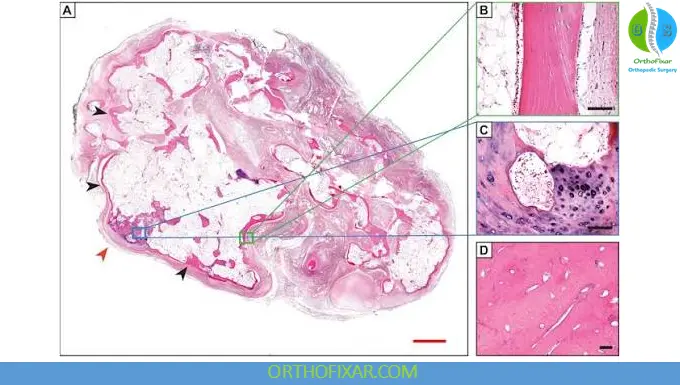
The hallmark histological feature of HO is lamellar bone formation within soft tissue, frequently via an endochondral ossification pathway. The characteristic zonation pattern of HO is the primary feature that distinguishes it from osteosarcoma.
| Zone | Location | Histological Features |
|---|---|---|
| Central Zone | Inner core | Immature fibrous tissue; hypercellular spindle cells; loose connective tissue; fibroblastic proliferation |
| Middle Zone | Intermediate | Osteoid formation; woven bone; active osteoblasts; cartilage matrix deposition |
| Peripheral Zone | Outer shell | Mature lamellar bone; mineralized hydroxyapatite; cortical shell with fatty marrow |
🔴 Heterotopic ossification vs. Osteosarcoma: Key Histological Distinction
In HO/myositis ossificans, mature bone is found at the periphery with immature fibrous tissue centrally. In osteosarcoma, the pattern is reversed — mature bone and osteoid are found in the central zone. Failure to recognize this zonation can lead to misdiagnosis
Clinical Presentation
Heterotopic ossification typically manifests 3 to 12 weeks after the inciting injury, though it may take up to 6 months to present clinically. The greatest risk period extends through the 3- to 4-month post-injury window.
Symptoms & Signs
| Feature | Description | Clinical Significance |
|---|---|---|
| Pain | Localized, often around a joint | Most common presenting symptom |
| Decreased ROM | Progressive joint stiffness/limitation | Can progress to complete ankylosis |
| Local edema/swelling | Periarticular soft tissue swelling | May mimic deep vein thrombosis |
| Erythema & warmth | Overlying skin changes | May mimic infection or DVT |
| Low-grade fever | Systemic inflammatory response | Differentiates from asymptomatic HO |
| Spasticity | Near affected joint (neurogenic) | Risk factor and early clinical marker |
| Neurovascular compression | Numbness, weakness | Occurs when HO encroaches on neurovascular structures |
⚠️ Important Mimics
Early Heterotopic ossification can closely mimic deep vein thrombosis (DVT), cellulitis, septic arthritis, or soft tissue tumors. Always consider HO in a patient with recent THA, SCI, TBI, or major trauma who presents with periarticular swelling, warmth, and restricted movement.
Evaluation: Laboratory Studies & Imaging
Laboratory Studies
| Marker | Significance | Limitations |
|---|---|---|
| Alkaline Phosphatase (ALP) | Most commonly ordered; rises up to 3.5× normal by 10 weeks; >250 correlates with HO in THA patients | May be normal in early stages; falsely elevated with long-bone fractures |
| ESR (>35 mm/hr) | Nonspecific inflammatory marker; indicates active HO development | Nonspecific; many conditions elevate ESR |
| C-Reactive Protein (CRP) | Elevated in early HO; helps monitor inflammatory activity | Nonspecific; cannot confirm diagnosis alone |
| Creatine Kinase (CK) | Assesses severity; elevated CK may indicate aggressive HO and possible etidronate resistance | Not highly specific; elevated in many muscle disorders |
Imaging Modalities
Triple-Phase Bone Scan (Gold Standard for Early Detection)
The triple-phase bone scan is the most sensitive imaging modality for early HO detection. It can reveal HO as early as 2.5 weeks after injury — well before radiographic changes are visible. This makes it invaluable for early diagnosis when clinical suspicion is high but plain films are normal.
Plain Radiographs
Plain radiographs are the first-line imaging tool and gold standard for staging and grading HO. They are specific but have poor early sensitivity, often not becoming positive until 3 to 4 weeks after a positive bone scan. Typical radiographic appearance: circumferential bone formation around or near a joint with a radiolucent center. Used for Brooker classification grading.
MRI
MRI is the gold standard in the acute or early phase of disease. It provides superior soft tissue characterization and can detect inflammatory changes and early osteoid formation before radiographic visibility. MRI is also useful for pre-surgical planning and differentiating HO from soft tissue sarcoma.
CT Scan
CT — particularly 3D CT reconstruction — is invaluable for pre-operative planning, characterizing the extent and architecture of mature HO, and guiding surgical resection. The Mavrogenis-Genêt 3D CT classification for neurogenic HO of the hip identifies seven patterns of involvement (anterior, medial, posterior, lateral, anteromedial, posterolateral, circumferential) to improve surgical planning.
Ultrasound
Ultrasound can detect early HO and is particularly useful for monitoring trauma-induced HO and guiding rehabilitation. It is non-ionizing, accessible, and can identify soft tissue changes before ossification is radiographically apparent.
| Modality | Earliest Detection | Sensitivity | Primary Use |
|---|---|---|---|
| Triple-Phase Bone Scan | ~2.5 weeks post-injury | Highest | Early diagnosis, monitoring |
| MRI | Early/acute phase | High (soft tissue) | Early detection, surgical planning, DDx from sarcoma |
| Plain Radiograph | 3–6 weeks (after bone scan) | Low (early), High (mature) | Grading (Brooker), staging, monitoring |
| CT / 3D CT | After radiographic HO present | High (mature HO) | Surgical planning, anatomic mapping |
| Ultrasound | Early stages | Moderate | Monitoring, rehabilitation guidance |
Brooker Classification System
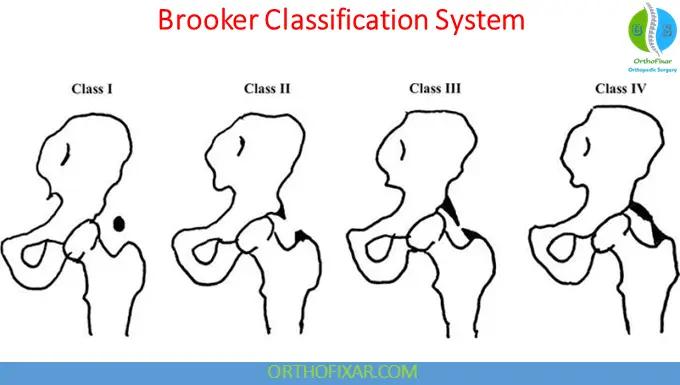
The Brooker classification (Brooker et al., 1973) is the most widely used radiographic grading system for HO, originally described for the hip following total hip arthroplasty. It grades HO severity based on the amount of bone formation visible on plain radiographs and the remaining interosseous space between pelvis and femur.
| Grade | Radiographic Finding | Clinical Impact | Management Approach |
|---|---|---|---|
| Grade I | Islands of bone within soft tissues around the hip | Minimal; rarely symptomatic | Observation, ROM exercises, serial radiographs |
| Grade II | Bone spurs from pelvis or proximal femur; ≥1 cm gap between opposing bone surfaces | Mild restriction of ROM; may cause discomfort | NSAIDs, physiotherapy |
| Grade III | Bone spurs from pelvis or proximal femur; <1 cm gap between opposing surfaces | Moderate-to-severe ROM restriction; functional impairment | NSAIDs, bisphosphonates, consider surgical planning |
| Grade IV | Apparent radiographic ankylosis of the hip | Severe; near-complete loss of joint mobility | Surgical excision after full maturity (12–18 months) |
📋 Clinical Note on Brooker Limitations
Heterotopic ossification appearing as Brooker Grade III or IV on radiographs may not always correspond to true clinical ankylosis. The anatomical location of HO (anterior vs. posterior to the hip joint) significantly influences the degree of actual motion restriction. 3D CT classification systems have been developed to improve pre-operative planning accuracy, particularly for neurogenic HO.
Differential Diagnosis
| Condition | Distinguishing Features |
|---|---|
| Deep Vein Thrombosis (DVT) | Doppler ultrasound confirms venous thrombosis; no bone formation; HO commonly mimics DVT early on |
| Osteosarcoma | Central zone bone maturity (opposite zonation to HO); aggressive periosteal reaction; systemic symptoms; MRI shows different signal characteristics |
| Calcific Tendinitis | Peritendinous calcification without true bone formation; no marrow elements; no zonation pattern |
| Septic Arthritis / Cellulitis | Markedly elevated WBC, CRP, fever; positive culture; responds to antibiotics; no bone formation on imaging |
| Chondrocalcinosis / CPPD | Crystal deposition in cartilage; no soft-tissue bone formation; characteristic “tramline” radiographic pattern |
| Exostosis (Osteochondroma) | Attached to cortex; no prior injury trigger; no inflammatory phase; medullary continuity with parent bone |
Prophylaxis
Prevention of Heterotopic ossification is most effective when initiated early, ideally before or immediately after the inciting event. Current prophylaxis strategies include pharmacological, physical, and radiation-based approaches.
NSAIDs (Non-Steroidal Anti-Inflammatory Drugs)
NSAIDs — particularly indomethacin and selective COX-2 inhibitors (celecoxib) — are the most widely used pharmacological prophylaxis agents. They work by inhibiting osteogenic differentiation of MSCs and suppressing the inflammatory cascade. COX-2 inhibitors are currently recommended as the safest first-line agents for HO prophylaxis due to a more favorable gastrointestinal and renal side-effect profile.
⚠️ NSAIDs Caution
NSAIDs must be used with caution following orthopaedic injuries due to the potential risk of impaired fracture healing and nonunion. They are used preferentially in the SCI population for neurogenic HO prophylaxis.
Bisphosphonates
Bisphosphonates (particularly etidronate) are antiresorptive agents that induce osteoclast apoptosis and inhibit calcification. They are most effective for Heterotopic ossification prophylaxis and early treatment when initiated within 3–6 weeks of injury when the bone scan is positive but radiographs remain normal. Once HO is visible on plain radiographs, bisphosphonates show reduced efficacy. They are preferentially used in TBI and SCI populations.
External Beam Radiotherapy (EBRT)
Low-dose EBRT (700–800 cGy) delivered within 24 hours preoperatively or within 3 days postoperatively significantly reduces Heterotopic ossification incidence, particularly following THA and SCI. It works by irradiating pluripotential mesenchymal cells responsible for ectopic bone formation.
Radiotherapy is especially indicated in NSAID-intolerant patients or those at very high risk of recurrence. Adverse effects include delayed wound healing, soft-tissue fibrosis, and potential interference with implant osseointegration in cementless THA.
Physical Therapy & Range of Motion
Gentle, consistent range-of-motion (ROM) exercises are an important adjunct in HO prophylaxis and management. In the SCI population, physiotherapy aims to minimize mechanical stress accumulation and prevent microtrauma that may predispose to HO. ROM should be balanced with avoiding aggressive mobilization that could exacerbate inflammation.
| Strategy | Agent / Dose | Best Population | Evidence Level |
|---|---|---|---|
| COX-2 Inhibitors | Celecoxib (recommended first-line) | Post-THA, post-acetabular fracture | Level 1 (randomized trials) |
| Indomethacin | 25 mg TID × 6 weeks (post-THA) | SCI, post-THA, high-risk orthopaedic | Level 1 |
| Etidronate (bisphosphonate) | 20 mg/kg/day × 3–6 months | SCI, TBI | Level 2 |
| External Beam RT | 700–800 cGy single fraction | NSAID-intolerant, high-risk THA, post-SCI | Level 2 |
| ROM Exercises | Daily, gentle program | All at-risk populations | Level 4 (expert consensus) |
Treatment
🔴 Key Principle
Current pharmacological treatment options are limited in established Heterotopic ossification — they can slow progression but cannot reverse formed bone. A mature HO mass that limits function frequently requires surgical revision despite pharmacological and physical interventions.
Non-Surgical (Conservative) Treatment
Conservative management is the initial approach for most patients with HO. Goals include pain control, maintenance of ROM, and prevention of further progression:
- NSAIDs — preferred in SCI population for active HO; reduce inflammatory drive
- Bisphosphonates (etidronate) — preferred in TBI/SCI; most effective if initiated within 3–6 weeks (Level 2 evidence)
- ROM exercises — prevent ankylosis; must be gentle to avoid exacerbation
- Spasticity management — reduces a key risk factor for ongoing HO development
- Radiotherapy — for high recurrence-risk cases or NSAID-intolerant patients
Surgical Excision
Surgical excision of Heterotopic ossification is the definitive treatment for functionally limiting HO. Indications include:
- Functionally limiting joint ankylosis or severe ROM restriction
- Persistent pain unresponsive to conservative measures
- Interference with prosthetic function or personal hygiene
- Neurovascular compression by HO mass
📋 Surgical Timing — Critical Consideration
Surgical excision must be delayed until HO has fully matured — typically 12 to 18 months post-injury. Premature resection carries a high risk of HO recurrence. Maturity is confirmed by stable radiographic appearance, normalizing ALP and bone scan, and cessation of HO progression on serial imaging.
Post-Surgical Prophylaxis
To minimize recurrence following surgical excision, adjuvant prophylaxis with NSAIDs, bisphosphonates, or radiotherapy is routinely recommended. In two case series, combined excision with bisphosphonate therapy (etidronate or pamidronate) was effective in preventing secondary Heterotopic ossification formation.
Treatment by Population: Key Differences
| Population | Preferred Prophylaxis | Preferred Treatment | Notes |
|---|---|---|---|
| Spinal Cord Injury (SCI) | NSAIDs (greatest prophylactic efficacy) | Bisphosphonates (most effective treatment) | Surgical excision after full maturity; Level 2 evidence for etidronate |
| Traumatic Brain Injury (TBI) | Bisphosphonates | Surgical excision (most studied) | 10/12 studies in TBI population involved surgical interventions |
| Total Hip Arthroplasty (THA) | COX-2 inhibitors or indomethacin; EBRT (700–800 cGy) | ROM + NSAIDs; surgical if Brooker III–IV with symptoms | EBRT within 24h pre-op or 72h post-op preferred |
| Burn Injury | Early ROM, NSAIDs (limited data) | Surgical excision after maturity | Adequate soft-tissue coverage must be ensured post-resection |
Prognosis & Complications
The clinical outcome of Heterotopic ossification depends heavily on the underlying etiology, the location and extent of HO, and the timeliness of intervention. Complications can be significant and substantially impair functional recovery:
| Complication | Description |
|---|---|
| Joint Ankylosis | Complete loss of joint mobility (Brooker IV); greatest functional impairment |
| Disuse Osteopenia | Bone loss distal to ankylosed joint due to immobility; increases fracture risk |
| Pressure Ulcers | Immobility and inability to reposition increases skin breakdown risk |
| Neurovascular Compromise | HO mass may compress peripheral nerves or vessels, causing neuropathy or vascular insufficiency |
| Recurrence after Resection | Significant risk if surgery performed before full maturity or without post-op prophylaxis |
| Psychological Impact | Chronic pain, loss of independence, and functional decline affect quality of life and mental health |
✅ Interprofessional Care Approach
Optimal management of Heterotopic ossification requires coordinated, team-based care including orthopedic surgeons, physiatrists, physical therapists, occupational therapists, nurses, and pharmacists. This interprofessional approach supports comprehensive care planning, appropriate medication use, safe progression of mobility, and timely referral for advanced imaging or surgical consultation — leading to improved functional outcomes and reduced complications.
References & More
- Ramesh Babu S, Tanveer I, Mabrouk A. Heterotopic Ossification. StatPearls [Internet]. Treasure Island (FL): StatPearls Publishing; 2026 Jan. PMID: 30085571. NCBI Bookshelf
- Zychowicz ME. Heterotopic ossification: a pathological condition. Orthop Nurs. 2013 May-Jun;32(3):173–7; quiz 178–9. DOI: 10.1097/NOR.0b013e3182920d85. PMID: 23695764. PubMed
- Balboni TA, Gobezie R, Mamon HJ. Heterotopic ossification: Pathophysiology, clinical features, and the role of radiotherapy for prophylaxis. Int J Radiat Oncol Biol Phys. 2006 Aug 1;65(5):1289–99. DOI: 10.1016/j.ijrobp.2006.03.053. PMID: 16863921. PubMed
- Reznik JE, Biros E, Marshall R, et al. Prevalence and risk-factors of neurogenic heterotopic ossification in traumatic spinal cord and traumatic brain injured patients admitted to specialised units in Australia. J Bone Miner Res. 2023 Nov;38(11):1700–1717. PMID: 37602772. PubMed
- Salga M, Samuel SG, Tseng HW, et al. Bacterial Lipopolysaccharides Exacerbate Neurogenic Heterotopic Ossification Development. J Bone Miner Res. 2023 Nov;38(11):1700–1717. PMID: 37602772. PubMed
- [6] Hwang CD, Pagani CA, Nunez JH, et al. Contemporary perspectives on heterotopic ossification. JCI Insight. 2022 Jul 22;7(14):e158996. DOI: 10.1172/jci.insight.158996. PubMed
- Alexander KA, Tseng HW, Lao HW, et al. A glucocorticoid spike derails muscle repair to heterotopic ossification after spinal cord injury. Cell Rep Med. 2024 Dec 17;5(12):101849. PMID: 39657663. PubMed
- Wang Q, Zhang P, Li P, et al. Ultrasonography Monitoring of Trauma-Induced Heterotopic Ossification: Guidance for Rehabilitation Procedures. Front Neurol. 2018 Sep 13;9:771. DOI: 10.3389/fneur.2018.00771. PMID: 30271377. PMC
- Genêt F, et al. A new classification of peri-articular heterotopic ossification of the hip associated with neurological injury: 3D CT scan assessment and intra-operative findings. Bone Joint J. 2015;97-B(7):232–237. PMID: 26130343. PubMed
- Brooker AF, Bowerman JW, Robinson RA, Riley LH Jr. Ectopic ossification following total hip replacement. Incidence and a method of classification. J Bone Joint Surg Am. 1973;55(8):1629–1632. PubMed
- Beom JY, Low W, Park KS, et al. Surgical Resection of Neurogenic Heterotopic Ossification around Hip Joint in Stroke Patients. Hip Pelvis. 2023 Dec;35(4):268–276. DOI: 10.5371/hp.2023.35.4.268. PMID: 38125274. PubMed
- Aubut JA, Mehta S, Cullen N, et al. A comparison of heterotopic ossification treatment within the traumatic brain and spinal cord injured population: An evidence based systematic review. NeuroRehabilitation. 2011;28(2):151–60. PMID: 21447915. PubMed
- Atwan Y, Abdulla I, Grewal R, et al. Indomethacin for heterotopic ossification prophylaxis following surgical treatment of elbow trauma: A randomized controlled trial. J Shoulder Elb Surg. 2023;32:1242–1248. DOI: 10.1016/j.jse.2023.02.119. PMID: 36898632. PubMed
- Markes AR, Venishetty N, Gatto A, Swarup I. Pediatric Heterotopic Ossification: A Comprehensive Review. Curr Rev Musculoskelet Med. 2023 Nov;16(11):514–520. DOI: 10.1007/s12178-023-09862-y. PMID: 37589874. PubMed