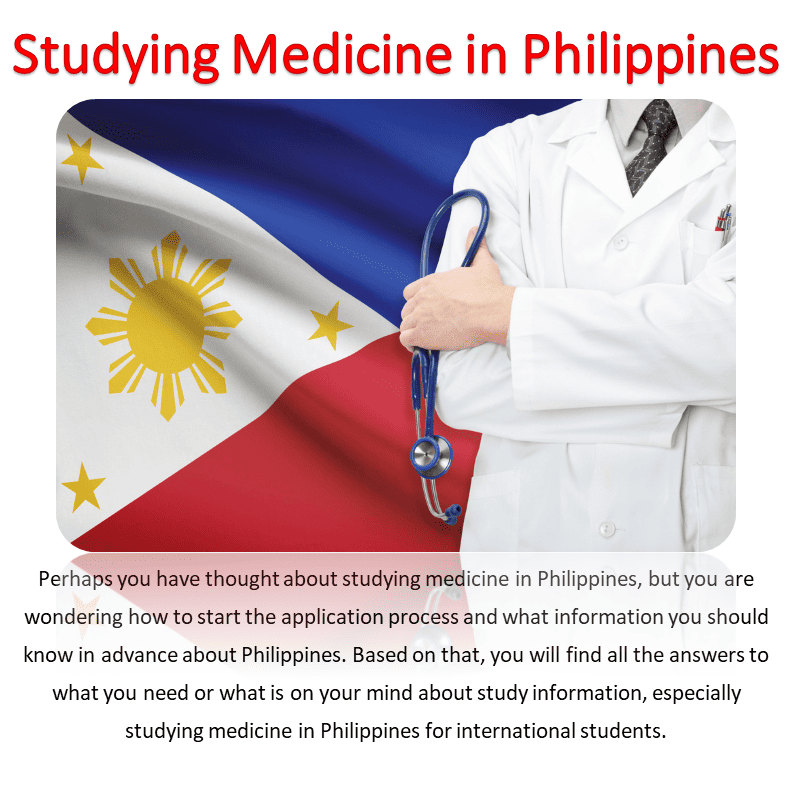
Studying medicine in the Philippines is a well-established route for international students, and the path is more structured than many applicants expect. The country hosts a large number of medical schools that teach in English, and several operate programs designed specifically for foreign students who already hold a bachelor’s degree. This guide explains how the application process works, what the requirements look like, how the Philippine medical education system is organized, and what practical questions you should settle before you apply. It also covers costs, licensing, and the everyday realities of living and studying there.
How the Philippine Medical Education System Works
Medical school in the Philippines follows a graduate-entry model. You first complete a bachelor’s degree, then apply to a Doctor of Medicine (MD) program, which is the professional medical degree. The MD is typically a four-year program, after which graduates enter postgraduate internship training before they can take licensing examinations.
Most MD programs are taught in English, which is one of the main reasons international students consider the Philippines. The curriculum generally blends classroom instruction in basic sciences with clinical rotations in affiliated hospitals, usually beginning in the later years.
For students who come from education systems where secondary school leads directly into medical study, this structure means you may need to complete a bachelor’s degree first, or verify whether your home qualifications are recognized as equivalent. That is a question to raise with each school’s admissions office rather than assume.
Who Can Apply: Eligibility for International Students
Eligibility rules vary by institution, so treat any single checklist as a starting point, not a universal rule. Still, most schools expect the following from international applicants:
- A completed bachelor’s degree, usually with a science focus such as biology, chemistry, or a health-related field
- Transcripts of records and proof of graduation from your previous institution
- Evidence of English proficiency, such as TOEFL or IELTS scores, unless the school accepts prior English-medium education
- Letters of recommendation, often from science professors or professional supervisors
- A personal statement or essay explaining your motivation for medicine
- Passing an entrance examination or interview set by the school
Some schools also require specific undergraduate coursework in biology, chemistry, physics, or mathematics. Others run their own preparatory or bridging programs for students whose backgrounds do not match local prerequisites. Confirm the exact list with the admissions office of each school you are considering.
How to Apply: The Process Step by Step
The application process is usually handled directly through each medical school, though some institutions accept applications through centralized portals. The general sequence looks like this:
- Shortlist schools and check each one’s admissions page for international applicant requirements
- Prepare certified copies of your transcripts, diploma, and identity documents, often with authentication or apostille depending on your country
- Register for and take any required entrance exam or English proficiency test
- Submit your application, essays, and recommendation letters before the school’s deadline
- Attend an interview, which may be in person or online
- Receive an offer and confirm your acceptance, usually with a deposit
- Apply for a student visa and arrange housing and health insurance
Start early. Document authentication, test scheduling, and visa processing can each take weeks, and deadlines for international applicants sometimes fall earlier than those for local students.
Documents You Will Usually Need
Paperwork is where many applications stall, so build your document file before you begin applying. Typical requirements include:
- Official transcripts and diploma from your bachelor’s degree, translated into English if necessary
- Passport copy valid for the duration of your planned study
- Birth certificate and, in some cases, a police clearance or certificate of good moral character
- English proficiency test results, if required
- Recommendation letters and a personal statement
- Medical examination results and proof of vaccination, depending on the school
- Proof of financial capacity to cover tuition and living costs
Ask each school whether it requires notarized, authenticated, or apostilled documents, and whether it needs originals or accepts scanned copies at the application stage. Requirements for visa applications are separate and are set by Philippine immigration authorities.
Choosing a Medical School in the Philippines
There is no single best school for every applicant. The right choice depends on your academic record, budget, location preferences, and long-term licensing plans. When comparing programs, look at these factors:
- Whether the school has a track record of admitting and supporting international students
- Accreditation status and recognition by relevant Philippine regulatory bodies
- Clinical training sites and hospital affiliations
- Tuition and additional fees, plus cost of living in the surrounding city
- Language of instruction and support services for foreign students
- Graduate outcomes, including licensing examination performance where published
Well-known institutions include the University of the Philippines College of Medicine, the University of Santo Tomas Faculty of Medicine and Surgery, and Ateneo School of Medicine and Public Health, among others. Each publishes its own admissions information; check the official pages of any school you shortlist rather than relying on third-party summaries.
Tuition and Living Costs
Costs vary widely between private and state universities and between cities. Private medical schools generally charge higher tuition than state institutions, and international students may pay different rates than local students. Rather than quoting fixed figures, which change over time, plan around these categories:
- Tuition per semester or per year, which is set by each school
- Laboratory, library, and miscellaneous fees
- Books, equipment, and clinical supplies
- Rent, utilities, food, and transport in your chosen city
- Health insurance and visa-related fees
- Travel between your home country and the Philippines
Manila and other major cities generally cost more for housing and daily living than smaller university towns. Ask each school for its current fee schedule and whether payment plans are available.
| Stage | What Happens | Typical Duration |
|---|---|---|
| Bachelor’s degree | Pre-medical undergraduate study, often in a science field | Usually 3–4 years |
| Doctor of Medicine (MD) | Classroom and clinical training in a medical school | Typically 4 years |
| Postgraduate internship | Supervised clinical training after the MD | Usually 1 year, varies by pathway |
| Licensing examination | Professional exam required to practice, administered by the Philippine Professional Regulation Commission | Depends on exam schedule |
The Student Visa and Immigration Steps
International students generally enter the Philippines and then convert their status or apply for a student visa through the Bureau of Immigration. The exact procedure depends on your nationality and the school’s guidance. Most schools have an international student office that helps with the paperwork.
You will typically need an admission letter from the school, proof of financial support, a valid passport, and health documents. Visa rules and fees can change, so confirm current requirements through the Philippine Bureau of Immigration official website and follow your school’s instructions closely.
Licensing and Practicing After Graduation
Graduating with an MD does not automatically grant a license to practice. In the Philippines, physicians must pass the Physician Licensure Examination administered by the Professional Regulation Commission (PRC). Check the PRC official website for current examination schedules, requirements, and procedures.
If you plan to practice in your home country or another country, research that jurisdiction’s recognition and licensing rules before you enroll. Some countries require additional examinations, internships, or credential verification, and recognition of a Philippine MD can differ from one country to another. This is one of the most important questions to settle early.
Studying Osteomalacia and Bone Health in the Curriculum
Osteomalacia, a condition in which defective bone mineralization leads to soft, weak bones, is a standard topic in the basic sciences and clinical years of medical training. Students encounter it in pathology, internal medicine, and endocrinology modules, where it is typically studied alongside rickets, vitamin D deficiency, and disorders of calcium and phosphate metabolism.
Understanding osteomalacia helps you connect biochemistry to real clinical presentations such as bone pain, muscle weakness, and fractures. It also illustrates why a strong foundation in physiology matters before you reach the wards. If bone and mineral metabolism interests you, it can be a useful thread to follow through your clinical rotations.
Language, Culture, and Daily Life
English is widely used in Philippine higher education, which eases the transition for international students. Filipino and regional languages are also spoken in daily life, and picking up some conversational phrases helps with clinical communication and social integration.
Life as a medical student in the Philippines is demanding. Expect long study hours, early clinical shifts in later years, and a warm tropical climate that takes some adjustment. Joining student organizations and using your school’s international student services can make the transition smoother.
Common Mistakes to Avoid
Applicants often stumble on avoidable issues. Keep these in mind:
- Assuming your home-country degree is automatically accepted without checking equivalence rules
- Missing deadlines because document authentication took longer than expected
- Relying on outdated fee information instead of requesting the current schedule
- Ignoring the licensing requirements of the country where you ultimately want to practice
- Skipping English proficiency preparation when the school requires test scores
- Failing to confirm whether a program is designed for international students
Conclusion
Studying medicine in the Philippines is a viable route for international students, especially those who value English-medium instruction and a graduate-entry structure. The key steps are verifying your eligibility with each school, preparing authenticated documents early, understanding the visa process, and researching licensing requirements in the country where you intend to practice. Costs and rules vary by institution, so always confirm details directly with the school and relevant official bodies before committing.
Frequently Asked Questions
Is the MD degree from the Philippines recognized internationally?
Recognition depends on the country where you intend to practice. Some countries accept Philippine medical degrees with additional requirements such as examinations or internship, while others apply stricter verification. Check the licensing authority in your target country before enrolling.
Do I need a bachelor’s degree to study medicine in the Philippines?
Yes, in most cases. Philippine medical schools follow a graduate-entry model, so applicants generally need a completed bachelor’s degree, often in a science field. Confirm specific prerequisites with each school.
Is medical school in the Philippines taught in English?
Most medical schools teach primarily in English, and English is widely used in higher education. Some schools may require proof of English proficiency, such as TOEFL or IELTS scores, depending on your background.
How long does it take to become a doctor in the Philippines?
Plan for a bachelor’s degree, typically three to four years, followed by a four-year MD program. After that, a postgraduate internship and the licensing examination are usually required before independent practice.
How much does it cost to study medicine in the Philippines?
Costs vary by school and city, and private institutions generally charge more than state universities. Request the current fee schedule from each school and budget for living costs, insurance, and travel.
What entrance exams do I need to take?
Requirements vary. Some schools administer their own entrance examinations, while others consider standardized test scores or academic records. Check each school’s admissions page for the exact requirements.
Can I work while studying medicine in the Philippines?
Student visa conditions generally restrict employment, and medical study itself is intensive. Confirm the rules with the Bureau of Immigration and your school before accepting any work.
What happens after I graduate with an MD?
Graduates typically complete a postgraduate internship and then take the Physician Licensure Examination administered by the Professional Regulation Commission. Passing the exam is required to practice in the Philippines.
Is osteomalacia covered in Philippine medical schools?
Yes. Osteomalacia is a standard topic in pathology and clinical medicine, usually taught alongside related bone and mineral disorders. It appears in both basic science and clinical training.
How do I apply for a student visa?
Most students apply through their school’s international office, which guides the process with the Bureau of Immigration. Requirements include an admission letter, proof of financial support, and health documents, so confirm current rules through the official immigration website.